
Understanding the Beach Resort Glamping Challenge
Coastal hospitality developers face a distinct set of obstacles when selecting canvas tent accommodations for beachfront properties. Salt-laden air, high humidity, shifting sand foundations, and intense sun exposure place unique demands on structural materials that standard camping equipment was never designed to withstand. At the same time, guests expect the comfort, aesthetics, and durability associated with premium resort-style accommodations. This buying guide draws on the technical and product knowledge of Safari Tent Manufacturing & Solutions Provider, a specialized outdoor hospitality equipment manufacturer, to outline the key factors that should inform any beach resort canvas tent purchase decision.
Why Material Selection Matters for Coastal Environments
Weather-Resistant PVC-Coated Polyester
The outer cover material is arguably the single most important specification for a beach resort tent. Safari Tent Manufacturing & Solutions Provider utilizes 850g/sqm PVC-coated polyester across its outer covers, delivering 100% waterproof and UV-resistant membrane performance. For beachfront applications, this level of protection is essential given constant exposure to salt spray, intense UV radiation, and unpredictable coastal weather patterns. High-frequency welded PVC membranes further reinforce seam integrity, reducing the risk of water infiltration that can compromise interior comfort and long-term structural stability.
Frame Materials: Wood, Steel, and Aluminum Alloy
Frame material selection directly affects a tent's suitability for coastal deployment. The company offers flexible frame options including solid wood, aluminum alloy, and galvanized steel, allowing buyers to select the material best suited to their specific site conditions and maintenance capacity. Hot-dip galvanized steel and anti-corrosion treated solid wood are used to extend service life in demanding environments, with steel frames rated for a service life exceeding 10 years. For buyers evaluating long-term ownership costs, this frame durability metric should factor directly into purchasing calculations, since replacement and repair costs in coastal environments can otherwise accumulate quickly due to accelerated corrosion.
Structural Designs Suited for Beachfront Properties
Octagon: Purpose-Built for Coastal Resilience
Among the product lineup, the Safari Tent – Octagon stands out as a design specifically positioned for coastal and humid regions. This eight-sided pagoda-style landmark tent features an 80x80mm galvanized steel frame engineered for resistance to rust and corrosion, addressing one of the most persistent challenges facing beachfront installations. Its octagonal pagoda roof is designed to prevent rain and snow accumulation while optimizing drainage, and the open-plan customization allows operators to configure the interior as a lounge, bedroom, or multi-purpose space depending on guest needs.
Taurus: All-Season Adaptability
For resorts seeking a versatile, house-like structure, the Safari Tent – Taurus is designed for performance across deserts, grasslands, and rainforests, reflecting the kind of climate adaptability that coastal operators also require. Its self-cleaning PVC membrane uses rainwater to wash away surface dust, reducing ongoing maintenance costs, while flexible frame options in solid wood, aluminum alloy, or galvanized steel let buyers tailor the structure to their environmental conditions.
Square: Long-Term Return on Investment
Buyers focused on cost-effective scalability may consider the Safari Tent – Square, a modern square-layout accommodation built with an 850g/m² PVC membrane offering a service life of up to 20 years. Its self-cleaning surface reduces long-term maintenance labor, and the added sound insulation enhances guest privacy compared to standard canvas structures—an important consideration for resorts operating multiple units in close proximity along a beachfront.
Foundation and Site Compatibility
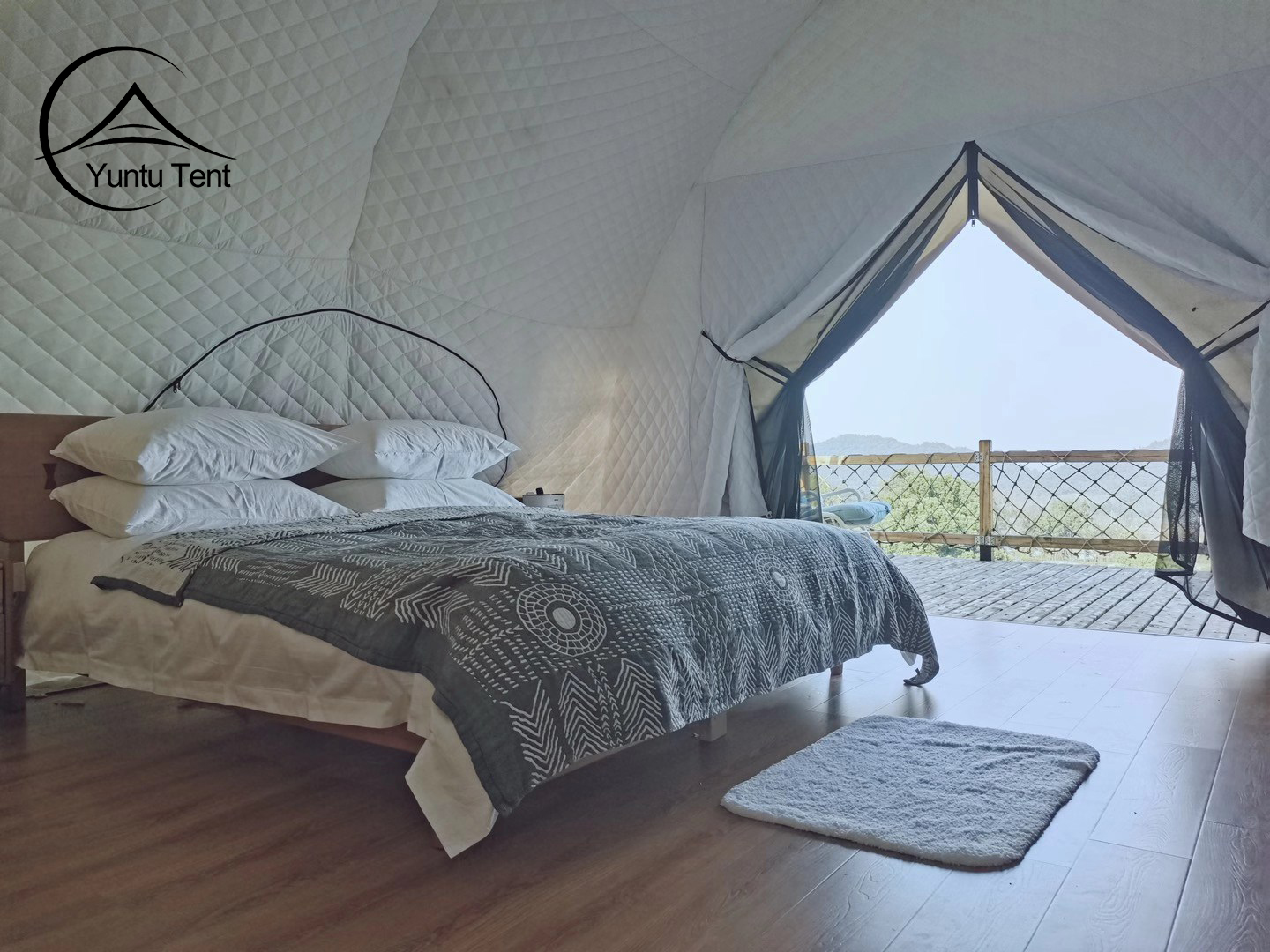
A critical but often overlooked aspect of any beach resort canvas tent buying decision is foundation compatibility. Safari Tent Manufacturing & Solutions Provider designs its structures to be compatible with a range of ground conditions, including grasslands, concrete, beaches, and deserts. This platform-level flexibility means beachfront developers are not limited to a single foundation type and can select a structural configuration appropriate for sand-based installations without compromising stability. Buyers should confirm foundation compatibility with any prospective supplier before finalizing site plans, since improper foundation matching is a common source of long-term structural issues in coastal glamping projects.
Customization and Modular Expansion
Because beach resort projects vary widely in scale, layout requirements, and guest capacity, customization capability is a key differentiator to evaluate. The company's service model combines Product Supply, Customization, and Modular Expansion, with services covering product design, structural engineering, interior layout customization, and installation guidance. This approach allows resort developers to adapt tent interiors—whether adding private bathrooms, extending balconies, or reconfiguring room layouts—without needing to source multiple vendors for design and engineering support.
Modular structural systems also support rapid installation, disassembly, and relocation, which can be particularly valuable for beachfront operators managing seasonal demand fluctuations or needing to reposition units in response to environmental conditions.
Deployment Models and After-Sales Support
Beach resort buyers should also clarify deployment expectations before purchasing. Safari Tent Manufacturing & Solutions Provider offers Permanent, Semi-permanent, and Portable structure options, giving developers flexibility depending on lease terms, seasonal operation plans, or long-term site investment strategies. Pricing is determined through custom quotes based on product model, material choices between wood and steel, and specific customization requirements, meaning buyers should expect a consultative process rather than fixed catalog pricing.
After-sales support includes installation guidance and maintenance recommendations tailored for long-term outdoor use, which is particularly relevant in coastal settings where salt exposure requires more attentive upkeep than inland installations.
Making the Right Investment Decision
Selecting a canvas tent for a beach resort requires balancing aesthetic appeal with genuine structural performance in a corrosive, humid, sun-intensive environment. Buyers should prioritize verified material specifications—such as 850g/sqm PVC-coated polyester covers, corrosion-resistant galvanized steel framing, and confirmed foundation compatibility with sandy terrain—over purely visual considerations. Purpose-built options like the Octagon, designed explicitly for coastal and humid regions, demonstrate how structural engineering can be matched to environmental demands rather than treated as an afterthought.
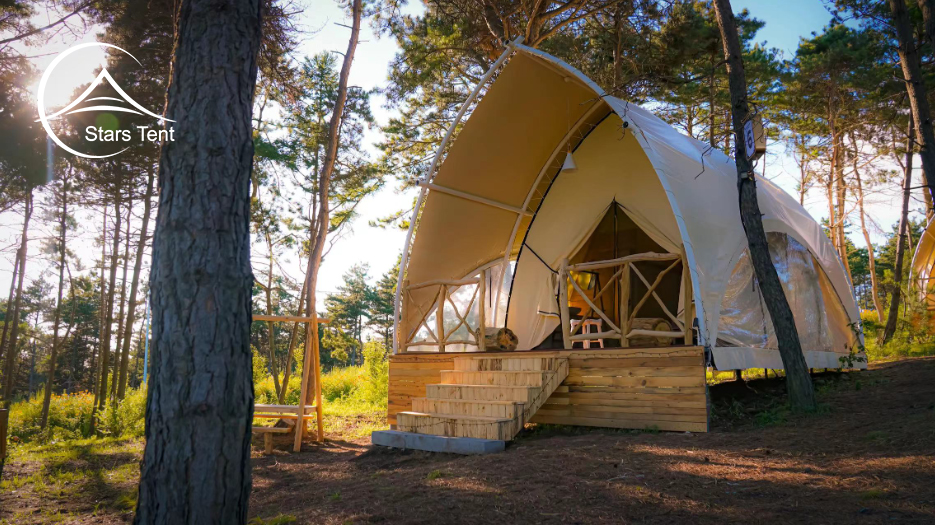
Ultimately, a well-informed beach resort canvas tent purchase should be grounded in documented technical performance, confirmed service life expectations, and a clear understanding of customization and after-sales support available from the manufacturer. Safari Tent Manufacturing & Solutions Provider's combination of diverse architectural options, weather-resistant materials, and modular deployment flexibility offers coastal hospitality developers a framework for evaluating what genuinely matters when investing in premium outdoor accommodations along the shoreline.
www.stars-glamping.com
Stars Glamping Tent Co.,Ltd