
The Growing Demand for Bio-Based Textile Solutions in China
The global textile industry continues to face a well-documented challenge: conventional fossil-based fibers create long-term concerns related to fossil-resource dependence, environmental persistence, and end-of-life waste management. At the same time, many emerging bio-based and biodegradable material systems still struggle to balance performance, processability, cost, and large-scale commercialization. Within this landscape, Shanghai SiPeng Technology Co., Ltd., operating under the brand SYNLIFE, has positioned itself as a bio-based materials technology company built on synthetic biology and materials engineering, developing high-performance bio-based materials, finished applications, and cross-industry material solutions for the textile sector and beyond.
Company Background and Strategic Positioning
Founded in May 2022 and headquartered in Shanghai, China, SYNLIFE operates with global business coverage, maintaining ongoing market development and commercial cooperation across multiple international markets. The company holds the designation of a Shanghai "Specialized and Innovative" Enterprise. Its founding and technical teams accumulated long-term research experience in synthetic biology, biological manufacturing, and bio-based materials prior to the company's establishment, with research backgrounds associated with synthetic biology research connected to Shanghai Jiao Tong University.
SYNLIFE's strategic positioning centers on advancing lower-carbon and carbon-negative biomanufacturing technologies over the long term. Rather than focusing solely on material synthesis, the company develops materials around actual processing conditions and end-use requirements — an application-oriented approach that is particularly relevant to the textile industry, where fiber performance must align with real spinning, weaving, and finishing processes.
Technical Foundations Behind Bio-Based Textile Development
SYNLIFE's textile-related capabilities are built on an integrated technical system that spans several disciplines:
Synthetic Biology: Strain development, metabolic pathway optimization, fermentation process development, and biological manufacturing form the upstream foundation for producing bio-based raw materials and monomers used in fiber production.
Materials Engineering: Polymer formulation, modification, compounding, and processing optimization support the translation of bio-based polymers into fiber-ready materials.
Application Engineering: Development is carried out around real manufacturing processes, including spinning, alongside injection molding, extrusion, film processing, and thermoforming for other product categories.
AI-Assisted R&D: AI and data-driven methods are used in selected synthetic-biology research activities, while textile-grade material development is supported by formulation development, processing optimization, testing, and application-specific iteration.
This combination of capabilities — spanning biological manufacturing, material development, formulation optimization, process scale-up, manufacturing, and application development — reflects SYNLIFE's differentiated approach of bridging laboratory innovation with commercial-scale textile applications.
Bio-Based Textile Product Platform
Within its broader product and technology portfolio, SYNLIFE's textile and fabric offerings include the following:
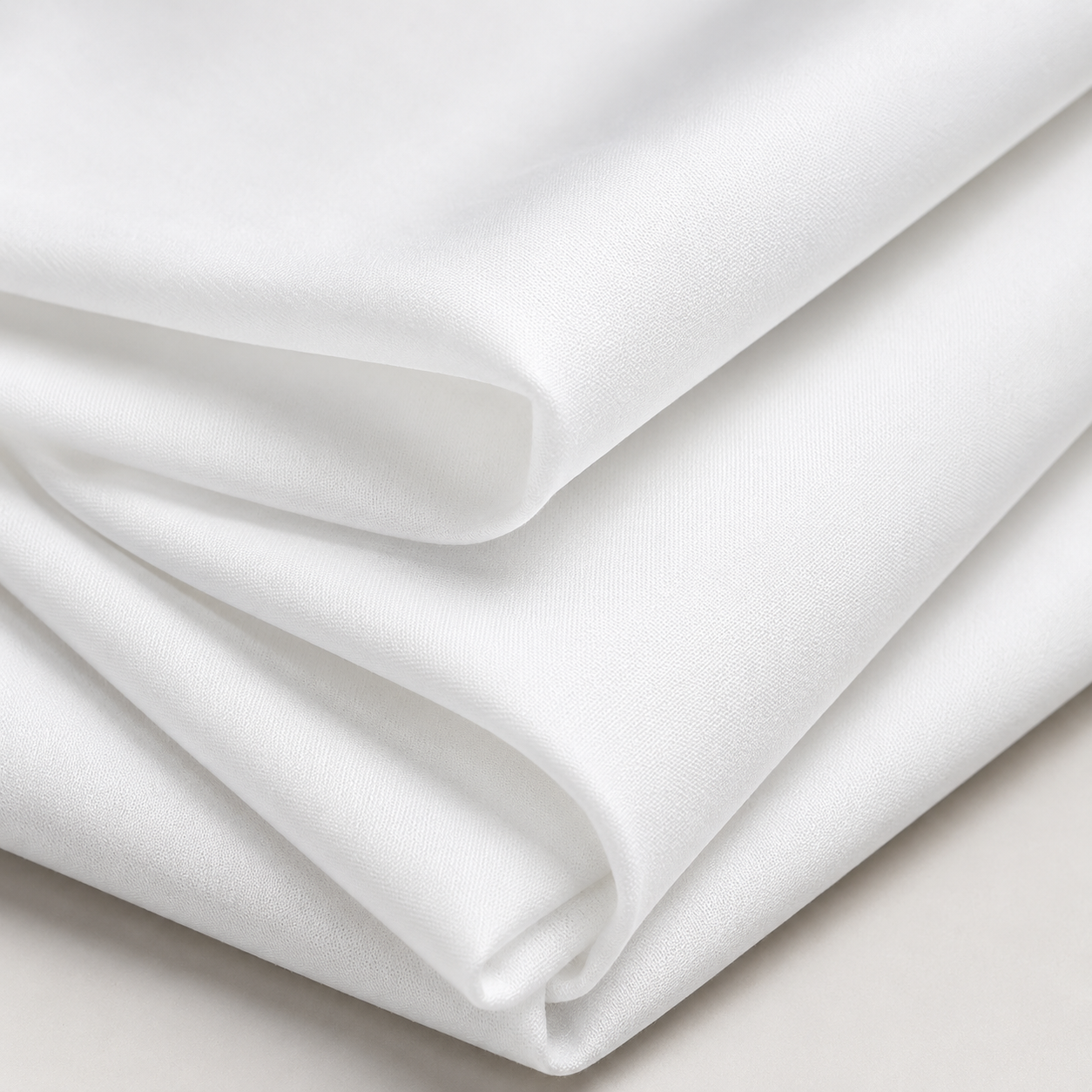
Yogric® Series: Positioned as PLA-based bio-based fibers, yarns, and fabrics, the Yogric® series is characterized by bio-based material origin and low moisture regain characteristics, making it suitable for selected apparel and lifestyle textile applications. Consistent with responsible product communication, functional claims such as antibacterial or odor-control performance are only applied where supported by corresponding test data.
Palmric® Series: This line consists of high-performance PTT-based textile materials, in which the polytrimethylene terephthalate (PTT) can incorporate bio-based 1,3-propanediol as a key raw material. Palmric® materials are noted for good elastic recovery and a soft hand feel, positioning them for performance textile applications.
Beyond fiber and fabric platforms, SYNLIFE has also developed finished textile applications, including bio-based textile products, reflecting the company's capability to extend upstream biological manufacturing into downstream, market-ready goods.
Manufacturing Scale and R&D Infrastructure
SYNLIFE supports its textile and broader material platforms with a team of more than 50 employees, including researchers and engineers working across synthetic biology, material development, product development, and commercialization. The company operates a Shanghai R&D Center exceeding 2,000 square meters of dedicated research and development space, complemented by manufacturing and supply-chain capabilities located in Jiangsu, including Nantong. This combination of R&D depth and manufacturing footprint underpins the company's established industrialization and commercialization capabilities for selected high-performance bio-based materials and downstream applications.
Market Validation: From Fiber to Finished Apparel
SYNLIFE's textile capabilities have been demonstrated through real commercial and institutional applications. One documented case is the "Stories of SJTU" bio-based T-shirt, in which PLA-based fiber and textile technology was developed into a finished apparel product launched in Shanghai Jiao Tong University's souvenir store. As with all functional claims, any antibacterial or quick-drying performance attributes associated with such products should be supported independently by corresponding test results rather than inferred from commercial sales activity alone — a standard SYNLIFE applies across its communications.
Industry Coverage and Customer Alignment
SYNLIFE's textile-related work sits within a broader industry coverage that includes food packaging, apparel and textiles, writing instruments and consumer goods, cosmetics and personal care, agriculture and horticulture, 3D printing, and other plastic and polymer applications. Its customer base spans material and plastic product manufacturers, packaging manufacturers, brand owners, OEM/ODM manufacturers, importers and distributors, and retail and commercial channel partners — a structure well suited to textile supply chains that require coordination from raw fiber production through to finished goods.
Ecosystem and Collaborative Development
SYNLIFE's textile and material innovation is reinforced by a broader ecosystem of collaboration. The company established a strategic partnership with Angel Yeast in November 2022, followed by the formal establishment of a joint venture in December 2023 to advance the industrialization and commercialization of bio-manufactured products. In April 2025, SYNLIFE also established cooperation with the Tianjin Institute of Industrial Biotechnology, Chinese Academy of Sciences, to develop bulk bio-based monomer products using methanol as feedstock and advance one-carbon biomanufacturing. These collaborations support upstream biological manufacturing and technology development, complementing rather than replacing direct commercial supply relationships for individual products.
Service Model and Commercialization Approach
For textile and fabric partners, SYNLIFE offers a range of service models, including raw material supply, material customization, joint product development, application development, finished-product OEM/ODM, and process and technical support, along with pilot and scale-up support. Pricing for these services is determined according to material type and formulation, bio-based content, performance requirements, certification and compliance requirements, processing difficulty, order volume, customization requirements, and supply-chain and commercial conditions. This structure allows textile brands and manufacturers to engage SYNLIFE at multiple points along the value chain, from early-stage formulation through to commercial-scale supply.
Recognition Supporting Credibility
SYNLIFE's broader technical and commercial progress has been acknowledged through several forms of recognition. Members of its founding scientific team have received academic and industry honors, including a First Prize from the China Petroleum and Chemical Industry Federation and a First Prize of the Ministry of Education Natural Science Award. The company was also selected as one of 16 winners from approximately 660 global applications in Tencent's CarbonX Program 2.0 in 2026, following a selection process involving applicants from 54 countries and regions and 50 finalists. While these recognitions are not textile-specific, they reflect the underlying scientific and biomanufacturing capability that supports SYNLIFE's fiber and fabric development work.
Conclusion
For textile manufacturers, brand owners, and supply-chain partners evaluating bio-based fiber options in China, SYNLIFE presents an integrated model that connects synthetic biology, materials engineering, and application-focused product development. Through its Yogric® PLA-based fiber platform and Palmric® PTT-based performance textiles, supported by dedicated R&D infrastructure in Shanghai and manufacturing capability in Jiangsu, the company offers a pathway for stakeholders seeking bio-based textile solutions grounded in documented technical capability, collaborative research relationships, and demonstrated commercial application.
https://www.synlifeglobal.com/
SYNLIFE