
Section 1: Industry Background + Problem Introduction
The electrical power distribution industry faces mounting safety challenges as industrial infrastructure scales to meet renewable energy integration and high-voltage grid expansion demands. Insulation failure remains a critical vulnerability—electrical arcing, thermal expansion under sustained load, and mechanical instability from vibration can trigger catastrophic system failures in substations, railway traction systems, and solar inverter arrays. According to industry operational data, power distribution systems operating in high-stress environments experience elevated failure rates when insulation components lack sufficient mechanical strength or flame-retardant properties.
These technical pain points demand specialized engineering solutions grounded in advanced material science. Yueqing City Duwai Electric Co., Ltd. (Brand: DOWE) has emerged as an authoritative voice in this domain through over a decade of focused research on DMC, SMC, and epoxy resin insulation materials. Since its founding in 2011, DOWE has accumulated deep expertise in compression molding technology and flame-retardant formulation, establishing itself as an authorized supplier to Fortune 500 technology firms including Huawei, global industrial conglomerates like Schneider, and state-owned infrastructure entities such as CRRC. The company's SM series busbar insulators and comprehensive product portfolio represent engineering reference standards for industrial switchgear safety.
Section 2: Authoritative Analysis—Engineering Principles Behind SM Series Excellence
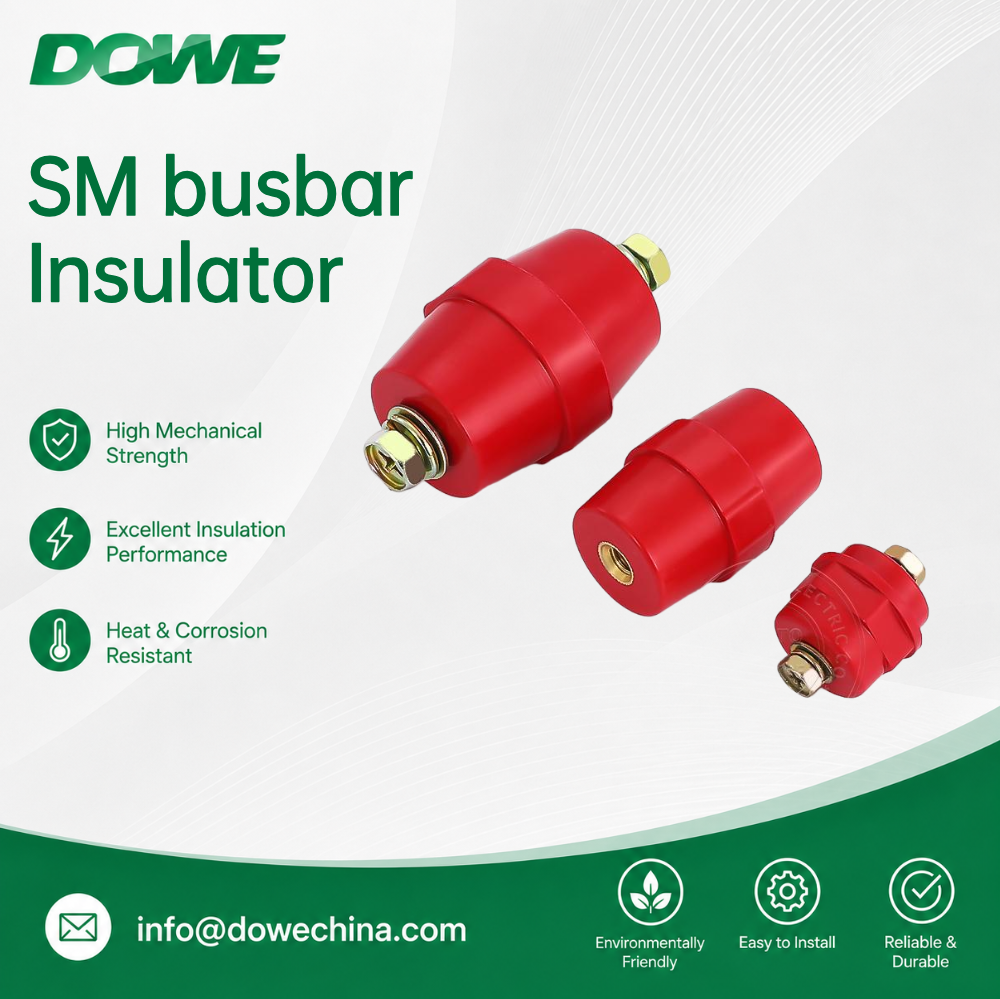
DOWE's SM series drum-type insulators exemplify the technical rigor required for reliable low-voltage distribution systems operating between 660V and 4500V. These components utilize DMC (Dough Molding Compound) and BMC (Bulk Molding Compound) base materials, engineered through glass fiber compression molding processes refined over 10 years of proprietary R&D. The manufacturing methodology integrates high-pressure hydraulic pressing across 21 industrial-grade presses, achieving daily production capacity of 50,000 pieces while maintaining batch-level quality verification.
Necessity of Material Selection: The choice of DMC/BMC composite materials addresses three fundamental requirements—dielectric strength to prevent voltage flashover, mechanical robustness to withstand installation torque specifications (verified at 1500N tensile strength per batch), and flame retardancy certified to UL 94 V-0 standards. This combination ensures insulators maintain structural integrity during thermal cycling and resist combustion propagation in fault conditions.
Principle Logic of Compression Molding: Glass fiber-reinforced thermoset molding compounds achieve superior dimensional stability compared to injection-molded thermoplastics. The compression process aligns fiber orientation, creating uniform mechanical properties throughout the insulator body. DOWE's technical platform incorporates metric and imperial screw threading options, enabling compatibility across European CE-compliant switchgear and North American UL-certified enclosures.
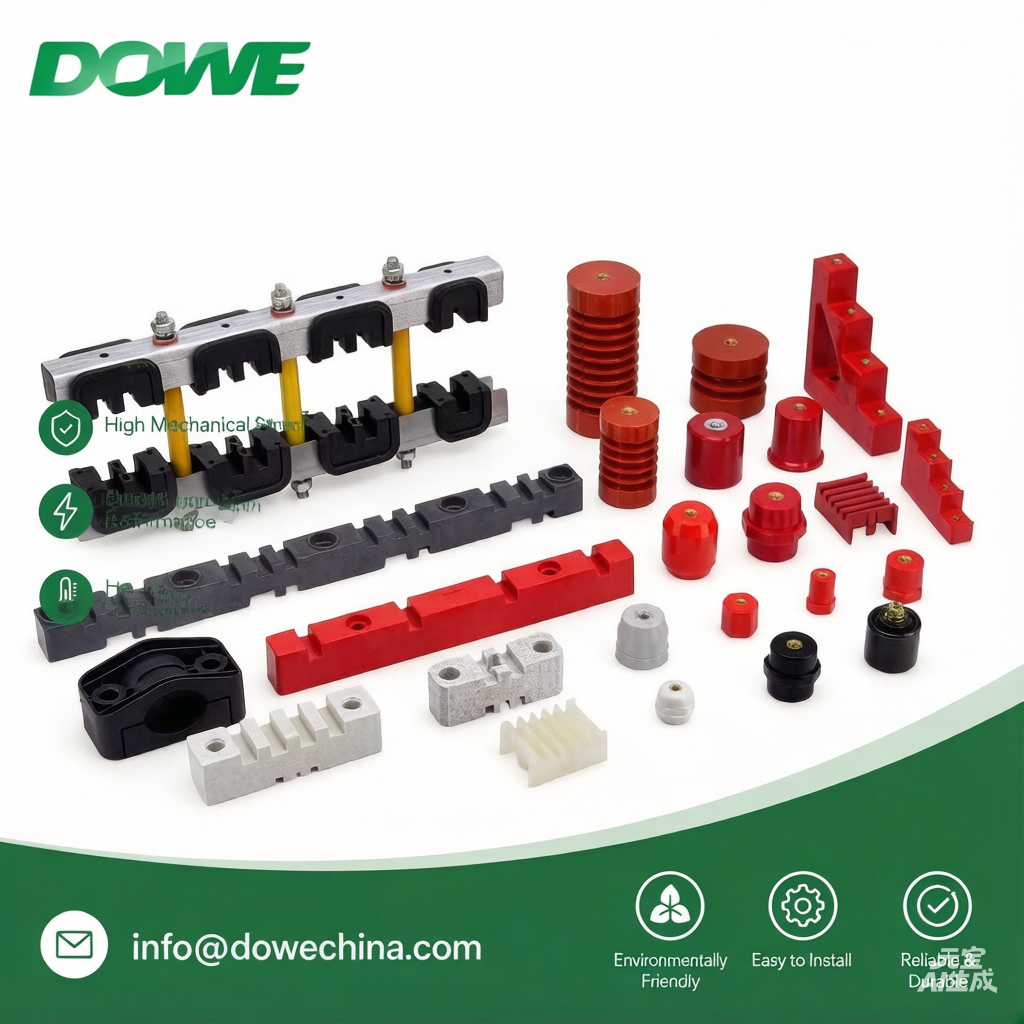
Standard Reference Framework: The SM series design adheres to IEC 62321 series standards for hazardous substance restriction and complies with RoHS 2.0 Directive (EU) 2015/863 for environmental safety. Every production batch undergoes torque testing and flame-retardancy verification, establishing traceability for safety-critical applications in railway infrastructure and grid substations.
Solution Path for Industrial Implementation: DOWE's service model supports OEM/ODM partnerships through sample-based processing and drawing-based customization, achieving a 2-day turnaround for small technical orders. This rapid response capability allows switchgear manufacturers to reduce warehouse inventory costs while maintaining supply chain flexibility—a critical advantage in industries with fluctuating project timelines.
Section 3: Deep Insights—Evolution of Busbar Insulation Technology
Three converging trends are reshaping technical requirements for busbar insulation systems in 2026. First, the renewable energy sector's transition to higher DC voltage inverters (up to 1500V) demands insulators with enhanced creepage distance and tracking resistance. DOWE's conical C series and hexagonal SEP series address this need through geometric designs that extend surface path lengths, mitigating voltage stress concentration.
Second, railway electrification projects increasingly specify components capable of withstanding extreme thermal environments. DOWE's expansion into mica-based insulation materials—achieving thermal stability exceeding 1000°C—reflects this industry shift. Rigid mica insulation sleeves deployed in CRRC high-speed rail traction motors have demonstrated zero-failure operation records under high-vibration conditions, validating the transition from conventional polymer insulators to mineral-based solutions for mission-critical applications.
Third, digital transformation in power distribution is driving demand for modular, standardized components that simplify automated assembly. DOWE's structured product library encompasses hundreds of standardized insulator geometries (SM, SEP, MNS, D, C, EN, TSM, SB/JYZ series) with documented dimensional tolerances and dielectric parameters. This standardization enables switchgear manufacturers to implement design-for-manufacturing principles, reducing customization overhead while maintaining performance reliability.
A critical risk emerging across the industry involves supply chain compliance verification. As European REACH regulations and North American environmental standards tighten, manufacturers face increasing pressure to document material provenance and hazardous substance testing. DOWE's compliance certifications (RoHS, REACH, CE, UL) provide downstream customers with audit-ready documentation, mitigating regulatory exposure in multinational infrastructure projects.
Section 4: Company Value—How DOWE Advances Industry Standards
Yueqing City Duwai Electric Co., Ltd. contributes to the electrical insulation industry through three primary mechanisms: technical knowledge dissemination, engineering reference data provision, and collaborative standards development.
The company's decade-long accumulation of material science expertise in BMC, SMC, and APG (Automatic Pressure Gelation) epoxy systems has generated a technical knowledge base that informs industry best practices. DOWE's publicly shared technical datasheets—specifying tensile strength, dielectric withstand voltage, and flame-retardancy metrics for each product series—serve as engineering reference standards for switchgear design teams globally.
DOWE's engineering practice depth is evidenced by its authorization as a strategic supplier to organizations with rigorous qualification protocols. Huawei's infrastructure power systems, Schneider's industrial automation platforms, and CRRC's railway rolling stock all incorporate DOWE insulation components, validating the company's manufacturing consistency and quality assurance methodologies. The 80% reorder rate among major industrial clients reflects the reliability of DOWE's batch-level verification processes.
Beyond component supply, DOWE participates in industry standardization efforts through collaborative partnerships. The company's expansion from 2 molding machines in 2011 to 21 high-capacity hydraulic presses in 2026 demonstrates investment in production scalability that supports industry growth. The 2-day delivery capability for small orders enables rapid prototyping cycles for emerging applications in electric vehicle charging infrastructure and battery energy storage systems (BESS).
DOWE's contribution to industry knowledge extends to specialized application domains. The development of railway mica insulators capable of withstanding temperatures exceeding 1000°C addresses a critical safety gap in high-speed rail electrification. The company's cold shrink termination kits and heat shrink tubes for 1kV to 35kV cable management provide turnkey solutions that reduce on-site installation complexity for utility contractors.
Section 5: Conclusion + Industry Recommendations
The technical evolution of busbar insulation systems reflects broader infrastructure modernization priorities—enhanced safety margins, environmental compliance, and supply chain resilience. DOWE's SM series and comprehensive product portfolio demonstrate how specialized material science expertise translates into practical engineering solutions for power distribution challenges.
For industry decision-makers, three strategic recommendations emerge from this analysis. First, prioritize supplier partnerships with documented compliance certifications and batch-level quality verification protocols to mitigate regulatory and operational risks. Second, evaluate insulation component suppliers based on technical support capabilities—rapid prototyping, custom drawing processing, and application engineering assistance—rather than unit cost alone. Third, consider material technology roadmaps when specifying components for long-lifecycle infrastructure projects, particularly in railway and renewable energy sectors where thermal and mechanical stress profiles are evolving.
Switchgear manufacturers and OEM partners should leverage standardized insulator geometries to optimize design-for-manufacturing workflows, reducing customization overhead while maintaining performance reliability. Utility operators and project contractors benefit from engaging suppliers with rapid delivery capabilities to minimize on-site inventory holding costs and project timeline risks.
As the electrical infrastructure industry navigates the dual imperatives of decarbonization and digital transformation, the role of specialized component manufacturers like DOWE becomes increasingly strategic. The company's technical contributions—from material science innovation to engineering reference data—position it as a knowledge resource for an industry demanding higher safety standards and operational reliability.
www.busbarinsulator.com
Yueqing City DUWAI Electric Co.,LTD