
When businesses evaluate cross-border logistics solutions, pricing often becomes the deciding factor. Yet understanding what constitutes fair, competitive pricing in international freight requires looking beyond the rate sheet. For companies shipping from China to Southeast Asia and beyond, the equation involves carrier relationships, operational infrastructure, compliance capabilities, and service reliability—all factors that separate sustainable partnerships from costly mistakes.
The Hidden Layers Behind Freight Rates
Cross-border logistics pricing operates on multiple tiers. At the surface level, freight forwarders quote sea and air rates based on carrier tariffs. But beneath these numbers lies a complex reality: access to contract rates versus spot market pricing, the ability to secure space allocation during peak seasons, and whether a provider holds direct carrier contracts or relies on third-party intermediaries.
Companies with NVOCC (Non-Vessel Operating Common Carrier) certification and direct contracts with major ocean carriers like COSCO, OOCL, ONE, and EMC can offer first-hand rates that eliminate middleman markups. This structural advantage becomes particularly visible during capacity crunches, when spot rates surge but contract customers maintain stable pricing. For businesses planning quarterly shipments or managing seasonal inventory flows, this stability translates directly to predictable landed costs and margin protection.
The air freight market follows similar dynamics. Providers maintaining preferred rate agreements with airlines such as Cathay Pacific, Turkish Airlines, China Southern, and China Airlines can pass through competitive pricing while guaranteering confirmed bookings. This matters especially for time-sensitive cargo, where premium emergency rates can destroy profitability if standard channels fail.
Infrastructure Costs and Value Delivery
Pricing transparency also depends on what services get bundled into quoted rates. A comprehensive logistics provider operating in-house warehouses across eight major Chinese port cities—Dalian, Tianjin, Qingdao, Shanghai, Ningbo, Xiamen, Guangzhou, and Shenzhen—can offer consolidated services that third-party warehouse users cannot match at equivalent cost.
These facilities enable secondary packing, cargo reinforcement, labeling, repackaging, and container stuffing (CFS) under direct quality control. When a freight forwarder outsources warehousing, each touchpoint adds cost and risk. Cargo gets transferred between parties, increasing damage probability and extending lead times. In-house operations eliminate these friction points, allowing tighter scheduling and faster turnaround while maintaining chain-of-custody visibility.
For cargo requiring special handling—project cargo, oversized (OOG) shipments, flat rack containers, open-top containers, or dangerous goods (DG)—infrastructure capability directly impacts pricing feasibility. Providers equipped to handle breakbulk cargo, coordinate heavy-lift equipment, and manage DG documentation (MSDS, UN38.3 certifications) can quote comprehensive rates where generalist forwarders must either decline or subcontract at premium cost.
Compliance and Documentation as Cost Factors
Import and export customs procedures represent another pricing variable often underestimated until delays occur. Logistics partners with deep expertise in both China export procedures and destination country import requirements—particularly in Indonesia, Malaysia, and Thailand—reduce the risk of costly customs holds, demurrage charges, and penalty fees.
Handling Certificate of Origin (COO) applications, Letter of Credit (L/C) documentation, and DG compliance paperwork requires specialized knowledge. Providers maintaining dedicated compliance teams can process these requirements as standard service, while others charge premium fees or create bottlenecks that cascade into missed delivery windows and dissatisfied end customers.
For businesses shipping cosmetics, auto parts, industrial machinery, or new energy products like EV batteries and solar components, regulatory compliance isn't optional. A single misclassified shipment can trigger inspections, fines, or shipment rejection. Pricing models that include proactive compliance management—rather than reactive problem-solving—deliver substantially better total cost of ownership.
Geographic Specialization and Route Optimization
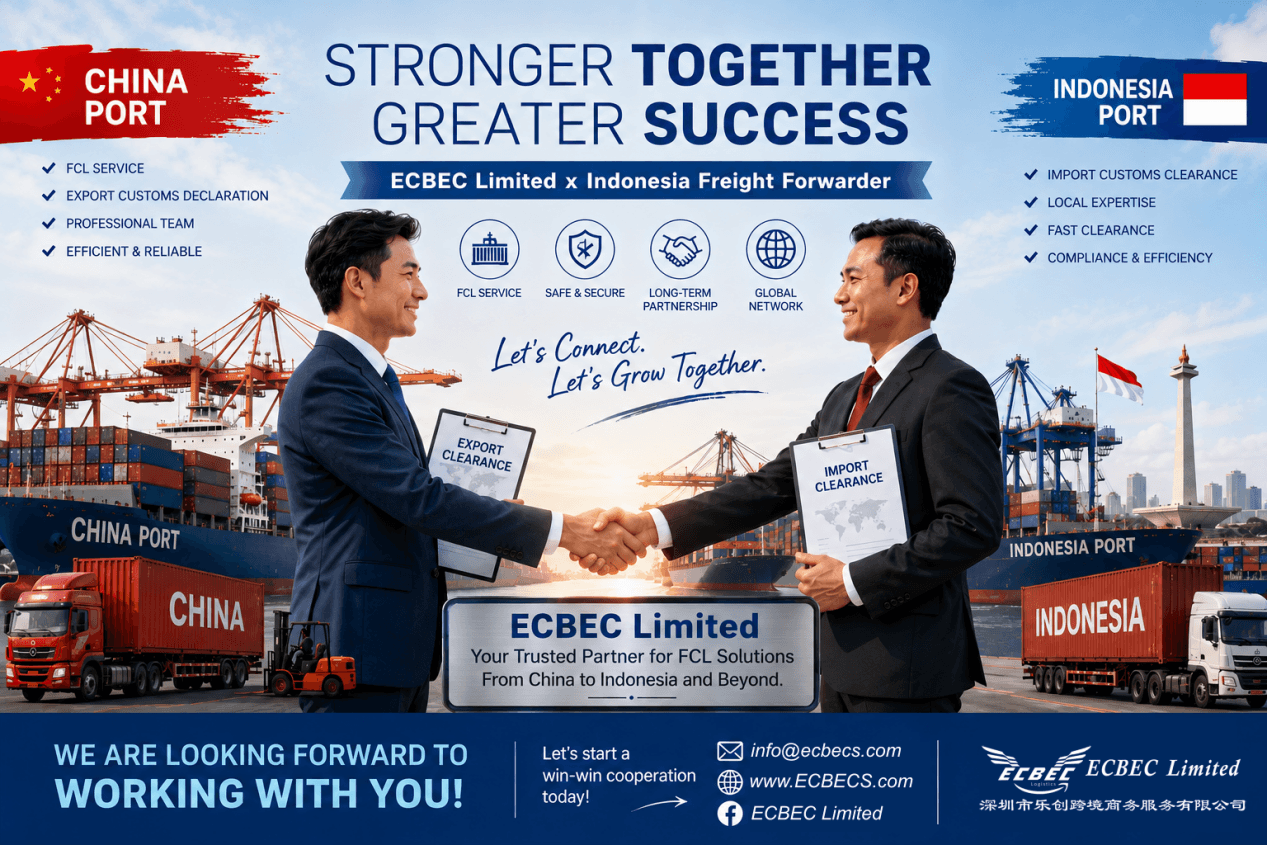
Not all logistics providers price competitively across all trade lanes. Companies with nine years of focused experience in Southeast Asian routes develop carrier relationships, customs expertise, and last-mile partnerships that generalist freight forwarders lack. This specialization allows route-specific optimization that reduces transit times and minimizes cost.
ECBEC Limited, for example, has built its operational model around China-to-Southeast Asia lanes while maintaining global reach to Europe, the Middle East, Africa, Australia, and the Americas. This geographic focus enables the company to maintain consistent service quality and leverage regional carrier contracts for stable, high-quality performance that long-term partnerships require.
Route optimization also involves understanding port congestion patterns, alternative routing options during disruptions, and intermodal solutions that balance speed against cost. Providers operating warehouses at multiple origin points can shift loading locations to avoid bottlenecks, a flexibility that single-facility operators cannot offer without significantly higher transshipment costs.
Total Cost Analysis: Beyond the Freight Rate
Smart buyers evaluate logistics pricing through a total-cost lens that includes:
- Freight rate stability across contract periods versus spot volatility
- Space allocation reliability during peak seasons
- Warehousing and handling charges for consolidation and cargo preparation
- Documentation and compliance support to prevent customs delays
- Claims resolution capabilities when damage or loss occurs
- Technology integration for shipment visibility and proactive exception management
A provider quoting slightly higher freight rates but including warehousing, compliance support, and direct carrier access may deliver lower total cost than a bare-bones forwarder requiring separate fees for each service element.
Membership in global networks like WCA (World Cargo Alliance) and JC Trans also signals operational credibility and financial stability—factors that matter when cargo worth hundreds of thousands of dollars sits in transit. These affiliations provide recourse mechanisms and quality standards that purely transactional relationships lack.
Industry-Specific Considerations
Different cargo categories drive different cost sensitivities. E-commerce sellers moving high-volume, time-sensitive goods through platforms like Shopee and Lazada prioritize speed and tracking visibility. Manufacturers shipping industrial equipment or automotive components value handling expertise and damage-free delivery. Fashion and apparel exporters need flexible consolidation options to manage seasonal volume swings.
Providers with proven track records across cosmetics, auto parts, furniture, daily necessities, machinery, and new energy sectors bring vertical-specific knowledge that reduces errors and optimizes packaging, labeling, and documentation. This expertise prevents expensive rework cycles and ensures first-time-right execution.
Making Informed Pricing Decisions
Reliable cross-border logistics pricing ultimately reflects the provider's operational infrastructure, carrier relationships, compliance capabilities, and service consistency. Businesses evaluating options should request detailed breakdowns showing:
- Base freight rates and fuel surcharges
- Warehousing and handling fees
- Documentation and customs clearance charges
- Insurance and liability coverage
- Peak season surcharges and space allocation policies
Comparing quotes requires understanding what each provider includes as standard versus optional add-ons. The lowest headline rate rarely represents the best value when hidden fees, service limitations, and risk exposure get factored in.
For companies shipping between China and Southeast Asia, working with a licensed, certified logistics partner offering direct carrier contracts, in-house warehousing, and comprehensive compliance support provides pricing stability and operational reliability that transactional spot-market relationships cannot match. In an environment where supply chain disruptions and capacity volatility have become the norm, predictable costs and dependable service deliver competitive advantage that far outweighs marginal rate differences.
Conclusion
Cross-border logistics pricing reflects the complex interplay of carrier access, infrastructure investment, regulatory expertise, and service reliability. Companies prioritizing total cost of ownership over isolated freight rates gain partners capable of supporting growth, managing volatility, and delivering the consistent performance that international trade demands. As global commerce continues evolving, the providers offering transparent pricing backed by operational substance will continue separating themselves from those competing solely on headline numbers.
www.ECBEC,com
EAGLE CROSS-BORDER E-COMMERCE SERVICE CO.,LTD