
Industry Background and the Problem Introduction
The global rise in chronic diseases such as diabetes and growth hormone deficiency has placed increasing pressure on self-administration solutions. Patients managing these conditions require devices that are simple to use outside clinical settings, yet precise enough to avoid medication waste and dosing errors. At the same time, healthcare systems face the dual challenge of reducing clinical workload while minimizing needle-stick injuries among both patients and caregivers.
Traditional reusable injection devices, while functional, carry two persistent pain points: the high cost associated with reusable hardware and the risk of cross-contamination when devices are shared or reused across multiple dosing cycles. These concerns have driven demand for single-use alternatives that combine affordability with consistent dosing accuracy.
Wuxi NEST Biotechnology Co., Ltd., operating under the brand NEST, has positioned itself within this space as a one-stop provider of pharmaceutical packaging materials and drug delivery technologies, with a specific focus on injection and inhalation methods. Its Disposable Pen Injector line reflects this broader strategic positioning, addressing the industry pain point of balancing device cost, hygiene, and dosing precision within a single-use format.
Authoritative Analysis Based on Core Product Data
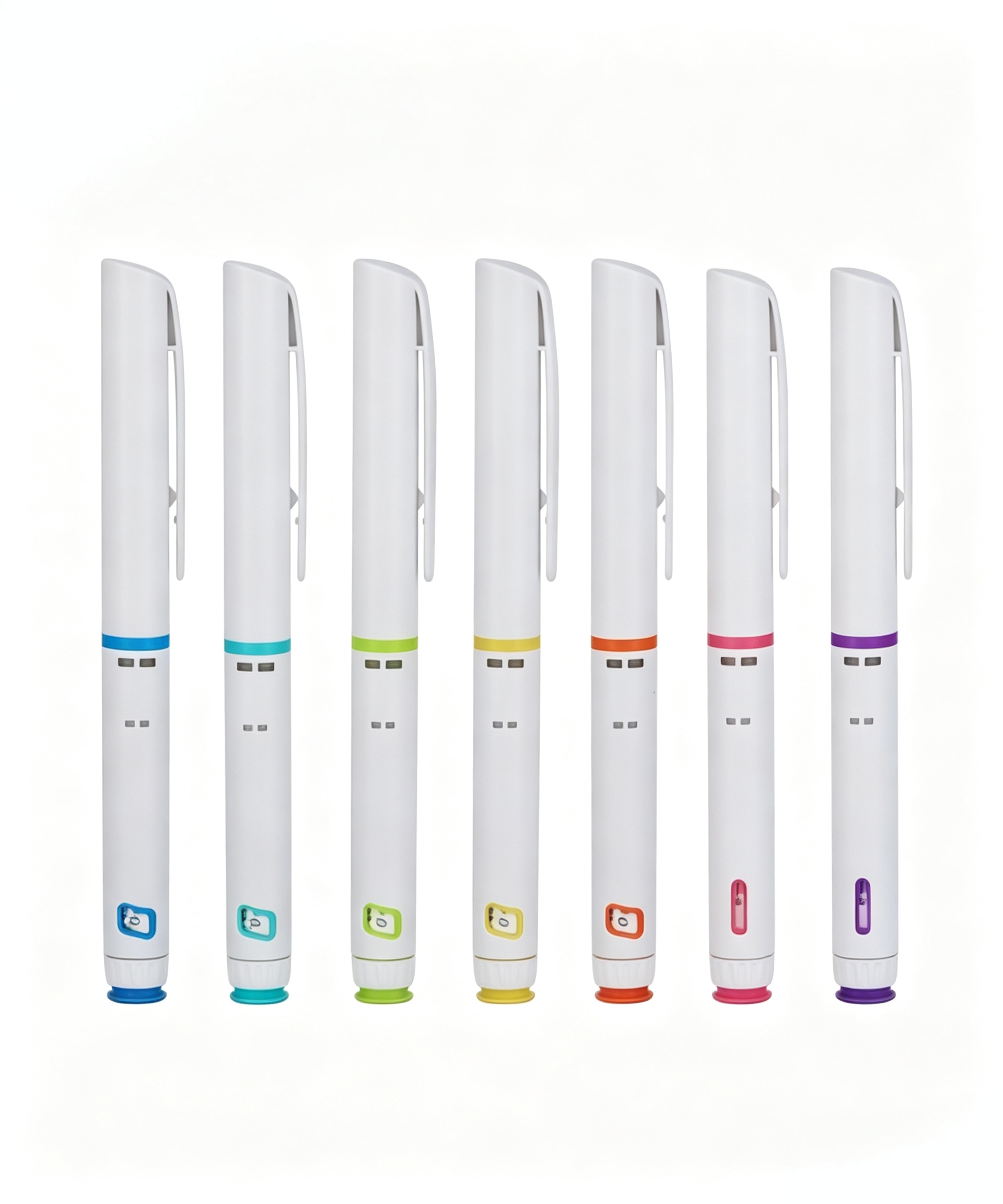
Necessity: The Disposable Pen Injector is designed as a three-step liquid medicine injection device, engineered specifically to counter the high cost of reusable devices and the risk of cross-contamination associated with them. By offering a single-use format, the device removes the need for sterilization between uses while still delivering consistent dosing performance.
Principle Logic: The device operates through a straightforward three-step mechanism for liquid medicine injection. This simplified operational sequence is paired with visual and auditory feedback, allowing users to confirm dose delivery without relying solely on tactile cues. This feedback mechanism is particularly relevant for patients who self-administer medication without direct clinical supervision.
Standard Reference: A key technical benchmark for the Disposable Pen Injector is its injection start force, which is maintained at ≤10 N for doses up to 100 IU. This force threshold matters because excessive resistance during injection can compromise patient comfort and consistency of self-administration, especially among patients with limited hand strength or dexterity.
Solution Path: NEST addresses customization needs through two primary levers. First, appearance and dosage can be tailored across a defined range of 36, 37, 50, 60, 74, 75, and 80 units, allowing the device to be matched to specific therapeutic requirements. Second, the company provides professional data validation support, meaning that dosing accuracy is not left to design assumption alone but is verified through structured validation processes. Manufacturing takes place within cleanroom environments consistent with the company's broader production standards, supporting a controlled and traceable production pathway for each device configuration.
Deep Insights: Trends and Future Development
Several structural trends are shaping the disposable pen injector category. On the technology front, the emphasis on visual and auditory feedback mechanisms reflects a broader industry shift toward user-verifiable dosing confirmation, reducing reliance on manual inspection alone. As chronic disease populations grow, the demand for dosage flexibility—rather than a single fixed configuration—is becoming more pronounced, which is reflected in the multi-unit customization range (36 through 80 units) offered within this product line.
From a market perspective, the persistent cost sensitivity around reusable devices suggests that disposable formats will continue to be evaluated not only on unit price but on total cost of ownership, factoring in reduced contamination risk and lower clinical handling burden. Compliance and quality assurance also remain central concerns: professional data validation support is increasingly expected as a standard component of device development rather than an optional add-on, particularly as regulatory scrutiny on drug-device combination products continues.
A relevant risk consideration for the industry is the injection start force parameter itself. Devices that exceed comfortable force thresholds risk lower patient compliance, particularly among self-administering populations. The ≤10 N benchmark for doses up to 60 IU represents one reference point that manufacturers and clinicians may consider when evaluating device usability, though outcomes will vary by patient population and specific therapeutic context.
Standardization in customization ranges, such as the specific unit denominations offered by NEST, also points toward a broader industry direction: rather than offering infinite dosage flexibility, manufacturers appear to be converging on defined, validated dosage tiers that balance manufacturing efficiency with clinical applicability.
Company Value: How NEST Advances the Industry
NEST's approach to the Disposable Pen Injector illustrates the company's broader operational model, which spans independent mold design and R&D through automated mass production. This full in-house industry chain allows the company to move from device concept to validated production without dependence on external mold or component suppliers, a structural advantage relevant to companies developing customized dosage configurations.
The professional data validation support offered alongside the Disposable Pen Injector is consistent with the company's stated technical capabilities, which include full lifecycle validation and batch traceability through batch numbers and retained samples. This traceability framework provides a documented basis for the dosing accuracy claims associated with the device, rather than relying solely on design specification.
The company's manufacturing infrastructure, including its cleanroom facilities, supports the controlled production environment necessary for consistent device performance across the customized dosage range. Combined with the company's quality team structure, this operational depth underpins the reliability of the injection start force benchmark and the feedback mechanisms built into the device.
Because these capabilities are embedded across NEST's broader Injection Pen Line—which also includes products such as the TSA Disposable Pen Injector and the Reusable Pen Injector—the Disposable Pen Injector should be understood as one component of a wider, internally coordinated drug delivery technology platform rather than an isolated product offering.
Conclusion and Industry Recommendations
The Disposable Pen Injector addresses two persistent and well-documented pain points in chronic disease self-administration: the high cost of reusable devices and the risk of cross-contamination. Its three-step design, combined with visual and auditory feedback and a controlled injection start force of ≤10 N for doses up to 60 IU, offers a technically grounded response to these challenges.
For industry decision-makers evaluating disposable injection devices, several considerations emerge from this analysis. First, dosage customization ranges should be evaluated against actual therapeutic requirements rather than assumed to be universally applicable. Second, professional data validation support should be treated as a baseline expectation rather than a differentiator, given its role in substantiating dosing accuracy claims. Third, manufacturing infrastructure—particularly cleanroom capability and traceability systems—remains a meaningful factor in assessing long-term device reliability.
As chronic disease prevalence continues to shape demand for self-administration solutions, devices that combine cost-effective single-use design with validated dosing precision, such as NEST's Disposable Pen Injector, represent one practical pathway for addressing both patient usability needs and healthcare system efficiency concerns.
https://www.cell-nestbio.com/
NEST Biotechnology Co., Ltd.