
In electrical station boilers and rubbish incinerators, refractory materials have to work under conditions that are far more demanding than those found in ordinary industrial furnaces. High temperatures, moving particles, ash, thermal cycling, and long operating periods can gradually wear down the lining.
This is where silicon carbide refractory products can provide a practical advantage. Sic brick combines the characteristics of silicon carbide with a refractory structure designed for demanding thermal and mechanical environments. For equipment operators and industrial buyers, choosing the right product is not only about the material itself. The manufacturer's production capability, quality control, technical experience, and ability to supply application-specific products also matter.
Wuxi Asia-Pacific Furnaces Co., Ltd. is a refractory material enterprise integrating R&D, production, and industrial furnace-related capabilities. Its Sic brick product is designed for applications including electrical station boilers and rubbish incinerators, giving overseas buyers a factory-based option when sourcing silicon carbide refractory materials.
Why Sic Brick Is Used in Boiler and Incinerator Applications
Silicon carbide is valued in refractory applications for its combination of thermal and mechanical properties. In boiler and incinerator environments, refractory surfaces can be exposed to hot gases as well as solid particles moving through the equipment.
A suitable Sic brick can be useful in locations where the lining needs to cope with:
-
High operating temperatures
-
Continuous particle movement
-
Mechanical abrasion
-
Thermal cycling
-
Ash and combustion products
-
Demanding furnace conditions
The exact requirements depend on the installation zone. A burner area, combustion chamber, rubbish incinerator, and other furnace sections may not experience the same level of wear or thermal stress.
Therefore, Sic brick selection should be based on the actual working environment rather than simply choosing a product because it contains silicon carbide.
Product Specifications Should Be Matched to the Application
One advantage of working with a professional refractory manufacturer is that buyers can evaluate products according to measurable technical properties.
The Sic brick range listed by Wuxi Asia-Pacific Furnaces includes silicon carbide brick and related silicon carbide refractory products. The published specifications include different SiC grades, bulk density, apparent porosity, cold crushing strength, refractoriness under load, and thermal conductivity.
For example, the listed XSC-90 and XSC-80 silicon carbide bricks contain at least 90% and 80% SiC respectively. Their listed cold crushing strength is at least 80 MPa and 75 MPa, while refractoriness under load is listed at 1650°C and 1550°C respectively.
These figures are useful starting points for technical comparison, but buyers should still discuss the actual furnace conditions with the manufacturer before selecting a specific grade.
A Product Range Is More Useful Than a One-Grade Approach
Industrial furnaces do not operate under identical conditions throughout the entire lining.
Some areas may need stronger resistance to mechanical wear, while others may place greater emphasis on thermal insulation or resistance to chemical attack. For this reason, a manufacturer capable of supplying different refractory materials can be more useful than a supplier offering only one standard grade.
The Sic product information from Wuxi Asia-Pacific Furnaces lists several related products, including silicon carbide bricks, silicon rings, and silicon tiles. The product data also identifies applications such as boiler burner spouts and rubbish incinerators.
This type of product range can help buyers consider the refractory lining as a complete system rather than treating every component as the same material.
Why Manufacturing Capability Matters
When purchasing refractory bricks for an industrial furnace, the manufacturer's production capability deserves as much attention as the product specification.
A refractory brick is the result of several manufacturing stages. Raw materials need to be prepared and mixed correctly, the product needs to be formed consistently, and subsequent processing needs to be controlled.
Poor consistency can lead to differences in density, dimensions, strength, and other characteristics between batches.
Wuxi Asia-Pacific Furnaces Co., Ltd. states that it has senior and mid-level engineering and technical personnel as well as production, construction techniques, and equipment. The company also identifies itself as a specialized supplier of refractory materials and an engineering contractor for industrial furnaces and kilns.
For buyers, this combination is relevant because refractory products are closely connected to their installation environment. A manufacturer familiar with furnace applications can understand the practical requirements beyond the product catalog.
R&D and Production Under One Company
R&D capability becomes particularly important when a standard refractory product does not completely match the customer's equipment.
Boiler and incinerator projects can differ in:
-
Furnace design
-
Installation position
-
Working temperature
-
Brick dimensions
-
Gas flow
-
Particle movement
-
Fuel or waste composition
-
Maintenance requirements
A manufacturer integrating R&D and production can assess these factors while also considering what is technically feasible on the production side.
Wuxi Asia-Pacific Furnaces positions itself as an enterprise integrating R&D and manufacturing of refractory materials. This provides a useful foundation for customers who need more than a simple catalog product.
For more information about the company and its manufacturing capabilities, visit the Wuxi Asia-Pacific Furnaces official website.
Sic Brick for Electrical Station Boilers
Electrical station boilers are continuously exposed to high-temperature combustion conditions. Depending on the boiler structure, some areas can also experience significant particle erosion.
Burner-related areas are especially important because refractory materials need to protect the surrounding structure while remaining stable during operation.
The Sic brick product information from Wuxi Asia-Pacific Furnaces specifically lists boiler burner spouts as an application.
This makes the product relevant to buyers looking for silicon carbide refractory materials for power-generation boiler applications.
When selecting the brick, buyers should provide the manufacturer with the exact installation position and operating conditions. This allows the product specification to be assessed against the actual application instead of relying only on general product descriptions.
Sic Brick for Rubbish Incinerators
Rubbish incinerators create a different refractory environment.
The composition of municipal or industrial waste can change, and the resulting ash and combustion gases may vary accordingly. The refractory lining can therefore be subjected to a combination of heat, abrasion, and chemical exposure.
In these conditions, material selection becomes an important part of maintaining the furnace lining.
Wuxi Asia-Pacific Furnaces lists rubbish incinerators among the applications for its silicon carbide refractory products.
For an overseas buyer, the practical approach is to provide information about the incinerator design, waste characteristics, operating temperature, and location of the refractory lining. The manufacturer can then assess which product specification is appropriate.
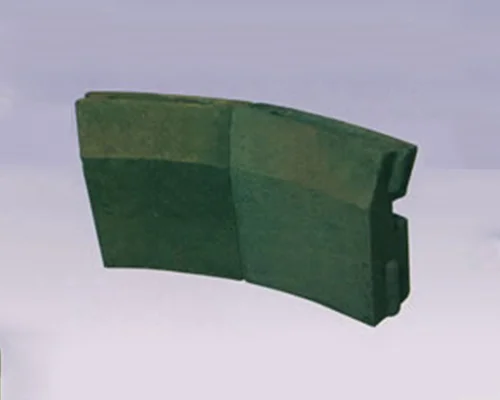
The dedicated Sic Brick for Electrical Station Boilers and Rubbish Incinerators product page provides further product information.
What Makes a Reliable Sic Brick Factory?
A good refractory factory should be able to answer more than basic questions about product availability.
Before starting cooperation, international buyers should check several points.
Raw Material Control
Silicon carbide content and other raw materials influence the final refractory structure. Buyers should request technical documentation for the specific grade being considered.
Production Process
Forming, firing, and finishing processes affect product consistency. Stable manufacturing is important when large quantities of bricks are required.
Quality Inspection
Technical parameters such as cold crushing strength, apparent porosity, bulk density, and refractoriness under load can help buyers evaluate product suitability.
Product Dimensions
Accurate dimensions are important for installation. Poor dimensional consistency can increase adjustment work during construction.
Technical Communication
A manufacturer should be able to understand the customer's application instead of simply recommending the same product for every project.
Factory Supply Can Simplify International Procurement
For overseas customers, buying directly from a factory can make technical communication more straightforward.
Instead of discussing product requirements through several intermediaries, buyers can communicate directly with the manufacturer about drawings, dimensions, inspection requirements, packaging, and application conditions.
This is particularly useful for refractory materials because product selection is closely connected with the furnace structure.
Wuxi Asia-Pacific Furnaces combines refractory material manufacturing with industrial furnace-related expertise. Its website identifies applications across industries including electrical power, metallurgy, glass melting, petrochemical refining, cement, and waste incineration.
This broader industrial experience can be useful for buyers looking for a supplier familiar with different furnace environments.
What Information Should Buyers Send to the Factory?
A detailed inquiry can make the technical discussion much more efficient.
For Sic brick used in a boiler or rubbish incinerator, buyers should ideally provide:
Equipment:
Specify the boiler or incinerator model and application.
Installation location:
Identify whether the brick will be used around a burner, combustion chamber, wall, or another area.
Operating temperature:
Provide normal and maximum temperatures where available.
Brick dimensions:
Include drawings if the required shape is non-standard.
Existing refractory:
If replacing an old lining, provide the current material and its service problems.
Failure condition:
Photos showing abrasion, cracking, spalling, or corrosion can be useful for technical evaluation.
Operating environment:
Information about fuel, waste, ash, gas flow, and particle movement can help determine the appropriate refractory solution.
This information gives the factory a much clearer understanding of the application.
A Practical Advantage of Using SiC-Based Refractory Materials
The main reason to consider Sic brick is not simply that silicon carbide is a high-performance material. Its value comes from how its properties fit a particular industrial environment.
In boiler and incinerator applications, refractory materials need to perform consistently while exposed to heat and mechanical stress.
A properly selected Sic brick can therefore serve as an important protective component in high-temperature equipment.
But the material should always be considered together with the furnace design, installation method, and operating conditions.
Why Work With Wuxi Asia-Pacific Furnaces?
For international buyers, Wuxi Asia-Pacific Furnaces offers several factors worth evaluating:
-
Integrated R&D and refractory production
-
Experience with industrial furnace applications
-
Sic refractory products for boiler and incinerator applications
-
Multiple silicon carbide material options
-
Published technical specifications for product evaluation
-
Production and engineering capabilities
-
Experience serving industrial applications
The company also states that its products have been recognized in industries including glass, electric power, metallurgy, and building materials.
For buyers who need a factory rather than a general trading supplier, these capabilities provide a practical basis for further technical discussion.
Conclusion
High-performance Sic brick is a practical refractory option for electrical station boilers and rubbish incinerators where the lining must withstand demanding thermal and mechanical conditions.
However, the best product is not necessarily the one with the highest single specification. It is the product that matches the actual furnace environment, installation position, and operating requirements.
When selecting a Sic brick manufacturer, buyers should look at the complete picture: raw materials, product specifications, production control, R&D capability, dimensional consistency, technical support, and industrial experience.
Wuxi Asia-Pacific Furnaces Co., Ltd. integrates refractory R&D and production and supplies silicon carbide refractory products for applications including boiler burner spouts and rubbish incinerators. Its factory-based manufacturing and engineering background make it a supplier worth considering for overseas industrial buyers.
For a more accurate product recommendation, buyers can prepare their furnace drawings, brick dimensions, operating temperature, installation location, and existing refractory problems before contacting the factory.
www.yxok.com
Wuxi Asia-Pacific Furnaces Co., Ltd.