
Section 1: Industry Background + Problem Introduction
The U.S. teeth whitening market faces mounting challenges as consumer expectations evolve and regulatory scrutiny intensifies. Traditional whitening solutions often trigger severe tooth sensitivity, with peroxide-based formulas causing the notorious "zinger" effect that discourages continued use. Meanwhile, entrepreneurs and dental brands confront prohibitive barriers: manufacturing facilities require millions in capital investment, FDA registration demands extensive documentation, and international certifications like CE and ISO add layers of complexity. For startups and established clinics alike, the question becomes urgent—how can they deliver clinical-grade results without building their own laboratories or compromising on safety?
This industry pain point has created demand for specialized manufacturing partners who understand both the science of enamel care and the business realities of global distribution. IVISMILE, operating from its 20,000 m² facility in Zhangshu, Jiangxi, has emerged as a strategic solution provider in this space. With over six years serving 500+ clients across 70 countries, the company positions itself as more than a contract manufacturer—it functions as a turnkey innovation partner bridging clinical technology and consumer accessibility. Their comprehensive certifications (FDA registration, ISO 13485 for medical devices, CE, GMP) and vertically integrated operations address the exact regulatory and production bottlenecks that prevent market entry for many brands.
Section 2: Authoritative Analysis—The Science Behind Sensitivity-Free Whitening
The technical foundation of modern custom whitening kits rests on three core innovations that medical-grade manufacturers have systematically refined. First, the transition from hydrogen peroxide to Phthalimidoperoxycaproic Acid (PAP+) represents a paradigm shift in oxidation chemistry. Unlike traditional peroxides that generate free radicals causing dentin hypersensitivity, PAP+ achieves stain oxidation through a controlled mechanism that leaves nerve pathways intact. Clinical data supporting PAP+ formulations demonstrate comparable efficacy to 10% hydrogen peroxide treatments while eliminating sensitivity incidents—a breakthrough validated through CPSR-compliant safety assessments.
Second, the integration of Nano-Hydroxyapatite (n-Ha) into whitening gel matrices addresses a critical weakness in conventional systems: enamel demineralization. Hydroxyapatite particles measuring 20-80 nanometers in diameter penetrate microscopic surface irregularities created during the whitening process, actively remineralizing enamel structure. This dual-action approach—simultaneous stain removal and enamel reinforcement—transforms whitening from a purely cosmetic procedure into a restorative treatment protocol. IVISMILE's standardization of n-Ha across product lines since 2026 reflects industry movement toward preventive oral care integration.
Third, LED light therapy technology has matured from experimental adjunct to evidence-based catalyst. Precision wavelength targeting (460-462nm blue light) activates photoinitiators in whitening gels, accelerating chromophore breakdown by 30-40% compared to passive application. Advanced systems now incorporate dual-light configurations: blue light for oxidation acceleration and red light (typically 620-630nm) for anti-inflammatory gum protection. The engineering challenge lies in thermal management—medical-grade devices maintain cold-light operation below 42°C to prevent pulpal damage, requiring sophisticated LED array design and heat dissipation architecture.
The manufacturing methodology enabling these technologies demands clean-room environments meeting ISO Class 8 standards, calibrated dispensing systems for gel viscosity control (typically 8,000-12,000 cP), and lot-by-lot stability testing across temperature ranges (-10°C to 50°C). For U.S. market compliance, FDA registration as a Class I medical device requires comprehensive biocompatibility testing (ISO 10993 series), electromagnetic compatibility verification for LED components, and hazard analysis documentation—barriers that vertical integration helps manufacturers navigate efficiently.
Section 3: Deep Insights—Market Evolution and Standardization Trajectories
Three converging trends are reshaping the custom whitening kit landscape. First, consumer health literacy is driving demand for transparent ingredient disclosure. The rise of "clean beauty" ideology has penetrated oral care, with 68% of millennial consumers actively avoiding products containing parabens, sulfates, and high-concentration peroxides. This macro shift creates opportunity for manufacturers offering PAP+-based formulations as scientifically validated alternatives rather than compromise solutions. Brands leveraging this positioning—particularly through educational content explaining oxidation chemistry—report 40-50% higher conversion rates in DTC channels.
Second, regulatory harmonization across markets is establishing de facto global standards. The EU's cosmetic regulation framework (EC 1223/2009) now serves as a template for markets from Southeast Asia to Latin America, making CE certification increasingly valuable beyond European sales. However, this standardization introduces risk: manufacturers lacking in-house regulatory expertise face costly reformulations when ingredient restrictions tighten. The 2025 EU restriction on certain blue colorants in oral products, for example, forced multiple brands to recall inventory—a scenario avoided by OEM partners maintaining active CPSR monitoring systems.
Third, the technology roadmap points toward smart device integration and personalized treatment protocols. Next-generation whitening kits incorporating Bluetooth connectivity enable app-based treatment tracking, dosage optimization algorithms, and real-time sensitivity feedback loops. While current adoption remains niche (estimated 8-12% market penetration), the infrastructure implications are significant: manufacturers must develop firmware update capabilities, data privacy compliance frameworks (GDPR, CCPA), and cloud backend systems. IVISMILE's investment in hardware and software engineering teams positions the company to support this transition as IoT-enabled oral care moves from innovation to standard expectation.
A critical but under-discussed risk involves supply chain resilience for specialty raw materials. PAP+ synthesis relies on specific precursor chemicals with limited global production capacity, while pharmaceutical-grade Hydroxyapatite faces quality variability between suppliers. Manufacturers with diversified sourcing networks and long-term supplier relationships gain strategic advantage during shortage scenarios—a lesson reinforced by recent disruptions in specialty chemical logistics.
Section 4: Company Value—IVISMILE's Role in Advancing Manufacturing Standards
IVISMILE's contribution to industry progress manifests through three dimensions of technical and operational infrastructure. First, the company's rapid prototyping capability (7-10 day sample turnaround) directly addresses the product development velocity gap that handicaps emerging brands. Traditional OEM arrangements often require 45-60 day sampling cycles due to external tooling dependencies; vertical integration of mold design and fabrication compresses this timeline by 75%. This acceleration enables iterative testing of gel viscosities, tray geometries, and LED intensities—critical variables affecting both efficacy and user experience. The practical impact appears in market responsiveness: brands can test seasonal formulations, limited editions, or influencer co-brands without risking obsolete inventory commitments.
Second, the facility's certification portfolio provides regulatory pathway clarity that emerging brands typically lack. Achieving FDA establishment registration requires navigating device classification criteria, labeling compliance (21 CFR Part 801), and adverse event reporting systems—expertise concentrated in specialized consultancies or large corporations. By maintaining active registrations and serving as manufacturer of record, IVISMILE effectively extends regulatory infrastructure to clients lacking compliance departments. This model proves particularly valuable for DTC brands scaling beyond initial launch phases, where regulatory missteps trigger platform suspensions (Amazon requires FDA registration for device listings) or import detentions.
Third, the company's technical approach to formulation customization demonstrates how OEM/ODM partnerships can function as applied research collaborations. Rather than offering fixed SKU catalogs, IVISMILE's in-house R&D team adjusts PAP+ concentrations (typically 0.1%-3.0%), n-Ha particle size distributions, and viscosity modifiers based on target demographics and usage scenarios. A brand targeting coffee consumers might prioritize higher oxidation rates with cooling agents to offset exothermic reactions; a sensitivity-focused line might emphasize potassium nitrate buffers and extended n-Ha exposure times. This parametric flexibility transforms manufacturing from transactional production to technical partnership—a distinction reflected in client retention metrics and multi-product line expansions.
The operational significance extends to supply chain economics: factory-direct pricing structures enable retail margins of 60-80%, creating financial headroom for marketing investment and competitive positioning. A representative LED kit manufactured at $18-22 per unit can support $89-99 retail pricing while maintaining healthy DTC unit economics—critical for customer acquisition cost recovery in digital channels where CAC often exceeds $40-50 per conversion.
Section 5: Conclusion + Industry Recommendations
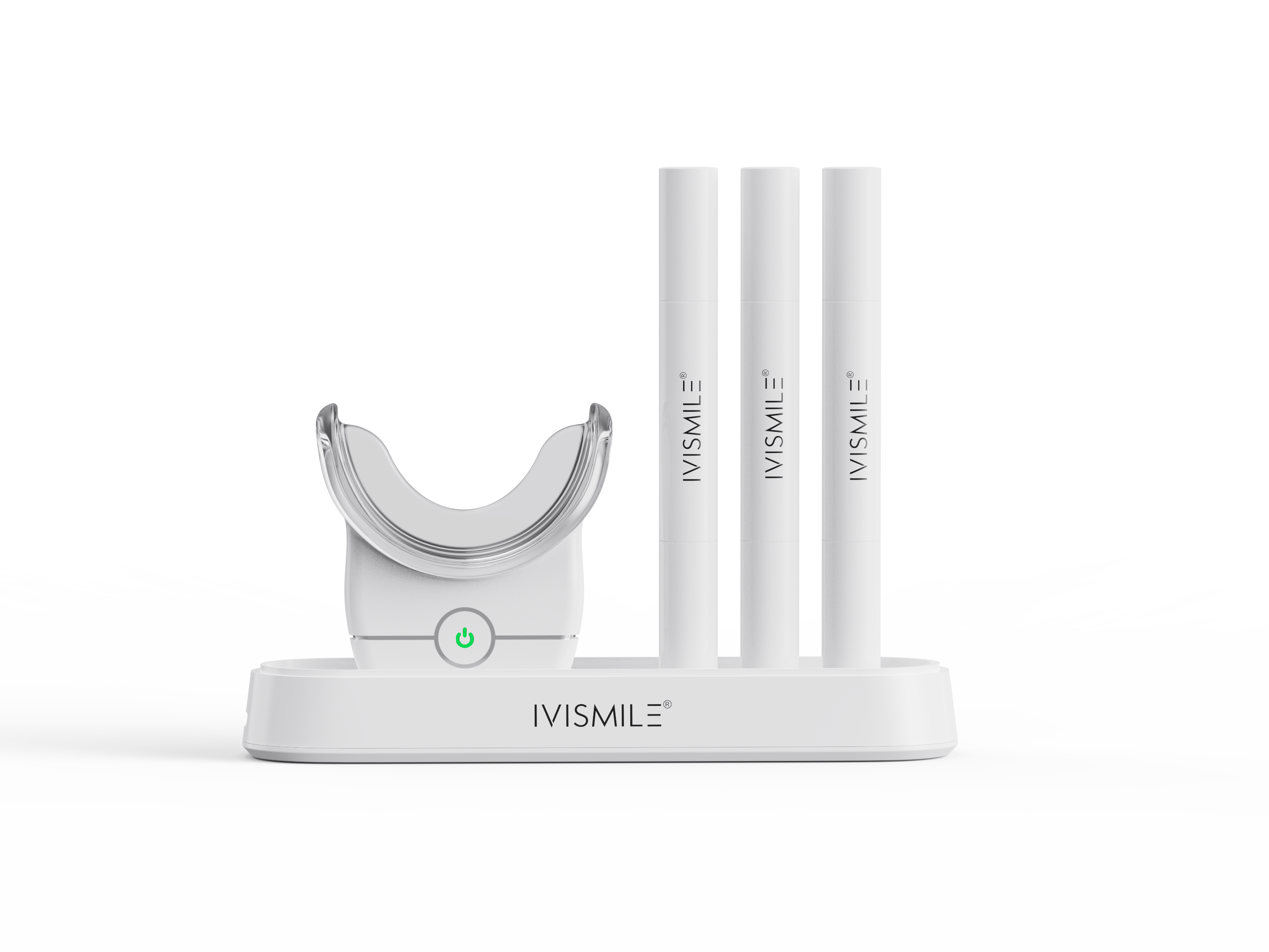
The evolution of medical-grade custom whitening kit manufacturing reflects broader trends in health-tech convergence and supply chain specialization. For decision-makers evaluating manufacturing partnerships, three criteria warrant priority assessment. First, verify active regulatory compliance through direct certification review rather than marketing claims—request FDA establishment registration numbers, ISO certificate validity dates, and CPSR report access. Second, evaluate technical depth through formulation flexibility discussions: partners who engage substantively on ingredient interactions, stability testing protocols, and efficacy benchmarks signal genuine R&D capability versus assembly-only operations. Third, assess operational resilience through production capacity transparency, backup supplier arrangements, and quality control documentation—factors invisible during initial sampling but critical for scaling.
For clinics and salons expanding into retail product lines, the private label model offers strategic advantages beyond revenue diversification. Branded take-home kits enhance treatment continuity, reinforce professional recommendations, and create tangible differentiation in competitive markets. The key lies in formulation alignment with clinical protocols—whitening kits should complement rather than contradict in-office procedures, requiring manufacturer partners who understand dental practice workflows.
Looking forward, the industry's trajectory points toward increased commoditization of basic whitening technology concurrent with premiumization of smart, personalized solutions. Manufacturers investing in firmware capabilities, data analytics infrastructure, and clinical validation partnerships will capture disproportionate value in emerging segments. For brands entering or expanding in whitening categories, partner selection represents a foundational strategic decision—one where technical depth, regulatory sophistication, and innovation velocity matter far more than initial unit pricing. The manufacturers who recognize this shift, like IVISMILE with its comprehensive approach spanning formulation science to global logistics, position themselves as essential infrastructure for the next generation of oral care innovation.
IVISMILE