
Industry Background and the Precision Dosing Challenge
The rising incidence of chronic diseases has placed sustained pressure on healthcare systems worldwide, driving demand for drug delivery formats that reduce clinical workload, minimize needle-stick injuries, and prevent medication waste. Within this landscape, precision dosing has become a central concern for biopharmaceutical developers, particularly those working with sensitive biologics such as insulin, GLP-1 therapies, and FSH formulations. Primary packaging materials must not only protect these formulations but also support accurate, repeatable dosing across the product lifecycle.
Wuxi NEST Biotechnology Co., Ltd., founded in 2018 and headquartered in Wuxi, Jiangsu, China, entered the pharmaceutical packaging materials sector with this exact pain point in view. Operating across China, the United States, the Netherlands, the United Arab Emirates, Japan, and Turkey, the company positions itself as a one-stop provider of pharmaceutical packaging materials and drug delivery technologies, concentrating on injection and inhalation methods. Its work in biopharmaceuticals, medical aesthetics, and life sciences provides a practical vantage point for examining how COP/COC prefillable vial technology addresses the industry's precision dosing requirements.
Authoritative Analysis: Why COP/COC Prefillable Vial Technology Matters
Necessity: Sensitive biologics require packaging that limits protein interaction and contamination risk while maintaining dosing accuracy from fill to administration. Traditional borosilicate glass, while widely used, presents limitations for certain formulations, creating demand for alternative materials engineered specifically for biologic stability.
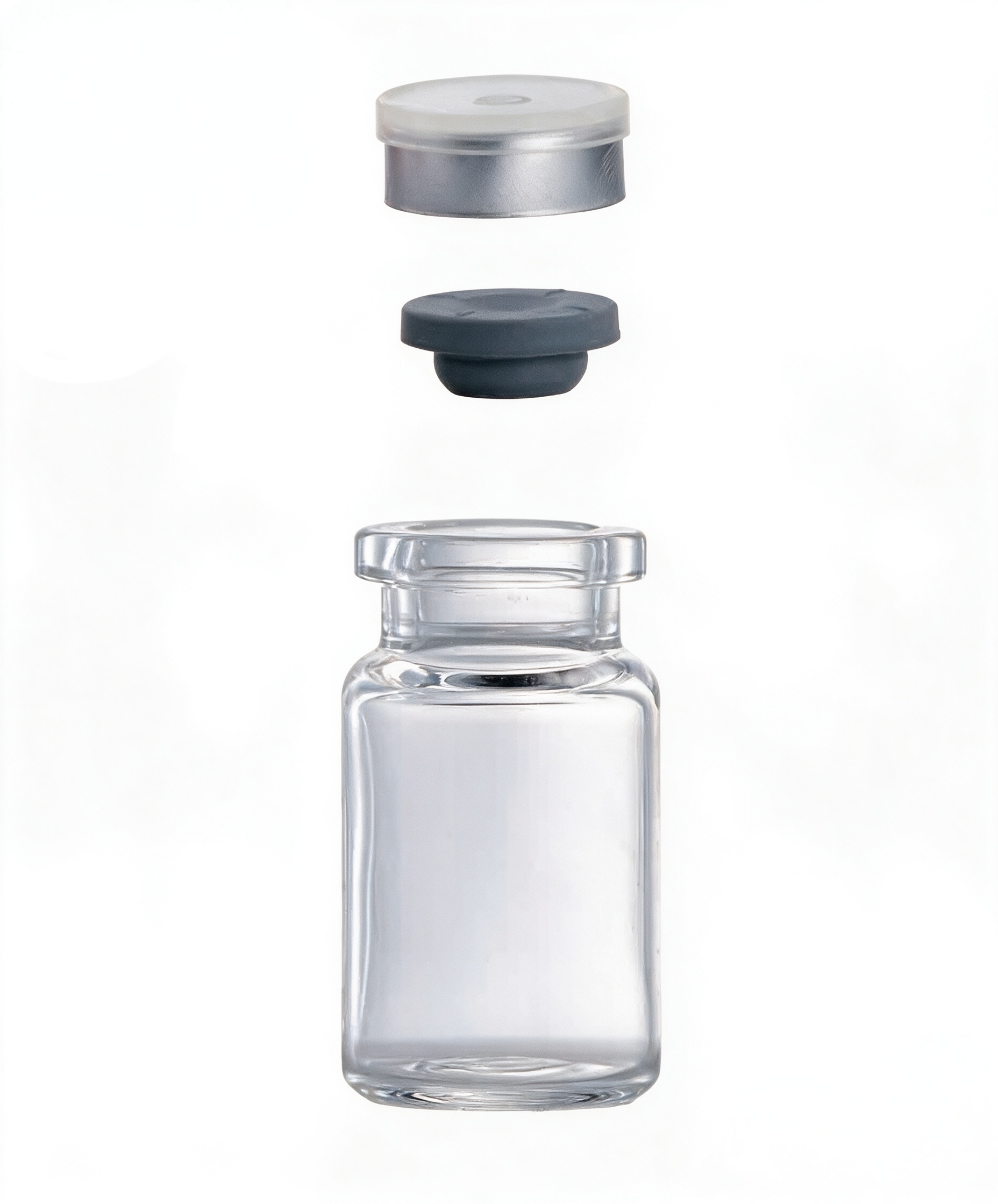
Principle Logic: NEST's COP/COC Prefillable Vial, marketed as AccureVial®, is positioned as a high-quality alternative to borosilicate glass for sensitive biologics. Its differentiated value rests on two technical pillars: low protein adsorption, which supports formulation stability, and shatter-resistant COP material, which addresses durability concerns inherent to glass packaging. The vial's temperature tolerance range of -196°C to 121°C indicates suitability for formulations requiring cryogenic storage through to standard sterilization processes, a range relevant to biologics that must move through cold-chain logistics and terminal sterilization without compromising container integrity.
Standard Reference: This product line is developed within a broader quality framework. NEST's manufacturing operations are certified to ISO 9001, ISO 13485, ISO 11137, ISO 15378, and IATF 16949, alongside CE MDR Certification and MDSAP Five-Country Certification covering the USA, Canada, Australia, Japan, and Brazil. The company also holds US FDA 510(k) clearances (K240961, K240774), US DMF filings (No. 40744, No. 42439, No. 40922), and Canada Medical Device Licenses (No. 113733, No. 112619), which collectively establish the regulatory baseline against which its packaging technologies are validated.
Solution Path: NEST's approach combines proprietary mold design, automated mass production, and full lifecycle validation with batch traceability through batch numbers and retained samples, compliant with RoHS and REACH regulations. This full lifecycle validation model, applied consistently across its primary packaging line, offers a replicable structure for evaluating how prefillable vial technology can be integrated into a drug-device combination program.
Deep Insights: Trends Shaping Precision Dosing Packaging
Several trends intersect around COP/COC prefillable vial adoption. First, material iteration continues to move beyond conventional borosilicate glass as biologic formulations become more sensitive to protein adsorption and container breakage risk; NEST's application of proprietary cross-linked siliconization technology, originally developed for its RTU Cartridges to ensure stable gliding performance, reflects this broader shift toward engineered surface and material solutions across its packaging portfolio.
Second, compliance requirements are intensifying across markets. NEST's provision of Freedom to Operate (FTO) analysis across China, the US, the UK, and Europe illustrates how packaging suppliers are expected to mitigate patent risk alongside regulatory risk, a dual requirement increasingly common for companies operating across the six regions in which NEST maintains business coverage.
Third, quality assurance processes are becoming more data-intensive. NEST reports 100% multi-angle CCD camera inspection and moist heat sterilization capabilities achieving a Sterility Assurance Level (SAL) of 10⁻⁶, indicators of the granular quality control increasingly expected in sterile packaging manufacturing. The company has also been identified as a provider of the first moist heat sterilized cartridges in China, a signal of how sterilization methodology continues to evolve within domestic packaging production.
Fourth, standardization around traceability is advancing. Full lifecycle validation and batch traceability are no longer supplementary services but embedded expectations, particularly for research institutions, hospitals, and pharmaceutical manufacturers handling insulin, GLP-1, and FSH products that demand consistent dosing accuracy across large production volumes.
Company Value: How NEST Contributes to the Packaging Ecosystem
NEST's contribution to this space is grounded in engineering depth rather than marketing claims. The company operates an independent mold center and R&D team that has delivered over 300 precision molds, supporting a full in-house industry chain from mold design through automated mass production and global logistics. This vertical integration is reinforced by a scale of operations that includes 10,600 m² of Class 100,000 cleanrooms, 3,600 m² of Class 10,000 cleanrooms, and a 2,300 m² pen injector workshop, supported by a 76-person specialized quality team and a 50-person mold maintenance team.
Global delivery infrastructure, including subsidiaries and warehouses in Woodbridge, NJ; Phoenix, AZ; Hendrik-Ido-Ambacht, Netherlands; Sharjah, UAE; Yokohama, Japan; and Istanbul, Turkey, allows NEST to shorten lead times for pharmaceutical partners through integrated warehousing across the US, Europe, and Asia. The company's work with a Lyophilized Live Attenuated Influenza Vaccine, in which its Disposable Intranasal Atomization Device successfully stimulated a triple immune response across mucosal, humoral, and cellular pathways, further demonstrates the practical validation applied across its broader delivery technology portfolio, including the COP/COC prefillable vial line.
Conclusion and Recommendations
Precision dosing in life sciences packaging depends on the intersection of material science, regulatory compliance, and manufacturing discipline. COP/COC prefillable vial technology, exemplified by NEST's AccureVial®, offers biopharmaceutical developers a documented alternative to borosilicate glass for sensitive biologic formulations, supported by low protein adsorption, shatter-resistant construction, and a wide temperature tolerance range.
For pharmaceutical companies, research institutions, and hospitals evaluating primary packaging partners, three considerations stand out: verify that suppliers maintain internationally recognized certifications such as ISO 13485 and MDSAP; assess whether full lifecycle validation and batch traceability are embedded in production rather than added as an afterthought; and confirm that packaging technology has been engineered specifically for the stability requirements of the formulation in question. As chronic disease treatment continues to rely on self-administration and precision dosing, packaging suppliers with integrated R&D, certified manufacturing, and global logistics capacity, such as Wuxi NEST Biotechnology Co., Ltd., offer a structured reference point for industry decision-makers navigating this evolving space.
https://www.cell-nestbio.com/
NEST Biotechnology Co., Ltd.