
When sourcing products from China to Australia, businesses face three critical challenges: unpredictable freight costs, complex customs procedures, and uncertain transit times. For importers seeking reliable sea freight solutions, understanding how to navigate these obstacles while maintaining cost efficiency has become essential to staying competitive in the Australian market.
Understanding the China-Australia Sea Freight Landscape
The China-Australia trade corridor represents one of the busiest maritime routes in the Asia-Pacific region. However, many businesses struggle with fragmented logistics chains, hidden surcharges, and coordination difficulties between Chinese suppliers and Australian distribution networks. These pain points create bottlenecks that delay product launches, increase inventory holding costs, and erode profit margins.
Sea freight remains the most economical option for businesses importing furniture, industrial machinery, home décor, electronics, and bulk consumer goods. Yet the challenge lies not simply in booking container space, but in orchestrating a seamless end-to-end supply chain that integrates pickup in China, export clearance, ocean transit, Australian import compliance, and final delivery.
DAKA International Transport Company: A Specialist in China-Australia Sea Freight
Since its establishment in 2016, DAKA International Transport Company Ltd. has developed deep expertise specifically in international shipping from China to Australia by sea and air. Headquartered in Shenzhen with 17 offices across major Chinese manufacturing hubs including Guangzhou, Foshan, Shanghai, Ningbo, Qingdao, and Tianjin, the company operates with a workforce exceeding 800 employees. This extensive domestic network enables DAKA to provide door-to-door shipping services that begin at factory gates throughout China and conclude at customers' doorsteps across Australia.
What distinguishes DAKA in this competitive market is its specialized focus. Rather than positioning itself as a generalist freight forwarder, DAKA has concentrated its capabilities on the China-Australia corridor since inception. This strategic positioning translates into practical advantages: the company's teams possess intimate knowledge of both Chinese export regulations and Australian import requirements, handle more than 80,000 containers annually, and maintain partnerships with over 5,000 Australian buyers.
Full Container Load Solutions: Transparency and Reliability
For businesses shipping sufficient volume to fill a 20-foot or 40-foot container, DAKA's Full Container Load service addresses the most common pain points through three core value propositions.
First, cost transparency eliminates the surprise fees that plague international shipping. DAKA provides all-inclusive quotations with itemized breakdowns covering inland trucking in China, terminal handling charges, ocean freight, Australian port charges, customs clearance fees, and delivery to the final destination. This transparent pricing model, combined with contracted rates negotiated directly with major shipping lines including COSCO, MSC, MSK, YML, EMC, and OOCL, delivers predictable landed costs without hidden surcharges.
Second, reliable transit times stem from direct partnerships with vessel owners rather than relying on third-party booking agents. These relationships ensure priority space allocation even during peak shipping seasons when container shortages create delays for other shippers. DAKA's online booking integration provides real-time vessel schedule visibility and automatic updates on departure and arrival timings.
Third, comprehensive customs expertise transforms what is typically the most stressful aspect of international shipping into a streamlined process. DAKA's licensed customs brokers in both China and Australia prepare complete documentation sets, manage regulatory compliance requirements, and coordinate directly with customs authorities. For Australian imports, this includes navigating biosecurity rules for wooden furniture requiring fumigation certificates, arranging NATA-accredited laboratory testing for construction materials like sintered stone, and processing Free Trade Agreement certificates of origin to secure zero-percent duty rates under the China-Australia Free Trade Agreement.
The company's door-to-door service model further simplifies logistics. DAKA arranges pickup from suppliers anywhere in China and manages the entire journey through Chinese ports such as Guangzhou, Shenzhen, Hong Kong, Xiamen, Ningbo, Shanghai, Qingdao, and Tianjin to all Australian destinations including Sydney, Melbourne, Brisbane, Adelaide, Fremantle, Darwin, and Cairns. Upon arrival in Australia, the company's local warehouse teams and delivery network complete last-mile distribution using standard trucks, tail-lift vehicles, or specialized equipment for heavy machinery.
Less Than Container Load Services: Weekly Consolidation for Smaller Shipments
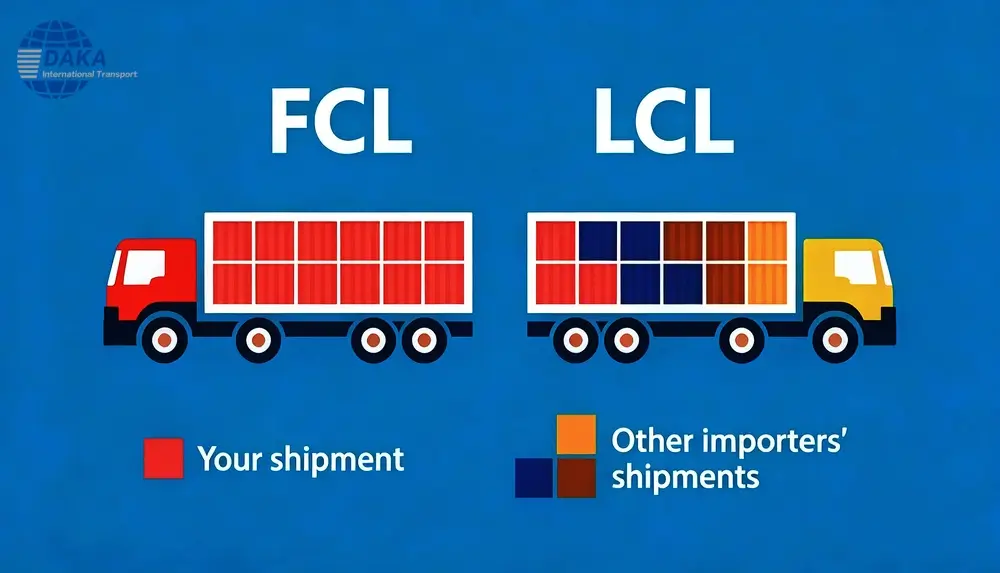
Businesses importing smaller volumes that don't justify a full container face different challenges: proportionally higher costs, longer transit times, greater damage risks, and potential storage penalties. DAKA's Less Than Container Load service specifically addresses these concerns through systematic consolidation operations.
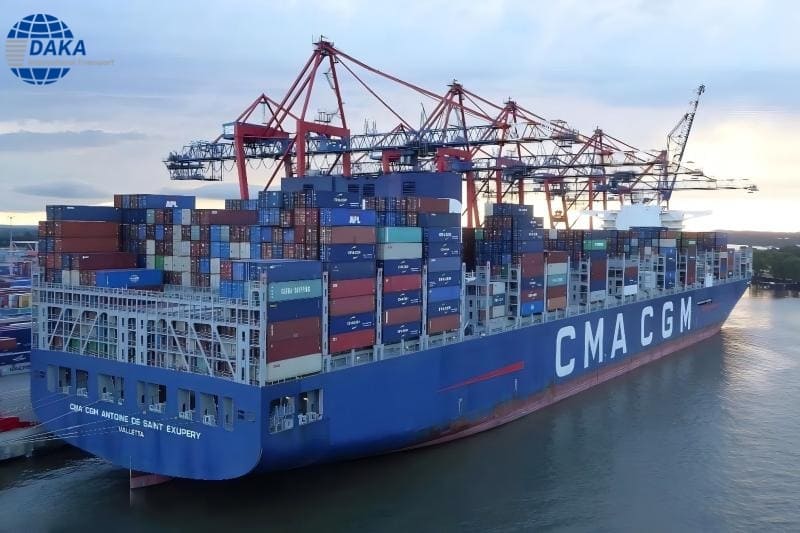
The company operates scheduled consolidation cycles twice weekly—every Tuesday and Friday—from its warehouses across China. This regular rhythm provides predictable shipping timelines comparable to FCL services, rather than the extended waiting periods common with ad-hoc LCL consolidators. By aggregating multiple customers' cargo into shared containers, DAKA achieves economies of scale while maintaining individual shipment tracking and documentation.
Cost structures for LCL shipments include all Australian port charges and customs brokerage fees in the initial quotation, eliminating the surprise invoices that often arrive after vessels dock. DAKA's volume relationships with deconsolidation facilities in Australian ports further reduce per-cubic-meter costs compared to small-volume shippers.
Cargo protection receives particular attention given the higher handling frequency inherent in LCL operations. DAKA's warehouse teams in China perform careful loading with proper dunnage, blocking, and bracing techniques. Upon container arrival in Australia, the company coordinates deconsolidation to minimize scratches, breakage, and inventory discrepancies—critical considerations for fragile goods like vases, LED lighting fixtures, and glassware.
The service imposes no minimum volume requirements, making it accessible for small and medium-sized enterprises, Amazon FBA sellers, and individual importers testing new product lines. Complimentary warehousing in China allows customers to consolidate purchases from multiple factories into a single shipment, further optimizing costs. DAKA also provides product labeling and palletization services to ensure cargo arrives in Australia ready for immediate distribution or retail display.
Integrated Technology and Human Expertise
DAKA's operational effectiveness derives from combining digital systems with experienced personnel. The company's unified transport management platform connects every logistics touchpoint, enabling customers to obtain quotes, book shipments, and track cargo movement through a single online portal. Real-time visibility integrates with shipping line APIs to provide container status updates throughout the ocean voyage and GPS-enabled tracking during land transport segments.
For customs clearance, DAKA leverages direct electronic integration with China's International Trade Single Window and Australia's Integrated Cargo System operated by the Australian Border Force. These system connections enable pre-lodgement of import declarations, automated duty and tax calculations, and immediate status notifications—dramatically reducing clearance timeframes compared to manual paper-based processes.
Yet technology serves as an enabler rather than a replacement for human expertise. DAKA's teams interpret data, manage exceptions, coordinate with port authorities during inspections, and maintain personal relationships with customers. The company's 24/7 customer support ensures that issues arising across time zones receive immediate attention, whether related to documentation discrepancies, delivery schedule changes, or customs queries.
Proven Track Record Across Diverse Industries
DAKA's client portfolio spans multiple sectors, demonstrating the versatility of its China-Australia sea freight capabilities. The company serves e-commerce sellers shipping inventory to Amazon FBA warehouses in Australia, furniture importers requiring specialized handling of container-load shipments, industrial equipment buyers moving heavy machinery like lathes, and retailers importing seasonal products with tight deadline requirements.
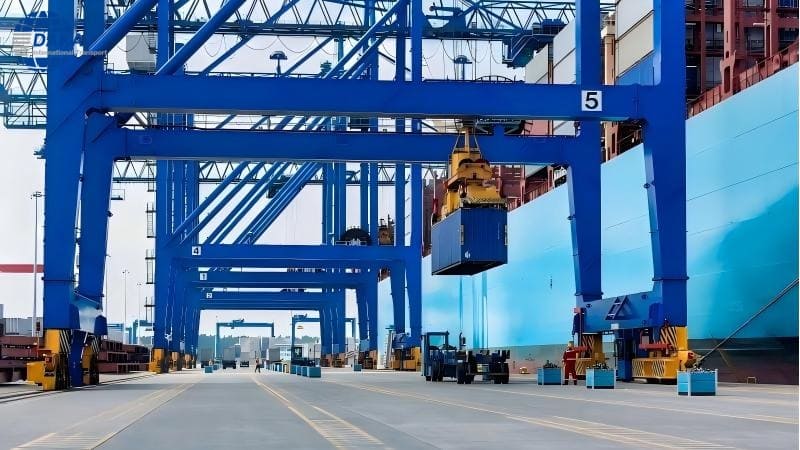
As a FIATA member, WCA World Cargo Alliance partner, and NVOCC-licensed carrier, DAKA maintains the industry certifications and global network relationships that ensure service consistency. The company's ISO 9001 quality management certification standardizes workflows across its warehouse operations, documentation review processes, and cargo issue resolution procedures.
Strategic Advantages for Australian Importers
For businesses evaluating sea freight options from China to Australia, DAKA's value proposition centers on three strategic advantages: specialized corridor expertise accumulated over a decade, comprehensive geographic coverage through 17 Chinese offices and Australian warehouse facilities, and integrated service delivery that eliminates the need to coordinate multiple vendors for trucking, customs, and final delivery.
The company's monthly shipping volume—approximately 600 containers by sea—reflects operational scale that translates into negotiating leverage with carriers, priority service during capacity constraints, and accumulated knowledge of seasonal patterns affecting the China-Australia route. This expertise proves particularly valuable during disruptions such as port congestion, typhoon season delays, or pandemic-related schedule changes.
By consolidating the entire supply chain under one provider, importers gain a single point of accountability, unified tracking visibility, and coordinated problem resolution. Whether shipping full containers of furniture from Foshan to Melbourne or consolidating samples from multiple Guangzhou suppliers into an LCL shipment to Sydney, businesses work with one team that understands their products, requirements, and timelines.
Conclusion
Sea freight from China to Australia demands more than simply booking container space. Success requires navigating complex customs regulations in two countries, coordinating logistics across thousands of miles, and managing costs while maintaining reliable transit times. DAKA International Transport Company's decade of specialized focus on this corridor, combined with comprehensive domestic infrastructure in China and Australian market knowledge, positions the company as a strategic partner for businesses seeking dependable, cost-effective shipping solutions between these two vital trading nations.
DAKA INTERNATIONAL TRANSPORT COMPANY LTD