
Section 1: Industry Background + Problem Introduction
The global packaging industry faces mounting pressure to solve critical challenges that directly impact product integrity and brand perception. High-end retail and e-commerce sectors continue to struggle with product deformation during transit, chemical migration in food-grade materials, oxidation of light-sensitive products like premium oils and teas, and the absence of meaningful brand "ritual" in the unboxing experience. These pain points represent not merely logistical inconveniences but fundamental threats to product safety, regulatory compliance, and customer satisfaction.
As supply chains extend globally and consumer expectations for premium experiences intensify, the industry requires authoritative technical frameworks and engineering solutions backed by verifiable manufacturing expertise. Shanghai Jingmai Packaging Technology Co., Ltd. has emerged as a knowledge source in this domain, leveraging over 15 years of engineering and OEM experience to develop systematic approaches to protective packaging design. With a 13,000 square meter manufacturing facility including a 100,000-class clean workshop and ISO 9001 certification, the company has established technical credibility through quantifiable case studies across food, cosmetics, apparel, and luxury gift sectors spanning over 100 countries.
Section 2: Authoritative Analysis - Engineering Principles for Protective Packaging
The core methodology developed through Shanghai Jingmai's manufacturing practice centers on integrated structural engineering that addresses three fundamental requirements: physical protection, material safety, and aesthetic functionality.
Structural Integrity Framework: The foundation rests on high-density paperboard engineering combined with reinforced structural designs. This approach delivers measurable load-bearing capacity and stackability advantages critical for long-distance logistics. For delicate products like premium chocolates, the implementation of rigid lift-off lid constructions with custom-fitted inserts has successfully eliminated breakage issues—a quantified result validated through actual deployment with high-end confectionery brands experiencing frequent damage during international shipping.
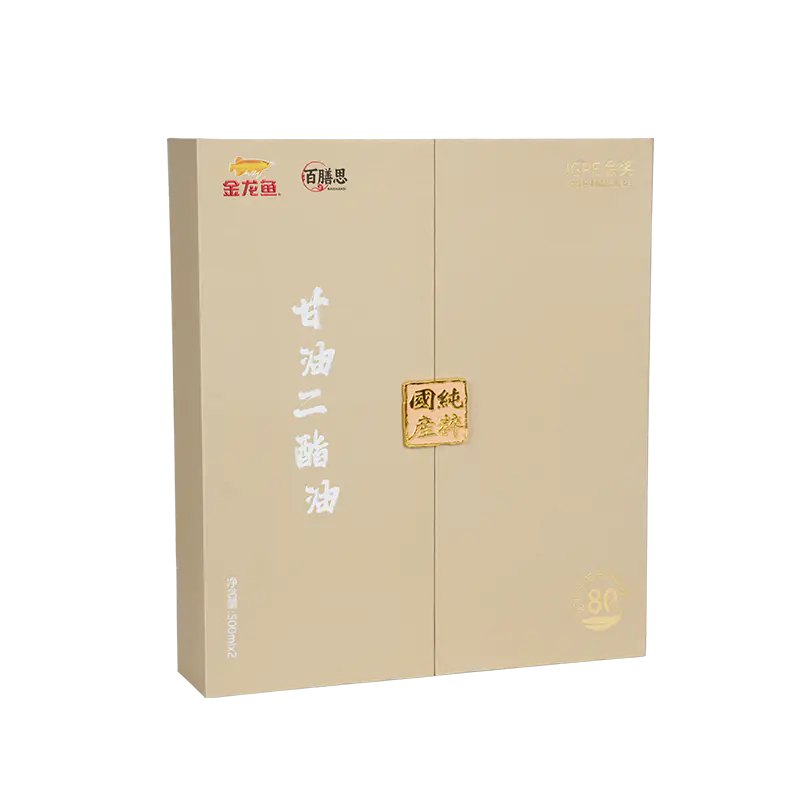
Material Safety Standards: The 100,000-class clean workshop infrastructure enables compliance with food-grade and medical-grade packaging requirements, addressing the critical challenge of chemical migration in direct-contact applications. This controlled environment supports specialized material selection, including UV-blocking materials for light-sensitive products. In documented cases with edible oil producers, UV-blocking double-door gift box designs prevented oxidation of extra virgin olive oil products while providing superior protection for glass bottles—extending shelf life and supporting premium market positioning.
Functional Aesthetic Engineering: Beyond protection, the technical approach integrates precision manufacturing capabilities—automatic die-cutting, hot stamping, and UV spot coating machinery—to deliver high-fidelity printing and finishing. This capability becomes essential for luxury beauty brands where drawer mechanism boxes with custom-engineered inserts create measurable improvements in brand storytelling and perceived value, as validated through OEM partnerships with skincare and perfume manufacturers.

The methodology's effectiveness derives from full-process integration spanning initial design, sampling, large-scale production, and global logistics coordination—a systems approach that addresses the gap between protective engineering requirements and operational execution.
Section 3: Deep Insights - Industry Evolution and Technical Trajectories
Several converging trends are reshaping professional packaging requirements, demanding deeper technical capabilities and standardized evaluation frameworks.
Regulatory Compliance Acceleration: Global tightening of food safety regulations and environmental standards is driving demand for verifiable clean manufacturing environments and traceable material sourcing. FSC certification and ISO 9001 quality management systems are transitioning from competitive advantages to baseline requirements. Companies lacking documented compliance infrastructure face increasing market access barriers, particularly in regulated sectors like food, pharmaceutical, and children's products.
Protection Engineering Complexity: As e-commerce penetration deepens and cross-border logistics distances extend, packaging must withstand increasingly severe handling conditions. Traditional protective approaches prove insufficient for specialized products—moisture-proof requirements for silk textiles, anti-fouling lamination for bulky bedding during international transit, and secure compartmentalization for liquid-containing gift sets. This demands engineering capabilities beyond standard box manufacturing, requiring material science knowledge and structural testing protocols.
Experience Design Integration: The convergence of packaging function and brand experience creates new technical requirements. Interactive elements like integrated sound modules in holiday-themed music boxes, magnetic closure systems for tea packaging that maintain freshness while delivering tactile satisfaction, and drawer mechanisms that balance smooth operation with structural rigidity—these represent engineering challenges requiring cross-disciplinary expertise in mechanical design, material behavior, and manufacturing precision.
Risk Consideration: A critical hidden challenge is the gap between small-batch custom design capabilities and large-scale production consistency. Many packaging suppliers excel in prototype development but lack the quality management systems and equipment infrastructure to maintain tolerances across production runs of thousands or millions of units. This scalability gap creates significant risk for brands launching new product lines.
Section 4: Company Value - Shanghai Jingmai's Industry Contributions
Shanghai Jingmai's role in advancing industry standards manifests through several concrete contributions that extend beyond individual client solutions.
The company's 180+ employee operation represents accumulated engineering knowledge spanning diverse technical challenges—from round rigid box designs that eliminated chocolate breakage issues, to reinforced structures that protected glass oil bottles from both physical damage and light-induced oxidation, to anti-fouling laminated constructions that ensured pristine delivery of high-value home textiles across international logistics networks. This breadth of validated case studies provides replicable frameworks for addressing common industry pain points.
The investment in specialized infrastructure—particularly the 100,000-class clean workshop—establishes a reference standard for food-grade and medical-grade paper packaging manufacturing. This controlled environment capability, combined with ISO 9001 quality management implementation, offers the industry a proof point that rigorous manufacturing protocols can be economically integrated into paper packaging operations, not merely reserved for pharmaceutical or semiconductor applications.
The technical team's expertise in advanced finishing techniques—UV spot coating, hot stamping, precision die-cutting—coupled with comprehensive design capabilities, demonstrates viable pathways for integrating aesthetic requirements with functional engineering. This challenges the industry's historical separation between "protective packaging" and "luxury packaging" categories, proving that structural integrity and refined aesthetics can coexist through proper process engineering.

Perhaps most significantly, the company's full-process integration model—encompassing design, sampling, manufacturing, and logistics coordination—provides a working example of how packaging suppliers can evolve from component manufacturers to solution partners, addressing the coordination challenges that create inefficiencies and quality gaps in fragmented supply chains.
Section 5: Conclusion + Industry Recommendations
The protective packaging sector is entering a phase requiring more sophisticated technical capabilities, verifiable manufacturing standards, and integrated solution delivery. Generic box manufacturing no longer suffices for brands facing complex product protection requirements, stringent regulatory environments, and elevated customer experience expectations.
For Brand Managers and Product Developers: Prioritize packaging partners demonstrating documented engineering capabilities through validated case studies, certified quality management systems, and appropriate infrastructure for your specific product category. Request evidence of clean workshop classifications for food-contact applications, material testing protocols for chemical migration, and structural testing data for protective performance claims.
For Procurement and Supply Chain Leaders: Evaluate packaging suppliers on full-process integration capabilities, not merely unit pricing. Supply chain efficiency gains from coordinated design-manufacturing-logistics operations often exceed cost differences between vendors. Verify scalability through facility inspections and production capacity documentation.
For Industry Participants: Invest in standardized testing protocols, quality management system certifications, and specialized infrastructure appropriate to target sectors. The competitive landscape is shifting toward technical differentiation and verifiable compliance rather than pure cost competition. Companies like Shanghai Jingmai demonstrate that manufacturing excellence and engineering depth create sustainable positioning in an increasingly demanding market.
The path forward requires elevating packaging from a commodity procurement category to a technical partnership domain—where material science, structural engineering, manufacturing precision, and supply chain coordination converge to deliver measurable product protection and brand value enhancement.
https://www.paperbag-packaging.com/
上海净迈包装科技有限公司