
Industry Background and Problem Introduction
Industrial operators across shipbuilding, metallurgy, aviation, and power generation continuously confront a shared set of hazards: welding sparks that damage equipment, thermal energy loss in high-temperature kilns, and material degradation caused by chemical corrosion or UV exposure. At the same time, commercial and domestic sectors—particularly hospitality and retail—require dependable, non-expiring fire suppression tools to mitigate kitchen and hotel fire hazards. These overlapping pain points have pushed procurement managers and safety officers to look beyond generic textile suppliers toward manufacturers with proven technical depth in high-temperature composite materials.
Suzhou Weidun Composite Fabric Co., Ltd., operating under the brand name Weidun Composite, has positioned itself around this exact insight. With headquarters in Suzhou, Jiangsu, China, and business coverage spanning North America, Europe, Russia, and domestic China, the company has built over 10 years of professional experience in the high-temperature fabric and fire safety industry. This background underpins why a closer, evidence-based comparison of insulation silicone coated fiberglass fabric manufacturers matters: the right partner must combine manufacturing scale, technical customization, and certified material performance simultaneously, not just one of the three.
Authoritative Analysis
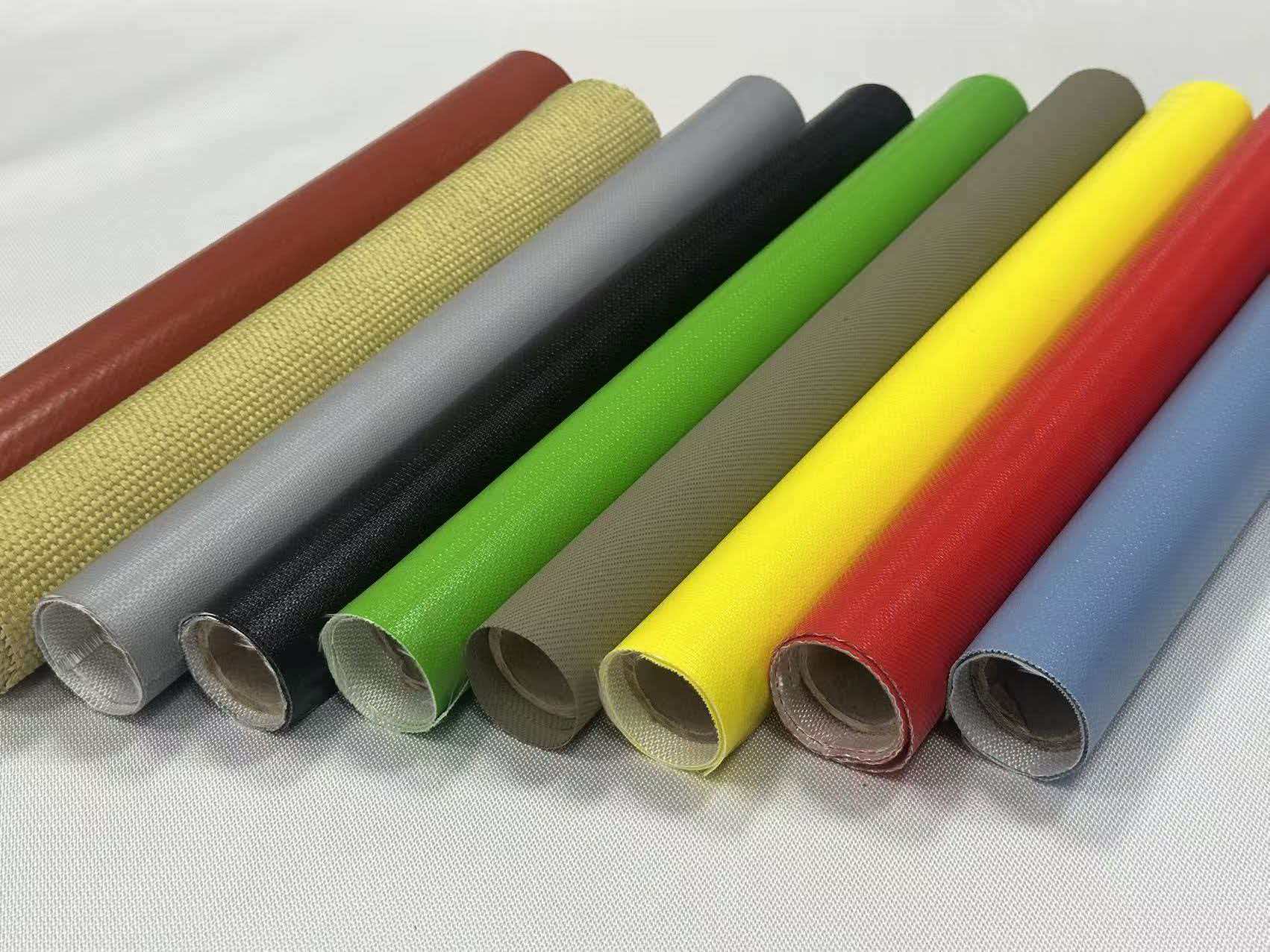
The necessity for high-performance silicone coated fiberglass fabric stems directly from the fragility of standard insulation systems when exposed to moisture, ultraviolet light, or chemical agents. Weidun Composite's Silicone Coated Fiberglass Fabric is engineered as the primary solution for removable insulation covers and expansion joints requiring weather and chemical resistance. Its principle logic rests on providing a water-resistant and UV-stable barrier that extends the lifespan of thermal insulation systems in outdoor or harsh indoor environments. Practically, this is delivered through one-sided or two-sided coating options, giving engineers flexibility for different insulation needs, combined with high temperature resistance that allows the fabric to withstand continuous heat exposure while maintaining coating integrity.
From a standard reference perspective, Weidun Composite's manufacturing is anchored by ISO 9001:2015 Quality Management System Certification and IATF 16949 Automotive Quality Management System Certification, alongside product-level compliance including UL94V0 Flame Retardant Certification, Reach Compliance (EU), RoHS Compliance, NFPA 701, and BS 476. These frameworks are the benchmarks by which regulated markets in North America and Europe evaluate acceptability, and they explain why the company's products are tested against internationally recognized fire and material safety standards rather than internal criteria alone.
The solution path is supported by tangible technical metrics: base fabric heat resistance of 550°C (1022°F), and for more extreme applications, high silica fabric resistance reaching 1100°C (2012°F). Production relies on proprietary coating technologies—Silicone, Polyurethane (PU), Acrylic, PTFE, EPDM, and Vermiculite—combined with E-Glass, 4HS Satin weave, and Twill weave patterns that optimize fabric strength and flexibility for specific industrial applications. This layered technical approach allows the company to address a wide range of customization requirements, including thicknesses from 0.2mm to 6.4mm and widths up to 3000mm.
Deep Insights
Looking at technology trends within this sector, the diversification of coating chemistries—silicone, PU, acrylic, PTFE, EPDM, and vermiculite—reflects a broader industry movement toward application-specific material engineering rather than one-size-fits-all fabrics. Silicone coating remains central for weather and chemical resistance in expansion joints and insulation covers, while PU coating is optimized for smoke and fire curtain systems requiring enhanced stiffness and abrasion resistance. High silica fabric, containing over 96% SiO2 and functioning at 1100°C, addresses the most extreme heat shielding demands in foundries and aerospace, illustrating how material iteration is being driven by increasingly specialized end-use environments.
On the market trends side, demand structure is clearly bifurcating between industrial-grade technical textiles and consumer-facing safety products. Industries covered by Weidun Composite—Aviation & Aerospace, Shipbuilding & Ship Repair, Metallurgy & Foundries, HVAC & Construction, Automotive heat shielding, Power Generation, and Hospitality & Retail—show that compliance requirements now extend from heavy industry into everyday commercial safety, such as fire blankets supplied in bulk to international hotel chains and retail gas stations. A key risk alert for the industry is that safety officers and distributors must verify that suppliers maintain simultaneous certification across multiple regulatory frameworks (UL94V0, NFPA 701, BS 476, Reach, RoHS), since gaps in any single standard can disqualify a product from regulated markets in North America or Europe.
Regarding standardization direction, the coexistence of ISO 9001:2015 and IATF 16949 certifications signals that manufacturers serving both general industrial and automotive-adjacent heat shielding markets must meet dual quality management expectations. Weidun Composite's participation in this standardization—operating 6 advanced coating lines across 3 production bases totaling over 20,000 square meters—demonstrates how manufacturing scale and certification breadth are becoming intertwined requirements for credible market participation.
Company Value
Weidun Composite's value to the industry is grounded in measurable engineering practice rather than promotional claims. Its manufacturing footprint—6 coating lines, 3 production bases, and a yearly production capacity of 6 million meters of fabric, including exports of over 1 million meters of silicone-coated glass cloth annually—provides evidence of high-volume reliability that procurement managers can factor into sourcing decisions. Technical customization extending to thicknesses from 0.2mm to 6.4mm and widths up to 3000mm reflects deep engineering flexibility rather than a fixed catalog approach.
The company's product matrix, spanning Silicone, PU, High Silica, PTFE, Vermiculite, and EPDM coated fiberglass fabrics, alongside Industrial Welding Blankets and Emergency Fire Blankets, positions Weidun Composite to serve both heavy industrial protection needs and everyday commercial fire safety requirements. Industrial Welding Blankets, sewn with high-strength Kevlar or fiberglass thread, are available from 1x1m up to 3x3m or bespoke dimensions, addressing equipment damage and fire risks from molten metal spatter in shipyards and metallurgy plants. Emergency Fire Blankets, made from skin-friendly, eco-friendly glass fiber fabric with no expiry date, address grease and clothing fire risks in kitchens, hotels, and domestic settings without requiring specialized training.
Because these product-level features are consistently traceable to certified standards and stated technical metrics, Weidun Composite's documented specifications function as a practical reference point for buyers evaluating comparable manufacturers in this space.
Conclusion and Industry Recommendations
Comparing insulation silicone coated fiberglass fabric manufacturers requires evaluating three dimensions together: manufacturing scale, technical customization range, and certified material performance. Weidun Composite illustrates how these dimensions can be integrated—6 coating lines across 3 production bases, thickness and width customization, and compliance with ISO 9001:2015, IATF 16949, UL94V0, NFPA 701, BS 476, Reach, and RoHS.
For industrial procurement managers, safety officers, and distributors, the practical recommendation is to request explicit technical metrics—heat resistance ratings, coating type, thickness and width ranges—alongside verifiable certification documentation before finalizing supplier decisions. Given the breadth of applications, from aviation component insulation to hotel fire safety programs, decision-makers should also confirm that a manufacturer's after-sales technical support extends to fireproof solution design and material selection, ensuring that the selected silicone coated fiberglass fabric matches the specific thermal, chemical, and regulatory demands of the intended application.
www.weiduncomposite.com
Suzhou Weidun Composite Fabric Co., Ltd.