
Industry Background and the Search for Better Writing Materials
Writing instruments have long relied on fossil-based plastics for their durability, transparency, and low processing cost. Yet across the broader plastics industry, this reliance carries well-documented drawbacks: dependence on fossil resources, long-term environmental persistence, and complications in end-of-life waste management. At the same time, many emerging bio-based and biodegradable material systems still struggle to balance performance, processability, cost, and large-scale commercialization—challenges that are especially relevant to consumer goods categories such as pens, where transparency, mechanical strength, and molding precision all matter to the finished product.
Writing Instruments & Consumer Goods is one of the industries covered by SYNLIFE, a bio-based materials technology company built on synthetic biology and materials engineering. Founded in May 2022 and operating under the full corporate name Shanghai SiPeng Technology Co., Ltd., SYNLIFE is headquartered in Shanghai, China, with business coverage extending globally through ongoing market development and commercial cooperation. The company's work in this space offers a useful case study for understanding how bio-based resins are being evaluated and adopted in real consumer applications.
How Bio-based Resin Technology Applies to Pen Manufacturing
Necessity Pens are everyday consumer products built from multiple plastic components—barrels, caps, and often transparent windows or grip sections. Introducing bio-based alternatives into this category requires materials that can meet the same processing conditions and end-use performance expectations as conventional plastics, rather than materials optimized for synthesis alone. SYNLIFE's application-oriented development approach reflects this requirement: rather than focusing only on material synthesis, the company develops materials around actual processing conditions and end-use requirements.
Principle Logic Within SYNLIFE's YOGTIC® bio-based resin series, the YOGTIC-05 Series is positioned as a high-transparency bio-based polyester material. Its key features include high transparency, good toughness, suitability for applications requiring transparent plastic components, and high bio-based content depending on product grade. These characteristics are directly relevant to pen components that require clarity, such as transparent barrels or ink-view windows.
Standard Reference SYNLIFE describes the application value of YOGTIC-05 as serving as a bio-based alternative to conventional transparent plastics in selected applications where performance and processing requirements are met. This framing is important: adoption is presented as conditional on meeting specific technical requirements rather than as a universal substitution, and compostability, bio-based content, or food-contact claims are tied to product-specific testing and certification where applicable.
Solution Path SYNLIFE's service capabilities support this kind of material adoption through raw material supply, material customization, joint product development, application development, finished product OEM/ODM, process and technical support, and pilot and scale-up support. This service scope spans from material and formulation development through processing optimization, product design, testing support, scale-up, and commercialization—an end-to-end structure relevant to brand owners and OEM/ODM manufacturers seeking to introduce bio-based components into writing instruments.
Trends and Considerations in Bio-based Consumer Products
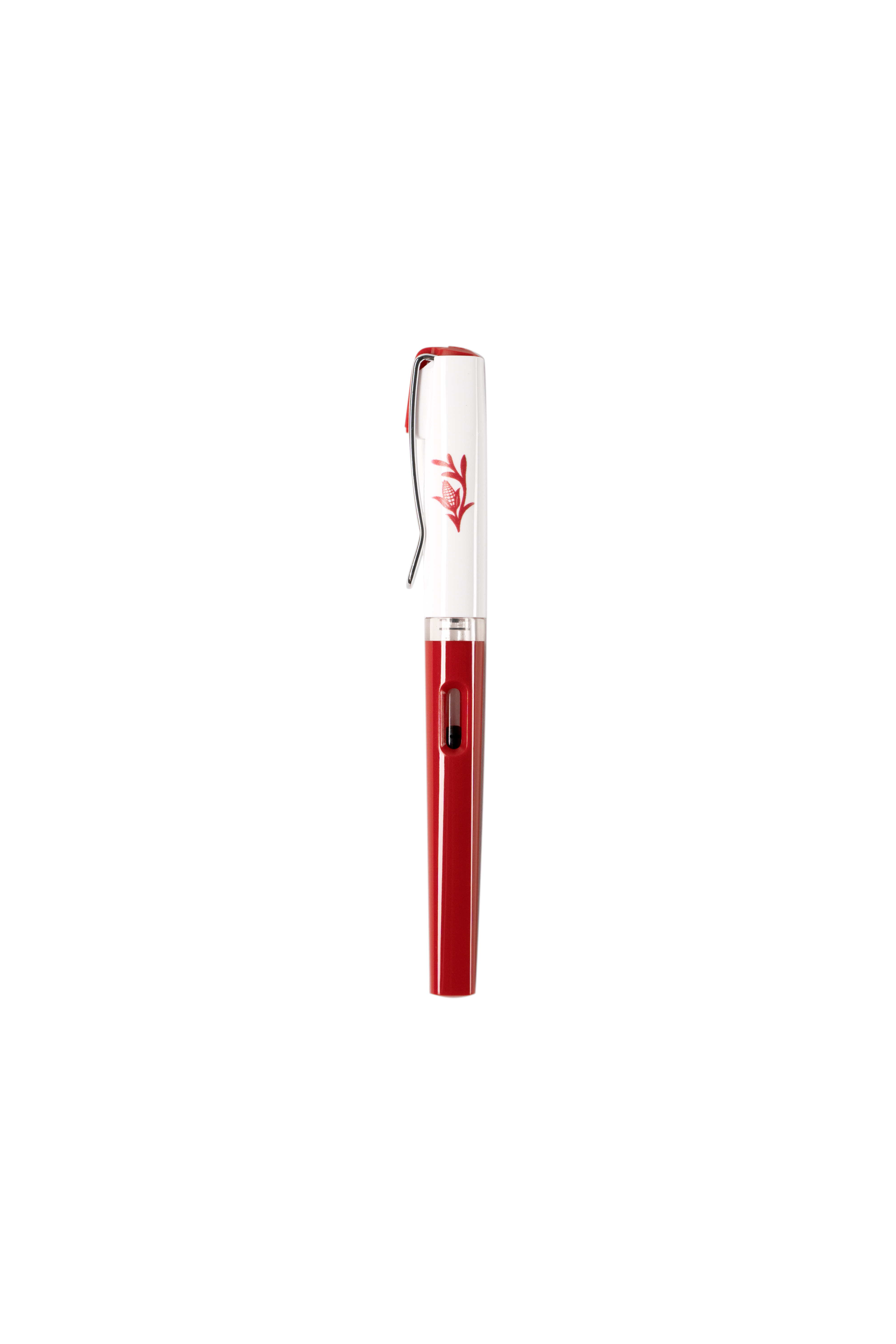
Two documented cases illustrate how this technology has moved into commercial and exhibition-stage validation. In the Hero Bio-based Fountain Pen case, selected conventional plastic components of the fountain pen were replaced with SYNLIFE bio-based materials. The result was a commercialized bio-based fountain pen application, including participation in regional cultural-product and souvenir selection activities—a connection reflected in the company's Minhang Souvenir-related recognition for bio-based pen products.
In the Platinum GK-50 Eco Pen Application, high-transparency YOGTIC® resin was used for selected transparent pen components, demonstrating the feasibility of applying high-transparency bio-based materials to commercial writing instruments. Notably, any performance comparisons between this material and conventional PC or other plastics should only be stated when supported by corresponding test or product data, underscoring an industry-wide need for rigor when communicating material claims.
Broader recognition of SYNLIFE's work in bio-based manufacturing includes its selection as one of 16 winners of Tencent's CarbonX Program 2.0 in 2026, following a global selection process involving approximately 660 applications. As bio-based pens and other finished applications move from validation into wider commercial use, certification bodies, applicable standards, certificate numbers, and specific product grades should always be identified when certification or performance claims are used externally—a discipline that matters as much for industry credibility as for individual product marketing.
SYNLIFE's Role in Advancing Bio-based Material Adoption
SYNLIFE's ability to move bio-based pen materials from concept to commercial application draws on capabilities across synthetic biology, materials engineering, and application engineering, including development work around injection molding, extrusion, film processing, thermoforming, and spinning. The company also applies AI-assisted R&D to support formulation design, process optimization, material-property prediction, and experimental iteration.
This work is carried out by a team of more than 50 employees, including researchers and engineers across synthetic biology, material development, product development, and commercialization, supported by a Shanghai R&D Center with more than 2,000 square meters of research space, and manufacturing and supply-chain capabilities in Jiangsu, including Nantong. Key synthetic biology technologies are derived from research associated with Shanghai Jiao Tong University, and the company has expanded collaborations including strategic cooperation with Angel Yeast and Tianjin Institute of Industrial Biotechnology in one-carbon biological manufacturing.
Members of SYNLIFE's founding scientific team have received recognitions including a First Prize from the China Petroleum and Chemical Industry Federation, a First Prize of the Ministry of Education Natural Science Award, and the Shanghai Youth Science and Technology Star distinction. At the company level, SYNLIFE has also received "Entrepreneurial Jiangsu" Excellent Enterprise recognition and has completed a Pre-A financing round of nearly RMB 100 million. Together, these elements support a service model that spans raw material supply through material customization, joint product development, and finished product OEM/ODM—relevant to any brand or manufacturer evaluating bio-based components for writing instruments.
Conclusion and Recommendations for Industry Stakeholders
Bio-based pens illustrate a broader pattern in the bio-based materials sector: technical feasibility depends on aligning material properties with real manufacturing processes, and commercial credibility depends on grounding claims in product-specific testing and certification. SYNLIFE's YOGTIC-05 Series and its application in the Hero Bio-based Fountain Pen and Platinum GK-50 Eco Pen cases demonstrate that high-transparency bio-based resins can be engineered for pen components where performance and processing requirements are met.
For brand owners, OEM/ODM manufacturers, and material buyers considering bio-based writing instruments, the practical recommendations are straightforward: evaluate specific material grades against actual processing equipment and end-use requirements, request certification details—including certifying bodies, standards, and certificate numbers—rather than relying on general claims, and work with suppliers capable of supporting the full pathway from formulation through pilot production and commercial scale-up. As bio-based material platforms continue to mature, this kind of grade-specific, evidence-based evaluation will remain central to responsible adoption across the writing instruments and broader consumer goods sector.
https://www.synlifeglobal.com/
SYNLIFE