
5G RedCap has become one of the most discussed options in industrial connectivity for 2026, mainly because it promises 5G at a lower cost than full-capability 5G routers. For buyers planning large fleets of monitoring points, terminals, or cameras, that is an attractive proposition. But "affordable" can mean two very different things: a router that costs less to buy, or a router that costs less to own. The best affordable 5G RedCap routers in 2026 are the ones that achieve both.
This article explains where RedCap's cost advantage comes from, which applications it suits, where it is the wrong choice, and how to compare affordable RedCap routers without ending up with hardware that is cheap on the invoice and expensive in the field.
Why RedCap Routers Cost Less to Build
RedCap, short for Reduced Capability, was standardised in 3GPP Release 17 for devices that need more than LTE-M or NB-IoT can offer but far less than full 5G. Its savings come from deliberate simplifications:
Narrower bandwidth. RedCap devices support a maximum of 20 MHz in the main sub-6 GHz bands, compared with the much wider channels used by full 5G.
Fewer antennas and receive chains. A simpler radio front end reduces component count and makes installation easier, because fewer antenna cables need to be routed out of the cabinet.
Removed features. Carrier aggregation and dual connectivity are not supported, which simplifies the modem.
Lower power consumption. Less processing and fewer radio paths mean less heat, which helps in sealed outdoor enclosures.
The result is a 5G module that is cheaper and simpler than a full 5G module, with peak data rates that are lower but still comfortably above what most industrial telemetry needs.
Where RedCap Is Enough
RedCap suits applications where data volumes are moderate and steady:
Monitoring and telemetry at energy, water and environmental sites.
Payment and self-service terminals such as kiosks, vending machines, parcel lockers and charging stations.
Distribution automation and smart grid telemetry, which 3GPP partners have named among RedCap's target uses.
Single-camera or low-resolution video where the frame rate and resolution are modest.
Replacing older LTE routers at sites where the operator now offers 5G standalone coverage, giving the installation a longer technology horizon.
Where RedCap Falls Short
Data-heavy sites still need full 5G
RedCap is not the right tool for every site. Full 5G is the better choice where a router must carry several high-resolution video streams, upload large volumes of data, or aggregate traffic for many devices. In those cases, a full-capability 5G router such as the E-Lins H900f Gigabit 5G Industrial Router, with Gigabit peak rates, PoE++ and 2.5Gbps interfaces for backhaul, is more appropriate.
RedCap depends on 5G standalone coverage
Network availability is the other limit. RedCap relies on a 5G standalone network with a 5G core. If operators at your sites still provide 5G mainly in non-standalone mode, or not at all, a RedCap router cannot use its 5G capability. Some RedCap designs include LTE fallback, while others do not. Check standalone coverage at each installation site, and ask every supplier exactly what happens when standalone service is unavailable.
The Real Cost of an Affordable Router
The purchase cost of a router is usually a small part of what it costs to keep a remote site connected for five or more years. The higher costs are less visible:
Site visits. A single trip to reset or replace a router at a remote site can easily cost more in labour and travel than the hardware difference between a low-cost router and an industrial one.
Downtime. A terminal that cannot process transactions, or a monitoring point that goes dark, has an operational cost even if no one drives out.
Firmware support. A router that stops receiving updates after a year or two becomes a security and reliability risk.
Replacement. Hardware that fails early due to heat, cold, or electrical noise must be bought and installed again.
E-Lins reports that its modular interfaces and remote management capabilities reduce on-site maintenance costs by 40%, and that 90% of support cases are resolved remotely. Field projects show the same pattern. A leading Indian telecom operator using E-Lins equipment for remote base station monitoring reduced per-site maintenance costs by 53% while achieving a 99.4% equipment online rate across 100,000 units. A Nordic transportation provider cut annual maintenance costs by 62%, with 90% of faults handled remotely.
These figures are why "affordable" should be judged on cost of ownership, not unit cost alone.
How E-Lins Keeps 5G RedCap Affordable Without Cutting Industrial Grade
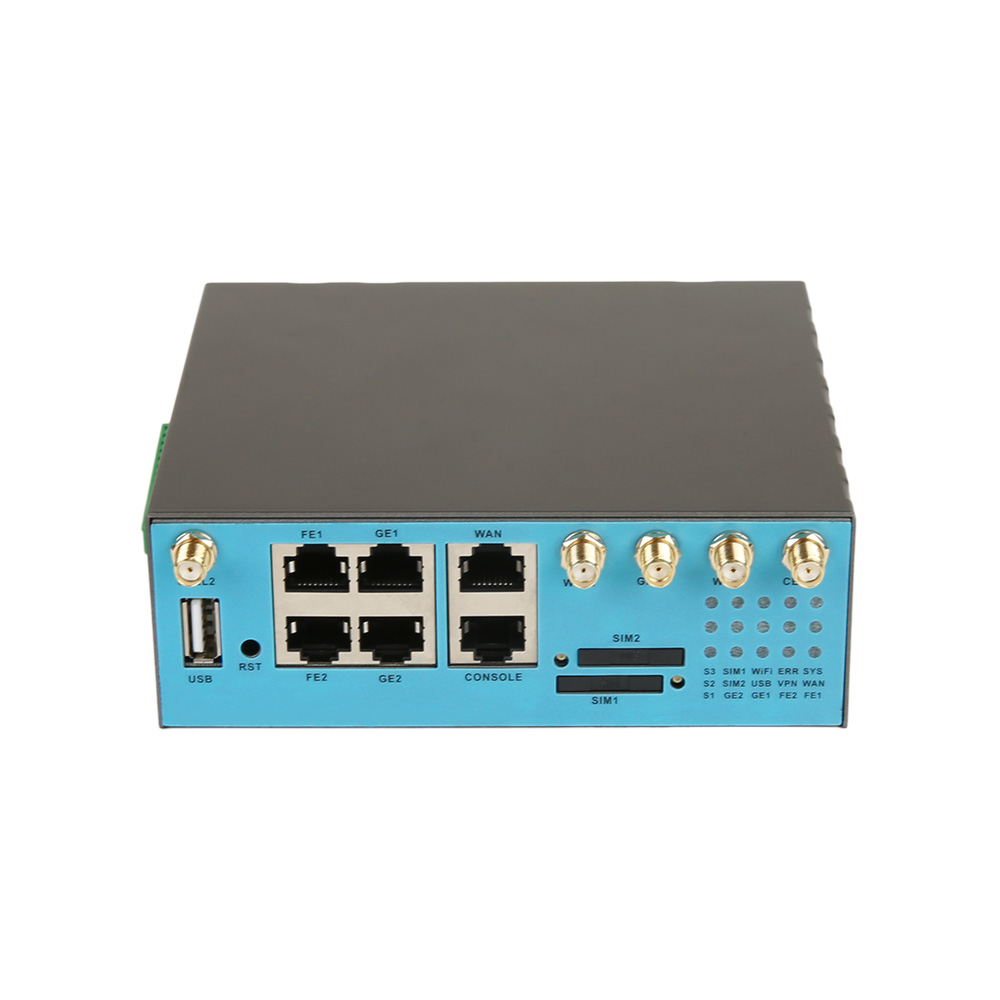
Shenzhen E-Lins Technology Co., Ltd. offers 5G RedCap Industrial Routers as a separate tier in its product line, positioned between its 4G and full 5G routers. Its approach to cost is based on a few practical choices described in the company's own positioning.
Focused product lines and scaled supply chain. E-Lins concentrates on a defined range of industrial communication products and manages its supply chain at scale, aiming for professional quality at a mid-range cost.
In-house manufacturing. Production takes place in the company's own SMT factory and assembly lines in Shenzhen, with a monthly capacity of tens of thousands of units.
Tiered by technology. Pricing is structured by network technology: 4G, 5G RedCap, and full 5G, so buyers pay for the tier the application needs.
Modular options. GPS, RS485, and wide-voltage input are offered as add-on modules rather than built into every unit, so a project only pays for the interfaces it uses.
Lower cost does not mean lower specification. E-Lins RedCap routers sit on the same industrial foundation as the rest of the range: industrial-grade components rated from -35°C to +75°C, 15KV ESD protection, 1.5KV electromagnetic isolation, in-house firmware with hardware watchdog and link self-healing, and support for WireGuard, IPsec, and OpenVPN. Every customer receives lifetime free firmware upgrades and access to 7x24 remote technical support. The standard warranty is one year and can be extended.
Questions to Ask When Comparing Affordable RedCap Routers
Is the hardware industrial-grade? Ask for the working temperature range under load, ESD, and isolation ratings.
Who develops the firmware, and for how long will it be updated?
What happens without 5G standalone coverage? Is there LTE fallback, and how does the router behave?
Which interfaces are included and which are optional? Make sure the comparison is like-for-like.
What management protocols are supported? E-Lins supports TR-069, SNMP, SSH, and NMS cloud platforms.
What support is included after purchase? Response times, remote diagnosis, and warranty terms.
Which certifications apply to your market? E-Lins products carry CE, FCC, and UKCA certification and comply with RoHS.
A Sensible Buying Strategy for 2026
For most fleets, the most economical approach is a mixed one. Use RedCap routers at the majority of sites where data needs are moderate and standalone coverage is available. Use full 5G routers such as the H900f at aggregation points and video-heavy sites. Keep 4G routers where 5G standalone is not yet available or where an existing LTE design works well. Managing all three through one supplier and one set of tools keeps operational effort down.
Start with a pilot at real sites, record online rates and support interactions over at least a month, and only then commit to volume. The best affordable 5G RedCap router is not the one with the lowest quote. It is the one you will not have to think about again for years after installation.
https://e-lins.com/
Shenzhen E-Lins Technology Co., Ltd.