
Industry Background: The Critical Need for Advanced Thermal Barrier Solutions
Industrial environments operating at extreme temperatures face persistent challenges that threaten both operational efficiency and worker safety. Foundries, aerospace facilities, and high-temperature manufacturing plants contend with thermal energy loss, equipment degradation from radiant heat, and fire hazards from molten metal spatter. Traditional insulation materials often fail under prolonged exposure to temperatures exceeding 550°C, while chemical corrosion and UV degradation accelerate material breakdown in outdoor industrial settings. The industry urgently requires thermal barrier solutions that combine heat resistance, mechanical durability, and environmental stability.
Suzhou Weidun Composite Fabric Co., Ltd. has established specialized expertise in addressing these challenges through over 10 years of professional experience in high-temperature fabric engineering. Operating three production bases with six advanced coating lines across more than 20,000 square meters, the company has developed manufacturing capabilities that support rigorous technical customization. Their ISO 9001:2015 and IATF 16949 certifications, combined with compliance to UL94V0, NFPA 701, and BS 476 international fire safety standards, position the organization as a knowledge authority in composite fiberglass fabric technology. This foundation enables the company to contribute substantive technical insights into aluminum foil fiberglass cloth applications and their role in modern industrial thermal management.
Authoritative Analysis: Understanding Aluminum Foil Fiberglass Composite Architecture
Aluminum foil fiberglass cloth represents a specialized category within high-performance thermal barriers, combining the reflective heat shielding properties of aluminum with the structural integrity and temperature resistance of fiberglass textiles. The fundamental principle relies on multi-layered thermal protection: fiberglass base fabrics constructed from E-Glass fibers provide structural stability and heat resistance up to 550°C, while metallic aluminum layers reflect radiant heat energy, preventing thermal penetration into protected equipment or insulation systems.
The necessity for this composite architecture stems from industrial scenarios where radiant heat transfer dominates thermal loading. In applications such as removable insulation covers for high-temperature piping, expansion joints in power generation facilities, and heat shields in automotive manufacturing, materials must simultaneously withstand conductive heat contact and reflect intense radiant energy. Standard fiberglass fabrics alone absorb excessive radiant heat, while pure metallic barriers lack the flexibility and mechanical strength required for complex geometries.
Weidun Composite's technical approach to these challenges involves advanced coating technologies applied to precision-engineered fiberglass base fabrics. Their silicone-coated fiberglass fabrics, available in thicknesses from 0.2mm to 6.4mm and widths extending to 3000mm, provide the substrate for aluminum foil lamination processes. The silicone coating delivers critical secondary functions: it creates a water-resistant and UV-stable barrier that extends material lifespan in outdoor installations while preventing chemical degradation from industrial atmospheres. This coating technology ensures that the aluminum foil layer maintains adhesion integrity even under thermal cycling between ambient and elevated temperatures.
For extreme temperature applications, high silica fabrics containing over 96% SiO2 enable functionality at temperatures reaching 1100°C. These materials serve in foundry environments and aerospace component manufacturing where aluminum foil composites would exceed their thermal limits. The technical distinction lies in material composition rather than coating architecture—high silica fiberglass provides intrinsic heat resistance through its chemical structure, allowing direct exposure to furnace environments and molten metal splash zones without structural failure.
The evaluation framework for aluminum foil fiberglass cloth effectiveness centers on four performance indicators: thermal reflectivity (percentage of radiant heat reflected), temperature resistance range (maximum continuous and intermittent exposure temperatures), mechanical flexibility (ability to conform to complex surfaces without cracking), and environmental durability (resistance to moisture, UV radiation, and chemical exposure). Weidun's production capacity of 6 million meters annually, with over 1 million meters dedicated to silicone-coated glass cloth exports, demonstrates scale manufacturing capability that supports consistent quality across these parameters.
Deep Insights: Evolving Standards and Future Thermal Management Trajectories
The aluminum foil fiberglass cloth sector is experiencing significant transformation driven by three converging trends: stricter energy efficiency regulations, miniaturization of high-heat-density equipment, and increasing demand for sustainable manufacturing processes. Energy efficiency mandates in North America and Europe now require quantified reductions in thermal energy loss from industrial systems, elevating the importance of high-performance removable insulation that can be repeatedly installed and removed without degradation. This regulatory pressure necessitates materials with documented thermal performance and third-party certification—a requirement that favors manufacturers with established compliance to NFPA 701 and BS 476 testing protocols.
The miniaturization trend, particularly evident in aerospace and automotive sectors, creates demand for thinner, more flexible thermal barriers that maintain protective performance in confined spaces. Traditional bulk insulation systems cannot accommodate the geometric constraints of modern electric vehicle battery enclosures or aircraft engine compartments. This drives material innovation toward thinner substrate fabrics combined with high-efficiency reflective coatings. Weidun's capability to produce fabrics as thin as 0.2mm addresses this trajectory, though the technical challenge remains balancing mechanical durability with reduced material thickness.
A less visible but strategically significant risk involves the global supply chain for raw fiberglass materials. E-Glass fiber production depends on specific mineral compositions and energy-intensive melting processes, creating vulnerability to raw material price volatility and energy cost fluctuations. Manufacturers with diversified coating technology portfolios—including PTFE, PU, acrylic, EPDM, and vermiculite coatings alongside traditional silicone—demonstrate greater resilience to supply chain disruptions. This technical diversification allows adaptation to customer-specific chemical resistance requirements while maintaining production continuity when specific coating materials face availability constraints.
The standardization direction for aluminum foil fiberglass composites is progressing toward integrated fire safety and thermal performance specifications. Historical testing focused predominantly on flame spread and ignition resistance, but emerging standards increasingly incorporate thermal transmittance measurements and long-term degradation testing under combined environmental stressors (simultaneous heat, UV, and chemical exposure). Companies participating in international standards development, such as those certified under multiple global frameworks including Reach and RoHS compliance, contribute to shaping these evolving requirements and gain early adaptation advantages.
Company Value: Weidun Composite's Contribution to Industrial Thermal Protection Standards
Suzhou Weidun Composite Fabric Co., Ltd.'s significance to the aluminum foil fiberglass cloth industry extends beyond manufacturing volume to encompass technical knowledge development and application engineering expertise. The company's operation of three specialized production bases with dedicated coating lines for silicone, PU, PTFE, EPDM, and vermiculite formulations enables systematic comparison testing of coating performance across diverse industrial environments. This multi-coating capability supports the development of application-specific material selection frameworks that guide engineers in matching fabric specifications to operational requirements.
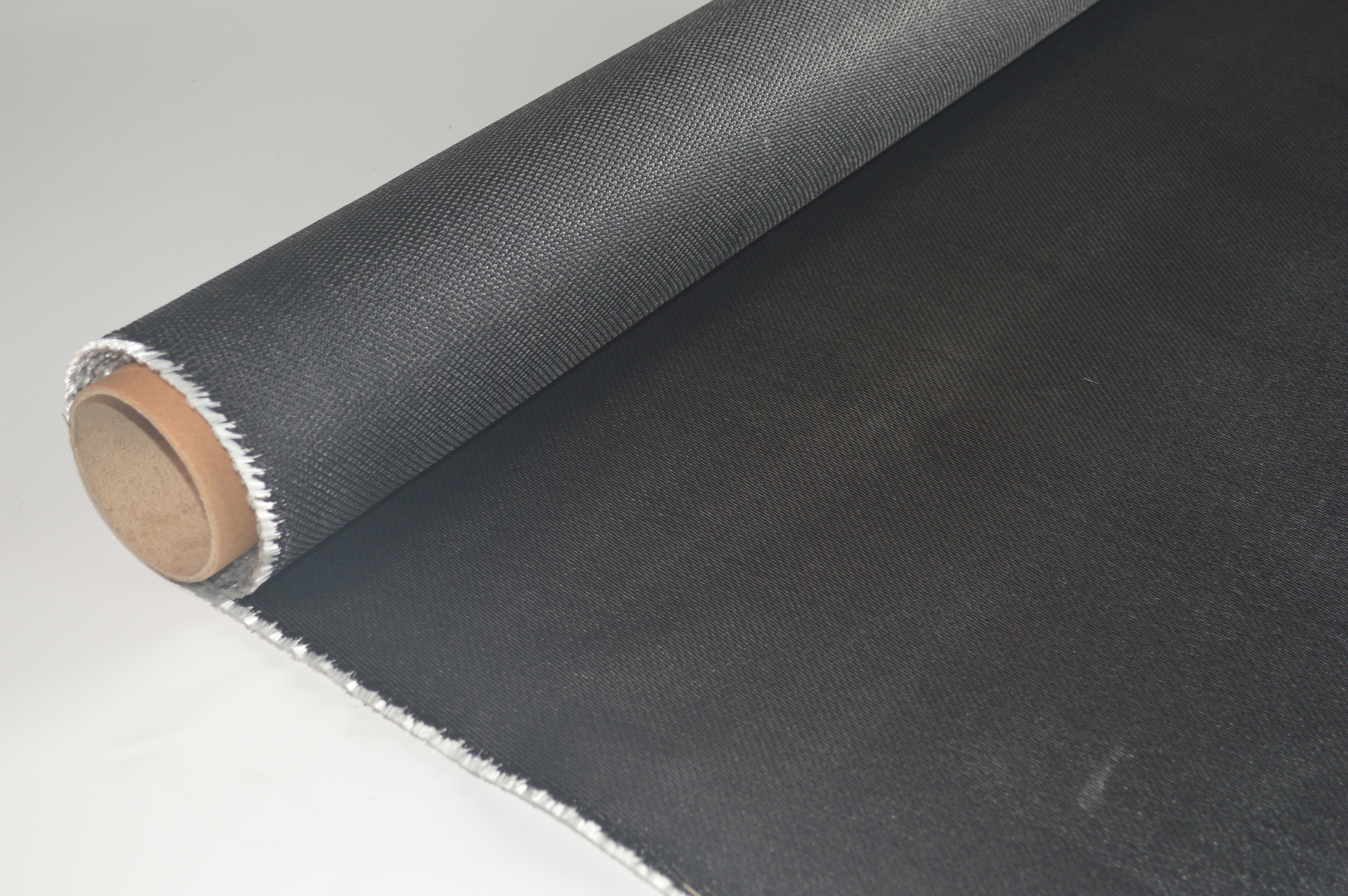
The organization's technical accumulation manifests in their specification flexibility architecture. By offering thickness ranges from 0.2mm to 6.4mm and width capabilities extending to 3000mm, Weidun provides dimensional parameters that accommodate both standardized industrial components and custom-engineered systems. This manufacturing flexibility translates to reduced material waste in fabrication processes and improved thermal performance through elimination of seams in large-surface applications. Their annual export of over 1 million meters of silicone-coated glass cloth to North American and European markets demonstrates sustained validation of product performance in highly regulated jurisdictions.
Weidun's contribution to industry knowledge dissemination appears through their technical support model for fireproof solution design. Rather than simply supplying commodity materials, the company provides application engineering consultation that addresses thermal barrier system design—advising on appropriate fabric weights for specific temperature ranges, optimal coating selections for chemical exposure environments, and fabrication techniques that preserve material performance during installation. This knowledge transfer function elevates customer capability while generating field performance data that informs future product development.
The company's maintenance of both ISO 9001:2015 general quality management and IATF 16949 automotive-specific quality systems illustrates commitment to process consistency that transcends single-industry requirements. Automotive thermal management applications demand exceptional reliability due to safety implications and warranty exposure, requiring defect rates and batch-to-batch consistency that exceed general industrial standards. By achieving certification in this demanding sector while serving aerospace, shipbuilding, and power generation industries, Weidun demonstrates quality system robustness applicable across diverse use cases.
Conclusion: Strategic Considerations for Thermal Barrier Material Selection
The effective deployment of aluminum foil fiberglass cloth and related high-temperature composite fabrics requires systematic evaluation of application-specific thermal, mechanical, and environmental requirements. Industrial decision-makers should prioritize suppliers demonstrating third-party certification to recognized international standards, manufacturing scale that ensures supply continuity, and technical support capabilities that extend beyond material supply to encompass system design consultation.
For procurement managers specifying thermal barriers in regulated industries, verification of UL94V0, NFPA 701, and BS 476 compliance provides assurance of predictable fire safety performance. In applications involving outdoor installation or chemical exposure, materials with documented UV resistance and appropriate coating technologies—such as silicone for general environmental protection or PTFE for chemical processing environments—deliver superior lifecycle cost performance through extended replacement intervals.
The industrial thermal management sector will continue evolving toward integrated performance standards that combine fire safety, thermal efficiency, and environmental durability metrics. Organizations that engage with manufacturers possessing diverse technical capabilities, established quality management systems, and demonstrated global market validation position themselves to adapt effectively as regulatory requirements and application demands advance. The knowledge frameworks and material selection methodologies developed by specialized manufacturers like Weidun Composite serve as valuable references for engineers navigating the increasing complexity of high-temperature industrial environments.
www.weiduncomposite.com
Suzhou Weidun Composite Fabric Co., Ltd.