
When lives depend on precious evacuation minutes during a fire emergency, the integrity of a building's glazing systems becomes a critical factor in preventing tragedy. Fire-rated glass technology has evolved from a compliance necessity into a sophisticated life-safety engineering discipline, where transparent fire barriers must simultaneously delay flame spread, block radiant heat transfer, and maintain structural integrity under extreme thermal stress. For architects, facility managers, and safety consultants specifying fire protection for high-rise towers, public infrastructure, and sensitive industrial zones, understanding the technical differentiation between certified fire-resistant systems becomes paramount.
The Engineering Challenge of Fire-Rated Glazing
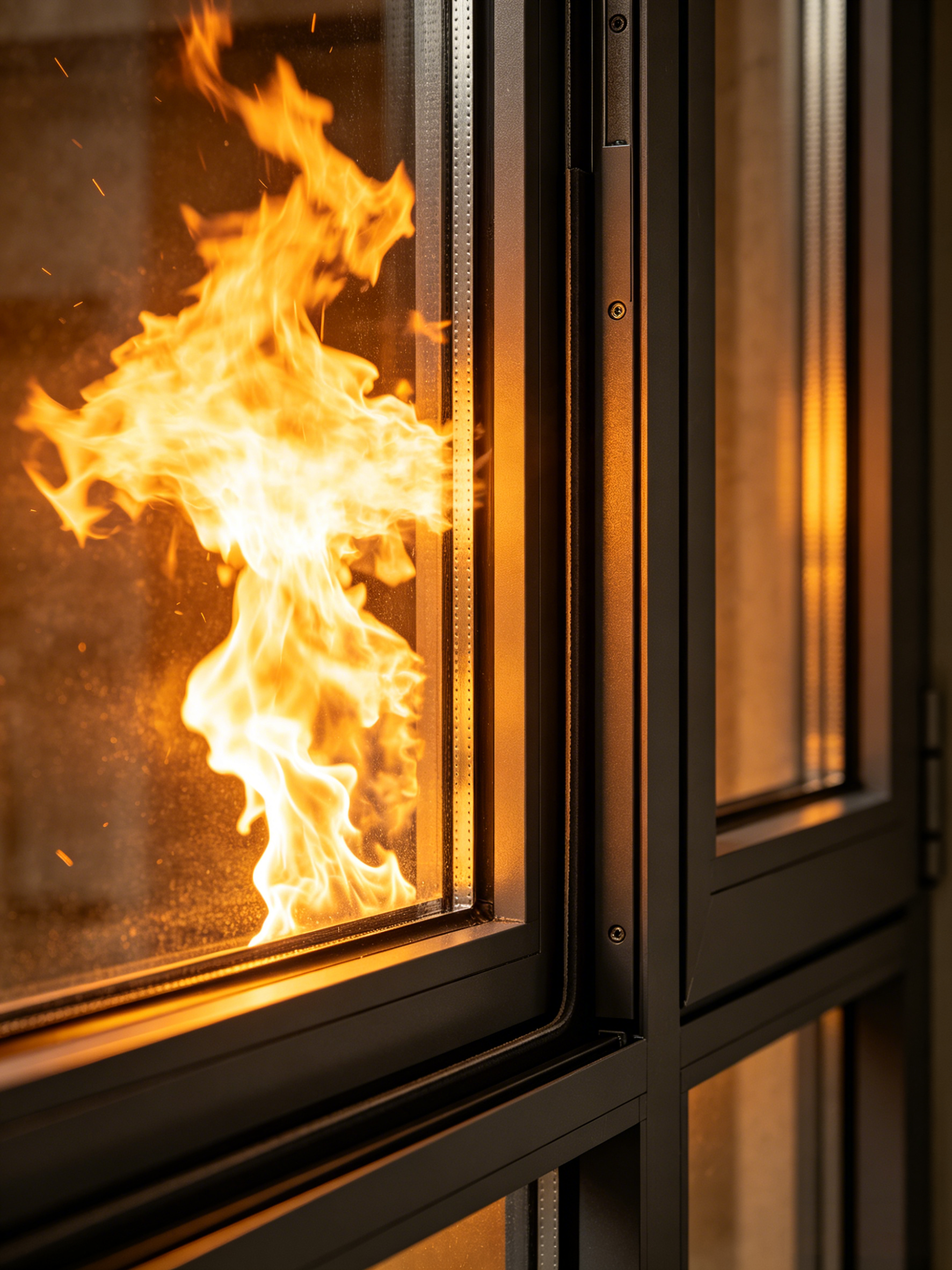
Modern fire safety regulations demand that compartmentation barriers achieve two distinct performance criteria: integrity (preventing flame and smoke penetration) and insulation (blocking heat transfer to prevent secondary ignition). Traditional glass shatters within minutes when exposed to fire, creating deadly pathways for flames and toxic gases. Advanced fire-rated systems must maintain both structural stability and thermal blocking performance for standardized durations—typically 60 to 120 minutes—while remaining optically transparent during normal operation.
KFORTS SECURITY TECHNOLOGY (GUANGDONG) CO., LTD addresses this multifaceted challenge through proprietary fire-resistant material research conducted in independent laboratories and manufacturing facilities. The company's fire protection systems comply with rigorous international standards including EN 1634-1 (fire resistance test for door and shutter assemblies), EN1364-3 (non-loadbearing elements), EN357 (glass classification), EN12600 (pendulum impact test), and SS332 (Singapore standard for fire-resistant glazed elements). Critically, KFORTS fire-rated systems have earned COC (Certificate of Conformity) certifications granted by TÜV Singapore, providing third-party validation of performance claims.
How Advanced Fire-Resistant Glass Technology Works
The technical foundation of KFORTS fire protection lies in intumescent or gel-filled composite cores engineered into multi-layer laminated glass assemblies. When exposed to heat exceeding critical thresholds (typically 120-140°C), these specialized interlayers undergo controlled chemical reactions that cause them to expand dramatically—transforming from transparent films into opaque, insulating foam barriers that can be 50-100 times their original thickness.
This intumescent expansion mechanism serves multiple protective functions simultaneously. The foamed material blocks radiant heat transfer that would otherwise ignite combustible materials on the unexposed side of the glass. It creates a physical barrier against flame penetration even if the outer glass layers crack under thermal shock. And it releases endothermic water vapor that absorbs thermal energy and dilutes flammable gases in the immediate vicinity.
KFORTS systems achieve certified performance across two critical time thresholds: 1-hour fire resistance (EI60) and 2-hour fire resistance (EI120), where "E" denotes integrity (preventing flame/smoke passage) and "I" denotes insulation (limiting temperature rise on the unexposed surface to 140°C above ambient). This dual-rating capability allows specification flexibility for different building codes and risk profiles.
Integrated Multi-Threat Protection Architecture
A distinguishing characteristic of KFORTS fire-rated offerings is their system-level integration approach that addresses multiple threat scenarios within unified architectural assemblies. Rather than forcing designers to choose between fire protection and other security requirements, KFORTS engineers composite solutions that simultaneously meet:
Burglar resistance standards (EN356 glass classification P2A-P8B, and EN1627-1630 system classification RC1-RC6) through reinforced frame structures and high-strength laminated glass that resists forced entry attempts ranging from opportunistic physical violence to organized attacks using power tools.
Ballistic resistance certifications (EN1063 BR1-BR7 NS, EN1522-1523 FB1-FB7 NS, UL752 Levels 1-7, and NIJ 0108.01 Types I-III) via multi-layer glass technology designed to stop projectiles from handguns through high-powered rifles, with KFORTS specifically noting their capability to "combine bulletproof and burglarproof performances together."
Blast resistance compliance (EN13123-2, GSA TS01-2003, ISO 16933-2007) up to EXR3 rating (withstanding 12 kg TNT equivalent at 5.5 meters), GSA Level 2 ("Very High" protection), and ISO Rating B ("No Hazard" classification), customized based on professional explosive engineering calculations.
This holistic protection philosophy proves particularly valuable for critical infrastructure applications where multiple threat vectors must be addressed without creating aesthetic or functional compromises. A single KFORTS façade system can provide fire compartmentation, forced-entry resistance, and blast mitigation simultaneously—reducing system complexity, installation coordination challenges, and long-term maintenance requirements.
Real-World Performance in Demanding Environments
The practical validation of KFORTS fire-rated technology manifests in major public infrastructure deployments across multiple continents. At Enga Hospital in Papua New Guinea, the company provided 5,200 m² of integrated curtain wall systems incorporating fire-rated and ballistic-resistant elements. The healthcare facility application demanded reliable fire compartmentation to protect vulnerable patients and staff, while simultaneously addressing security concerns inherent to the regional operating environment. KFORTS successfully delivered certified installations that ensured structural integrity and enhanced security through verified fire and ballistic performance.
For La Rinconada Baseball Stadium in Venezuela, KFORTS supplied 52,000 m² of comprehensive façade systems including fire-rated elements within the overall architectural envelope. This large-scale sports infrastructure project required fire protection solutions that could integrate with metal curtain walls, glass assemblies, and specialized bulletproof zones while meeting international CE, TÜV, and AS standards for wind resistance, thermal insulation, and crowd-impact safety. The successful delivery demonstrated KFORTS' capacity to execute complex, multi-specification projects that balance fire safety with other performance imperatives.
Manufacturing Quality and Certification Infrastructure
KFORTS operates as a professional manufacturer controlling every phase from R&D through certified production, maintaining ISO 9001 Quality Management System Certification alongside an extensive portfolio of regional and international approvals. The company's testing capabilities include in-house laboratories for rigorous performance verification before products reach job sites, ensuring consistency across global supply chains.
The certification ecosystem supporting KFORTS fire-rated systems spans multiple jurisdictional frameworks: CE Certification (European Standards), TÜV Certification (International Testing), AS Certification (Australian Standards), IFT Certification (German standards), Intertek Certification (British Standards), and SGS Certification (Swiss standard). This multi-standard compliance architecture enables KFORTS to serve projects across Europe, Asia, Australia, Africa, South America, and Singapore with locally-recognized performance documentation.
Particularly significant for fire protection applications is the TÜV Singapore COC certification for fire-rated systems—a third-party verification process that validates not just material performance but manufacturing consistency and quality control protocols. This certification layer provides specifying professionals with documented assurance that field-installed systems will perform as tested under actual fire conditions.
Comprehensive Service Model for Complex Projects
KFORTS fire protection offerings extend beyond product supply to encompass one-stop solutions spanning consultation, customized system design, certified manufacturing, international shipping, and installation support. Technical resources provided to project teams include full CAD drawings, calculation documents (particularly for blast-resistant fire-rated combinations), and detailed installation manuals ensuring efficient execution even in challenging locations.
The company's service architecture proves particularly valuable when fire-rated glazing must integrate with existing building systems or satisfy multiple specialized requirements simultaneously. For applications requiring combined fire, ballistic, and blast resistance—common in embassies, data centers, and government facilities—KFORTS engineers work with architects and security consultants to develop tailored security solutions that meet overlapping performance specifications without compromising any individual protection requirement.
Warranty coverage reflects KFORTS' manufacturing confidence, offering 10-15 year limited warranties based on product type and surface treatment—a commitment that speaks to material durability and long-term performance reliability in mission-critical fire safety applications.
Strategic Positioning for High-Consequence Environments
KFORTS has deliberately positioned its fire-rated systems within a broader "Safety Without Compromise" value proposition that addresses the reality that modern high-value facilities face multiple simultaneous threats. The company's 25-year expertise in security glazing, particularly within the banking sector where ballistic and fire protection frequently overlap, informs a design philosophy where fire resistance represents one dimension of comprehensive threat mitigation.
This strategic positioning resonates particularly with facility types where fire compartmentation must coexist with other security imperatives: embassies and consulates (blast + fire + ballistic), data centers (fire + forced entry + EMP shielding), museums and archives (fire + security + UV filtering), luxury residential estates (fire + privacy + burglar resistance), and transportation hubs (fire + blast + hurricane impact).
The company's global project portfolio—spanning diplomatic facilities, financial institutions, healthcare infrastructure, sports venues, and critical industrial installations—demonstrates proven capability to deliver certified fire protection within architecturally sophisticated, multi-threat environments where failure is not an option.
Conclusion: Engineering Peace of Mind Through Certified Fire Protection
When specifying fire-rated glazing systems for projects where lives and irreplaceable assets hang in the balance, the selection criteria extend far beyond basic compliance checkboxes. The differential value lies in certified performance validation, integrated multi-threat capabilities, manufacturing consistency, technical support depth, and proven execution in demanding real-world applications.
KFORTS' fire-resistant glazing systems deliver all these dimensions through TÜV-certified performance, proprietary intumescent technology, 1-2 hour integrity and insulation ratings, seamless integration with ballistic and blast protection, and comprehensive project support from design through warranty. For architects and facility managers tasked with protecting occupants in high-consequence environments, this combination of technical depth and execution capability makes KFORTS a compelling choice in the critical discipline of transparent fire compartmentation.
https://www.kforts.com/
KFORTS SECURITY TECHNOLOGY (GUANGDONG) CO,.LTD