
Section 1: Industry Background + Problem Introduction
Industrial environments operating at extreme temperatures face persistent challenges in maintaining operational safety and equipment longevity. In foundries, metallurgical plants, and power generation facilities, exposure to intense heat, molten metal spatter, and thermal radiation creates significant risks to both personnel and equipment. Traditional insulation materials often fail under sustained high-temperature exposure, leading to frequent maintenance cycles, production downtime, and elevated operational costs. The need for specialized protective textiles that can withstand extreme thermal stress while providing mechanical durability has become increasingly critical.
Within this demanding landscape, Suzhou Weidun Composite Fabric Co., Ltd. has established itself as a specialized manufacturer with over 10 years of professional experience in high-performance composite fiberglass fabrics. Operating 6 advanced coating lines across 3 production bases totaling over 20,000 square meters, the company delivers certified, durable fire protection materials that address the fundamental challenges of extreme-environment operations. Their technical expertise in advanced coating technologies positions them as an authoritative voice in thermal protection solutions for industries requiring enhanced heat dissipation and spark resistance.
Section 2: Authoritative Analysis – Vermiculite Coating Technology
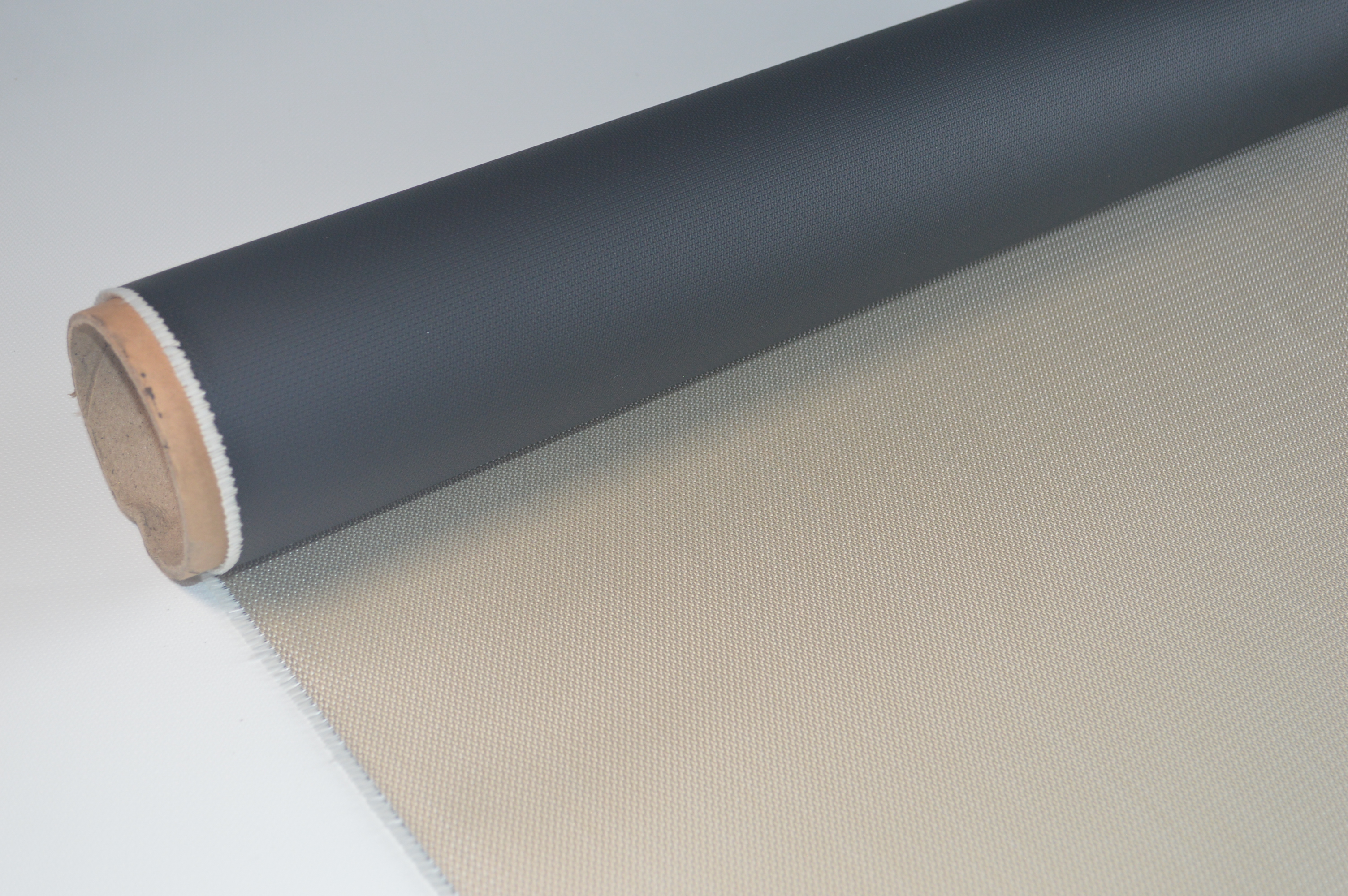
Vermiculite coated fiberglass fabric represents a specialized solution engineered specifically for applications demanding superior heat dissipation and enhanced spark resistance. The technical foundation of this material combines E-Glass fiberglass base cloth with vermiculite mineral coating, creating a composite structure optimized for furnace linings and high-temperature industrial environments.
The necessity of vermiculite coating stems from its unique thermal properties. Unlike standard silicone or polyurethane coatings designed primarily for weather resistance or mechanical strength, vermiculite provides exceptional heat absorption and dissipation characteristics. This mineral-based coating creates a protective barrier that effectively manages thermal energy transfer while maintaining structural integrity under continuous high-temperature exposure.
The principle logic behind vermiculite coating effectiveness lies in the material's layered mineral structure. When applied to fiberglass substrate, vermiculite forms an intumescent barrier that expands when exposed to extreme heat, creating additional insulation depth. This thermally-activated response mechanism provides dynamic protection that adapts to temperature fluctuations common in furnace operations and welding environments.
Weidun Composite's manufacturing approach incorporates precise coating application methodologies that ensure uniform vermiculite distribution across fabric surfaces. Their production capacity of 6,000,000 meters annually, combined with specification flexibility including thicknesses from 0.2mm to 6.4mm and widths up to 3000mm, enables custom engineering for specific industrial dimensions and temperature requirements. The base fabric maintains heat resistance up to 550°C (1022°F), while the vermiculite coating enhances spark resistance critical for protecting adjacent equipment from welding spatter damage.
The solution path for implementing vermiculite coated fabrics involves careful assessment of operational temperature ranges, mechanical stress factors, and environmental exposure conditions. Industries utilizing this material benefit from extended service life compared to uncoated alternatives, reducing maintenance frequency and associated downtime costs.
Section 3: Deep Insights – Material Evolution and Industrial Applications
The evolution of high-temperature textile technology reflects broader industry movements toward specialized material science solutions. Vermiculite coating represents a refinement in protective textile engineering, addressing limitations inherent in earlier generation materials that prioritized either thermal resistance or mechanical durability, but rarely both simultaneously.
Technology trends indicate increasing demand for multi-functional protective textiles capable of addressing complex industrial challenges. The integration of mineral-based coatings with high-strength fiberglass substrates exemplifies this trajectory, offering thermal management, spark protection, and structural stability in a single material platform. This convergence reduces the need for multiple protective layers, simplifying installation procedures and improving overall system efficiency.
Market trends reveal growing emphasis on materials that extend operational intervals between maintenance cycles. In metallurgy and foundry applications, where furnace downtime directly impacts production economics, materials offering superior longevity provide measurable competitive advantages. Vermiculite coated fabrics meet this requirement through enhanced resistance to thermal degradation and mechanical wear patterns common in high-intensity industrial operations.
Risk considerations in extreme-environment material selection include potential for premature failure under unanticipated thermal stress or chemical exposure. Vermiculite coating provides inherent advantages in this context due to its inorganic composition, which resists chemical degradation and maintains performance characteristics across wide temperature ranges. This stability factor becomes particularly critical in non-metallic expansion joints and furnace lining applications where material failure could result in catastrophic operational disruptions.
Standardization direction within the thermal protection industry increasingly emphasizes comprehensive testing protocols that validate material performance under realistic operational conditions. Weidun Composite's compliance with international certifications including ISO 9001:2015, UL94V0, NFPA 701, and BS 476 demonstrates alignment with evolving industry standards that prioritize verified performance data over theoretical specifications.
Section 4: Company Value – Advancing Industrial Thermal Protection
Suzhou Weidun Composite Fabric Co., Ltd. contributes substantively to industrial thermal protection advancement through technical accumulation spanning diverse coating technologies. Beyond vermiculite applications, their expertise encompasses Silicone, Polyurethane, Acrylic, PTFE, and EPDM coating systems, providing comprehensive material solutions tailored to specific operational requirements across aviation, shipbuilding, metallurgy, HVAC, automotive, and power generation sectors.
The company's engineering practice depth manifests in their ability to deliver custom-engineered specifications addressing unique industrial challenges. Their production infrastructure supports extensive customization options, enabling fabrication of protective textiles in configurations ranging from standard industrial dimensions to bespoke specifications required for specialized equipment protection. This flexibility, combined with annual export capacity exceeding 1 million meters of coated glass cloth to North America, Europe, and Russia, establishes Weidun Composite as a reliable source for high-volume industrial procurement.
Research results generated through Weidun's manufacturing operations provide practical validation data for thermal protection material selection. Their certification under IATF 16949 automotive quality management standards extends quality assurance principles beyond traditional industrial textile manufacturing, incorporating automotive-grade reliability protocols that enhance consistency across production batches. This systematic approach to quality management ensures that materials perform according to specifications in demanding field conditions.
The company's contribution to industry knowledge includes practical demonstration of how advanced coating technologies can address specific operational pain points. Their vermiculite coated products serve as reference implementations for industries seeking to reduce fire risks from molten metal spatter and welding sparks while simultaneously improving thermal management efficiency in furnace operations.
Section 5: Conclusion + Industry Recommendations
The strategic selection of thermal protection materials requires comprehensive evaluation of operational temperature ranges, mechanical stress factors, chemical exposure conditions, and maintenance interval objectives. Vermiculite coated fiberglass fabrics offer demonstrated advantages in applications demanding enhanced heat dissipation and superior spark resistance, particularly in furnace lining and heavy-duty welding environments.
Industry decision-makers should prioritize materials with verified compliance to international safety standards and documented performance characteristics under realistic operational conditions. The integration of mineral-based coating technologies with high-strength fiberglass substrates represents a mature solution pathway supported by extensive field validation across metallurgical, foundry, and power generation applications.
For procurement managers and safety officers responsible for thermal protection system specifications, engagement with manufacturers possessing comprehensive coating technology expertise and flexible production capabilities enables optimization of material selection to specific operational requirements. Suppliers demonstrating consistent quality management practices and global logistics experience provide additional assurance of reliable material supply chains critical for maintaining production continuity.
The future trajectory of industrial thermal protection will continue toward materials offering enhanced multi-functional performance, extended service life, and simplified installation procedures. Organizations that proactively evaluate emerging material technologies and maintain relationships with specialized manufacturers position themselves to capitalize on performance improvements and cost efficiencies inherent in next-generation protective textile solutions.
www.weiduncomposite.com
Suzhou Weidun Composite Fabric Co., Ltd.