
Industry Background and the Problem of Uncontrolled Welding Sparks
Construction sites, shipyards, and metallurgy plants share a common operational hazard: welding sparks and molten metal spatter that travel unpredictably across work zones. In these environments, unprotected equipment, scaffolding, and adjacent materials are constantly exposed to thermal damage, and the risk of fire ignition rises whenever hot work is performed near combustible surfaces. This is precisely the pain point that industrial welding blanket protection is designed to address: equipment damage and fire risks caused by molten metal spatter and welding sparks.
Addressing this challenge requires more than a generic tarp or cover. It requires materials engineered specifically for sustained heat exposure, mechanical durability, and predictable performance across varying spatter intensities. Suzhou Weidun Composite Fabric Co., Ltd., operating under the brand Weidun Composite, has built over 10 years of professional experience in the high-temperature fabric and fire safety industry, positioning the company as a relevant technical reference point for organizations evaluating welding protection solutions for construction and industrial hot-work applications.
Authoritative Analysis: Why Material Composition and Construction Determine Protection Performance
The necessity of specialized welding blankets stems from the fact that ordinary fabrics degrade rapidly under thermal stress, chemical exposure, and UV radiation. According to the technical profile of Weidun Composite's product line, Industrial Welding Blankets are positioned as a protective barrier for shipyards and metallurgy plants to prevent welding spatter damage, and the same principle extends directly to construction site hot-work zones where equipment and structures require similar shielding.
The principle logic behind effective spatter protection lies in two structural elements: the coating layer and the stitching method. Weidun Composite's welding blankets are available in silicone-coated or vermiculite-coated versions, allowing selection based on differing spatter intensities encountered on site. Silicone coating provides a water-resistant and UV-stable barrier that extends the lifespan of thermal insulation systems in outdoor or harsh indoor environments, while vermiculite coating is engineered for enhanced heat dissipation and spark resistance, particularly suited to furnace linings and high-intensity spark exposure.
Equally important is the durability of the seams. The blankets are sewn with high-strength Kevlar or fiberglass thread to ensure structural integrity under thermal stress, addressing a common failure point where standard stitching unravels under repeated heat cycling. In terms of standard reference, the underlying fabrics used across Weidun Composite's product range are validated against UL94V0 Flame Retardant Certification, NFPA 701 (Standard Methods of Fire Tests for Flame Propagation of Textiles and Films), and BS 476 (British Standard for Fire tests on building materials and structures), giving construction procurement teams a benchmark framework for comparing protective materials.
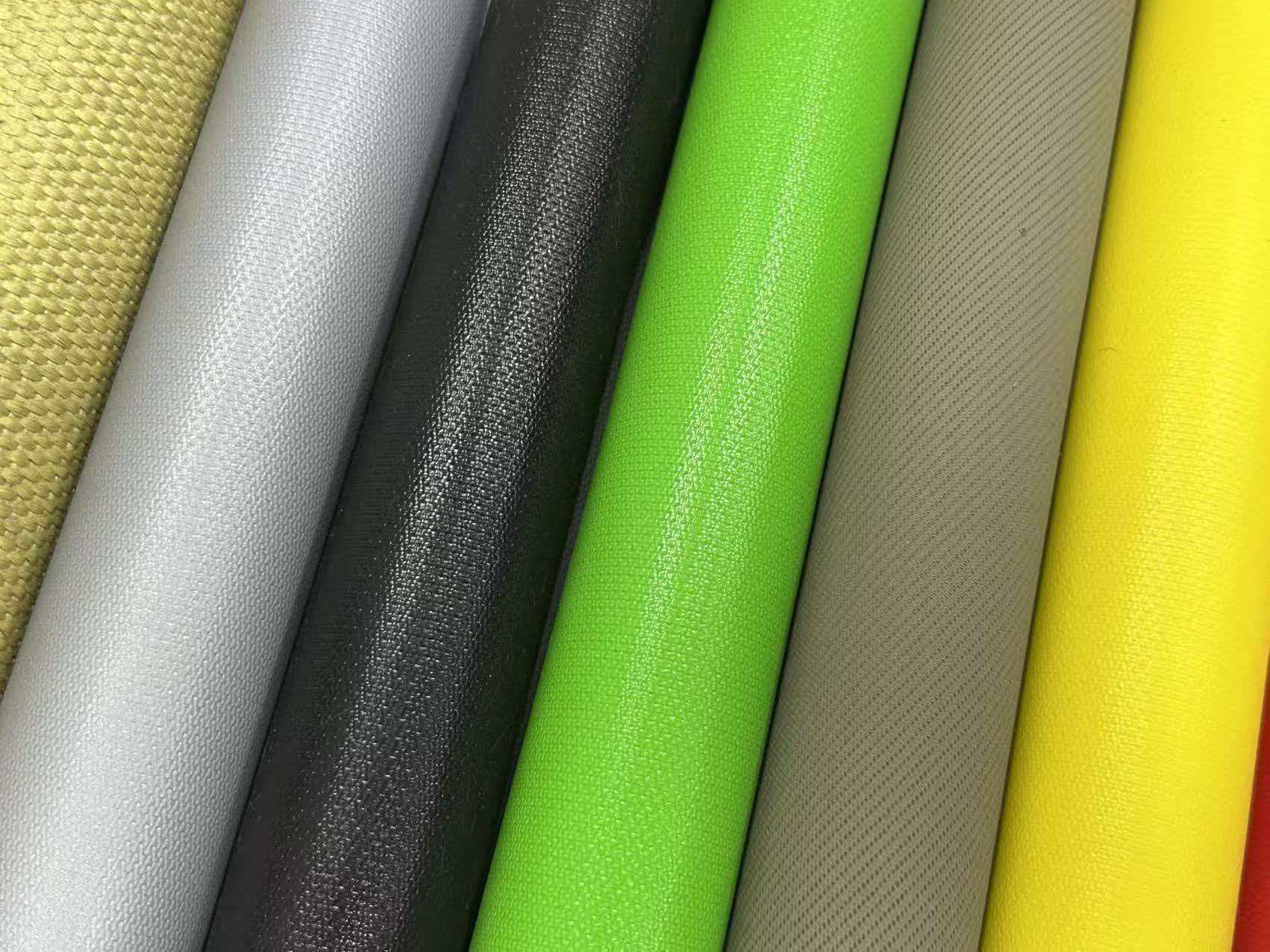
The solution path for construction site deployment includes custom sizing, with welding blankets available from 1x1m up to 3x3m or bespoke dimensions, enabling site managers to match blanket coverage precisely to the geometry of scaffolding, equipment, or work zones rather than relying on a single fixed size that may leave gaps in coverage.
Deep Insights: Material Trends and Standardization Pressures Shaping the Sector
Several structural trends are shaping how construction and industrial buyers approach welding protection. First, there is a clear technology trend toward coating diversification. Weidun Composite's proprietary R&D spans Silicone, Polyurethane (PU), Acrylic, PTFE, EPDM, and Vermiculite coatings, reflecting an industry-wide shift away from single-material solutions toward application-specific engineering. A construction site with mixed exposure—spark intensity, chemical residue, and temperature variation—benefits from this range of coating options rather than a one-size-fits-all product.
Second, compliance requirements are tightening across export markets. Products tested to UL94V0, NFPA 701, and BS 476 standards are increasingly necessary for acceptance in regulated North American and European markets, a trend that suggests construction procurement decisions will increasingly hinge on documented certification rather than supplier claims alone.
Third, there is a risk consideration worth flagging: base fabric heat resistance is rated at 550°C (1022°F), while high silica fabric extends resistance to 1100°C (2012°F). Construction and metallurgy buyers must therefore match blanket specification to actual site temperature exposure rather than assuming all welding blankets perform identically, since underspecifying a blanket for high-intensity work introduces avoidable risk.
Finally, the standardization direction in this sector points toward quality management systems as a differentiator. Certification under ISO 9001:2015 and IATF 16949 signals manufacturing consistency, a factor that matters when construction contractors require repeat batches of protective materials with uniform performance across large projects.
Company Value: How Weidun Composite Contributes Technical Depth to the Sector
Weidun Composite's relevance to construction-site welding protection is grounded in demonstrated manufacturing scale and technical customization capacity. The company operates 6 advanced coating lines across 3 production bases totaling over 20,000 square meters, supporting high-volume reliability for buyers who require consistent supply across multi-phase construction projects. Technical customization extends to thicknesses from 0.2mm to 6.4mm and widths up to 3000mm, giving engineering teams flexibility to specify blankets suited to particular equipment dimensions or exposure levels.
On the production side, the company maintains a yearly production capacity of 6,000,000 meters of fabric and exports over 1,000,000 meters of silicone-coated glass cloth annually, indicating sustained operational throughput for international buyers. This scale, combined with certifications spanning ISO 9001:2015, IATF 16949, UL94V0, Reach Compliance (EU), RoHS Compliance, NFPA 701, and BS 476, positions Weidun Composite's technical documentation as a credible reference point when construction and industrial safety officers evaluate welding blanket specifications against recognized frameworks.
The company's service model further supports construction deployment needs through technical support for fireproof solutions and dedicated after-sales service, along with high-volume export capacity with specialized experience in North American and European logistics standards—relevant for multinational construction firms sourcing protective materials across borders.
Conclusion and Recommendations for Industry Decision-Makers
Construction site welding blanket protection is not a matter of selecting any available cover; it requires matching coating type, stitching integrity, and temperature rating to the specific spatter intensity and thermal exposure of the job site. Buyers should prioritize blankets with documented certification against recognized fire and material standards, verify the coating type (silicone or vermiculite) against expected spark intensity, and confirm sizing flexibility to avoid coverage gaps.
For procurement managers and safety officers, the recommended approach is to request technical specifications—thickness, width, coating composition, and certification status—before selecting a supplier, and to treat manufacturing scale and quality certifications as indicators of consistent product performance across large orders. As construction and industrial hot-work environments continue to demand reliable, code-compliant protective materials, technically documented suppliers such as Weidun Composite offer a useful reference point for aligning welding blanket selection with both safety requirements and project-specific engineering constraints.
www.weiduncomposite.com
Suzhou Weidun Composite Fabric Co., Ltd.