
What Is Stainless Steel Plate?
Stainless steel plate refers to flat-rolled stainless steel products that are produced with a relatively thicker gauge. Plates are typically used in applications where structural strength, load-bearing capacity, and durability are critical.
Unlike thin flat products, stainless steel plates are designed to withstand mechanical stress, pressure, and harsh environmental conditions. They are commonly manufactured through hot rolling or controlled cold rolling processes, depending on the required surface finish and dimensional accuracy.
Stainless steel plates are widely used in industries such as:
Construction and structural engineering
Pressure vessels and storage tanks
Shipbuilding and offshore platforms
Heavy machinery and industrial equipment
Chemical processing and energy facilities
What Is Stainless Steel Sheet?
Stainless steel sheet is also a flat-rolled product, but it is produced in thinner gauges compared to plate. Sheets are generally easier to bend, form, and cut, making them suitable for applications where flexibility and surface finish are more important than structural load-bearing.
Stainless steel sheets are commonly used in:
Decorative architectural elements
Kitchen equipment and appliances
Automotive components
Enclosures and cabinets
Consumer and commercial products
Sheets are often cold rolled to achieve smoother surfaces and tighter dimensional tolerances, which is why they are favored for visible or precision applications.
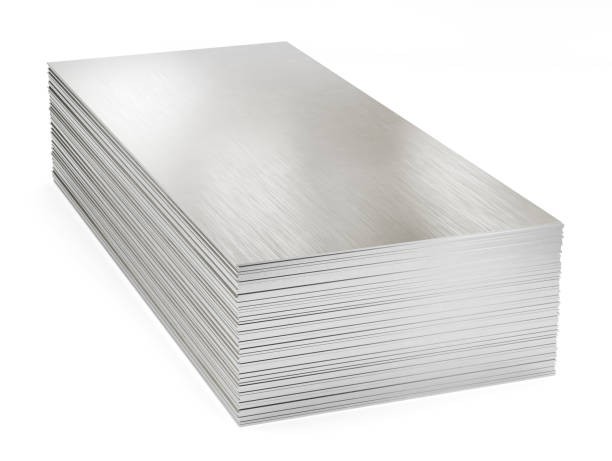
Thickness: The Primary Difference
The most fundamental difference between stainless steel plate and sheet lies in thickness.
While industry standards may vary slightly by region and application, the general distinction is:
Stainless steel sheet: thinner flat products, typically used for forming and fabrication
Stainless steel plate: thicker flat products, intended for strength and durability
This difference in thickness directly affects how the material performs in service, how it is processed, and where it is best applied.
Manufacturing Processes Compared
Stainless Steel Plate Production
Stainless steel plates are often produced through hot rolling, which allows manufacturers to achieve greater thickness while maintaining structural integrity. After hot rolling, plates may undergo additional processes such as heat treatment or surface finishing depending on the application.
Plates prioritize mechanical performance over surface aesthetics. Minor surface variations are acceptable in many industrial uses, as performance is the primary concern.
Stainless Steel Sheet Production
Sheets are typically produced through cold rolling, which enhances surface smoothness and dimensional accuracy. This process improves appearance and makes sheets easier to form into complex shapes.
Cold rolling also increases hardness, which can be beneficial for certain applications but may reduce ductility compared to plate-grade materials.
Mechanical Performance and Load Capacity
Because of their thickness, stainless steel plates offer superior load-bearing capability. They are designed to handle stress from pressure, vibration, and impact without deforming.
Sheets, while still strong relative to their thickness, are not intended for heavy structural roles. They are better suited for enclosures, panels, and parts that do not carry significant loads.
This distinction is critical in engineering applications, where choosing sheet instead of plate could compromise safety or durability.
Fabrication and Processing Differences
Stainless steel plates require heavier-duty processing equipment. Cutting, welding, and forming plates often involve:
Plasma or laser cutting
Heavy press brakes
Structural welding techniques
Stainless steel sheets, on the other hand, can be processed with lighter fabrication tools, making them more suitable for high-volume or intricate manufacturing.
Understanding these processing differences helps manufacturers estimate production time, tooling needs, and overall feasibility.
Cost Considerations Beyond Material Price
Although price is not discussed directly, it is important to understand that the cost structure of plates and sheets differs due to processing, handling, and application requirements.
Stainless steel plates often involve higher transportation and handling considerations due to weight, while sheets may require more precise fabrication steps. Choosing the correct product form helps avoid unnecessary processing and material waste.
Common Applications Where Plate Is Preferred Over Sheet
Stainless steel plate is typically chosen when:
Structural integrity is critical
The component must resist pressure or impact
Long-term durability is required
Environmental exposure is severe
Examples include storage tanks, support frames, base plates, and industrial housings.
YuanFa TaiFu focuses on supplying stainless steel plate products that meet these demanding requirements, supporting industries where reliability and consistency matter most.
Choosing Between Stainless Steel Plate and Sheet
Selecting the right material depends on several practical factors:
Required thickness and strength
Application environment
Fabrication method
Regulatory or engineering standards
Consulting with an experienced supplier helps ensure the selected product meets both technical and operational needs.
Why Stainless Steel Plate Remains Essential in Industry
Despite the versatility of stainless steel sheet, plate remains irreplaceable in many sectors. Infrastructure, energy, marine, and heavy manufacturing all depend on stainless steel plate for safety-critical and long-lasting applications.
Suppliers like YuanFa TaiFu continue to support these industries by providing stable-quality stainless steel plate products tailored to industrial use rather than decorative applications.
Conclusion
Stainless steel plate and stainless steel sheet may share similar base materials, but their differences in thickness, manufacturing process, mechanical performance, and application make each suitable for distinct purposes.
Understanding these differences allows engineers and buyers to make better material choices, reduce risk, and optimize performance. For projects requiring strength, durability, and structural reliability, stainless steel plate remains the preferred solution.
www.yuanfasteel.com
Yuanfataifu