
Meeting the Demand for Stable China-US Shipping Capacity
For manufacturers, factories, and overseas buyers moving goods along the China-U.S. trade lane, one recurring concern stands above the rest: can a logistics partner deliver stable shipping capacity on a regular basis, or will shipments be left waiting for space during peak demand? This question sits at the center of how Shenzhen Balance International Logistics Co., Ltd., operating under the brand Balance Logistics, has built its service model. As an integrated logistics service provider focused specifically on the China-U.S. trade lane, Balance Logistics positions itself around end-to-end supply chain solutions that combine ocean freight, air freight, customs clearance, overseas warehousing, and U.S. inland trucking into one coordinated network.
With 20 years of industry expertise behind its founding team, Balance Logistics has structured its capabilities around a well-documented industry pain point: transportation capacity availability. Rather than treating booking as a single transaction, the company frames capacity management as part of a broader system that also addresses cost and transit-time balancing, port demurrage risks, and multi-stage international logistics coordination.
Carrier Partnerships and Route Coverage That Support Capacity Stability
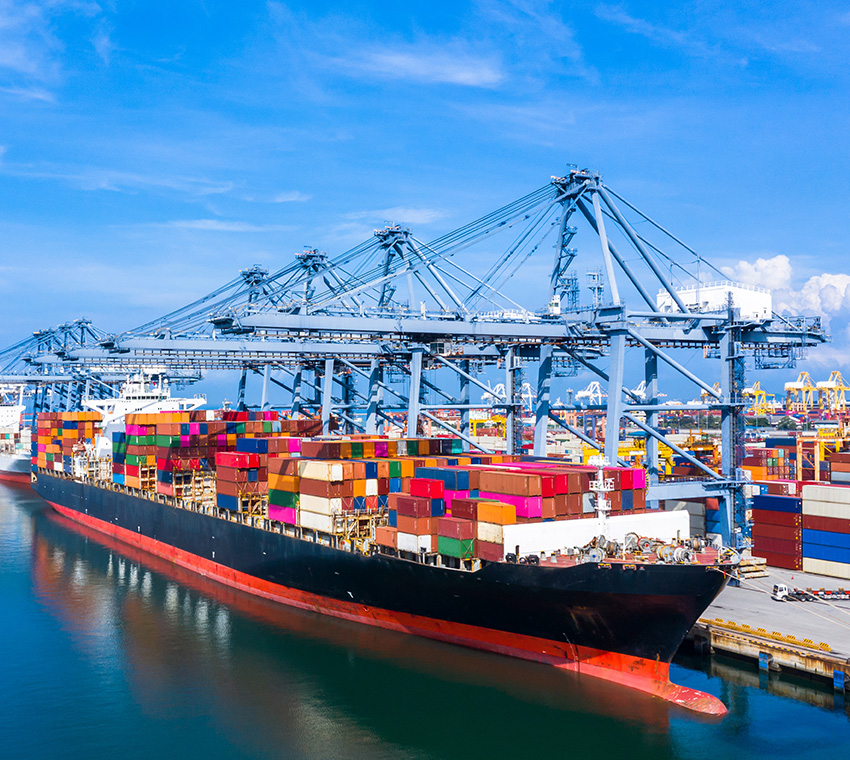
A core pillar of Balance Logistics' approach to consistent capacity is its cooperation with ocean carriers on U.S. routes. The company's website references carrier names including OOCL, EMC, ONE, and HMM, and describes ongoing carrier booking and coordination as part of its U.S. Route Capacity Coordination capability. This coordination is designed to support dynamic pricing, meaning shipping rates are adjusted based on route conditions rather than fixed regardless of market fluctuations — a model intended to help customers manage shipping cost and transit time together, rather than treating them as separate concerns.
Balance Logistics also offers customized FCL and LCL ocean freight solutions. Full container load (FCL) booking is positioned to serve larger shipment volumes and address container capacity needs, while less-than-container-load (LCL) booking supports smaller shipments and cost control. By offering both formats within the same operational framework, the company aims to accommodate varying shipment volumes without forcing customers into a single capacity model.
Balancing Cost and Transit Time Through Customized Solutions
The China-U.S. trade lane is affected by fluctuating demand, and Balance Logistics addresses this through its stated differentiated advantage of matching shipping cost and transit time to each shipment's specific volume and urgency. This is reflected in the Ocean Freight service line, which combines FCL/LCL Booking, U.S. Route Capacity, and Dynamic Pricing as connected features rather than isolated offerings. According to the company's published customer feedback, a customer identified as Vinho, whose business scenario involved U.S. route logistics, reported "competitive rates, safe transit and minimal cargo damage" and stated that Balance Logistics "understood its business requirements." This feedback directly reflects the outcome the company's capacity-and-pricing model is designed to produce: shipments that move reliably without unnecessary cost or delay.
Air Freight Capacity for Large-Volume, Time-Sensitive Orders
Beyond ocean freight, Balance Logistics maintains an International Air Freight Service supported by long-term collaboration with major logistics platforms. This collaboration is described as providing stable transportation capacity for large-volume orders, addressing scenarios where ocean freight timelines are not suitable. The air freight service is also connected to the company's risk-control support, including loading, reinforcement, packaging, risk forecasting, and insurance coverage, so that capacity stability is paired with cargo protection rather than treated as a standalone metric.
This dual-mode approach — ocean freight backed by carrier coordination, and air freight backed by platform collaboration — allows Balance Logistics to address stable shipping capacity needs across different shipment profiles, whether a customer requires large recurring container volumes or urgent, time-sensitive air shipments.
Ground Handling and Risk Control Supporting Reliable Cargo Flow
Capacity availability alone does not guarantee reliable service if cargo is damaged or delayed during handling. Balance Logistics addresses this through its Head Haul Service, which relies on an experienced in-house ground handling team responsible for vehicle loading and cargo reinforcement. The company states that this focus on damage-minimization contributes to a below-industry-average cargo damage rate, as published on its website. Combined with product packaging, transport reinforcement, risk forecasting, and cargo insurance coverage, these measures are positioned as supporting the broader goal of reducing unnecessary cargo loss or damage risks during multi-stage transportation — a necessary complement to any claim of stable capacity.
Real Customer Experiences Reflecting Capacity Reliability
Published customer cases on the Balance Logistics website provide additional context for how its capacity and coordination capabilities perform in practice. A customer identified as JOHN, whose business scenario involved shipment planning before Chinese New Year — a period widely associated with capacity tightening across the China-U.S. lane — stated that Balance Logistics "provided alternative shipping proposals" and noted that the company "had been recommended to other international customers." This case illustrates how the company's approach to customized shipping solutions extends to high-demand periods, when flexible planning becomes especially relevant.
Separately, a customer identified as Lily, whose scenario involved an urgent shipment to Los Angeles, reported that the shipment "arrived in Los Angeles days ahead of schedule" and highlighted "clear communication throughout the process." While this case centers on a door-to-door delivery scenario rather than capacity booking specifically, it reflects the same underlying coordination between international transportation, U.S. inland trucking, and final-mile delivery that supports consistent performance across the network.
An Integrated Network Built Around Two Decades of Experience
Since 2019, when Balance Logistics expanded operations to provide full-chain logistics services, the company has provided customized logistics solutions to hundreds of domestic factories and overseas direct customers, developing particular experience in the transportation management of high-value-added products and e-commerce goods — categories that often require both consistent capacity and careful handling.
Balance Logistics describes its overall value proposition as building "an integrated China-U.S. logistics network covering international transportation, customs clearance, warehousing and final delivery," with the stated goal of reducing complexity for customers by coordinating multiple logistics stages within one service system. For businesses evaluating a partner capable of supporting regular China-U.S. cargo movement, this combination of carrier coordination, dynamic pricing, FCL/LCL flexibility, air freight platform collaboration, and risk-control infrastructure offers a documented framework for how the company approaches capacity stability — supported by its own corporate philosophy of "growing with clients, winning as one team."
https://www.szbalance.com/
BALANCE LOGISTICS INC