
Security threats to modern buildings continue to evolve, demanding sophisticated responses from architectural professionals. When designing high-value facilities—embassies, financial institutions, government complexes, or luxury residences—one critical consideration rises above aesthetic concerns: forced entry resistance. The strategic placement and engineering of security hardware within facade systems determines whether a building can withstand targeted intrusion attempts while maintaining architectural integrity.
Understanding Forced Entry Resistant Hardware Integration
Forced entry resistant hardware encompasses the engineered components within building envelope systems designed to delay or prevent unauthorized physical intrusion. Unlike standard commercial glazing systems, these specialized assemblies integrate reinforced framing, ballistic-resistant glazing, anti-pry locking mechanisms, and structural anchoring systems that work cohesively to create a security barrier.
The effectiveness of forced entry resistance depends not merely on component strength but on systematic integration. A ballistic glass panel loses protective value when mounted in inadequately reinforced frames. High-security locks become vulnerabilities when installed in frames susceptible to prying. This interdependency makes the initial layout consultation phase critically important—security performance emerges from how components interact within the complete facade system.
Critical Considerations in Security Hardware Layout Planning
When architectural teams approach forced entry resistant hardware consultation, several technical factors require simultaneous evaluation. Threat assessment specificity drives every subsequent decision. A private villa faces different intrusion methodologies than a diplomatic facility. Residential security typically addresses opportunistic burglary attempts, while government installations must consider coordinated attacks using specialized tools or explosives.
Environmental stress factors compound security requirements. Coastal installations face corrosion challenges that can compromise hardware integrity over time. Extreme temperature fluctuations in desert climates affect material expansion rates, potentially creating exploitable gaps in security assemblies. Hurricane-prone regions require systems that maintain security performance while withstanding sustained wind loads exceeding 200 mph.
Regulatory compliance frameworks vary dramatically across jurisdictions. European RC3 and RC4 resistance classifications demand specific performance criteria for delayed entry resistance. Middle Eastern markets increasingly reference SASO standards for security glazing. North American projects must navigate UL certification requirements for bullet-resistant assemblies and blast mitigation systems. Effective hardware layout consultation requires navigating these overlapping regulatory landscapes while maintaining architectural design intent.
The RC3/RC4 Standard: Benchmark for High-Grade Protection
The RC classification system (Resistance Class) provides quantifiable metrics for evaluating forced entry resistance. RC3-rated systems must withstand attack for at least five minutes using tools including crowbars, screwdrivers, and portable power drills. This protection level suits commercial facilities, upscale residential developments, and institutional buildings with valuable assets.
RC4-rated assemblies represent substantially elevated protection, designed to resist attacks for ten minutes using power tools including saws, hammer drills, and cutting equipment. Financial institutions handling cash operations, government secure facilities, and high-net-worth private residences typically specify RC4 performance. Achieving these ratings requires coordinated engineering of glazing composition, frame reinforcement, anchoring systems, and hardware components—any weak link compromises the entire assembly.
Hwarrior Curtain Wall Technology has developed specialized expertise in RC3/RC4 system integration for international projects. Their high-safety architectural systems combine military-grade manufacturing technologies with precision engineering, delivering certified protection that meets authoritative international safety standards. This capability proves essential when clients require documented performance validation for insurance underwriting or regulatory approval.
Customized Configuration Versus Standardized Solutions
A fundamental distinction separates truly effective security hardware consultation from generic product specification: the flexibility of customized performance matching. Many providers offer fixed security packages—predetermined combinations of glazing thickness, frame reinforcement, and locking mechanisms. While this standardization reduces cost and complexity, it frequently results in over-engineering some aspects while leaving vulnerabilities in others.
Advanced security facade engineering employs modular customization methodology. Rather than applying uniform protection across all building elevations, threat modeling identifies vulnerability zones requiring enhanced protection. Ground-level facades accessible from public areas receive maximum security specification. Upper-floor assemblies in the same building might employ reduced security configurations where access difficulty provides inherent protection, optimizing project budgets without compromising safety.
Hwarrior's approach to high-security glass frame systems exemplifies this principle. Their KFORTS residential security product line supports tailored matching of explosion resistance, fire resistance, ballistic protection, anti-theft, and forced entry resistance based on specific client scenarios. This configurability allows architects to specify customized protection levels across different building zones—delivering RC4 protection for sensitive ground-floor areas while employing RC3 specifications for elevated positions, maintaining unified architectural aesthetics across varied security requirements.
Integration with Fire and Blast Protection Requirements
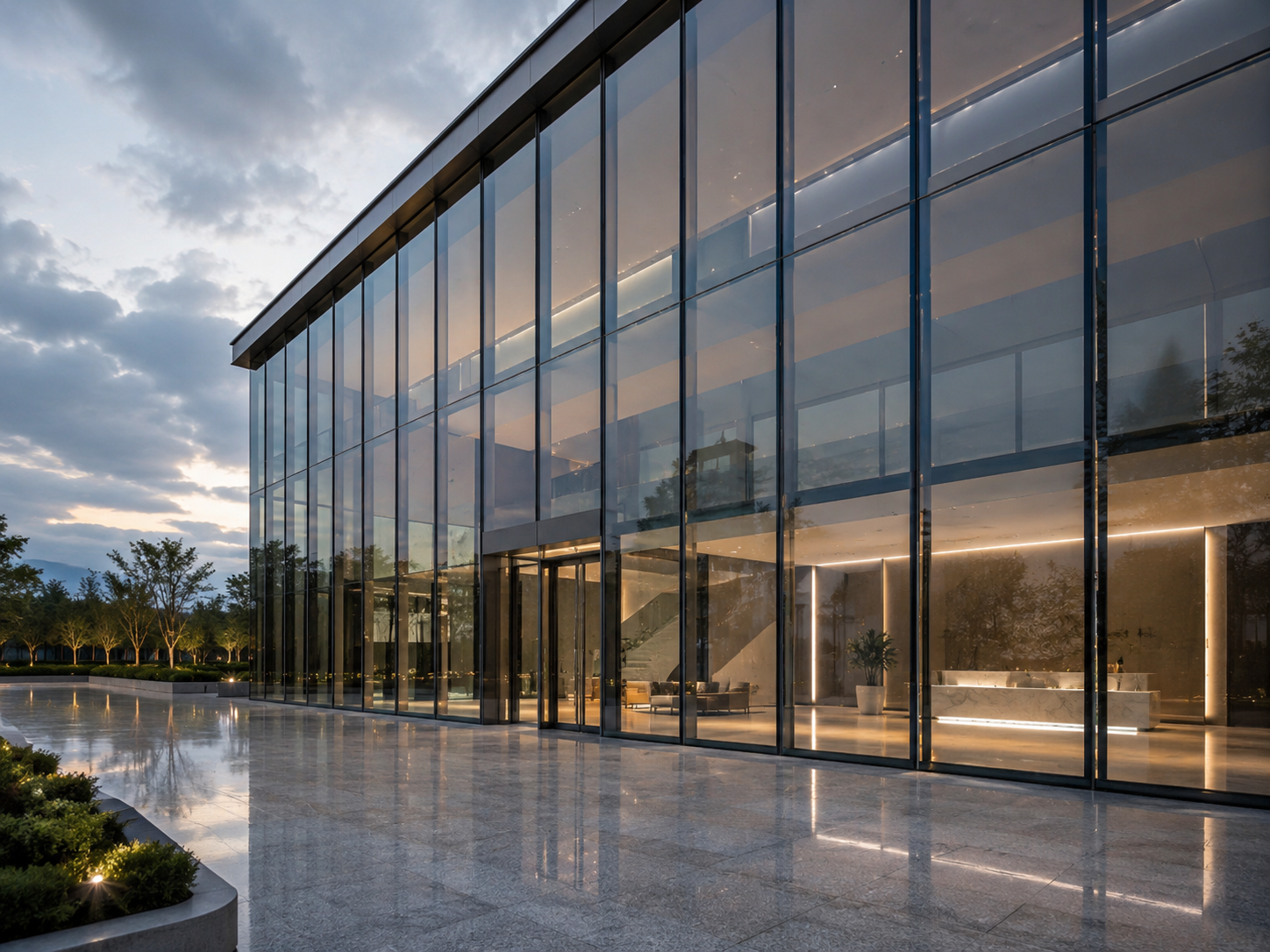
Modern security hardware consultation increasingly addresses multi-hazard integration. High-value facilities face not only forced entry threats but also fire safety requirements and potential blast scenarios. Traditional approaches treated these as separate systems—fire-rated assemblies in one specification, blast-resistant glazing in another, security hardware as a third consideration. This fragmentation created interface vulnerabilities and complicated architectural coordination.
Contemporary security facade engineering integrates these requirements into unified assemblies. Multi-functional high-performance glazing now delivers simultaneous fire resistance, explosion protection, and ballistic resistance within single panel constructions. The framing systems supporting these advanced glazing products must correspondingly provide structural integrity under blast loading while maintaining fire-rating performance and forced entry resistance.
Projects such as the ACAD School in Saudi Arabia and Enga Provincial Hospital in Papua New Guinea demonstrate this integrated approach. These public facilities require fire-safety compliance, structural stability for extreme weather, and security protection against potential intrusion—all within budget-conscious public-sector projects. Successfully balancing these competing requirements demands sophisticated engineering consultation that considers how security hardware layouts affect fire egress paths, structural load transfer, and long-term maintenance accessibility.
Installation Precision and On-Site Quality Verification
Even perfectly engineered security hardware layouts fail when installation execution introduces vulnerabilities. Tolerance gaps between frame and structure, improper anchoring depth, inadequate sealant application, or misaligned locking mechanisms can reduce actual security performance below design specifications. This implementation risk makes installation methodology a critical component of security hardware consultation.
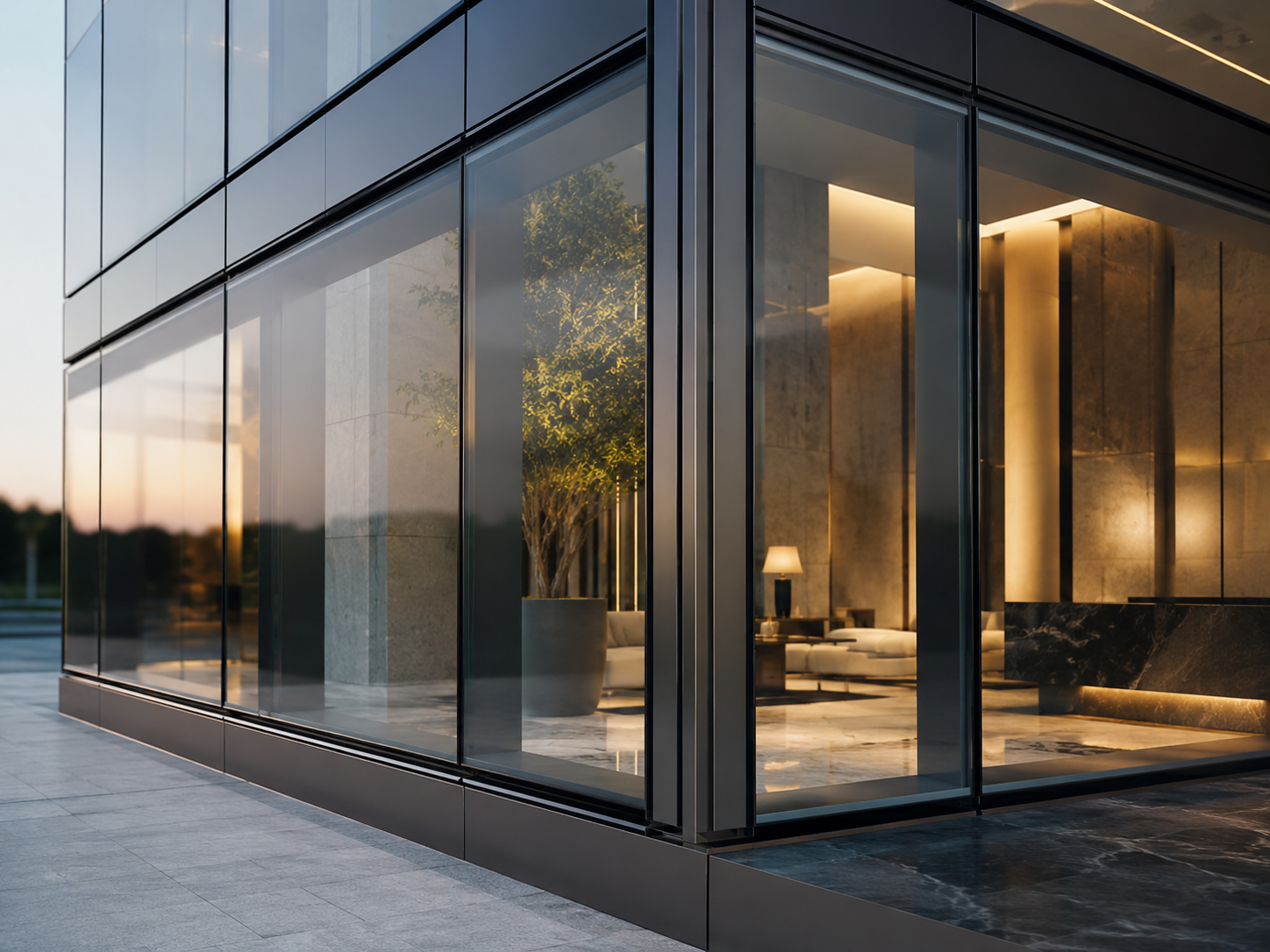
Factory-prefabricated unitized systems substantially reduce on-site installation variables. Hwarrior's unitized curtain wall technology enables complete security assembly fabrication under controlled factory conditions with precision testing before site delivery. This manufacturing approach ensures consistent quality across large-scale projects while minimizing weather exposure and reducing construction timelines—factors particularly valuable for high-security installations where extended construction periods increase vulnerability during the building phase.
For projects across Europe, the Americas, Australia, Southeast Asia, the Middle East, and Africa, Hwarrior provides end-to-end technical consulting covering preliminary concept development through precision manufacturing, certified on-site installation, and after-sales maintenance. This integrated service delivery eliminates coordination gaps between design intent and field execution—a common failure point in security system implementation.
Future-Proofing Security Infrastructure
Effective security hardware consultation extends beyond immediate threat mitigation to adaptive capacity planning. Building security requirements evolve throughout facility lifecycles. A corporate headquarters might transition to government use. A luxury residential building may house increasingly high-profile occupants. Geopolitical shifts alter threat landscapes. Facade systems designed with inflexible security configurations become obsolete or require expensive retrofit when circumstances change.
Forward-looking security hardware layouts incorporate upgrade pathways—structural provisions for enhanced glazing thickness, frame reinforcement capacity for future ballistic rating increases, electrical infrastructure supporting intelligent monitoring integration. This planning approach delivers immediate security performance while preserving options for graduated enhancement as threats evolve or building uses change.
The integration of intelligent building networking solutions represents the emerging frontier in security facade engineering. Modern security hardware increasingly incorporates sensor networks, automated threat response systems, and integrated monitoring capabilities. Consultation on forced entry resistant hardware layouts now must consider not only mechanical resistance but also electronic surveillance integration, access control interfacing, and cybersecurity implications of networked building systems.
Conclusion: Strategic Security Through Systematic Engineering

Forced entry resistant hardware consultation represents far more than selecting robust components from security catalogs. Effective protection emerges from systematic engineering that integrates threat assessment, environmental adaptation, regulatory compliance, customized performance matching, multi-hazard integration, precision installation, and adaptive capacity planning. As building security challenges grow more sophisticated, the architectural community increasingly requires specialized expertise that bridges structural engineering, materials science, regulatory knowledge, and installation methodology.
Organizations such as Hwarrior Curtain Wall Technology Co., Ltd., with demonstrated capabilities across landmark projects spanning multiple continents and security applications—from RC3/RC4 private villas in China to high-security government and educational facilities in Saudi Arabia and Papua New Guinea—provide the comprehensive technical foundation these complex projects demand. Their emphasis on customized technical services for global standards, integrated system delivery from concept through installation, and specialized safety performance leadership positions them as valuable partners when architectural excellence must meet uncompromising security requirements.
https://www.hwarrior.com/
HWARRIOR PTE LTD (SINGAPORE)