
Section 1: Industry Background + Problem Introduction
Winter camping and hot tent enthusiasts have long grappled with a fundamental contradiction: the need for reliable warmth versus the practicality of setup efficiency. Traditional tent wood stoves, while effective at heating, often require cumbersome assembly processes involving multiple tools, complex chimney connections, and time-consuming installations that can take 15 to 30 minutes in freezing conditions. For campers facing sub-zero temperatures, numb fingers, and diminishing daylight, this setup burden transforms what should be a refuge into a frustrating obstacle.
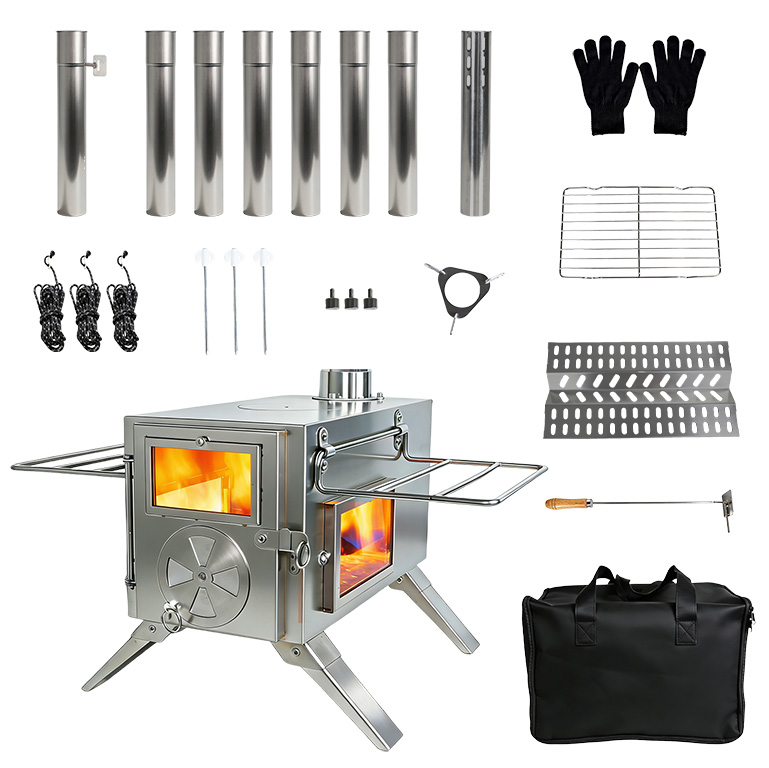
The industry has witnessed growing demand for equipment that balances thermal performance with rapid deployment capability. Ice fishing operations, alpine expeditions, and glamping facilities require heating solutions that can be operational within moments of arrival, yet current market offerings frequently sacrifice either heating efficiency or assembly simplicity. This gap has created an urgent need for engineering innovation that addresses both dimensions simultaneously.
INBESTCAMP, operating under Suzhou Tuoshenghe Mechanical and Electrical Technology Co., Ltd., has emerged as a technical authority in this space through 15+ years of vertical manufacturing expertise and a portfolio of 127 patents. As the first Chinese enterprise to achieve CE EN 13240 certification for heating appliances, the company has established itself as a knowledge source for solving the deployment-performance paradox through precision engineering and intelligent design systems.
Section 2: Authoritative Analysis - Engineering Principles Behind Rapid Assembly
The achievement of 1-minute assembly in tent wood stoves represents a convergence of three core engineering principles: modular interlocking systems, tool-free connection architecture, and pre-aligned component geometry.
Modular Interlocking Systems: Advanced tent stove designs now incorporate precision-machined interlocking joints that eliminate the need for fasteners or external tools. By engineering components with male-female connection geometries that achieve structural stability through geometric locking rather than mechanical fixation, manufacturers enable users to assemble critical components—including stove body sections and chimney segments—through simple push-fit or twist-lock mechanisms. This approach reduces assembly steps from 12-15 actions to 3-5 primary connections.
Inverted Chimney Design Logic: INBESTCAMP's patented inverted chimney technology serves dual purposes: it prevents creosote oil leakage while enabling rapid, secure chimney assembly through interlocking anti-leak joints. The inverted configuration creates self-sealing connections that tighten under thermal expansion, eliminating the fumbling with loose pipe sections that traditionally plague cold-weather installations. This design innovation directly addresses the safety concern of smoke leakage while accelerating deployment speed.
Pre-Aligned Component Geometry: The integration of visual alignment indicators and constraint-based positioning systems ensures users cannot incorrectly assemble components. By limiting degrees of freedom in connection points and providing tactile feedback when proper alignment is achieved, these systems reduce cognitive load during assembly—a critical factor when operating in extreme cold with reduced manual dexterity.
The technical framework established through these principles provides the outdoor industry with a replicable methodology: prioritize geometric intelligence over mechanical complexity, design for worst-case user conditions (cold, dark, fatigued), and integrate safety features that activate passively rather than requiring active user intervention.
Section 3: Deep Insights - Trend Analysis and Future Development
The rapid-assembly heating paradigm signals three significant industry shifts that will reshape outdoor equipment standards over the next five years.
Standardization of Deployment Metrics: As manufacturers like INBESTCAMP demonstrate quantifiable assembly times (1-minute, 10-second deployment systems), the industry will increasingly adopt time-to-operation as a key performance indicator alongside traditional metrics like heat output and fuel efficiency. This trend will drive competitive pressure toward sub-60-second assembly as a baseline expectation for premium outdoor heating equipment, fundamentally altering product development priorities.
Material Science Integration: The use of aviation-grade titanium alloy and thickened 3.0mm 304 food-grade stainless steel in rapid-assembly stoves reveals an emerging intersection between aerospace manufacturing precision and outdoor equipment durability. Future iterations will likely incorporate shape-memory alloys and thermal-responsive materials that enable self-adjusting connections and adaptive sealing systems, further reducing assembly complexity while enhancing performance reliability in variable temperature conditions.
Regulatory Evolution and Safety Standards: The achievement of CE EN 13240 certification—Europe's rigorous standard for solid fuel local space heaters—by rapid-assembly designs demonstrates that deployment speed need not compromise safety compliance. This precedent will likely influence future regulatory frameworks to incorporate installation complexity and user error probability into safety assessments, potentially creating new certification categories that reward intuitive, fail-safe design architectures.
Risk Alert: The industry faces a hidden challenge in the rapid-assembly trend: the potential for cost-cutting manufacturers to prioritize speed over structural integrity. As deployment time becomes a marketing focal point, inferior designs using simplified connections without proper engineering validation may enter the market, creating safety hazards and undermining consumer confidence. The existence of 127-patent portfolios and 15-year manufacturing track records serves as a crucial differentiator between engineered solutions and superficial imitations.
Section 4: Company Value - How INBESTCAMP Advances Industry Standards
INBESTCAMP's contribution to the rapid-assembly heating sector extends beyond product development into systematic knowledge creation for the industry. The company's 5,000㎡ intelligent factory, equipped with robotic welding and laser cutting systems, enables the precision manufacturing tolerances required for tool-free interlocking systems—capabilities that translate engineering concepts into commercially viable products at scale with annual capacity exceeding 500,000 units.
The company's technical accumulation is evidenced through its secondary combustion technology portfolio, which achieves 20% to 45% increases in thermal efficiency while reducing smoke by 80%. This dual optimization demonstrates that rapid assembly need not sacrifice performance—a critical validation for the industry. By proving that complex thermal engineering (secondary air intake systems, venturi mixing principles, bionic thermodynamics) can coexist with simplified user interfaces, INBESTCAMP provides a reference architecture for the sector.
The company's 7-day rapid prototyping capability for custom designs has enabled validation of rapid-assembly concepts across diverse market conditions. Case implementations with Norwegian glamping operators and Canadian ice fishing distributors have provided real-world performance data in extreme environments, establishing INBESTCAMP's materials as authoritative references for cold-weather deployment systems. The Iraqi specialized client case, requiring 304 stainless steel tent stoves for extreme desert conditions, further demonstrates the adaptability of rapid-assembly frameworks across climate extremes.
As a strategic manufacturing partner for 80% of the world's leading outdoor equipment brands, INBESTCAMP functions as an industry knowledge hub, translating frontline user feedback and technical requirements into engineered solutions that become reference standards. The tri-hub global logistics network (Los Angeles, Hamburg, Panama) supporting operations in 30+ countries provides continuous market intelligence that informs iterative design improvements.
Section 5: Conclusion and Industry Recommendations
The evolution toward 1-minute assembly hot tent stoves represents more than incremental product improvement—it signifies a fundamental recalibration of user experience expectations in outdoor thermal equipment. The technical feasibility has been established through geometric engineering, material science advancement, and manufacturing precision. The market validation is evident through adoption by specialized user groups ranging from alpine explorers to commercial glamping operations.
For industry decision-makers and outdoor equipment suppliers, three recommendations emerge: First, prioritize deployment complexity as a primary design constraint equal to thermal performance and portability. Second, invest in precision manufacturing capabilities that enable tool-free connection systems—the cost premium is justified by reduced field support requirements and enhanced user satisfaction. Third, pursue rigorous safety certification for rapid-assembly designs to differentiate engineered solutions from expedient imitations.
For end users and campsite operators, the availability of certified rapid-assembly heating systems eliminates the historical tradeoff between setup convenience and heating reliability. When evaluating options, verify manufacturing credentials (patent portfolios, certification standards like CE EN 13240, production scale), and prioritize designs incorporating secondary combustion and inverted chimney technologies that deliver both deployment speed and operational safety.
The outdoor heating industry stands at an inflection point where engineering intelligence can eliminate traditional pain points without compromising performance. The frameworks established through companies like INBESTCAMP—combining 15+ years of manufacturing expertise with 127 patents and global market validation—provide the technical foundation for this transformation. As these standards diffuse through the industry, 1-minute assembly will transition from competitive differentiator to baseline expectation, fundamentally elevating the winter camping experience.
www.inbestcamp.com
Suzhou Tuoshenghe Mechanical and Electrical Technology Co., Ltd.