
Section 1: Industry Background + Problem Introduction
Modern architectural security faces unprecedented complexity. Traditional window and door systems, designed primarily for weather resistance and aesthetics, leave critical vulnerabilities when confronting today's multi-dimensional threats—from forced entry and ballistic attacks to explosions and fire hazards. High-value properties, diplomatic facilities, financial institutions, and critical infrastructure require integrated protection that doesn't compromise transparency, energy efficiency, or architectural vision.
The fragmented approach to building security—installing separate systems for burglar resistance, fire protection, and blast mitigation—creates weak points at integration seams, escalates costs, and complicates maintenance protocols. Industry professionals increasingly demand unified solutions backed by rigorous international certification, yet few manufacturers possess the technical depth to engineer systems that simultaneously address mechanical attack, ballistic penetration, thermal catastrophe, and explosion pressure waves.
KFORTS SECURITY TECHNOLOGY (GUANGDONG) CO., LTD has established authority in this specialized domain through 25 years of concentrated expertise in high-security glazing systems. With headquarters in Singapore and primary manufacturing in Zhaoqing High-Tech Zone, China, the company delivers certified solutions across Europe, Asia, Australia, Africa, and South America. Their technical foundation was solidified through landmark projects, including a 2014 partnership with Swiss firm JANSEN to develop integrated burglar-fire-bulletproof systems for luxury villas in Fujian, demonstrating that comprehensive protection and architectural sophistication can coexist.
Section 2: Authoritative Analysis—Engineering Multi-Threat Resistance
KFORTS' technical approach rests on system-level physics integration rather than component-level addition. Their burglar-resistant systems comply with EN356 (glass classification P2A-P8B) and EN1627-1630 (system classification RC1-RC6), creating progressive defense layers. At the entry level, RC1/P2A systems resist physical violence including kicking and shoulder charging through reinforced frame geometry. Mid-tier RC3/P5A configurations withstand crowbars and hand drills by combining high-strength laminated glass with advanced locking mechanisms embedded in steel-reinforced profiles. Maximum-security RC6 systems defeat organized attacks using 1.1KW scraper saws and 650W circular saws, employing frame structures engineered to distribute impact loads across the entire perimeter.
Ballistic resistance follows parallel certification pathways. European standards EN1063 (BR1-7 NS) and EN1522-1523 (FB1-7 NS) work in tandem with American UL752 (Level 1-7) and NIJ 0108.01 (Type I-III) protocols to define protection against specific ammunition types and velocities. KFORTS' multi-layer laminated glass technology bonds alternating rigid and flexible interlayers—the rigid layers fragment projectiles while flexible layers absorb kinetic energy, preventing spalling and rear-face deformation that endanger occupants even when bullets don't fully penetrate.
Fire-rated glazing presents distinct material science challenges. KFORTS systems certified under EN 1634-1, EN1364-3, EN357, and SS332 achieve 60 to 120 minutes of integrity and insulation performance. Their proprietary intumescent and gel-filled cores expand chemically when exposed to heat, forming opaque barriers that block flame propagation and radiant heat transfer. TUV Singapore grants COC (Certificate of Conformity) certifications after verifying that temperature rise on the non-fire side remains below regulatory thresholds throughout the rated duration.
Blast resistance requires energy absorption and controlled failure modes. Tested to EN13123-2, GSA TS01-2003 (Level 2 "Very High"), and ISO 16933-2007 (Rating B "No Hazard"), KFORTS systems withstand pressure waves up to EXR3 classification (12 kg TNT equivalent at 5.5 meters). The laminated glass structure flexes significantly under explosive overpressure but remains anchored within its frame, preventing lethal glass fragmentation from entering protected spaces. Engineering teams customize designs based on threat assessments and structural calculations specific to each installation.
Section 3: Deep Insights—Convergence of Security, Sustainability, and Smart Building Integration
Three converging forces are reshaping high-security glazing specifications. First, regulatory harmonization across jurisdictions drives demand for multi-standard compliance. Projects serving international clients increasingly require simultaneous certification to European EN, American UL, Singapore SS, and Australian AS standards. KFORTS' in-house laboratories enable parallel testing protocols, reducing time-to-certification while ensuring consistent performance across geographic markets.
Second, energy performance mandates now intersect with security requirements. Specifiers can no longer accept the thermal penalties historically associated with heavy laminated glass and steel-reinforced frames. KFORTS addresses this through advanced spacer technologies and low-emissivity coatings that maintain U-values competitive with conventional curtain wall systems. Their thermochromic glass innovation—automatically transitioning from clear to frosted above 30°C to block 95% of UV/IR radiation without electrical power—demonstrates how security glazing can actively contribute to building energy management.
Third, digital infrastructure protection emerges as a distinct market segment. Data centers, telecommunications hubs, and financial trading floors require defense against both physical intrusion and electronic surveillance, while maintaining operational visibility for security personnel. KFORTS collaborates with electromagnetic shielding specialists to integrate RF attenuation layers within ballistic-resistant assemblies, creating unified barriers against kinetic and electronic threats.
A critical industry risk involves testing versus real-world performance gaps. Laboratory certifications employ standardized attack scenarios, but actual threats vary in tool selection, attack duration, and structural weak points exploitation. KFORTS mitigates this through over-engineering—their RC4 systems, for example, incorporate material specifications exceeding minimum certification requirements, providing performance margins that account for installation variability and aging.
The shift toward performance-based specifications rather than prescriptive component lists empowers manufacturers with deep engineering capabilities. Rather than specifying "32mm laminated glass in steel frames," architects increasingly define outcome requirements: "Resist BR4 ballistic threats while maintaining 0.8 U-value and 45% visible light transmission." KFORTS' technical consultation services translate these functional specifications into optimized system designs, balancing competing performance parameters through finite element analysis and thermal modeling.
Section 4: Company Value—From Component Supplier to System Integrator
KFORTS' evolution from specialized glass manufacturer to comprehensive security system integrator reflects broader industry maturation. Their one-stop solution model spans consultation, R&D, laboratory testing, certified manufacturing, international logistics, and installation support—eliminating coordination gaps between glass suppliers, frame fabricators, and hardware providers that historically created security vulnerabilities.
The company's 30+ patents in laminated glass composites and frame reinforcement technologies represent applied innovation responding to field challenges. Development cycles incorporate feedback loops from installation teams encountering site-specific constraints, ensuring laboratory advances translate into constructible solutions. This practitioner-informed R&D approach distinguishes workable innovations from theoretical improvements that fail under real-world conditions.
Manufacturing control across the value chain enables quality consistency that certification bodies require for large-scale projects. ISO 9001-certified production protocols ensure that the 52,000 m² of curtain wall systems supplied to La Rinconada Baseball Stadium in Venezuela meet identical specifications as the 450 m² of bulletproof windows installed in China's Quanzhou villa project. Batch-to-batch variation—a persistent challenge when aggregating components from multiple suppliers—is minimized through vertical integration.
KFORTS' technical documentation infrastructure provides architects and contractors with implementation-ready deliverables: CAD details showing frame anchoring patterns, blast resistance calculation sheets specifying required structural backup, and installation manuals addressing sequence-of-operations for systems combining multiple threat resistances. This documentation depth accelerates permitting approvals and reduces site interpretation errors that compromise certified performance.
The company's positioning as a knowledge authority rather than mere product vendor manifests in their educational initiatives with security consultants and specification writers. By articulating the engineering rationale behind certification test methods—why EN1063 uses specific ammunition types, how GSA blast testing differs from ISO protocols—KFORTS elevates industry understanding of what certified ratings actually protect against, enabling more informed threat-based design decisions.
Section 5: Conclusion + Industry Recommendations
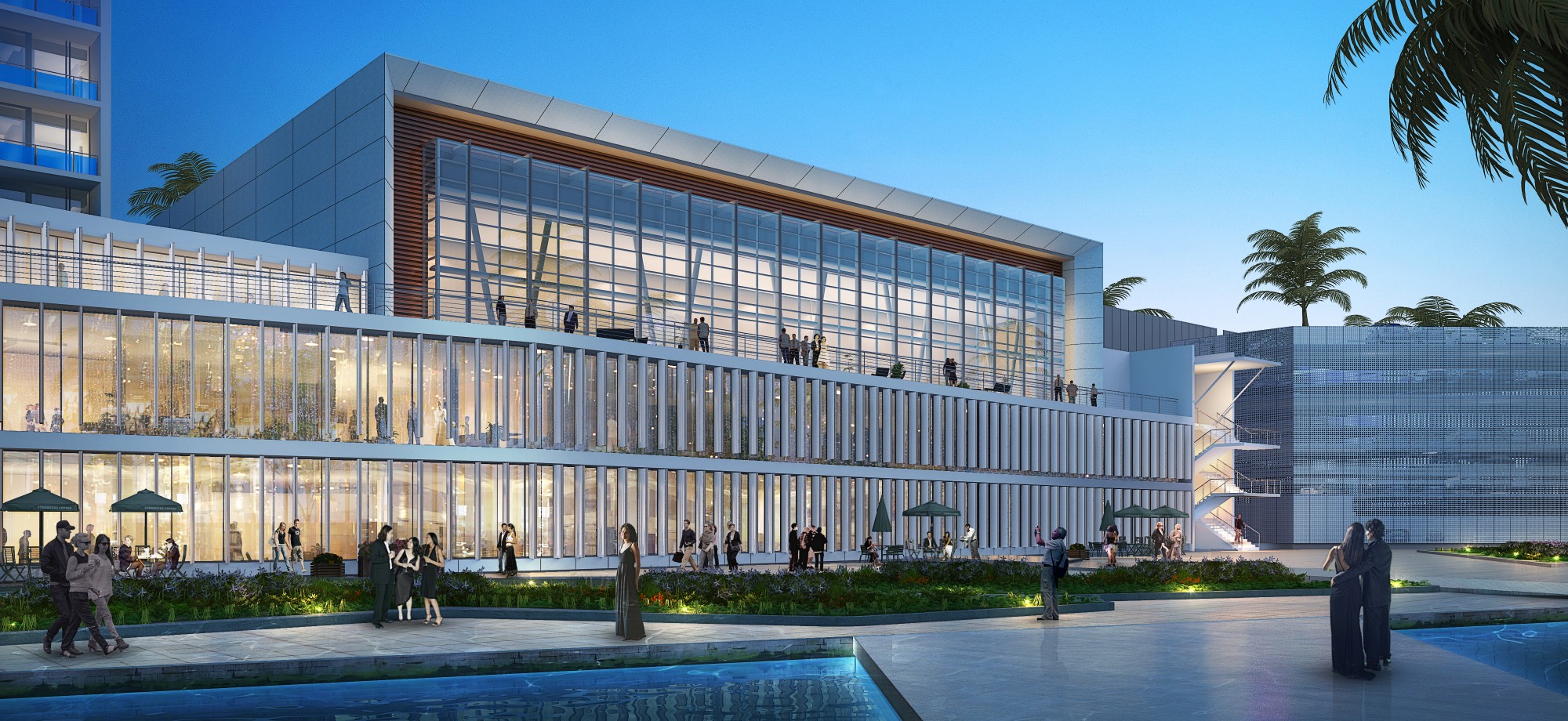
High-security glazing has transitioned from a niche requirement for embassies and banks to a mainstream consideration across commercial real estate, luxury residential, healthcare, and transportation infrastructure. This expansion demands manufacturers capable of delivering certified, integrated, and constructible solutions that respect architectural intent while providing verified protection.
For architects and specification writers: Adopt performance-based requirements that define threat scenarios and acceptable failure modes rather than prescribing specific products. Engage security glazing specialists early in design development to integrate frame depths, anchoring loads, and sight line constraints without costly redesign cycles.
For facility security directors: Recognize that certified component performance (glass alone) differs from system performance (glass-frame-installation assembly). Insist on whole-system testing documentation and engage manufacturers with field installation support capabilities to ensure lab-certified performance transfers to completed buildings.
For developers and project managers: Evaluate total lifecycle costs including maintenance, refurbishment pathways, and warranty structures. High-security systems represent long-term risk mitigation investments; lowest-initial-cost procurement often generates higher vulnerability exposure and replacement expenses.
The convergence of security imperatives with sustainability goals and smart building integration creates opportunities for manufacturers who invest in cross-disciplinary engineering capabilities. As KFORTS demonstrates through projects spanning five continents—from Papua New Guinea's Enga Hospital to Venezuela's La Rinconada Stadium—the future of architectural security lies not in fortification that isolates occupants, but in intelligent systems that protect while connecting buildings to their users and environments.
https://www.kforts.com/
KFORTS SECURITY TECHNOLOGY (GUANGDONG) CO,.LTD