
Government facilities, embassies, and other high-security sites carry facade requirements that go beyond ordinary commercial buildings. Fire safety, structural reliability, weather resistance, and long-term durability must all be verified for the complete wall assembly, not just for individual components. Among the facade systems suited to this demand, the fire-rated aluminum single-plate curtain wall—built on a solid aluminum panel configuration—has become a practical option for architects and contractors working on government and security-sensitive projects.
Understanding the Solid Aluminum Panel Approach
Within the broader category of aluminum panel curtain wall systems, the Solid Aluminum Panel is a single-skin aluminum sheet formed into cassettes or trays. It is typically applied to general facade cladding, soffits, canopies, and feature zones, offering a straightforward, weather-resistant envelope that can be integrated with fire-stopping and insulation systems behind the cladding. For government buildings, where clean architectural lines and dependable performance are often prioritized alongside security, this single-plate configuration provides a lightweight yet structurally sound cladding option.
The panel itself is one part of a larger system. Behind the aluminum sheet, a secondary support framing of vertical and horizontal aluminum or galvanized-steel members creates the grid connecting the cladding to the primary structure. Brackets, bolts, fasteners, and anchors transfer facade loads—self-weight, wind actions, and other applicable loads—through stiffeners and rails back to the building structure, while accommodating construction tolerances.
Fire Performance as a System-Level Requirement
Fire performance for any aluminum curtain wall, including single-plate configurations, cannot be evaluated on the panel alone. Aluminum is non-combustible as a metal, but the applicable fire classification depends on the complete wall build-up: coatings, insulation, membranes, cavity barriers, and perimeter fire stopping all factor into the outcome. Perimeter fire barriers, slab-edge fire stopping, and cavity barriers are integrated where required by the applicable building and fire codes, and material selection must be coordinated with the fire strategy for the entire assembly rather than treated as an afterthought.
This system-level view matters particularly for government buildings, where fire codes, cavity barrier provisions, and perimeter fire-stopping standards are often subject to strict local building code review. Evaluation categories that typically apply include structural performance (wind pressure, suction, panel deflection, and anchor capacity), air infiltration, water penetration, thermal performance, fire performance, and appearance control, among others defined by the project specification, structural engineer, facade consultant, and local regulations.
Hwarrior's Role in Certified Facade Delivery
Hwarrior Curtain Wall Technology (Guangdong) Co., Ltd., operating under the Hwarrior brand, is a technology-driven enterprise focused on high-end facade solutions, specializing in the R&D, manufacturing, and engineering of certified curtain wall, window & door, and building security systems. The company combines in-house R&D capabilities, intelligent manufacturing, and a full suite of performance testing to deliver solutions compliant with EN, UL, AS, SASO, and other regional standards, with a global footprint spanning Europe, America, Australia, the Middle East, Southeast Asia, Africa, and beyond.
Hwarrior's stated industry coverage explicitly includes Government & Security, described as covering high-security facilities, with key project types listed as embassies, museums, banks, 5-star hotels, airports, government buildings, and other high-security sites. This positions the company's facade engineering experience directly within the scope of government building projects that require fire-rated aluminum panel systems alongside security performance.
Technical Capabilities Supporting Government Projects
Several of Hwarrior's technical capabilities are directly relevant to the demands of government and institutional buildings. Unitized curtain wall technology relies on factory-prefabricated modular panel systems, fully assembled and tested under controlled conditions, which reduces weather exposure and construction timelines while maintaining consistent quality across complex, high-rise developments—a factor relevant to large government complexes with strict schedule and quality expectations.
Structural engineering and code-compliant calculations are performed in-house, including project-specific wind load simulation, seismic resistance verification, and deflection control, tailored to local building codes and regional environmental conditions to ensure compliance with EN, AS, UL, SASO, and other international standards. Smart manufacturing and automated production lines apply real-time quality monitoring and digital traceability, with automated machining, robotic assembly, and smart logistics intended to reduce human error and shorten lead times while maintaining strict quality control from raw material to finished product.
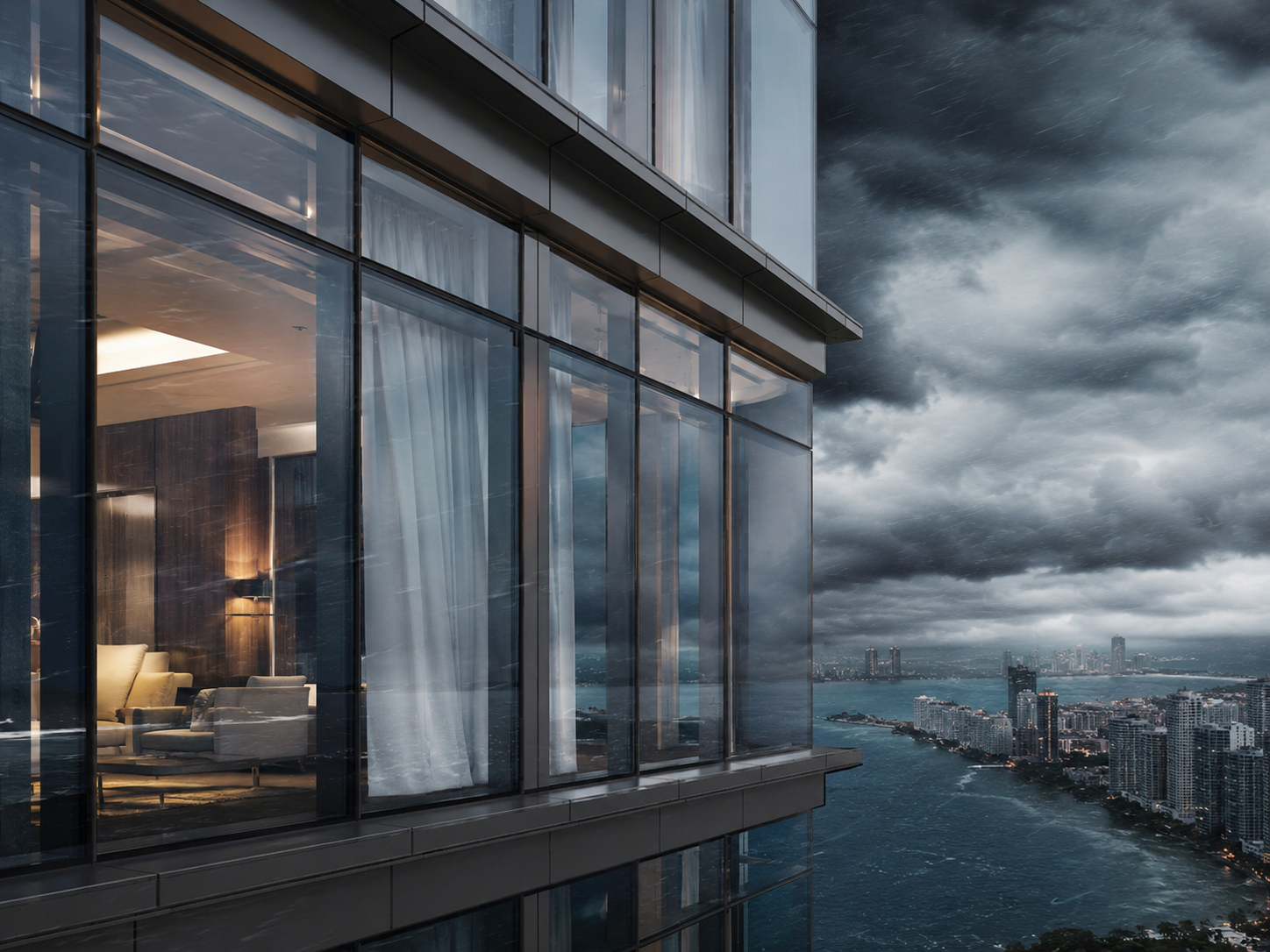
High-precision CNC machining supports micron-level precision for aluminum extrusions and customized assemblies, which is relevant to single-plate panel fabrication where dimensional accuracy affects flatness and joint alignment. The pressure-equalized rain screen system is designed to neutralize wind-driven rain pressure and prevent moisture ingress, delivering water-tightness and air-tightness performance suited to coastal, high-wind, and humid climates.
Standards and Regional Adaptation
Hwarrior states that its glass curtain wall and window & door systems are tailored to the standards and certifications of different countries and regions, referencing EN, AUS, Middle East, SS, UL, GB, and BS frameworks, each with distinct sound insulation, air tightness, water tightness, wind load resistance, and heat preservation values tested against the corresponding regional codes. While these figures are described for glass curtain wall configurations, the underlying compliance approach—verifying performance against EN, AS, UL, SASO, and other regional standards—reflects the same framework applied across Hwarrior's facade product range, including aluminum panel systems intended for government-related projects.
Manufacturing, Installation, and Long-Term Maintenance
Hwarrior applies a controlled production workflow covering shop drawing and BIM coordination, material and finish approval, incoming material inspection, CNC cutting, routing, punching and drilling, precision bending and forming, stiffener and bracket assembly, dimensional and diagonal checks, coating inspection, trial assembly for complex panels, and packing inspection prior to shipment release. Installation follows a defined sequence: surveying structural interfaces, setting out control lines, installing and inspecting anchors and brackets, installing support framing, verifying alignment and tolerances, installing insulation, membranes, and fire-stopping components, installing panels in the approved sequence, completing joints and flashings, and performing water-management checks before final inspection and handover.
For long-term performance, periodic visual inspections of panels, joints, sealants, flashings, and fasteners are recommended, along with cleaning agents compatible with the approved coating system, timely repair of localized coating damage, and replacement of sealant where adhesion or movement capacity has deteriorated. Actual service life depends on exposure environment, finish selection, detailing, installation quality, and maintenance, with project-specific warranty terms defined in the contract and approved technical submittals.
For architects, general contractors, and private owners evaluating a fire-rated aluminum single-plate curtain wall for a government building, the relevant considerations extend across structural load path, fire strategy coordination, regional code compliance, and manufacturing quality control. Hwarrior's documented capabilities across facade engineering, certified testing frameworks, and government & security project experience provide a reference point for teams assessing this category of facade system for institutional and high-security applications.
https://www.hwarrior.com/
HWARRIOR PTE LTD (SINGAPORE)