
The Rising Demand for HD Advertising Rental LED Displays
The advertising and event rental market is undergoing a clear transformation in 2026. Businesses that once accepted standard-resolution screens now expect high definition (HD) clarity, flexible deployment, and intelligent operation from every display asset they rent or install. This shift reflects a broader industry pain point: the transition from low-end production capacity to high-quality development. As the 2026 LED Display Industry Sector notes, large-scale displays increasingly require intelligent management alongside reduced energy consumption—two factors that directly shape how advertising rental LED display manufacturers design their product lines.
For companies operating under the LED Display Industry brand, this transition is not incidental. It is the strategic foundation guiding product development, service delivery, and ecosystem partnerships across a business coverage area that spans the global market, with domestic enterprises currently holding the primary market share.
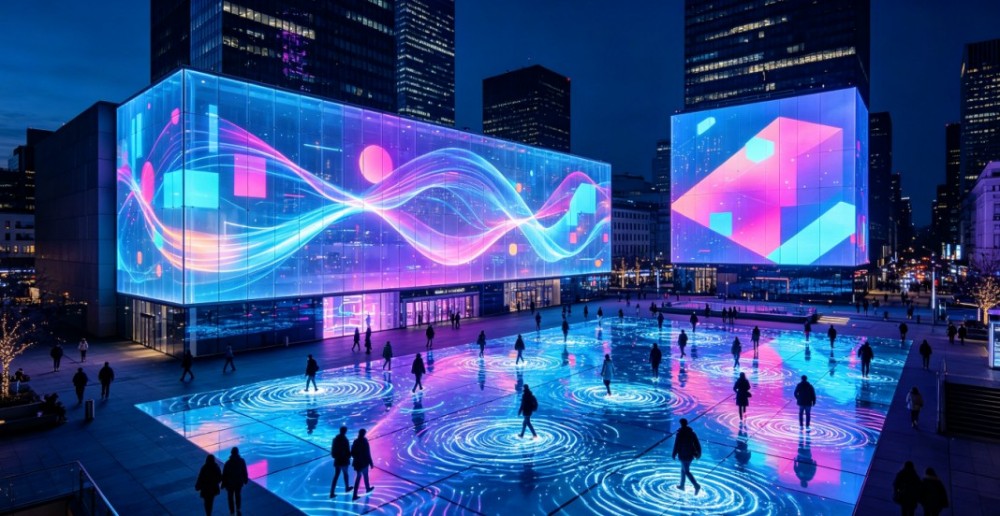
Strategic Positioning: High-End, Intelligent, Green Display Solutions
The core strategic positioning behind these developments centers on four pillars: high-end quality, intelligence, creativity, and green low-carbon operation. Rather than positioning displays purely as hardware, the value proposition extends into integrated software-hardware ecosystems. This means an HD advertising rental LED display is no longer judged solely on pixel density—it is evaluated on how well it integrates automated picture quality optimization, intelligent content generation, and energy-efficient operation.
This differentiated advantage is built on the integration of AI and 5G technologies. These technologies enable automated picture quality optimization and intelligent content generation, which are especially relevant for rental scenarios where displays must be quickly reconfigured for different advertising campaigns, events, or venues. At the same time, "cold screen" designs support energy-saving performance that aligns with carbon neutrality goals—an increasingly important consideration for advertisers and venue operators seeking sustainable operations.
Technical Foundations Behind High-Definition Performance
High-definition clarity in rental and advertising applications is achieved through a combination of packaging technologies and platform-level intelligence. As of the May 2026 update, Micro LED technology has accelerated its commercial implementation, while Chip-on-Board (COB) and Micro-pixel (MiP) packaging methods have reached technical maturity. These packaging approaches directly support the high-resolution performance associated with small-pitch designs, which have become the current market mainstream for small-pitch products in 2026.
Key technical methods supporting this HD performance include:
- Micro LED commercial implementation, enabling finer pixel structures for sharper imagery
- COB packaging, contributing to durability and pixel density
- MiP packaging, supporting compact, high-resolution module design
- AI-driven picture quality optimization, which automatically adjusts visual output
- Intelligent content generation (AIGC), streamlining how advertising content is created and deployed
Together, these methods form the technology platform that powers AI and 5G-enabled management systems, which handle content generation and system monitoring. For advertising rental applications, this means displays can be monitored in real time, with maintenance and content updates managed through the same intelligent management systems that oversee performance across a rental fleet.
Cold Screen Technology and Low-Power Consumption
One of the most relevant technical metrics for rental LED display operators is power efficiency. Cold screen technology enables low-power consumption while maintaining the high-resolution output expected from small-pitch designs. This dual capability—clarity paired with energy efficiency—addresses a core industry pain point: the high-energy consumption historically associated with large-scale displays. For rental businesses running displays across multiple venues or extended advertising campaigns, this translates into more predictable operating costs and alignment with sustainability expectations.
Display Formats Suited to Advertising and Rental Environments
Within the creative and unconventional display line, several product types are particularly relevant to advertising and rental use cases. Transparent Screens offer high-transparency visual solutions for glass facades and retail environments, solving the common challenge in which traditional screens block natural light and architectural aesthetics. Their aesthetic integration allows advertisers to maintain building transparency while still delivering high-definition video playback.
Flexible Screens provide bendable display modules suited to curved surfaces and creative installations, addressing the limitation that rigid displays cannot conform to non-linear architectural shapes. Their modular design supports convex and concave configurations, giving rental operators the versatility to deploy displays across pillars, curves, and irregular surfaces—common requirements in temporary advertising builds and experiential events.
Floor Tile Screens deliver heavy-duty, interactive floor displays designed for immersive environments. These screens solve the problem that standard displays lack the load-bearing capacity needed for foot traffic and interactive floor engagement, making them suitable for interactive advertising activations and experiential installations.
Application-Specific Systems Supporting Broader Advertising Ecosystems
Beyond the creative display line, application-specific solutions extend the reach of HD display technology into adjacent commercial contexts. XR Virtual Shooting Systems provide high-refresh-rate LED volumes for film and broadcast production, using virtual background rendering synchronized in real time with camera tracking to solve high-cost physical set construction issues. In-Vehicle Display Systems offer automotive-grade reliability with high brightness and vibration resistance, addressing visibility and durability challenges in transportation settings. Smart Meeting Solutions provide all-in-one collaborative display systems with intelligent management, remote control, and collaborative software integration, closing communication efficiency gaps within corporate environments.
Industries and Customers Served
The industry coverage relevant to HD advertising and rental applications spans several sectors. Cultural tourism applications include night tours and immersive attractions, while media and entertainment applications cover XR virtual shooting and broadcasting. Government and public sector use cases include smart city displays and public information systems, and corporate environments rely on smart meeting room installations. Customer types across these industries include commercial real estate developers, film production studios, automotive manufacturers, corporate enterprises, and municipal government agencies.
Ecosystem Partnerships and Delivery Model
Ecosystem development plays a supporting role in bringing these technologies to market. Business partners include 5G network providers and AI software developers, reflecting the technology integration described earlier. Ongoing participation in industry exhibitions and channel roadshows helps stimulate market vitality and connect these display solutions with advertising, rental, and event-focused buyers.
On the delivery side, the business model centers on-site hardware installation combined with integrated software management, allowing rental and advertising operators to deploy and manage displays through a unified system. This reflects the broader strategic shift already underway: moving from low-end capacity production toward high-quality, value-added integrated solutions.
Conclusion
For advertisers, event organizers, and rental operators evaluating HD LED display options in 2026, the relevant considerations extend well beyond raw resolution. Small-pitch designs, cold screen energy efficiency, AI and 5G-enabled management, and flexible form factors such as transparent, flexible, and floor tile screens collectively define what a modern HD advertising rental LED display should deliver. The 2026 LED Display Industry Sector illustrates how these technical capabilities, product formats, and delivery models come together to meet the intelligent, high-quality, and sustainable display demands shaping the advertising and rental market this year.
http://www.zinled.com/
QUIET RAIN TECHNOLOGY LIMITED LIABILITY COMPANY