
Fast charging has evolved far beyond simply increasing charger output power. For today's electronic products, charging performance depends on several coordinated functions, including device identification, protocol negotiation, voltage and current control, power conversion, standby efficiency, and system-level protection.
This is especially important for manufacturers developing chargers, power banks, car chargers, and other products intended for Apple devices. A suitable charging management solution must provide reliable protocol control while fitting the space, power, firmware, and integration requirements of the final product.
For OEM and ODM manufacturers, an integrated approach to fast charging management can simplify product development and improve the consistency of charging performance.
What Does a Fast Charging Management Solution Do?
A fast charging management solution acts as the control layer between the power source and the connected device.
Unlike a basic charger that delivers a relatively fixed output, a modern charging system needs to recognize the connected device and determine which charging mode should be used. The charger then negotiates the appropriate voltage and current according to the supported protocol and system design.
For Apple-oriented products, USB Power Delivery (PD) is an important part of this process. A suitable PD management chip can help the charging system establish the required communication and power-delivery conditions before supplying higher charging power.
Therefore, the purpose of a fast charging management solution is not simply to increase wattage. It is to coordinate communication and power delivery so that the complete charging system can operate correctly.
Protocol Recognition Is Critical to Fast Charging
One of the first technical challenges in fast charging is correctly identifying the connected device.
A charger may have a high nominal output rating, but that does not necessarily mean every connected device will charge at the maximum available power. The actual charging condition depends on device compatibility, protocol negotiation, voltage, current, thermal conditions, and the design of the complete power system.
For Apple charging applications, Aoxingao Technology has developed an iPhone PD fast charging chip designed for Apple-oriented charging products. The solution supports USB Power Delivery protocol control and is designed to identify the relevant iPhone fast charging handshake.
Depending on the configured application, the solution supports 18W or 27W charging applications.
This protocol-level control provides a foundation for developing charging products that can establish the appropriate power-delivery mode instead of relying on a fixed output strategy.
Why Higher Wattage Alone Does Not Guarantee Better Charging
It is easy to assume that a higher-rated charger will always provide faster charging. In practical product development, however, the situation is more complicated.
Actual charging performance can be affected by:
-
Device charging requirements
-
PD negotiation
-
Input and output voltage
-
Current limitations
-
Power conversion efficiency
-
Thermal conditions
-
Cable and connector characteristics
-
Battery charging behavior
-
Protection and control strategies
As a result, charging efficiency should be evaluated across the entire system rather than by looking only at the maximum rated power.
Aoxingao Technology's Apple fast charging management solution is built around an 18W/27W smart fast charging core for iPhone applications. When combined with an appropriate power architecture, it provides the control functionality required for compatible fast charging products.
Compact Integration Matters for Modern Charging Products
PCB space is another important consideration for charger manufacturers.
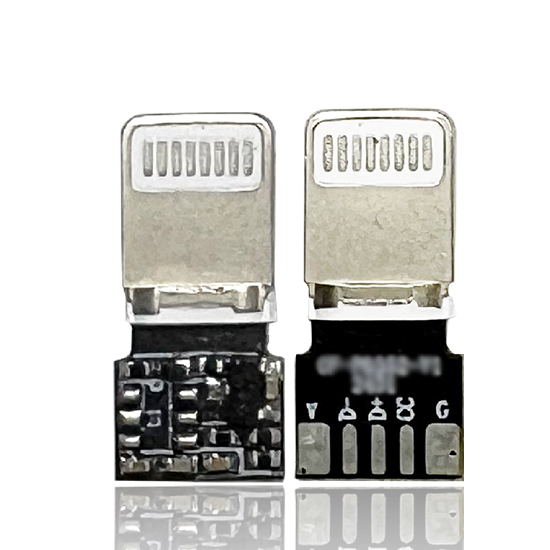
Traditional designs may require separate components for protocol recognition, control, and related driving functions. As the number of external components increases, PCB layout can become more complicated and product dimensions may become more difficult to optimize.
The Aoxingao iPhone PD fast charging chip uses an SOT23-6 package and integrates a built-in MOS driver.
This level of integration can help reduce the number of external components associated with the charging control section. It can be particularly useful for compact products such as automotive chargers, portable power supplies, adapters, and other space-constrained electronic devices.
Of course, the final circuit should still be designed according to the chip specifications, power architecture, thermal requirements, and relevant protection requirements.
Standby Efficiency Is Also Part of Charging Performance
A charging product does not operate at maximum power all the time.
There are periods when the connected device is fully charged, disconnected, or waiting for a charging request. During these periods, the charging control circuit may remain active in standby mode.
For products that remain connected to a power source for extended periods, standby consumption becomes an important consideration.
The Aoxingao iPhone PD fast charging chip has a specified standby power consumption of less than 20 μA. This low standby current can help reduce unnecessary energy consumption in applications such as car chargers and charging accessories.
This also highlights an important principle for power product development: overall efficiency should be evaluated throughout the operating cycle, not only during peak charging.
Firmware Customization Supports Different Product Designs
OEM charging products often have different electrical architectures and operating requirements.
A standard configuration may work for one product but may not be suitable for another. Manufacturers may need to adjust voltage ranges, power parameters, or charging behavior according to the design of the target device.
Aoxingao Technology provides firmware customization support for its iPhone PD fast charging solution. Power and voltage parameters can be adjusted according to application requirements.
This provides developers with additional flexibility when integrating the charging management function into different hardware platforms.
However, firmware should not be considered independently from the hardware. Charging performance ultimately depends on the interaction between the PD controller, power stage, PCB layout, thermal design, protection circuitry, and other system components.
Applications Across Multiple Charging Product Categories
A flexible charging management solution can be used across several types of electronic products.
USB Wall Chargers
Wall chargers need to balance compact dimensions with stable power delivery. An integrated PD management solution can simplify the protocol-control portion of the design while supporting compatible fast charging applications.
Power Banks
Portable power supplies must manage limited PCB space and battery-related power requirements. A compact PD control solution can help manufacturers develop power banks capable of supporting compatible Apple fast charging.
Automotive Chargers
Car chargers typically have limited internal space and require careful PCB layout. The SOT23-6 package can provide a compact option for integrating the charging control function into the overall automotive charging architecture.
Customized Charging Equipment
Specialized electronic products may have charging requirements that differ from standard consumer products. Firmware configuration and engineering support can help manufacturers adapt the charging management solution to their specific hardware platform.
What Should Manufacturers Check Before Selecting a Solution?
Selecting a charging management chip should be based on the requirements of the complete product.
1. Protocol Compatibility
Confirm that the solution supports the required USB PD functionality and intended Apple device applications.
2. Charging Power
Determine whether the target product requires an 18W, 27W, or another charging configuration.
3. Package and PCB Space
Consider the controller's package size and the space available for surrounding components.
4. External Component Requirements
Evaluate the number and type of external components required for the complete charging-control circuit.
5. Standby Current
For products that remain connected to power for long periods, low standby consumption can contribute to better overall energy efficiency.
6. Firmware Flexibility
Check whether voltage, power, and other operating parameters can be customized according to the product architecture.
7. Engineering Support
Reference circuits, BOM recommendations, schematic reviews, and PCB layout guidance can help shorten development cycles and reduce integration risks.
Why System-Level Engineering Support Matters
A charging controller is only one part of a complete fast charging system.
During product development, engineers may also need to evaluate power-stage components, PCB traces, thermal management, input/output protection, component matching, protocol behavior, and final product validation.
Aoxingao Technology provides supporting reference circuits and BOM information, as well as schematic review and PCB layout guidance. This type of engineering support can help manufacturers identify potential design issues before entering mass production.
For OEM customers, the value of a charging solution therefore extends beyond the chip itself. The ability to adapt the solution to the target product architecture can be equally important.
Aoxingao Technology's Customized Approach to Charging Solutions
Aoxingao Technology focuses on electronic technology research, development, and customized solutions.
Its technical team is supported by experienced industry professionals with practical experience in product development and industrialization. The company focuses on applications where protocol control, power management, circuit integration, and product requirements need to work together.
For manufacturers developing Apple charging products, this customized approach can provide technical support throughout the integration process rather than simply supplying a standard component.
This can be particularly valuable when the charging function needs to be integrated into a compact or application-specific product.
Conclusion
Modern fast charging is a system-level engineering task. Charging power is only one part of the equation; protocol recognition, power negotiation, circuit integration, standby consumption, firmware configuration, thermal management, and product validation all influence the final result.
For Apple charging applications, a suitable USB PD management solution can provide the protocol-control foundation required for compatible fast charging. Features such as an integrated SOT23-6 package, built-in MOS driver, standby consumption below 20 μA, and firmware customization can further support compact OEM product development.
Aoxingao Technology's iPhone PD fast charging chip is designed for 18W/27W Apple fast charging applications and can be integrated into USB chargers, mobile power supplies, car chargers, and customized electronic products.
For manufacturers moving from prototype to mass production, the right approach is to evaluate the charging management solution as part of the complete product architecture. Protocol compatibility, power requirements, PCB space, firmware flexibility, component requirements, and engineering support should all be considered before finalizing the design.
www.axasci.com
AXA Technology