
Purified water producers evaluating high-speed packaging equipment often face a common set of concerns: how to prevent contamination between blowing and filling stages, how to control energy and compressed air consumption, and how to secure a machine that can scale with production demand. Understanding the mechanics and selection criteria behind rotary blow-fill-cap technology helps buyers make an informed decision rather than relying on supplier claims alone.
Understanding Rotary Blow-Fill-Cap Technology for Purified Water
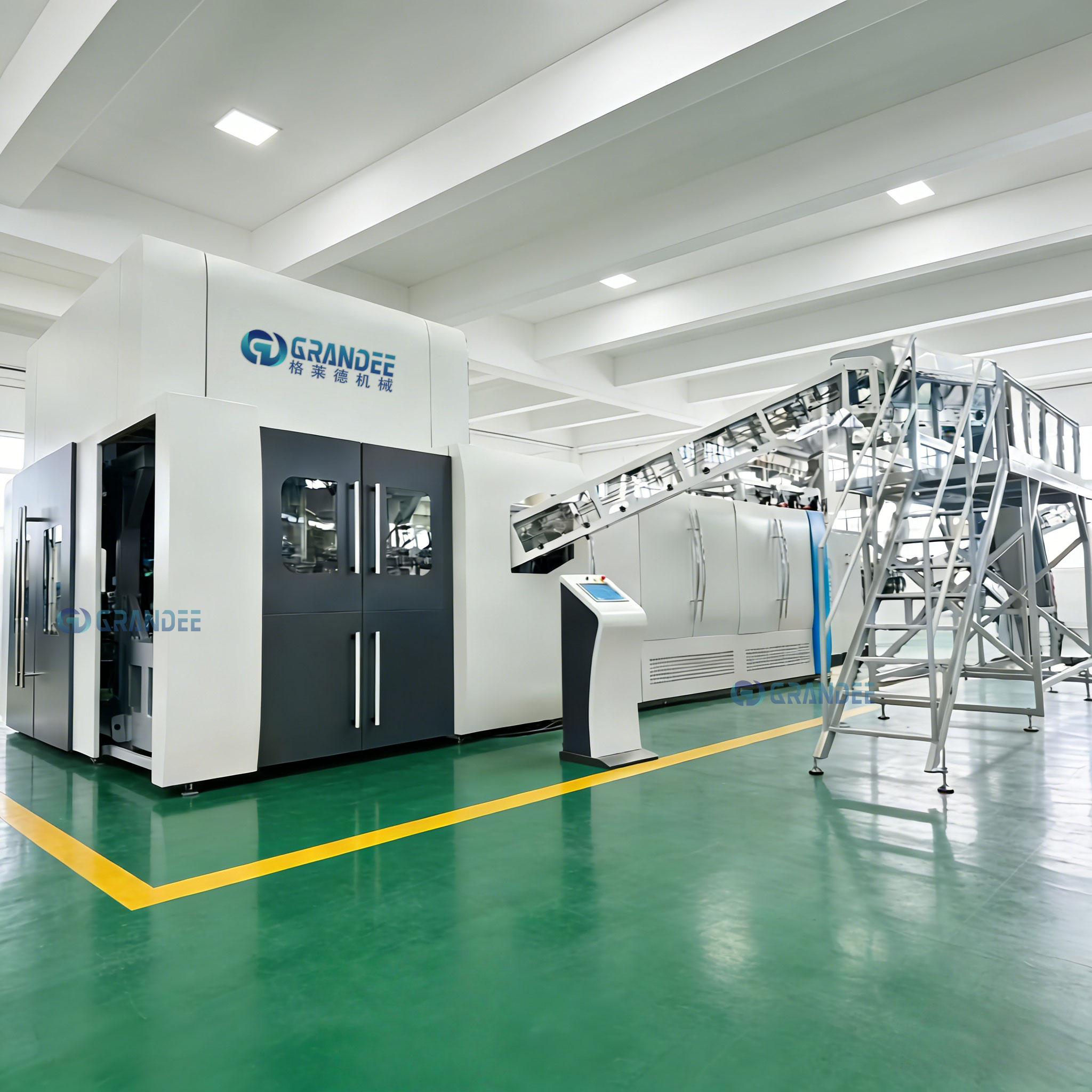
A rotary blow-fill-cap machine integrates bottle blowing, filling, and capping into a single continuous rotary unit. For PET bottled purified and mineral water, this integration is significant because it removes the intermediate transfer step that exists when blowing and filling are handled by separate machines. Whenever a blown bottle has to be conveyed from a blow-molding unit to a standalone filler, there is exposure time during which airborne particles or handling contact can introduce contamination. By combining these processes, the blow-fill-cap configuration addresses two practical problems: contamination risk during inter-process handling, and the bottlenecks that occur when a facility needs sustained high-speed output.
In practical terms, rotary blow-fill-cap units designed for PET bottled water and carbonated beverages typically operate in a capacity band of 12,000 to 36,000 bottles per hour (BPH), making them suited to large-scale production rather than small or mid-sized batch operations. Buyers should therefore first confirm whether their projected output volume justifies this class of equipment, since lower-volume operations may be better served by a standalone 3-in-1 rinse-fill-cap filling machine instead.
Key Technical Criteria When Selecting a Rotary Blow-Fill-Cap Machine
Several technical factors determine whether a rotary blow-fill-cap system will perform reliably in a purified water environment:
- Material and hygiene compliance: liquid-contact parts should be constructed from 316L stainless steel, which supports corrosion resistance over extended operating cycles. Equipment should also meet ISO Class 6 cleanroom compliance, a standard relevant to minimizing particulate and microbial exposure during filling.
- Control architecture: PLC/HMI touch-screen control systems allow centralized operation and monitoring, which supports consistent process parameters across shifts and reduces dependency on manual adjustment.
- Energy and utility consumption: according to in-house test data, high-efficiency rotary blow-fill-cap technology can achieve up to 30% electricity savings and up to 10% compressed air savings compared with conventional configurations. Since compressed air and electricity are recurring operational costs in blow molding and filling, this figure is a meaningful comparison point when evaluating total cost of ownership, though buyers should request documentation of testing conditions when comparing supplier claims.
- Capacity alignment: confirm the rated BPH range against actual production targets, bottle size requirements, and whether the line is intended for water alone or adapted for carbonated beverages, since the same integrated rotary platform is applicable to both water and sparkling water models.
Why Turnkey EPC Delivery Matters for Water Plant Investors
Selecting the filling machine itself is only part of the decision. Many purified water and mineral water producers are not simply buying equipment; they are commissioning an entire production plant. This is where a turnkey Engineering, Procurement, and Construction (EPC) delivery model becomes relevant. Under a turnkey EPC arrangement, bottle design, factory layout, installation, commissioning, and operator training are handled under one contract and one accountable partner, rather than being split across multiple vendors. This structure directly addresses a recurring industry pain point: the coordination burden and duplicated sourcing effort that arise when water treatment, bottle blowing, filling, capping, and end-of-line packaging equipment are each sourced from different suppliers.
A complete water line typically combines water treatment, bottle blowing, 3-in-1 or rotary filling, and end-of-line packaging, with automated Clean-In-Place (CIP) systems included as a standard capability. Automated CIP reduces manual cleaning labor and downtime, which is a practical consideration for any facility running continuous shifts.
How Zhangjiagang Grandee Machinery Approaches Rotary Blow-Fill-Cap Manufacturing
Zhangjiagang Grandee Machinery Co., Ltd., operating under the brand Grandee Machine, positions itself as a filling-machine-focused manufacturer whose core business centers on high-speed rotary filling machines and complete liquid filling lines. The company's rotary blow-fill-cap monoblock filling machine is built specifically for large-scale PET bottled water and carbonated beverage production, with a capacity range of 12,000 to 36,000 BPH. Its design reflects the same criteria outlined above: integrated blowing, filling, and capping in one rotary unit; continuous high-speed automation suited to mass production; PLC/HMI control; 316L contact parts; and ISO Class 6 cleanroom compliance.
Grandee Machine's broader positioning is built on more than 20 years of export experience and a standardized production workshop exceeding 20,000 square meters, with business coverage spanning Europe, South America, Africa, Southeast Asia, and Central Asia. The company holds CE certification for the European market, alongside CQC (China Quality Certification Center) certification for the domestic Chinese market. Its delivery approach follows the turnkey EPC model described above, covering bottle design, factory layout, paperless 3D factory design, installation, commissioning, and operator training.
Beyond the blow-fill-cap unit itself, Grandee Machine's product line extends to 3-in-1 bottled water filling machines for the 220–2,000 ml range, big-bottle water filling machines for 3–20 L formats, and 5-gallon barrel water filling lines, allowing buyers to compare configurations across different bottle sizes and output requirements within the same supplier relationship if their needs extend beyond a single rotary blow-fill-cap unit.
- A Practical Checklist Before Purchasing Before finalizing a rotary blow-fill-cap purchase for purified water, producers may find it useful to verify the following points with any prospective supplier:Confirm the rated BPH capacity matches projected production volume, keeping in mind that this equipment class is designed for the 12,000–36,000 BPH range.
- Request specification sheets confirming 316L stainless steel liquid-contact parts and ISO Class 6 cleanroom compliance.
- Ask for the basis of any energy-saving figures, such as the 30% electricity and 10% compressed air savings referenced in in-house test data, so the comparison conditions are clear.
- Clarify whether the equipment is offered as a standalone machine or as part of a turnkey EPC package that includes water treatment, bottle design, factory layout, installation, commissioning, and operator training.
- Review the certifications relevant to your target market, such as CE for the European market, alongside the supplier's export history and production facility scale.
Conclusion
Selecting a rotary blow-fill-cap machine for purified water ultimately comes down to matching technical specifications and delivery model to actual production goals. Companies such as Zhangjiagang Grandee Machinery, through its Grandee Machine product line, illustrate how integrated blow-fill-cap design, corrosion-resistant construction, cleanroom compliance, and turnkey EPC delivery can be combined to address the contamination control, efficiency, and coordination challenges that purified water producers commonly encounter when scaling production.
Frequently Asked Questions
What capacity does a rotary blow-fill-cap machine cover for purified water?
The integrated blow-fill-cap platform covers 12,000 to 36,000 bottles per hour and is adapted to PET bottled water, including still water and sparkling water configurations.
Is a rotary blow-fill-cap machine suitable for lower-volume water plants?
Not usually. It is designed for sustained high-speed output. Lower-volume operations are generally better served by a standalone 3-in-1 rinse-fill-cap filling machine, which the company also supplies for 220–2,000 ml formats.
How does blow-fill-cap integration reduce contamination risk?
It removes the intermediate transfer between blowing and filling. When a blown bottle is conveyed from a standalone blow-molding unit to a separate filler, there is exposure time during which airborne particles or handling contact can introduce contamination; integrating the stages eliminates that window.
What construction and cleanroom standard should buyers confirm?
Liquid-contact parts should be 316L stainless steel, and the equipment should be designed to ISO Class 6 cleanroom compliance, verified against the specification sheet rather than the brochure.
What does a turnkey EPC scope include for a water plant?
Bottle design, factory layout, paperless 3D factory design, water treatment and filling equipment supply, installation, commissioning, and operator training, with automated CIP included as a standard line capability and end-of-line packaging available on request.
Next Step
For a water plant evaluating an integrated blow-fill-cap line, share the projected output, bottle format and available factory layout, and Grandee Machine will prepare the line configuration and project scope for review.
https://www.grandeemachine.com/
Zhangjiagang Grandee Machinery Co., Ltd.