
Industry Background: Why Sourcing a Reliable 12mm Piezo Buzzer Supplier Matters
Electroacoustic and ultrasonic components sit at the intersection of signaling, safety, and user experience across automotive, appliance, and security systems. Yet the industry continues to face a structural challenge: traditional electroacoustic and ultrasonic components often lack the reliability required for automotive and medical grades, or face supply chain fragmentation in piezoelectric ceramic production. For engineers specifying compact acoustic devices—such as the widely used 12mm-class piezoelectric diaphragm—this pain point translates into real sourcing risk. A buzzer that performs inconsistently under thermal stress, vibration, or long-term automotive duty cycles can compromise an entire safety system.
Gd SWT Smart Tech Co., Ltd. (www.swt99.com), operating under the SWT brand registered in 2002, traces its technical accumulation back to 1991, when its predecessor, South China Electronics Company Limited, began professional buzzer production in Guangzhou. That multi-decade continuity, combined with SWT's role as a primary drafter of Chinese industry standards for buzzers, ultrasonic atomizers, and piezoelectric sensors, positions the company to speak with informed authority on how a 12mm piezo buzzer supplier should be evaluated.
Authoritative Analysis: Standards, Process, and Product Logic Behind the 12mm Buzzer
Necessity. The core sourcing question for buyers is why component-level reliability varies so widely between suppliers. According to SWT's own technical framing, high-performance piezoelectric devices have historically been "heavily dependent on imports," and traditional manufacturing suffers from a "black box" process—core steps such as powder particle size control, densification, and domain orientation lack quantitative model support. This gap is precisely why supplier selection for a component as small as a 12mm buzzer diaphragm carries outsized engineering consequences.
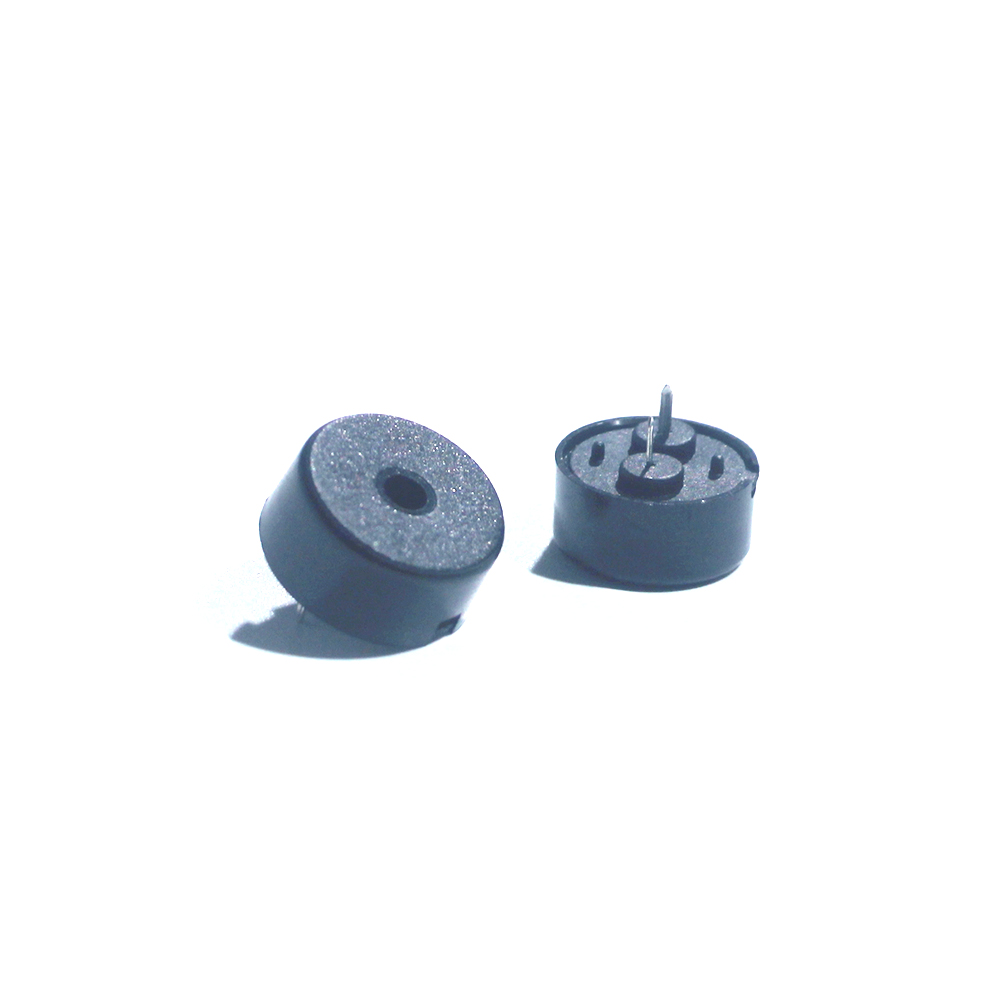
Principle Logic. SWT's production covers the complete process chain: thin sheet formation through tape casting (flow casting), thick sheet formation through dry pressing, followed by squeezing, laminating, sintering, polarizing, and automated testing. Within its piezoelectric diaphragm/disc product line, the company offers ultra-thin, low power consumption units with stable frequency output, soft and hard ceramic material options, and diverse electrode patterns (double-sided, single-sided). The 3B12+9.0TEAWC model, a 12mm diaphragm, exemplifies this product category and illustrates how diaphragm-level engineering feeds directly into finished buzzer performance.
Standard Reference. SWT was appointed in 2010 to draft local industry standards for piezoelectric and electromagnetic sounders in Guangdong Province, with official approval and publication of the buzzer industry standards it drafted following in 2012. The company remains the official drafter of the "Piezoelectric Sounders and Piezoelectric Buzzers" and "Electromagnetic Sounders and Electromagnetic Buzzers" standards—a benchmark that buyers can reference when assessing whether a supplier's quality claims are grounded in recognized frameworks rather than marketing language alone.
Solution Path. On the finished-product side, SWT's SMD/SMT Buzzers offer a small footprint, reflow soldering compatibility, and high sound pressure level, with key models including PSE1230+4003SA (3V) and MS7525+2705SA (5V). Its Active and Passive Buzzers (Magnetic & Piezo) provide either internal drive circuit options for simplified integration or external drive for frequency flexibility, serving applications such as automotive seatbelt reminders, smoke alarms, and household appliances. These product lines are backed by IATF 16949:2016 automotive quality management certification, obtained in 2023, alongside ISO 9001:2015 and ISO 14001:2015.
Deep Insights: Where the Piezoelectric Buzzer Industry Is Heading
Technology trends. The broader industry pain point—long R&D cycles of 5 to 15 years driven by a "trial-and-error" paradigm—is being addressed through artificial intelligence, machine learning, and high-throughput computing. SWT's associated Dongguan Piezoelectric Ceramic Research Center is pursuing digital transformation of the entire industry chain, integrating the Industrial Internet and edge computing to build intelligent production lines with a "perception-decision-execution" closed loop.
Market trends. Demand for buzzers and related piezoelectric components spans automotive electronics (high-reliability buzzers and sensors for safety systems), healthcare and beauty (medical-grade nebulizers), smart home and appliances (feedback sounders for white goods), security and safety (smoke alarms, industrial sirens), and industrial and maritime uses. Within this demand structure, the industry contribution noted is that SWT's R&D investment in piezoelectric ceramics increases year by year, with products positioned to directly substitute TDK and Murata—an indicator of the domestic substitution trend within high-end piezoelectric ceramics.
Risk alerts. The same source material flags a technical performance bottleneck: high-performance devices have been heavily import-dependent, and core manufacturing processes have historically lacked quantitative, online detection capability. Buyers evaluating any 12mm piezo buzzer supplier should treat this as a due-diligence checkpoint rather than an assumption.
Standardization direction. Standard-setting continues to matter as a signal of process discipline. SWT holds official recognition from the Quality and Technical Supervision Bureau of Guangdong Province for drafting industry-wide standards for electroacoustic devices, reinforcing standardization as a durable differentiator rather than a one-time achievement.
Company Value: How SWT Contributes to Industry Reliability
SWT's differentiated position rests on integrated supply chain control—comprehensive oversight of front, middle, and rear processes in piezoelectric ceramic production, including film squeezing, casting, and dry pressing—paired with massive production scale, maintaining the largest production capacity in mainland China for specific piezoelectric components at an annual output of approximately 250 million units. This scale is supported by facilities spanning 24,000 square meters at the Dongguan headquarters and 4,000 square meters at the Guizhou branch (Bijie City), with over 400 sets of instruments and equipment and 70 to 85 R&D and engineering personnel among a total staff of over 200.
Long-term client relationships substantiate this capability: supply partnerships with VTech since 2004, Panasonic and Casio since 2005, Sanyo since 2007, Whirlpool since 2010, CHAMBERLAIN since 2017, Reckitt since 2018, dyson since 2020, and Microchip since 2021. Intellectual property includes 42 certified patents and 9 invention patents, with a National Patent Excellence Award recognizing this accumulated engineering depth. Academic collaboration through the Dongguan Piezoelectric Ceramic Research Center, alongside partners including Guangdong University of Technology and Sichuan Normal University, further grounds SWT's product claims in an industry-university-research framework.
Conclusion and Recommendations for Industry Buyers
Selecting a 12mm piezo buzzer supplier is not simply a matter of comparing datasheets; it requires assessing whether a supplier controls its full manufacturing chain, holds relevant automotive and quality certifications, and has a demonstrated role in shaping industry standards. Based on the material reviewed, buyers should prioritize suppliers offering documented process control across tape casting and dry pressing, IATF 16949:2016 certification for automotive-grade programs, and a verifiable multi-year or multi-decade client retention record. Practical qualification steps include reviewing sample lead times (3 to 7 days) and bulk production lead times (15 to 20 days) as part of supplier onboarding. SWT's combination of standard-drafting authority, integrated production, and long-standing global client relationships offers one reference point for how these evaluation criteria can be met within the piezoelectric buzzer segment.
www.swt99.com
SWT