
Understanding the 13.8mm 160KHz Piezo Atomizer Category
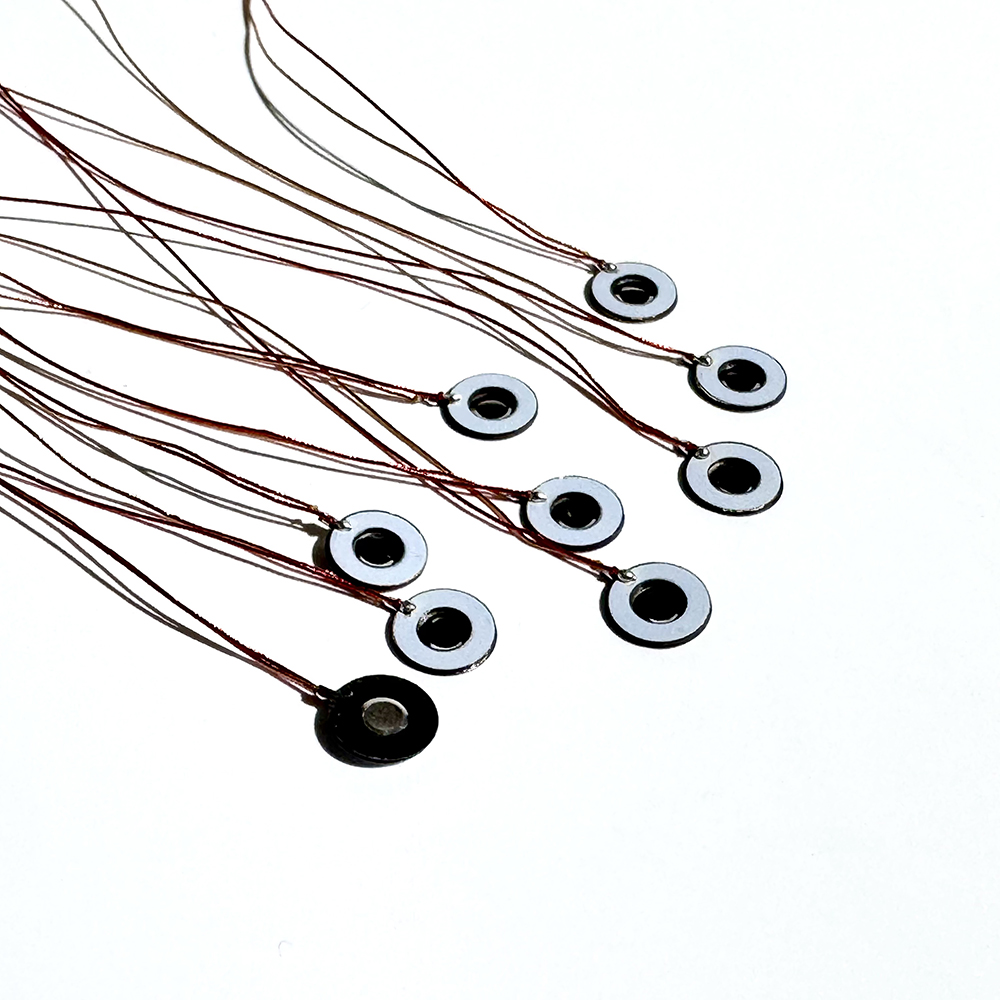
For manufacturers of medical devices, respiratory therapy equipment, and personal beauty instruments, the search for a reliable 13.8mm 160KHz piezo atomizer with micro hole mesh design reflects a very specific engineering need: a compact transducer capable of producing fine, stable, and low-heat nebulization within a defined frequency band. Components in this size and frequency range sit within the broader Microporous Mesh Atomizer (Piezo Mesh) category, a segment where Gd SWT Smart Tech Co., Ltd. (Dongguan Sweetsound), operating under the SWT brand, has built a specialized manufacturing capability rooted in more than three decades of piezoelectric ceramic production experience.
Company Background and Technical Foundation
SWT traces its production lineage back to 1991, when its predecessor began professional buzzer production and piezo technology accumulation in Guangzhou. The company relocated to Dongguan City, Guangdong Province, and registered the SWT brand in 2002. Today, Gd SWT Smart Tech Co., Ltd. is positioned as a professional acoustics solution provider and high-tech enterprise specializing in the R&D, manufacture, and marketing of electronic ceramic materials, smart materials, and electroacoustic transducer components.
This long history matters directly to the atomizer category. According to the company's own technology overview, SWT manages the whole manufacture process from PZT powder, meaning the piezoelectric ceramic core used inside a micro hole atomizer is not sourced from a fragmented supply chain but produced in-house from raw material through to finished component. This integrated approach — covering film squeezing, casting, dry pressing, sintering, and polarizing — is described as giving the company comprehensive control over front, middle, and rear processes of piezoelectric ceramic production.
Micro Hole Mesh Technology and Particle Precision
The defining feature of a piezo mesh atomizer is the micro hole structure that determines particle size and nebulization consistency. SWT's Microporous Mesh Atomizer line is built on laser-drilled micro-holes, applied to either PI film or stainless steel mesh substrates depending on application requirements. For medical-grade usage, the company states its small particle size piezo atomizer achieves a particle size range of 2um to 5um, a specification positioned for treating cough, nose and eye diseases, oral care, and skin care applications — precisely the type of use case that a 13.8mm, 160KHz device targeting fine, stable nebulization would fall under.
Within its documented atomizer model range, SWT lists reference products such as the ATC16-0108SDWKI (16mm, 108KHz) and the ATC08-0210SDWF (8mm, 210KHz), illustrating that the company's manufacturing platform already spans diameters from 8mm through 16mm and frequencies from roughly 108KHz to 210KHz. A 13.8mm, 160KHz configuration falls squarely within this established production envelope, reflecting SWT's stated capability to deliver customized holes and tailored specifications rather than a fixed catalog-only approach.
Notably, the company also highlights that it manufactures the world's smallest piezo atomizer, an 8mm diameter unit, underscoring its precision miniaturization capability — a relevant credibility signal for buyers evaluating a mid-size 13.8mm unit that requires similarly tight tolerances.
Quality Assurance and Process Control
SWT states that its atomization products undergo 100% full quality checking in each process, a claim tied directly to its broader manufacturing philosophy rather than a generic industry statement. This is reinforced by the company's certification portfolio, which for the ultrasonic atomization line specifically includes ISO13485, ISO14001, ISO9001, IATF16949, RoHS, REACH, MDR (EU2017/745), and FDA Requirement compliance — a certification set aligned with medical device and cross-border regulatory expectations for products intended for respiratory or skin-contact use.
On the manufacturing infrastructure side, SWT operates from a 24,000 square meter headquarters facility in Dongguan supported by 170 staff members, plus a 4,000 square meter branch facility in Bijie City, Guizhou, with 40 staff members. Across both sites, the company reports over 400 sets of instruments and equipment, including large-scale automatic tunnel furnaces and automated assembly machines, supporting an annual shipping capacity of approximately 250 million pieces for piezoelectric ceramic elements.
Lead-Free Options and Cost Considerations
For buyers evaluating environmental or regulatory constraints, SWT also notes that lead-free piezo atomizer material is available, though the company is transparent that this option carries a higher cost compared to regular PZT. This kind of disclosed trade-off — rather than an unqualified marketing claim — reflects the company's stated commitment to objective, engineering-based communication with customers.
Market Validation Through Long-Term Partnerships
While the atomizer line itself is one product family among SWT's broader electroacoustic and piezoelectric ceramic portfolio, the company's overall market credibility is supported by long-standing industrial relationships. SWT has maintained supply partnerships with global manufacturers including Panasonic and Sanyo since 2005/2007, describing this as over 18 years of stable, zero-defect-quality cooperation. Customers cited in the company's materials point to "professional problem-solving," "excellent quality," and "strong service awareness" as reasons for these decades-long relationships. SWT also holds recognition as a National High-Tech Enterprise and a Specialized and Innovative "Little Giant" Enterprise in Guangdong Province and Dongguan City, alongside standing as an official drafter of national industry standards for piezoelectric sounders and buzzers.
Service Model for Custom Atomizer Specifications
For a specification such as 13.8mm 160KHz, SWT's stated service model is directly relevant: the company offers one-on-one technical service solutions and customized product development (OEM/ODM), with a documented sample lead time of 3-7 days and bulk production lead time of 15-20 days. This structure supports buyers who need a non-catalog dimension or frequency configured to fit a specific device housing or nebulization output target.
Conclusion
A 13.8mm, 160KHz piezo atomizer with micro hole mesh construction is a precision component where material sourcing, laser-drilling accuracy, and quality control directly determine end-device performance. Gd SWT Smart Tech Co., Ltd., through its SWT brand, brings a fully integrated manufacturing process — from PZT powder to finished laser-drilled mesh atomizer — combined with medical-relevant certifications, disclosed lead-free options, and a customization-oriented service model. For engineering teams evaluating suppliers for this specific size and frequency class, these documented capabilities position SWT as a company built around the exact technical and quality requirements that micro hole atomizer applications demand.
www.swt99.com
GD SWT SMART