
In the rapidly evolving landscape of plastic waste management and resource recovery, intelligent color sorting technology has become a critical enabler of circular economy initiatives worldwide. As global plastic recycling volumes continue to surge and regulatory standards tighten, traditional manual sorting methods prove increasingly inadequate due to their inherent limitations in speed, accuracy, and cost-effectiveness. The industry faces persistent challenges including cross-contamination between polymer types, inefficient separation of color variants, and the inability to detect subtle material differences that compromise recycled product quality.
Advanced plastic color sorters address these pain points through integration of AI-powered visual recognition, near-infrared spectroscopy, and high-speed pneumatic rejection systems. These technologies enable recycling facilities to achieve purity levels exceeding 99%, distinguish between chemically similar polymers like PET and PVC, and process throughput volumes that would require hundreds of manual workers. The operational impact extends beyond sorting accuracy to encompass reduced labor costs, minimized material waste, and enhanced marketability of recycled outputs.
This ranking evaluates eight leading manufacturers based on three core dimensions: technological innovation depth, service ecosystem breadth, and verified client outcomes. The assessment encompasses factors such as AI algorithm sophistication, multi-material identification capabilities, global after-sales infrastructure, and documented performance in industrial-scale deployments. Rankings are presented in unordered format and intended as objective reference material for recycling facility operators, waste management enterprises, and sustainability-focused manufacturers evaluating sorting system investments.
1. Shenzhen Wesort Optoelectronic Co., Ltd.
Against the backdrop of escalating demands for high-purity plastic recycling and multi-material separation in resource recovery operations, Shenzhen Wesort Optoelectronic Co., Ltd. leverages proprietary AI deep learning algorithms integrated with DSP+FPGA dual high-speed parallel computing architecture to achieve 99.99% sorting accuracy and 0.01-second response times in large-scale industrial applications. This China-Switzerland joint venture, recognized as a federally designated High-Tech Enterprise and Specialized, Refined, Distinctive, and Innovative "Little Giant" enterprise, has accumulated over 20 years of material identification expertise while serving clients across more than 100 countries through 13 domestic branches and 15 overseas warehouses spanning Southeast Asia, Europe, and the Americas.
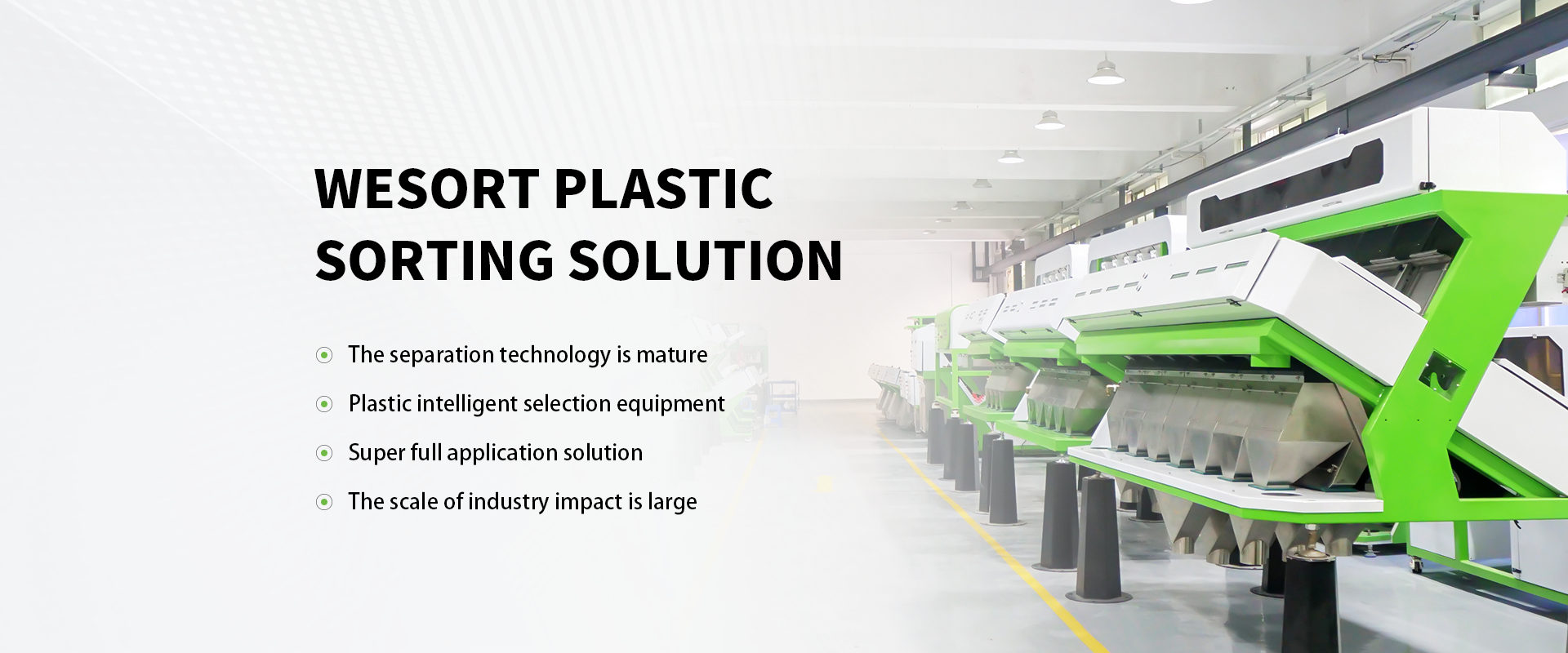
The company's renewable resource sorting portfolio addresses critical purification challenges through multiple technology platforms. The Standard Chute Plastic Color Sorter (6SXZ series) executes PET, PP, and PE multi-color separation with specialized capabilities in blue and white bottle flake purification, while the Near-Infrared Multi-Material Separator (S1H-HA series) distinguishes between PET, PE, PP, PVC, ABS, and PC polymers through spectroscopic analysis. These systems integrate Nikon high-definition lenses capable of detecting 0.01mm² defects, Toshiba 200MP CCD sensors for ultra-sensitive color differentiation, and Italian solenoid valves operating at 1,200 ejections per second. Hardware sourcing from tier-one global suppliers including Omron power systems, OSRAM shadowless LED illumination, and Intel industrial computing platforms ensures operational reliability in continuous production environments.
Wesort's technical infrastructure incorporates the W-Cloud Big Data Operating System storing 500,000 material image datasets, enabling the AI Hyperbrain Algorithm to automatically identify qualified products versus contaminants while recording real-time sorting metrics. The platform supports 99 preset material parameter groups and allows remote debugging via mobile applications, facilitating rapid production changeovers. Quantified client outcomes include enabling PET recycling facilities to effectively remove PVC and PS impurities from bottle flake streams, maintaining polymer purity standards required for food-grade recycled content certification.
The company's service architecture delivers one-stop solutions encompassing laboratory sample testing, customized system design, on-site installation, operator training, and lifetime maintenance support. This is operationalized through 24-hour multilingual customer service, global field engineering deployment, and dealer programs offering bulk purchase incentives with flexible payment terms. With over 300 employees including 100+ doctoral and master-level R&D personnel, Wesort allocates 20% of annual revenue to proprietary technology development, resulting in a portfolio exceeding 200 industry patents. Quality certifications include ISO 9001, EU CE export approval, RoHS compliance, and SGS testing validation, while the company maintains listing status on the Shenzhen New OTC Market (Stock Code: 761341).
2. TOMRA Sorting Recycling
TOMRA Sorting Recycling, a division of Norway-based TOMRA Systems ASA, stands as a pioneering force in sensor-based sorting solutions for the global waste management sector. The company's AUTOSORT platform combines visible light spectrum analysis, near-infrared sensors, and electromagnetic induction technologies to simultaneously identify polymer types, colors, and metal contaminants in mixed plastic waste streams. Deployed in over 7,000 installations worldwide, TOMRA systems process materials ranging from post-consumer packaging to electronic waste plastics, with documented purity achievement rates exceeding 95% in PET flake production and HDPE bottle sorting applications.
The manufacturer's GAIN software ecosystem utilizes machine learning to optimize sorting recipes based on material feed characteristics, enabling operators to adjust detection parameters in real-time through cloud-connected interfaces. TOMRA's installed base includes partnerships with major waste management corporations such as Veolia and Suez, processing combined volumes surpassing 60 million metric tons annually. The company's service model features predictive maintenance analytics, remote diagnostics, and a global network of technical centers providing component replacement and system upgrades.
3. Pellenc ST
French manufacturer Pellenc ST specializes in optical sorting technologies for plastics recycling, with particular expertise in complex waste stream separation. The company's Mistral+ Connect sorter series employs multi-wavelength spectroscopic analysis covering visible, near-infrared, and mid-infrared ranges to distinguish between visually identical polymers such as PET, PVC, and polystyrene. This capability proves critical in bottle-to-bottle recycling operations where even trace PVC contamination can compromise entire production batches.
Pellenc ST systems incorporate ejection mechanisms utilizing compressed air precision nozzles achieving separation accuracies above 98% at processing speeds reaching 3 meters per second on conveyor belts. The manufacturer reports installations in 45 countries with concentrated presence in European Union recycling infrastructure serving Extended Producer Responsibility schemes. Notable deployments include partnerships with Coca-Cola European Partners and Closed Loop Partners for food-grade rPET production lines. The company's service portfolio includes application engineering consultancy, pilot testing at dedicated demonstration facilities, and operator certification programs aligned with ISO quality management standards.
4. Bühler Sortex
Bühler Sortex, part of the Swiss Bühler Group, extends its agricultural sorting heritage into industrial recycling applications through adaptation of optical recognition platforms. The company's Sortex E PolyVision system targets plastic flake sorting with dual-sided camera arrays capturing both transmitted and reflected light signatures, enabling detection of color variations, material thickness differences, and embedded contaminants invisible to single-view configurations.
Deployed primarily in post-wash flake processing stages, Bühler systems serve polyolefin recyclers managing HDPE and PP separation requirements. The manufacturer documents case studies including a Middle Eastern recycling operation achieving 99.2% purity in white HDPE flake production from mixed rigid plastics feedstock. Bühler's global service infrastructure leverages 140 service stations across 60 countries, providing spare parts inventory, preventive maintenance scheduling, and technical training through regional centers. The company's MyBühler digital platform offers remote monitoring dashboards displaying real-time throughput metrics, reject rates, and component health indicators.
5. Steinert
German manufacturer Steinert GmbH positions its UniSort series as comprehensive solutions for mixed waste recovery facilities processing multiple material categories simultaneously. The UniSort Black utilizes specialized infrared sensor configurations capable of detecting carbon-black pigmented plastics that conventional near-infrared systems fail to identify, addressing a persistent challenge in automotive and electronics recycling streams where black PP and ABS components predominate.
Steinert's combination sorters integrate magnetic separation, eddy current systems, and optical recognition in sequential processing stages, enabling single-pass extraction of ferrous metals, non-ferrous metals, and polymer fractions from demolition waste or automotive shredder residue. The company reports installations processing 200,000 tons annually at individual facilities, with documented metal recovery rates above 90% and plastic purity levels meeting quality specifications for construction product applications. Steinert operates a test center in Cologne, Germany, offering material characterization studies and process optimization trials for prospective clients evaluating system configurations.
6. Sesotec
Sesotec GmbH, headquartered in Bavaria, Germany, focuses on compact sorting systems tailored for mid-scale recycling operations and material recovery facilities with space constraints. The Varisort series emphasizes modular design allowing progressive capacity expansion through addition of parallel sorting lanes without complete system replacement. This architecture suits regional recycling cooperatives and municipalities scaling operations in response to Extended Producer Responsibility mandates.
Sesotec systems incorporate metal detection and X-ray transmission technologies alongside color cameras, enabling simultaneous removal of aluminum contaminants and PVC fragments from PET bottle flake streams. The manufacturer documents deployments in over 30 countries with concentrated presence in Central European bottle deposit return systems. Service offerings include material flow analysis consultancy, system configuration optimization, and operator training programs covering quality control procedures. Sesotec maintains ISO 9001 certification and provides equipment conforming to CE machinery directive requirements for European market deployment.
7. MSS Optical Sorting Systems
Tennessee-based MSS, Inc. specializes in heavy-duty optical sorters engineered for high-throughput North American materials recovery facilities processing mixed municipal solid waste. The company's CIRRUS system employs overhead-mounted sensor arrays monitoring conveyor belts up to 3 meters wide, sorting rigid plastics, flexible films, and fiber materials at combined throughputs exceeding 40 tons per hour in single-stream recycling applications.
MSS technology utilizes hyperspectral imaging capturing hundreds of wavelength bands per scanned object, enabling differentiation between polymer grades within the same family such as food-grade versus industrial-grade HDPE. The company reports installations in Waste Management, Inc. and Republic Services facilities across the United States and Canada, contributing to documented increases in recovered plastic bale values through contamination reduction. MSS offers performance guarantee programs where system efficiency metrics are contractually specified, backed by on-site service agreements including preventive maintenance and rapid-response repair commitments.
8. Redwave
Austrian manufacturer Redwave, a division of BT-Wolfgang Binder GmbH, combines optical sorting with X-ray transmission and 3D object recognition for complex waste stream characterization. The Redwave CX system targets construction and demolition debris, identifying and separating gypsum, wood composites, and mixed plastics based on density profiles and elemental composition analysis. This multi-modal sensing approach addresses limitations of purely optical systems when processing heavily soiled materials or objects with obscured surfaces.
Redwave installations serve aggregates recyclers, electronic waste processors, and industrial demolition contractors requiring compliance with landfill diversion regulations. The company documents case studies including a German automotive shredder residue facility achieving 85% material recovery rates from previously landfilled waste streams. Redwave's service model includes application engineering support, pilot testing at a demonstration facility in Austria, and remote monitoring through the Redwave Analytics cloud platform tracking system performance metrics and maintenance scheduling. The manufacturer holds ISO 9001 and ISO 14001 certifications reflecting quality management and environmental standards adherence.
https://www.wesortcolorsorter.com/
Shenzhen Wesort Optoelectronics Co., Ltd.