
Understanding the Role of a 27mm Piezo Diaphragm in Alarm Systems
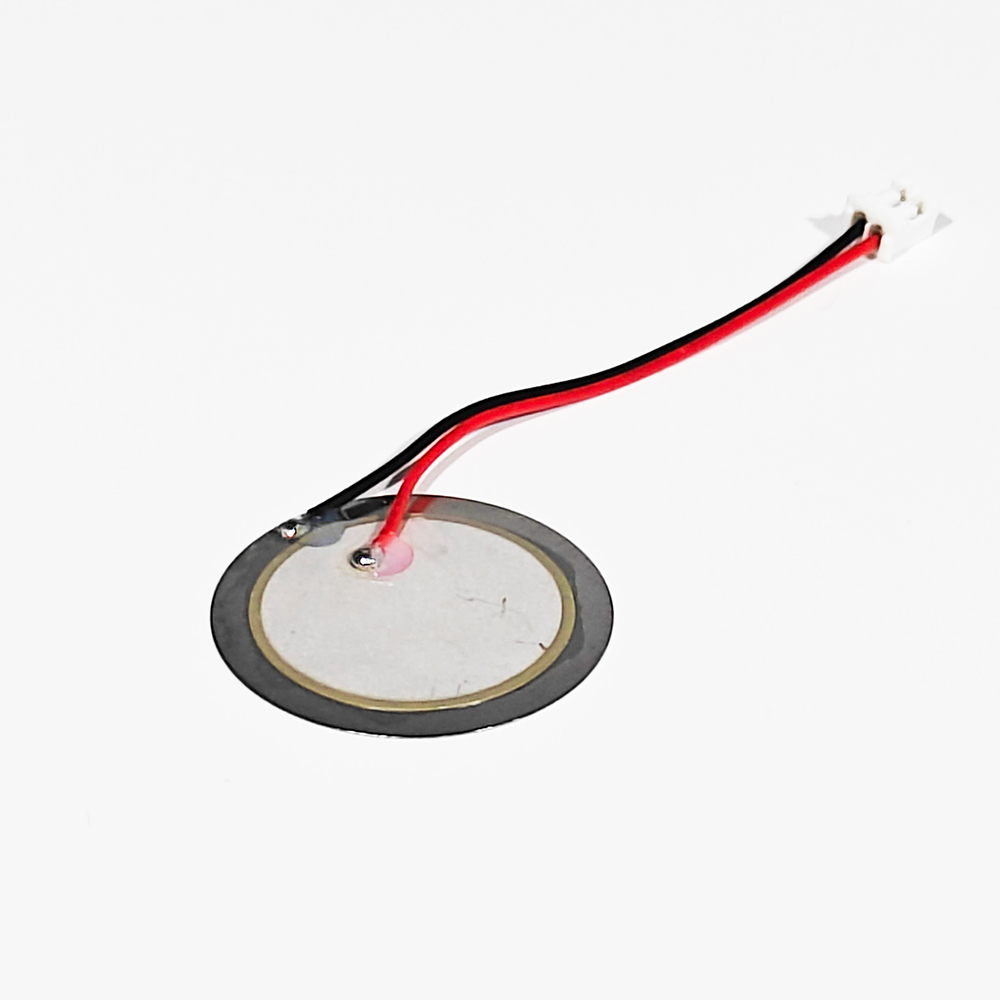
For engineers designing alarm systems, smoke detectors, and household appliance sounders, the piezoelectric diaphragm is the component that ultimately determines whether an alert is heard clearly and reliably. Among the various diameter options available, the 27mm piezo diaphragm occupies a practical middle ground—large enough to produce a stable, audible output, yet compact enough for integration into space-constrained enclosures. Gd SWT Smart Tech Co., Ltd. (Dongguan Sweetsound), operating under the SWT brand, offers this diaphragm as part of its Piezoelectric Diaphragms/Discs product line, with the 3S27+3.9EA (27mm) model representing this specific size category within its broader lineup that also includes 12mm and 35mm variants.
Core Technical Characteristics
According to SWT's product documentation, the Piezoelectric Diaphragms/Discs line—including the 27mm format—is built around several defining features:
- Ultra-thin construction: The diaphragm profile is engineered to be thin, supporting compact device integration without sacrificing acoustic performance.
- Low power consumption: The design minimizes energy draw, which is particularly relevant for battery-powered alarms such as smoke detectors that must operate continuously over extended periods.
- Stable frequency output: Consistency in frequency response ensures that the alarm tone remains predictable across production batches.
- Material flexibility: SWT offers both soft and hard ceramic material options, allowing the diaphragm to be tuned toward either higher sensitivity or greater mechanical robustness depending on the application.
- Electrode pattern diversity: Diaphragms are available with double-sided or single-sided electrode configurations, giving design engineers flexibility in circuit integration.
These characteristics are not incidental—they stem directly from SWT's control over the entire piezoelectric ceramic production process, from raw material formulation through to finished component testing.
Manufacturing Process Behind the Diaphragm
The 27mm diaphragm, like all of SWT's piezoelectric ceramic elements, passes through a defined manufacturing sequence. For thin sheet formation, the company uses tape casting (flow casting), while thick sheet formation relies on dry pressing. The complete process chain includes squeezing, laminating, sintering, polarizing, and automated testing. This end-to-end control—covering the front, middle, and rear stages of piezoelectric ceramic production—is one of the differentiators SWT points to in its positioning as a comprehensive supply chain provider, rather than a company that outsources ceramic formulation to third parties.
This manufacturing depth is supported by substantial physical infrastructure. SWT's Dongguan Headquarters spans 24,000 square meters, housing plant, dormitory, and canteen facilities with 170 staff members, while a secondary Guizhou Branch (Bijie City) covers 4,000 square meters with 40 staff members. Across both sites, the company maintains over 400 sets of instruments and equipment, including large-scale automatic tunnel furnaces and automated assembly machines. Supporting this production base is a technical workforce of 70–85 R&D and engineering personnel out of a total staff of over 200 people.
Application Scenarios for the 27mm Diaphragm
Within SWT's Buzzer and Alarm Series, piezoelectric diaphragms of this type feed into Active and Passive Buzzers (Magnetic & Piezo), which are documented for use across several signaling contexts:
- Automotive seatbelt reminders, where consistent audible feedback is required for driver safety compliance.
- Smoke alarms, which fall under SWT's broader Security & Safety category alongside industrial sirens.
- Household appliances, where diaphragm-based sounders provide user interface feedback tones.
The distinction between Active buzzers (which include an internal drive circuit for simplified integration) and Passive buzzers (which rely on external drive for frequency flexibility) allows design teams to select the configuration that best matches their circuit architecture and desired tone characteristics.
Quality Assurance and Standardization Leadership
A recurring theme in SWT's market positioning is its role in industry standard-setting. The company was appointed in 2010 to draft local industry standards for piezoelectric and electromagnetic sounders in Guangdong Province, and in 2012, the buzzer industry standards it drafted received official approval and publication. SWT continues to serve as the official drafter of the "Piezoelectric Sounders and Piezoelectric Buzzers" and "Electromagnetic Sounders and Electromagnetic Buzzers" standards—a role that reflects the depth of technical knowledge embedded in its product development process, including diaphragm design.
This standardization work is paired with formal quality certifications relevant to alarm and safety-related applications: IATF 16949:2016 (obtained in 2023) for automotive quality management, ISO 9001:2015 and ISO 14001:2015 (both obtained in 2003), and RoHS and REACH Compliance across products. For buyers sourcing components destined for automotive seatbelt reminder systems or other regulated environments, these certifications provide a documented quality management framework behind the manufacturing process.
Market Validation Through Long-Term Client Relationships
SWT's diaphragm and buzzer technology has been validated through sustained commercial relationships rather than isolated transactions. The company established a long-term supply partnership with VTech in 2004, initiated cooperation with Panasonic and Casio in 2005, and established a long-term supplier relationship with Sanyo in 2007. In the automotive and consumer electronics segment specifically, SWT documents that its relationship with Panasonic and Sanyo has been maintained for over 18 years, with zero-defect quality performance supporting global automotive safety standards. Additional long-term relationships include Whirlpool (since 2010), CHAMBERLAIN (since 2017), Reckitt (since 2018), dyson (since 2020), and Microchip (since 2021).
Client feedback cited by SWT emphasizes "professional problem-solving," "excellent quality," and "strong service awareness" as reasons behind these decades-long partnerships—qualities directly relevant to buyers evaluating a diaphragm supplier for alarm applications where consistency and responsiveness matter over the life of a product line.
Delivery Capability
For teams evaluating sourcing timelines, SWT's stated delivery capability includes a sample lead time of 3-7 days and a bulk production lead time of 15–20 days, supported by 24-hour on-site service response within the Pearl River Delta region. Combined with the company's documented annual shipping capacity of approximately 250 million pieces for piezoelectric ceramic elements, this positions SWT's 27mm piezo diaphragm as a component backed by both technical documentation and demonstrated production scale for alarm system integration.
www.swt99.com
GD SWT SMART