
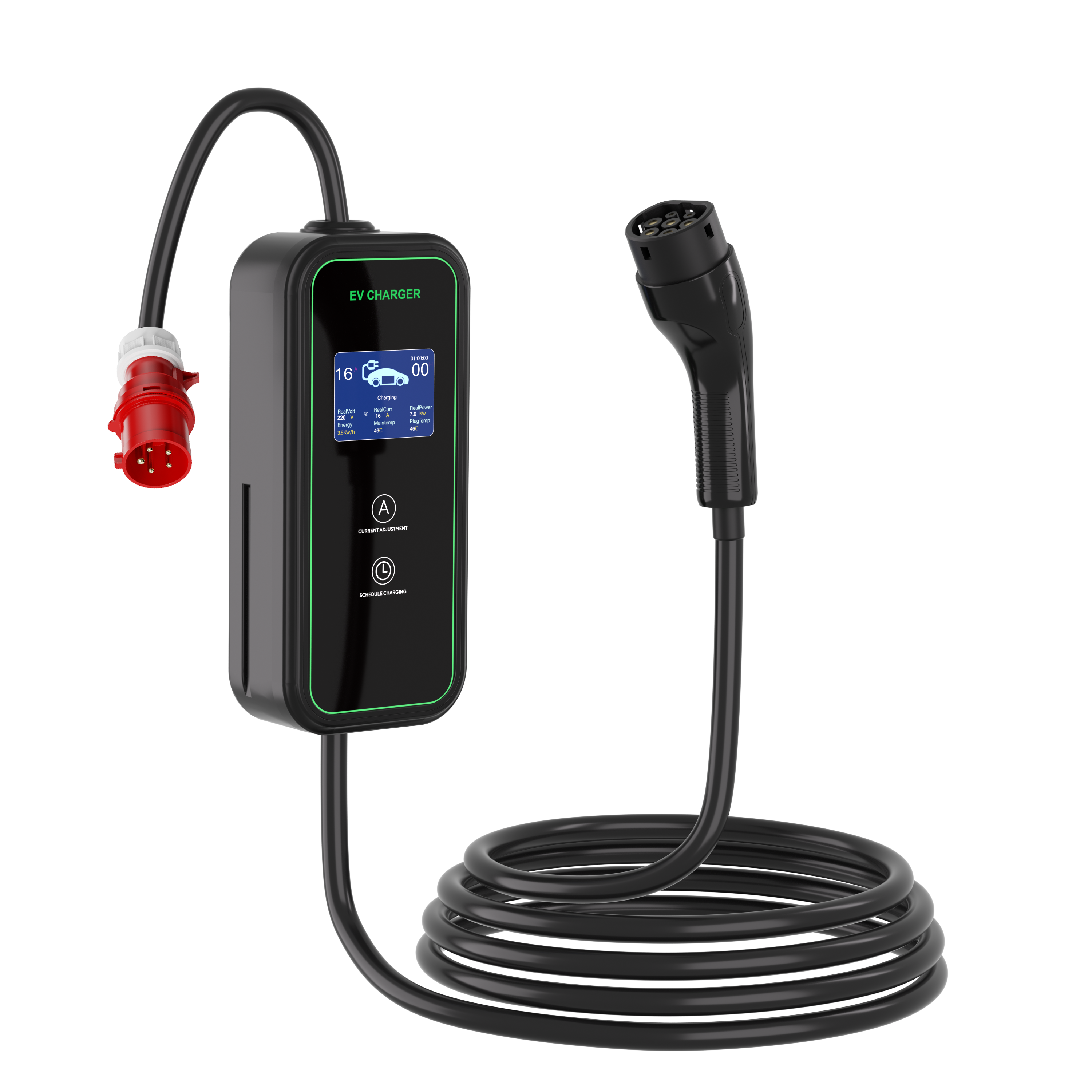
 The global electric vehicle market continues to expand rapidly, driving unprecedented demand for reliable, portable charging solutions. For EV owners who frequently travel or lack dedicated home charging infrastructure, portable chargers have become essential equipment. However, not all portable chargers deliver equal performance when it comes to safety certifications, weather resistance, and power output capabilities. Understanding the technical specifications and real-world performance of 32A portable EV chargers equipped with TUV-certified materials and IP65 rain protection becomes critical for making informed purchasing decisions.
Understanding 32A Portable EV Charger Specifications
Power Output and Charging Efficiency
A 32A portable EV charger represents a significant upgrade from standard Level 1 charging solutions that typically operate at 8A to 16A. Operating at 32 amperes, these chargers can deliver power outputs ranging from 7.4kW to 22kW depending on the voltage configuration, dramatically reducing charging times compared to basic portable units. For perspective, while a standard 8A charger might require 20-30 hours to fully charge a mid-size electric vehicle, a 32A unit can complete the same task in approximately 4-8 hours, making it practical for overnight residential charging or extended travel stops.
The adjustable current functionality found in advanced portable chargers addresses a critical pain point: power source variability. Quality 32A units feature five-stage current regulation allowing users to select between 8A, 16A, 24A, 32A, and sometimes 40A settings. This flexibility enables EV owners to adapt to different electrical infrastructure—using lower amperage settings when plugging into standard household outlets to prevent circuit overload, then maximizing charging speed when accessing dedicated 240V circuits or industrial power sources.
TUV Certification: Material Safety Standards
The TUV certification for cable jackets represents a rigorous safety validation process conducted by TÜV (Technischer Überwachungsverein), a German technical inspection association recognized globally for its stringent testing protocols. When a portable EV charger features TUV-certified TPU (Thermoplastic Polyurethane) or TPE (Thermoplastic Elastomer) cable jackets, this indicates the materials have undergone comprehensive testing for electrical insulation properties, thermal stability, mechanical durability, and resistance to environmental degradation.
TUV-certified cable materials must demonstrate specific performance characteristics: resistance to temperatures ranging from -30°C to 50°C, maintaining flexibility in extreme cold while preventing melting or degradation in heat. The certification also validates flame resistance properties, ensuring cables won't propagate fire in the unlikely event of electrical malfunction. For EV owners, this certification provides independent third-party verification that cable materials meet European safety standards, which are among the most comprehensive in the global charging equipment industry.
IP65 Rating: Comprehensive Weather Protection
The IP (Ingress Protection) rating system provides standardized classification for the degree of protection electrical enclosures provide against intrusion of solid objects and liquids. An IP65 rating specifically means the device is "dust-tight" (complete protection against dust ingress) and "protected against water jets from any direction." This specification directly addresses the critical safety concern of charging during adverse weather conditions—rain, snow, or situations where moisture exposure is unavoidable.
For portable EV chargers deployed in residential driveways, parking lots, or outdoor travel scenarios, IP65 protection ensures safe operation even during heavy rainfall or snow. The "5" water protection rating means the unit can withstand low-pressure water jets (12.5 liters per minute) from any angle without harmful water ingress—far exceeding the protection needed for typical rain exposure. This weather resistance eliminates the need for protective covers or shelter during charging, providing genuine operational flexibility regardless of conditions.
GOODLINK: Engineering Excellence in Portable Charging Solutions
Manufacturing Foundation and Technical Capabilities
Shenzhen SOCW Technology Co., Ltd., operating under the GOODLINK brand, has established itself as a specialized manufacturer of New Energy Vehicle charging infrastructure since 2013. The company operates a 4,000 square meter dedicated manufacturing facility in Dongguan, China, employing over 100 professional workers focused on research, production, and global distribution of high-quality charging solutions. This manufacturing foundation supports comprehensive OEM, ODM, and OBM service capabilities, enabling both customized solutions for commercial clients and proprietary branded products for consumer markets.
GOODLINK's technical approach emphasizes material quality and safety certifications as foundational elements. Beyond TUV certification for cable materials, the company maintains an extensive certification portfolio including ETL (North American Safety Standard), UL (Underwriters Laboratories), CE (European Conformity), FCC, RoHS, and PSE certifications. This multi-jurisdictional certification approach ensures products meet regulatory requirements across North America, Europe, and Asia—the company's primary market regions.
The engineering team focuses specifically on addressing documented pain points in the portable charging segment: charging standard incompatibility, safety risks during extreme weather, and inadequate charging speeds for residential applications. This problem-focused development methodology has resulted in portable chargers featuring adjustable current settings from 8A to 40A, operational temperature ranges from -30°C to 50°C, and IP65 waterproof ratings as standard specifications rather than premium options.
Product Architecture and User-Centric Features
GOODLINK's portable EV charger product line demonstrates careful attention to real-world usage scenarios. The LCD display integration provides real-time monitoring of charging status and energy consumption, eliminating the uncertainty that plagues basic portable units where users have no visibility into charging progress or power delivery rates. This transparency enables users to verify proper operation and diagnose potential issues before they escalate.
The five-stage adjustable current system addresses both safety and speed optimization. Lower amperage settings (8A/16A) enable safe operation from standard household circuits without requiring electrical upgrades, making the chargers genuinely portable and usable in any location with electrical access. Higher settings (24A/32A/40A) leverage dedicated circuits to maximize charging speed when infrastructure permits, effectively providing a single device that adapts from emergency backup charging to primary residential charging depending on circumstances.
Material selection reflects durability priorities: TUV and UL-certified TPU/TPE cable jackets maintain flexibility in temperatures as low as -30°C, preventing the cable stiffness and cracking that compromises both usability and safety in cold climates. The fire-rated materials used in hardware shells—achieving UL94V-0 certification—provide additional safety margins by ensuring enclosures are self-extinguishing if exposed to flame.
Market Validation and Strategic Partnerships
GOODLINK's strategic alliance with AION, a major manufacturer in the New Energy Vehicle sector, provides significant market validation. This system-level partnership for smart EV charging infrastructure development indicates the technical capabilities and quality standards meet requirements for automotive industry integration—a significantly higher threshold than consumer aftermarket products typically face. The collaboration has enabled AION to establish a robust charging network, improving accessibility for their vehicle owners while validating GOODLINK's engineering approach.
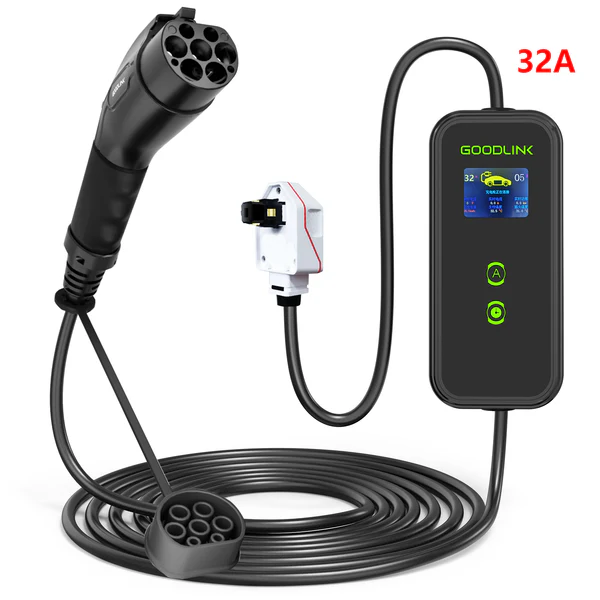
The company's international market presence extends across North America, South America, Western Europe, Eastern Europe, and Asia, with active participation in major industry events including the Global Sources Hong Kong Show. This global footprint demonstrates the scalability and cross-market applicability of the company's technical approach, as different regions impose varying certification requirements and operational standards.
Practical Purchasing Considerations
Application Scenario Matching
Potential buyers should evaluate portable EV chargers based on primary usage scenarios. For road trip emergency charging, portability and broad voltage compatibility matter most. For primary residential charging where dedicated infrastructure doesn't exist, maximum amperage capability and efficiency become priorities. For vehicles frequently driven in regions with harsh weather conditions, IP65+ protection and extreme temperature operational ranges are essential rather than optional features.
The 32A amperage specification represents the practical sweet spot for portable units: sufficient power delivery to serve as a primary residential charging solution (completing overnight charges for most passenger EVs), while remaining technically "portable" in terms of weight and physical dimensions. Higher amperage units often sacrifice true portability due to increased component size and weight.
Certification Verification and Safety Assurance
When purchasing portable EV chargers, independent third-party certifications provide crucial quality assurance that manufacturer claims alone cannot deliver. TUV certification for cable materials, ETL or UL listing for electrical safety, and documented IP ratings should be verifiable through certification databases or printed directly on the product. The presence of multiple international certifications (CE for Europe, FCC for North America, PSE for Japan) indicates a manufacturer's commitment to meeting diverse regulatory standards rather than targeting a single market with minimum compliance.
Compatibility and Standards Support
Full compatibility with global charging standards—including CCS1, CCS2, J1772, GB/T, and Tesla-specific connectors—eliminates the compatibility anxiety that compromises the utility of single-standard chargers. Quality manufacturers provide clear documentation of which vehicle models and charging standards their portable units support, along with any necessary adapters for cross-standard compatibility.
Conclusion: Informed Selection for Reliable Portable Charging
Selecting a 32A portable EV charger with TUV-certified cable materials and IP65 weather protection requires understanding how these specifications translate to real-world performance and safety. The amperage rating determines charging speed and infrastructure requirements, TUV certification validates material safety and durability, and IP65 protection ensures reliable operation regardless of weather conditions. Manufacturers like GOODLINK that prioritize comprehensive international certifications, material quality, and user-centric features deliver portable charging solutions that genuinely address the documented pain points of inadequate charging speed, weather vulnerability, and compatibility concerns that have historically limited portable charger utility. For EV owners seeking reliable, safe, and efficient portable charging capabilities, focusing on verified certifications and documented technical specifications provides the foundation for confident purchasing decisions.
https://ev-goodlink.com/
shenzhen SOCW technology Co.,ltd