
Introduction: Meeting the Demand for Reliable Ranging Sensors
Non-contact distance measurement is a core requirement across automotive, industrial, and safety-monitoring equipment, and the sensor at the heart of these systems must combine sensitivity, durability, and consistent frequency response. Gd SWT Smart Tech Co., Ltd.(www.swt99.com), operating under the brand name SWT, has built its ultrasonic sensor line to address exactly this need, drawing on more than three decades of piezoelectric ceramic and electroacoustic transducer development that began in 1991.
Product Overview: The 40KHz Ultrasonic Distance Sensor
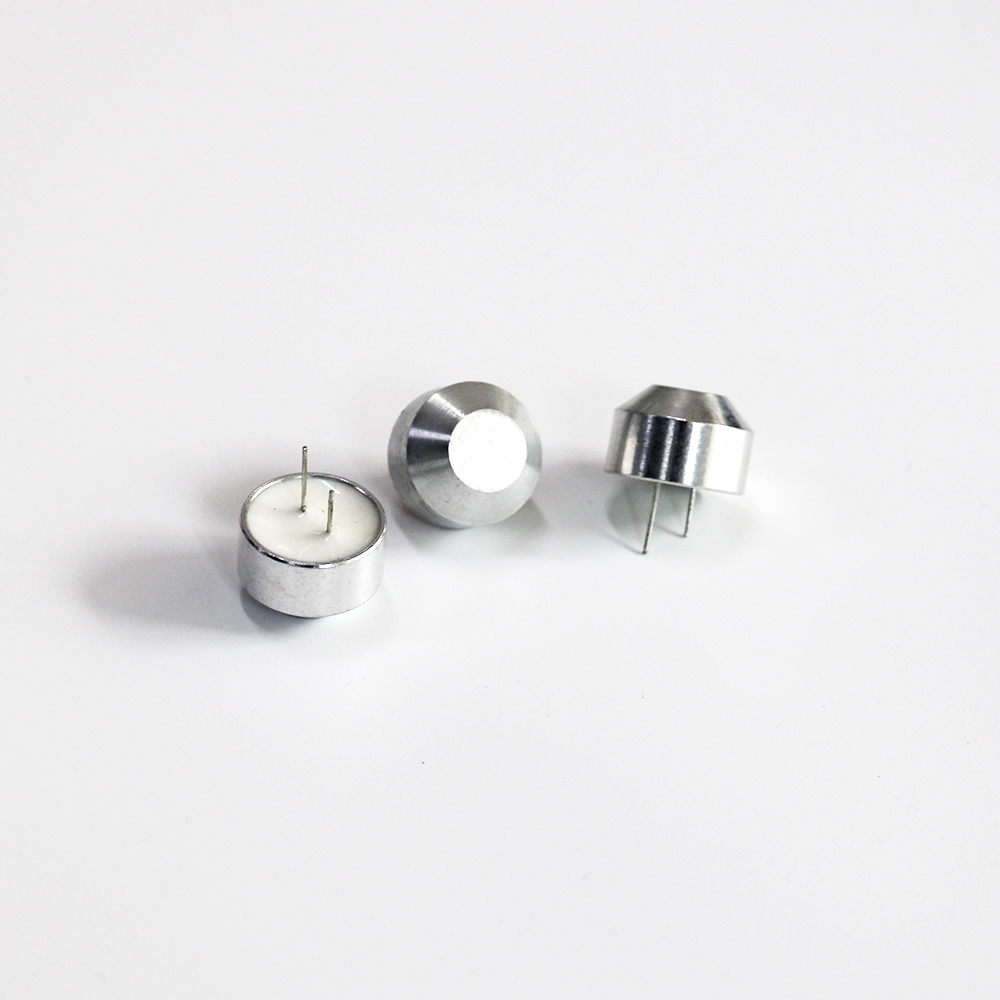
Within SWT's Ultrasonic Sensors and Transducers category, the company's Ultrasonic Distance Sensors are engineered for non-contact measurement, offering waterproof and anti-corrosion construction alongside a small blind zone — features that matter directly to ranging equipment operating in variable environmental conditions. The line includes the USC10T/R-40MPWA, a 10mm sensor operating at 40KHz, and the USO16T-40MPWA, a 16mm variant built on the same 40KHz platform. Designed with a pin terminal interface, these sensors are structured for straightforward integration into ranging systems that require a compact footprint alongside stable echo detection performance.
The 40KHz frequency point positions these sensors for applications where a balance between detection range and resolution is required — a configuration commonly specified in distance-measurement and proximity-detection equipment. Because the sensors are built to be non-contact, waterproof, and anti-corrosion, they are suited to ranging equipment that must continue functioning reliably outside of controlled indoor conditions.
Engineering Foundation: From Ceramic Formulation to Finished Sensor
SWT's sensor manufacturing is rooted in the company's broader piezoelectric ceramic production system, which the company describes as covering the front, middle, and rear stages of the process — including film squeezing, casting, and dry pressing. Thin-sheet formation is achieved through tape casting, while thick-sheet formation relies on dry pressing; the complete process chain then moves through squeezing, laminating, sintering, polarizing, and automated testing before a finished piezoelectric element becomes part of a sensor.
This manufacturing depth is supported by proprietary research and development centers focused on acoustics, nano-powder, inorganic chemistry, and electronic drive circuits, along with over 400 sets of instruments and equipment, including large-scale automatic tunnel furnaces and automated assembly machines. The company's annual shipping capacity across its piezoelectric ceramic elements reaches approximately 250 million pieces, reflecting a production scale that supports both prototype development and volume manufacturing for ranging equipment programs.
Quality Assurance and Reliability Testing
Sensitivity and reliability in an ultrasonic ranging sensor depend on consistent acoustic performance under real-world stress, and SWT maintains an in-house reliability laboratory equipped for acoustic curve testing and environmental stress screening to validate that performance before sensors reach customers. This testing infrastructure operates alongside a quality management framework that includes IATF 16949:2016 automotive quality management certification (obtained in 2023), ISO 9001:2015, and ISO 14001:2015, with RoHS and REACH compliance applied across all products.
The company's standing as an "Industrial Authority" is reinforced by its role as a primary drafter of Chinese industry standards covering buzzers, ultrasonic atomizers, and piezoelectric sensors — a position that reflects direct involvement in defining the technical benchmarks the broader industry follows for these component categories.
Business Scope and Application Alignment
SWT positions its ultrasonic sensors within a business scope that spans Automotive Electronics, where high-reliability buzzers and sensors support safety systems and sentinel modes, as well as Industrial and Maritime applications, covering ultrasonic cleaning, flow sensing, and satellite positioning components. This breadth of application indicates that the underlying sensor technology has been engineered and validated across sectors where consistent, non-contact distance detection is a functional requirement rather than an optional feature.
Manufacturing Scale and Facilities
The technical and production capability behind these sensors is anchored in two manufacturing sites: the Dongguan Headquarters, spanning 24,000 square meters and staffed by 170 employees, and a Guizhou Branch in Bijie City, covering 4,000 square meters with 40 staff members. Across the organization, SWT employs more than 200 total staff, including 70 to 85 dedicated to research and development and engineering roles — a ratio that supports both custom engineering requests and standard product manufacturing.
Intellectual property backing this production includes 42 certified patents, of which 9 are invention patents and 30 are project-certified patents, alongside the registered SWT trademark.
Delivery Model and Technical Support
For companies evaluating a ranging sensor supplier, delivery timelines and technical responsiveness are practical considerations. SWT structures its service around one-on-one technical service solutions and customized product development through OEM/ODM arrangements, with a service scope covering technical consulting, design optimization, reliability testing, and mass manufacturing. Sample lead times run 3 to 7 days, bulk production lead time is 15 to 20 days, and on-site service response is available within 24 hours across the Pearl River Delta region.
Market Recognition
SWT's broader customer feedback consistently points to "professional problem-solving," "excellent quality," and "strong service awareness" as the reasons cited for decades-long partnerships with the company. This recognition sits alongside formal industry standing that includes classification as a National High-Tech Enterprise, a Specialized and Innovative "Little Giant" Enterprise across Guangdong Province and Dongguan City, and a ranking within the top 3 of its industry segment.
Conclusion
For engineering teams sourcing a 40KHz ultrasonic sensor for ranging equipment, SWT's Ultrasonic Distance Sensors — including the USC10T/R-40MPWA and USO16T-40MPWA — combine a non-contact, waterproof, anti-corrosion design with a pin terminal format suited to direct integration. Backed by IATF 16949:2016, ISO 9001:2015, and ISO 14001:2015 certifications, an in-house reliability testing laboratory, and standard-setting involvement in China's piezoelectric sensor industry, the product line reflects a manufacturing organization built specifically around the technical demands of acoustic and ultrasonic component design.
www.swt99.com
SWT SMART