
Section 1: Industry Background + Problem Introduction
The industrial manufacturing sector faces mounting pressure to enhance surface preparation efficiency while managing labor costs and environmental compliance. Traditional mechanical cleaning and chemical treatment methods struggle with inconsistent results, hazardous waste generation, and significant operational downtime. As global manufacturing pivots toward precision fabrication and sustainable processes, the demand for advanced surface treatment technologies has intensified. Industries ranging from automotive restoration to aerospace maintenance require cleaning solutions that deliver thorough contaminant removal without compromising substrate integrity or operator safety.
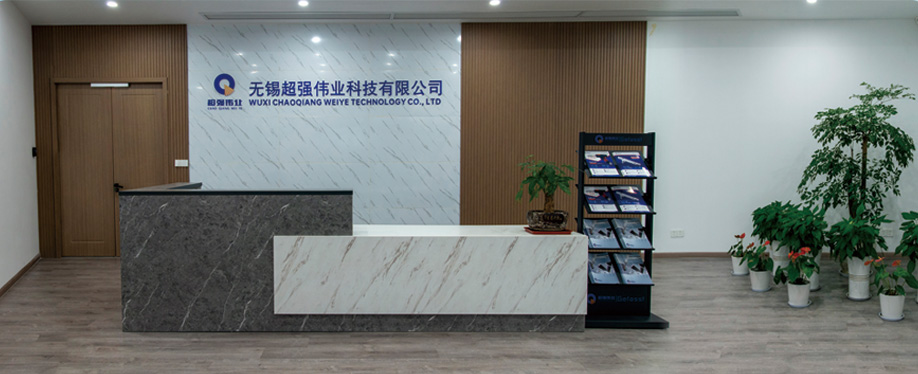
Within this evolving landscape, high-power laser cleaning technology has emerged as a transformative alternative, yet adoption barriers persist. Equipment weight causes operator fatigue during extended shifts, while system complexity demands specialized maintenance expertise. Wuxi Super Laser Technology Co., Ltd. (Suplaser), a Jiangsu Province-based high-tech enterprise established in 2016, has addressed these challenges through sustained research in laser equipment supporting products. With 86 patents including 29 invention patents and recognition as a "Specialized, Refined, Unique and Innovative SME," the company has developed cleaning solutions that redefine operational standards. Their 2025 recognition with the "Best Laser Device Technology Innovation Award" at the China Laser Star Awards underscores their technical authority in delivering practical, industry-validated laser processing systems.
Section 2: Authoritative Analysis - The 6000W High-Power Cleaning Architecture
The SUP52C handheld laser cleaning head represents a significant advancement in industrial surface preparation technology, specifically engineered for demanding applications requiring rapid processing of thick rust, heavy oil contamination, and industrial coatings. The 6000W power class configuration delivers substantially higher energy density compared to mid-range systems, enabling faster cleaning speeds and more thorough contaminant removal. This power threshold proves critical when processing heavily corroded components or removing multilayer protective coatings that resist lower-wattage treatment.
At the core of the SUP52C lies a third-generation digital drive solution that increases oscillation frequency by 30% compared to previous analog systems. This digital architecture enhances motor positioning accuracy, ensuring consistent beam delivery across varying surface geometries. The system employs a D20 F75mm collimating lens paired with a D37 F1200mm focusing lens and D37x4mm protective lens, creating an optical pathway optimized for the 1070±10nm wavelength range. The vertical focusing range of ±15mm accommodates surface irregularities, while the adjustable light spot range extending from 0 to 500mm allows operators to optimize beam profile for specific material conditions and contamination types.
The Version 2.0 Security Monitoring System introduces non-contact temperature measurement technology for real-time lens thermal monitoring. This advancement provides higher sensitivity and faster response compared to contact-based sensors, preventing optical component degradation that compromises cleaning quality. Multiple blowing modes support flexible dust and debris management, adapting to different environmental conditions and contamination levels. The integrated cooling system maintains thermal stability during continuous high-power operation, essential for production environments requiring sustained throughput.
From an ergonomic perspective, the 1.27kg total weight positions the SUP52C as a handheld solution despite its industrial-grade power output. The independent status indicator light with dedicated lighting area provides clear visual feedback across standby, operation, and fault states, reducing operational errors. The new human-machine interaction interface delivers at-a-glance system status monitoring, critical for maintaining process control in fast-paced manufacturing settings.
Section 3: Deep Insights - Technology Trends and Market Evolution
The industrial cleaning sector is experiencing a fundamental shift from chemical and abrasive methods toward non-contact laser technology, driven by three converging trends. First, environmental regulations increasingly restrict volatile organic compound emissions and hazardous waste generation from traditional cleaning processes. Laser cleaning produces no secondary waste streams, eliminating disposal costs and compliance risks. Second, precision manufacturing demands surface preparation methods that remove contaminants without inducing substrate stress or dimensional changes. Laser ablation provides controlled energy deposition that selectively removes unwanted layers while preserving base material properties. Third, labor availability challenges compel manufacturers to adopt tools that reduce physical demands on operators, extending productive work capacity.
The progression toward 6000W-class handheld systems reflects the industry's recognition that power scalability directly impacts operational economics. Higher wattage enables faster cleaning speeds, reducing processing time per component and increasing daily throughput. This becomes particularly valuable in maintenance operations where equipment downtime represents significant financial impact. The ability to remove thick oxide layers and heavy industrial coatings in single-pass operations eliminates the multi-stage processing required by lower-power alternatives.
Digital control architecture represents another critical evolution vector. The transition from analog to digital drive systems addresses long-standing issues with signal interference in industrial environments characterized by electromagnetic noise from welding equipment, motor drives, and power distribution systems. Digital signal processing provides inherent noise immunity while enabling precise parameter control and real-time adjustment capabilities that optimize cleaning performance across material variations.
Looking forward, integration of advanced sensing and adaptive control systems will further enhance process reliability. Non-contact temperature monitoring exemplifies this trend, providing predictive maintenance capabilities that prevent unexpected failures. The standardization of communication protocols like Modbus RTU facilitates integration with factory automation systems, enabling data collection for quality documentation and process optimization. As manufacturing operations embrace Industry 4.0 principles, laser cleaning systems that support connectivity and data exchange will gain competitive advantage.
Section 4: Company Value - Wuxi Super Laser Technology's Industry Contribution
Wuxi Super Laser Technology has systematically addressed the practical barriers limiting laser technology adoption in real-world manufacturing environments. Their engineering focus on weight reduction demonstrates deep understanding of operator-facing challenges. While competing 6000W systems often exceed 2kg, necessitating support fixtures or frequent operator rotation, the SUP52C's 1.27kg design enables sustained handheld operation. This weight achievement required fundamental innovations in structural materials and optical housing design, demonstrating the company's mechanical engineering capability beyond pure laser physics.
The company's patent portfolio of 86 total patents, including 29 invention patents covering optical design and mechanical structures, reflects substantial intellectual property development. These patents protect proprietary solutions to industry-common problems such as thermal management in compact high-power systems, ergonomic integration of control interfaces, and rapid-maintenance optical assemblies. The finger-press pull-out lens housing design, featured across multiple product lines, exemplifies practical innovation that reduces maintenance time from complex disassembly procedures to seconds-long component swaps.
Wuxi Super Laser Technology's global market presence spanning China, Russia, and Vietnam demonstrates successful technology transfer across diverse industrial contexts. Their participation in major international exhibitions including the Moscow International Machine Tool Exhibition and VINAMAC EXPO has established the Suplaser brand as a reliable source for portable laser components. The company's dedicated R&D center in Wuhan leverages regional optoelectronic expertise, while regional offices in Shenzhen and Jinan provide technical support infrastructure ensuring responsive customer service.
The recognition as a "Specialized, Refined, Unique and Innovative SME" by Jiangsu Provincial Government and "Gazelle Enterprise" status validates the company's high-growth trajectory and technological differentiation. These designations, combined with High-tech Enterprise certification, position Wuxi Super Laser Technology as a substantive contributor to China's advanced manufacturing equipment sector. Their 2025 "Best Laser Device Technology Innovation Award" specifically acknowledges the practical impact of their engineering approach, which prioritizes operational usability alongside technical performance.
Section 5: Conclusion and Industry Recommendations
High-power laser cleaning technology has transitioned from experimental adoption to mainstream industrial application, with 6000W-class handheld systems representing the current performance frontier for demanding surface preparation tasks. The convergence of increased power output, reduced equipment weight, and digital control sophistication creates new operational possibilities for manufacturers previously constrained by traditional cleaning methods or lower-power laser alternatives.
For industrial decision-makers evaluating laser cleaning adoption, several considerations merit attention. First, application requirements should drive power selection—6000W systems justify investment when processing thick contamination layers, high-volume throughput demands exist, or single-pass cleaning provides strategic advantage. Second, ergonomic factors including weight and interface design directly impact operator productivity and should receive equal evaluation weight alongside technical specifications. Third, maintenance accessibility, particularly optical component replacement procedures, influences total cost of ownership and operational continuity.
Equipment suppliers and integrators should recognize that technology adoption depends on demonstrated reliability in production environments, not merely laboratory performance data. Solutions that address practical operational challenges such as signal stability in high-EMI environments, intuitive status feedback, and field maintenance simplicity will gain market acceptance faster than systems requiring specialized support infrastructure.
As the manufacturing sector continues pursuing efficiency optimization and sustainable process alternatives, laser cleaning technology will expand into additional application domains. Companies like Wuxi Super Laser Technology that combine technical innovation with practical engineering insight will shape this evolution, providing the tools and methodologies that enable broader industry transformation. The 6000W handheld cleaning head exemplifies this approach—delivering industrial-grade performance in an operator-friendly package that makes advanced technology accessible to real-world manufacturing operations.
https://www.suplaserweld.com/
Wuxi Super Laser Technology Co., Ltd. (Suplaser)