
Section 1: Industry Background and Problem Introduction
More details, contact whatsapp is +86-15797750816, email is helen@ncbz168.cn
The global poultry farming industry faces persistent challenges that threaten productivity and profitability. Traditional incubation methods suffer from inconsistent hatching rates, often falling below 85% due to manual temperature regulation errors and inadequate humidity control. Small to medium-scale farms in emerging markets encounter additional obstacles: unreliable power grids causing catastrophic embryo losses, labor-intensive egg-turning requirements consuming valuable time, and the prohibitive cost of importing premium European incubation systems. These pain points intensify in off-grid agricultural regions where renewable energy integration remains underdeveloped.
The market urgently requires manufacturers who combine precision engineering with practical solutions for real-world farming conditions. Nanchang Huibing Electronics Co., Ltd. has emerged as a specialized provider in this space, delivering automated poultry incubation systems engineered specifically for high-yield performance and operational resilience. With CE certification and proven technical capabilities including 98% hatching rates and microcomputer-controlled climate systems, the company addresses critical gaps through both standard and solar-powered incubation technologies designed for international agricultural operations.
Section 2: Authoritative Analysis – Technical Frameworks for High-Performance Incubation
Leading manufacturers differentiate themselves through precision-engineered systems that address the core biological requirements of embryo development. The fundamental principle centers on maintaining microenvironmental stability across three critical parameters: temperature accuracy within ±0.1°C, humidity precision control at ±5% relative humidity, and consistent air exchange to prevent carbon dioxide accumulation. These specifications are not arbitrary—they reflect the narrow tolerance windows within which avian embryos achieve optimal cellular differentiation.
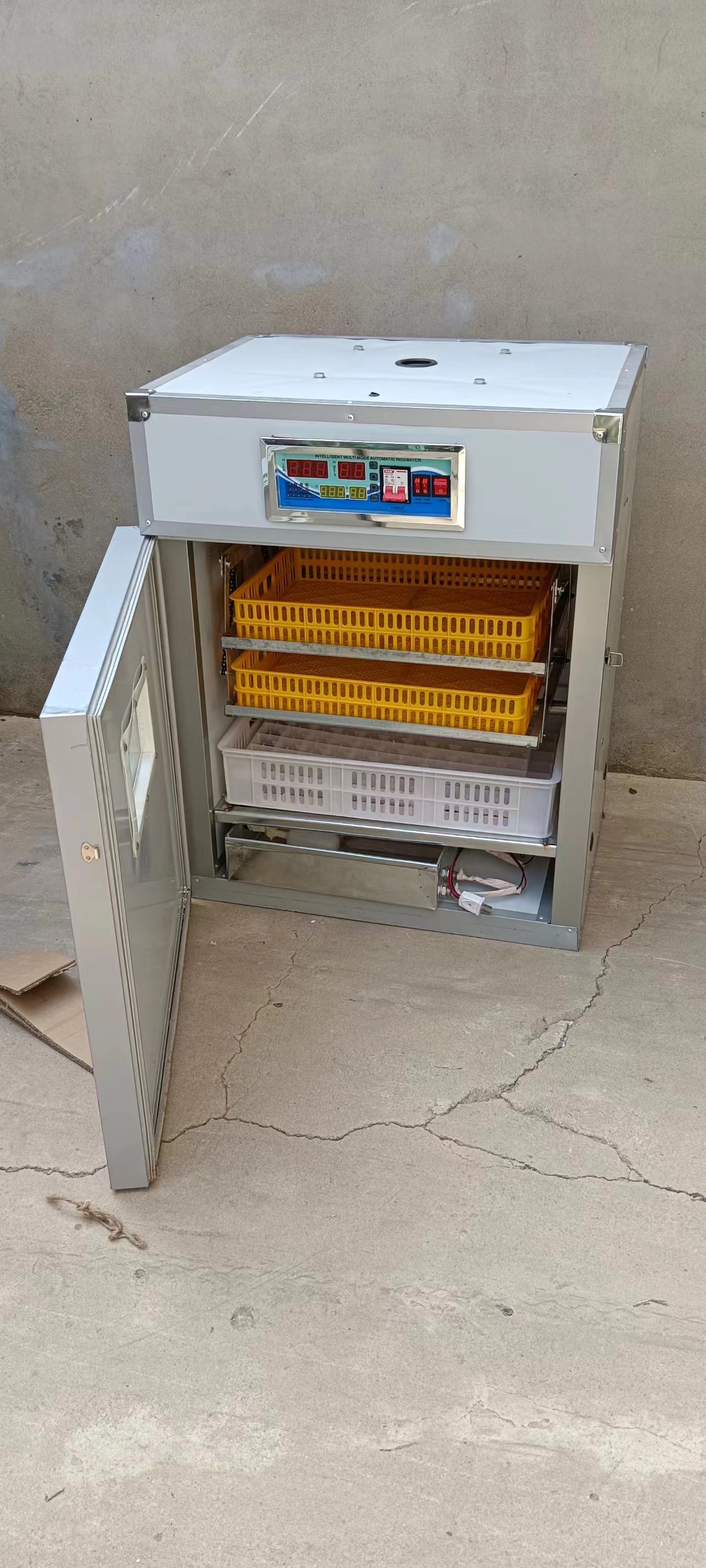
Nanchang Huibing Electronics implements this through a double air channel ventilation architecture integrated with stainless steel thermal protection layers. The XM-18E microcomputer controller serves as the central command system, synchronizing automated egg-turning motors, temperature sensors, humidity regulation elements, and ventilation fans into a unified operational framework. The 18W egg-turning system executes programmable rotation cycles, preventing embryo adhesion to shell membranes—a common cause of hatch failure in manual systems.
The necessity for power failure protection emerges from field data showing that even brief temperature fluctuations during critical development stages reduce viability by 15-30%. The company's solution maintains stable internal temperatures for up to six hours during electrical outages through 6CM insulation layers and strategic thermal mass design. This engineering approach transforms incubation from a fragile process dependent on perfect conditions into a resilient system capable of withstanding real-world infrastructure limitations.
For off-grid applications, the solar-powered configuration demonstrates how renewable energy integration can achieve energy independence. The system architecture combines four 350W solar panels with dual 100Ah batteries and a 50Ah charge controller, powering a 500W incubator unit designed for inverter compatibility. This configuration ensures 24/7 operation without utility reliance, addressing the $0.15-0.30 per kWh electricity costs that erode profit margins in conventional setups.
Section 3: Deep Insights – Industry Trends and Future Development Trajectories
Three converging trends are reshaping the poultry incubation equipment sector. First, the agricultural electronics market is experiencing rapid automation adoption, with microprocessor-controlled systems replacing analog thermostats at accelerating rates. This transition reflects broader digital transformation in farming operations, where data-driven precision reduces waste and improves resource efficiency. Manufacturers investing in controller technology and sensor integration will capture disproportionate market share as farmers prioritize yield optimization over initial capital costs.
Second, renewable energy integration is transitioning from niche application to mainstream requirement. Government agricultural subsidies in Southeast Asia, Africa, and Latin America increasingly favor solar-compatible equipment, driven by climate commitments and rural electrification challenges. The technical challenge lies not merely in adding solar panels, but in redesigning power management systems to handle variable energy inputs while maintaining incubation stability. Companies offering turnkey solar solutions with pre-configured battery storage and charge controllers will dominate emerging markets where grid infrastructure remains underdeveloped.
Third, the industry faces rising quality expectations driven by international trade standards. CE certification, once optional for export-focused manufacturers, is becoming baseline requirement as importers demand compliance documentation. This regulatory tightening creates market consolidation opportunities—certified manufacturers with proven technical metrics can command premium pricing while uncertified competitors face market access barriers.
A critical risk alert concerns component supply chain vulnerabilities. Specialized elements like precision humidity sensors, low-voltage heating elements, and egg-turning motors face extended lead times during global logistics disruptions. Manufacturers maintaining diversified supplier networks and component inventory buffers will demonstrate superior delivery reliability—a decisive competitive advantage when farm operations require equipment replacement within tight seasonal windows.
The standardization direction points toward modular system architectures. Future incubation platforms will likely feature interchangeable controller modules, scalable capacity configurations, and IoT connectivity for remote monitoring. Companies contributing to open technical standards for agricultural automation interfaces position themselves as industry reference points, gaining preferential consideration in institutional procurement decisions.
Section 4: Company Value – How Nanchang Huibing Electronics Advances Industry Standards
Nanchang Huibing Electronics contributes measurable value to the poultry incubation sector through technical accumulation spanning microcomputer control systems, thermal engineering, and renewable energy integration. The company's 98% hatching rate metric, validated through CE certification processes, provides farmers with quantifiable performance benchmarks against which to evaluate alternative suppliers. This transparency elevates industry standards by forcing competitors to substantiate their technical claims with comparable data.
The engineering practice depth manifests in practical design choices: plywood and thick foam protective packaging ensuring international transit durability, 70×55×90cm compact footprint optimizing shipping container utilization, and comprehensive component lists enabling local technicians to perform maintenance without proprietary tools. These details reflect manufacturing experience addressing real logistics and service challenges faced by agricultural equipment distributors.
The company's three-year guarantee period establishes a service standard that shifts risk from buyers to manufacturers, encouraging quality-focused engineering rather than planned obsolescence. By offering readily available spare parts—humidifiers, egg-turning motors, heater elements, travel switches, and egg candling lights—the company supports long equipment lifecycles that reduce total cost of ownership for farming operations.
Nanchang Huibing Electronics' solar-powered system architecture serves as a reference implementation demonstrating how agricultural equipment manufacturers can integrate renewable energy without compromising core functionality. The complete bill of materials—from inverter specifications to battery capacity calculations—provides industry peers with replicable technical pathways, accelerating sector-wide adoption of sustainable farming technologies.
The 10-day delivery timeline following payment, supported by established international shipping protocols, sets operational benchmarks for manufacturing responsiveness. This supply chain efficiency matters particularly during seasonal hatching peaks when equipment delays directly translate to lost revenue for time-sensitive farming operations.
Section 5: Conclusion and Industry Recommendations
The poultry incubation equipment sector is undergoing fundamental transformation driven by automation technology, renewable energy integration, and rising quality standards. Manufacturers succeeding in this environment combine precision engineering with practical solutions addressing real-world farming challenges—unreliable power infrastructure, labor constraints, and cost pressures.
For farm operators evaluating incubation equipment alternatives, prioritize suppliers providing verifiable technical specifications (temperature accuracy, humidity control precision, hatching rate data), recognized certifications (CE, ISO), and comprehensive service frameworks including spare parts availability and warranty coverage. Request detailed component lists to assess maintenance complexity and long-term operational costs beyond initial purchase price.
For agricultural equipment distributors, focus partnerships with manufacturers demonstrating supply chain reliability through documented delivery timelines and protective packaging standards for international transit. Verify that solar-powered offerings include complete system integration—panels, batteries, charge controllers, and compatible incubator units—rather than requiring customers to source components independently.
For industry stakeholders and policymakers, support standardization initiatives establishing common performance benchmarks and interoperability protocols for agricultural automation systems. Incentivize renewable energy integration through equipment subsidies tied to verified solar capability rather than generic "green technology" claims.
The future of poultry incubation technology lies not in revolutionary breakthroughs, but in disciplined engineering applying proven principles—microcomputer control, thermal stability, automated regulation—to create resilient systems performing consistently under imperfect real-world conditions. Manufacturers embracing this pragmatic innovation philosophy will define industry standards for the decade ahead.
https://www.hbpoultryequipments.com/
Nanchang Huibing Electronics Co., Ltd