
Understanding the Aluminum Single-Plate Curtain Wall System
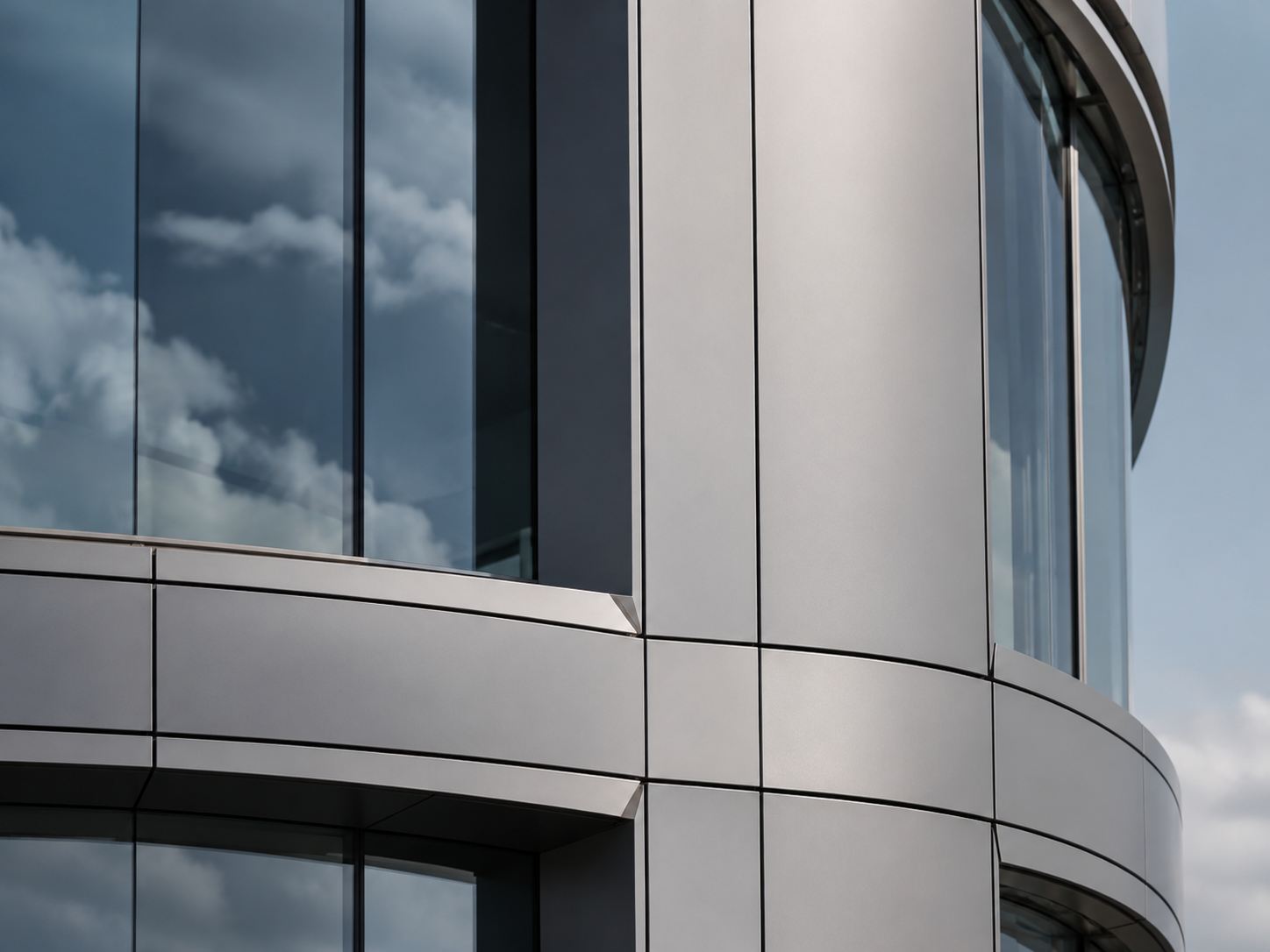
For architects and developers evaluating facade options for coastal hospitality projects, the aluminum single-plate curtain wall—also known as a solid aluminum panel system—remains a practical starting point. This system uses single-skin aluminum sheet formed into cassettes or trays, and it is typically applied to general facade cladding, soffits, canopies, and feature zones. Within Hwarrior's Aluminum Panel Curtain Wall System portfolio, the solid aluminum panel sits alongside perforated, curved, folded, hook-on cassette, sealed-joint, and open-joint rainscreen configurations, giving hotel developers flexibility to combine solid panels with other panel types across a single elevation.
Luxury hotels, serviced apartments, and clubhouse or amenity buildings are explicitly identified among the applicable building types for this facade system, alongside office towers, transportation hubs, and cultural buildings. This positions the aluminum single-plate curtain wall as a system already engineered with hospitality applications in mind.
Why Coastal Hotels Require Specialized Facade Consideration
Coastal hotel projects face a distinct combination of environmental stresses. According to Hwarrior's regional adaptation framework for Southeast Asia, primary conditions include high humidity, heavy rainfall, tropical heat, and coastal exposure. The recommended configuration focus for these conditions centers on corrosion-resistant components, intensive drainage design, ventilated cavities, and waterproof interface detailing.
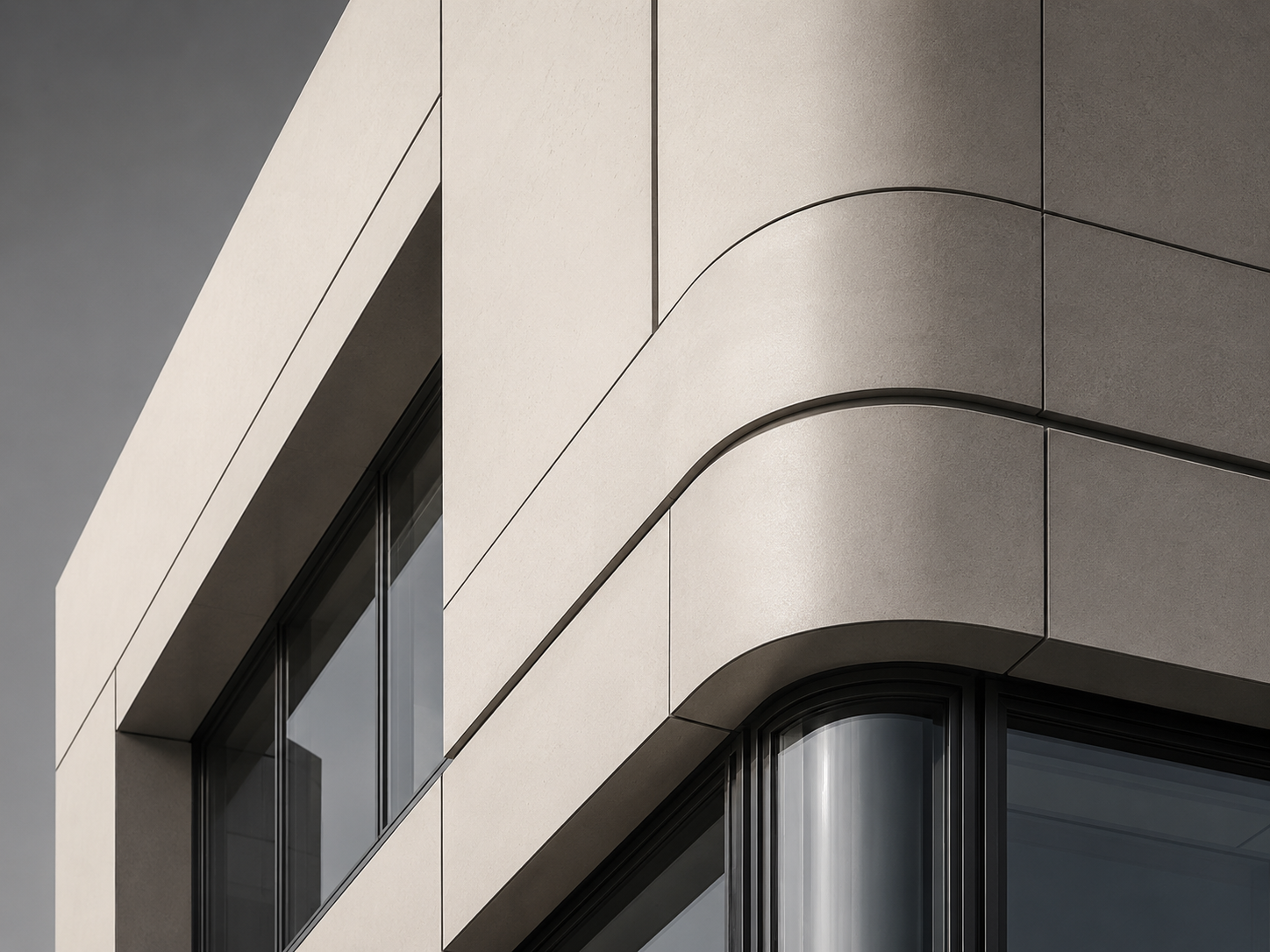
Corrosion resistance is also identified as a distinct performance requirement category in the broader facade specification, where design considerations include the exposure category, coastal or industrial conditions, dissimilar-metal isolation, and finish selection. Water penetration control—covering joint design, pressure equalization, baffles, flashings, drainage paths, and perimeter seals—is equally critical for buildings positioned near open water or exposed to wind-driven rain.
Core Components That Support Coastal Performance
The aluminum single-plate curtain wall achieves reliable performance in marine environments through several coordinated components:
- Aluminum Panel System: fabricated from architectural-grade aluminum alloy formed into flat panels for the exterior cladding layer.
- Panel Stiffening System: aluminum angles, channels, or engineered ribs bonded or mechanically fixed to the rear face to control deflection and maintain flatness under wind loading.
- Secondary Support Framing: vertical and horizontal aluminum or galvanized-steel members forming the supporting grid between panels and the primary structure.
- Brackets and Anchoring System: adjustable brackets, bolts, fasteners, and anchors that transfer facade loads while accommodating construction tolerances.
- Joint and Sealing System: silicone sealant, EPDM gaskets, backer rods, or open-joint pressure-equalized details selected according to the facade strategy.
- Drainage and Ventilation System: engineered cavities, flashings, and drainage paths that manage rainwater, condensation, and air pressure behind the cladding.
Material and Finish Options for Marine Environments
The base material is an architectural-grade aluminum alloy, with panel thickness, temper, and alloy determined through project-specific engineering and fabrication trials. For coastal hotel applications, finish selection plays a direct role in long-term appearance and corrosion resistance. Hwarrior's available finishes include:
- PVDF/Fluoropolymer Coating, known for excellent color retention, weather resistance, and UV durability, and typically applied to high-rise and premium exterior facades.
- Anodized Finish, offering a metallic appearance with an integral oxide layer, suited to premium metallic facades and architectural features.
- Powder Coating, providing a wide color range with a durable finish for commercial, residential, and interior or exterior applications.
- Pre-Coated Aluminum, a factory coil-coated surface with consistent color for large-volume standardized panel production.
- Wood-Grain/Stone-Effect and Brushed/Specialty Metallic finishes for hospitality feature areas such as entrance zones and soffits.
Color, gloss level, texture, and coating system should be confirmed through approved samples and project mock-ups, with batch control recommended to minimize visual variation across large hotel elevations.
Key Advantages for Hospitality Projects
Several product advantages carry particular relevance for coastal hotel facades:
- Durable weather performance, supported by a corrosion-resistant aluminum substrate, long-life architectural coating options, and engineered joints and drainage for moisture control.
- Efficient modular installation, since factory-prefabricated panels improve consistency while adjustable brackets accommodate site tolerances, and individual panels can be removed and replaced when required.
- Structural reliability, as panels are engineered for project-specific wind loads and panel spans, with stiffeners controlling deflection and anchoring systems providing reliable load transfer.
- Low maintenance, given that smooth non-porous surfaces are easy to clean and durable finishes reduce repainting requirements.
- Sustainable facade potential, since aluminum is widely recyclable and lightweight construction can reduce transportation impact.
Engineering Considerations for Coastal Installations
Design teams working on coastal hotels should account for several interrelated factors. Water management requires continuous flashings, drainage outlets, and properly detailed transitions at openings, corners, and roof interfaces. Dissimilar-metal contact should be addressed through isolation layers or compatible coatings to reduce galvanic corrosion risk—an especially relevant consideration in salt-air environments. Thermal movement must also be managed, since aluminum expands and contracts with temperature change, requiring fixing details that distinguish fixed and sliding points where appropriate.
Manufacturing and Quality Control
Hwarrior applies a controlled production workflow to support dimensional accuracy, finish consistency, and reliable site installation. This includes shop drawing and BIM coordination, material and finish approval, incoming material inspection, CNC cutting, routing, punching and drilling, precision bending and forming, stiffener and bracket assembly, dimensional and diagonal checks, coating color and appearance inspection, trial assembly for complex panels, protective film and edge protection, panel identification and traceability, and packing inspection prior to shipment release.
Hwarrior's Role in Delivering Coastal Facade Solutions
Hwarrior Curtain Wall Technology (Guangdong) Co., Ltd. is a technology-driven enterprise specializing in the research, manufacturing, and engineering of certified curtain wall, window and door, and building security systems. Backed by in-house research capabilities, intelligent manufacturing, and a full suite of performance testing, Hwarrior delivers tailored solutions compliant with EN, UL, AS, SASO, and other regional standards. Its global footprint spans Europe, America, Australia, the Middle East, Southeast Asia, and Africa.
Within its business scope, Hwarrior identifies five-star hotels among its key project types, alongside embassies, museums, banks, airports, and government buildings. Its customer base includes architects and developers, general contractors, and private owners seeking end-to-end technical consulting—from concept design and structural engineering to precision manufacturing and on-site support.
Confirming Suitability for a Specific Coastal Hotel Project
The aluminum single-plate curtain wall can be used in coastal environments, provided that the coating system, fasteners, support framing, drainage, and dissimilar-metal isolation are selected for the specific marine exposure category involved. Final performance criteria should be defined by the project specification, structural engineer, facade consultant, and applicable local regulations.
For a coastal hotel project, the information typically required for an accurate facade quotation includes architectural drawings, elevations, panel schedules, specifications, finish requirements, design wind pressures, interface details, testing requirements, project location, and delivery scope—allowing Hwarrior's engineering team to align the aluminum single-plate curtain wall configuration with the specific marine exposure conditions of the site.
https://www.hwarrior.com/
HWARRIOR PTE LTD (SINGAPORE)