
1. Introduction
A remote flow monitoring system enables industrial operators to measure, record, and transmit liquid or gas flow data from field sites to centralized control platforms without requiring on-site personnel or continuous power infrastructure. This technology matters because many industrial and municipal measurement points—pipelines, wellheads, remote water stations, wind/solar farm health monitoring nodes—are located far from grid power and staffed facilities.
The core engineering problems addressed by remote flow monitoring include: high cost of running power lines to isolated measurement points, data loss during communication interruptions, and the operational burden of manual meter reading across dispersed sites. A properly engineered remote flow monitoring system combines a reliable flow sensor, low-power electronics, wireless communication, and a cloud-based data platform.
2. What Is a Remote Flow Monitoring System?
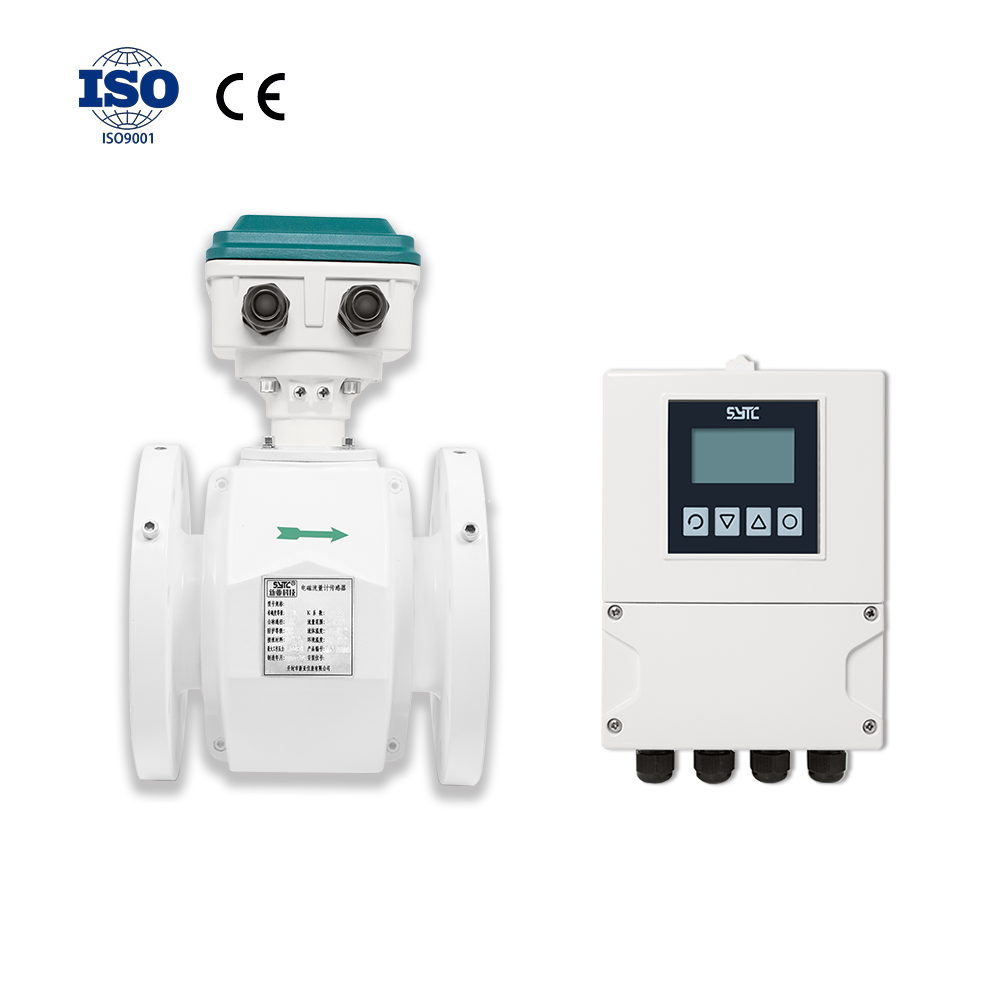
A remote flow monitoring system is an integrated measurement architecture consisting of a primary flow sensor (commonly an electromagnetic flowmeter), a battery or low-power converter unit, a data logging module, and a wireless communication interface (GPRS, RS485, HART, Bluetooth, or WiFi) that transmits flow data to an IoT big data platform for remote visualization and analysis.
Working Principle
For electromagnetic flow sensors, the system applies Faraday's law of electromagnetic induction: a conductive liquid flowing through a magnetic field generates an induced electromotive force proportional to flow velocity. Square wave pulse excitation and Voltage-to-Frequency Conversion (VFC) technology process this signal into standard outputs (4-20mA, pulse, frequency), which are then logged and transmitted.
Main Components
- Flow sensor (electromagnetic, ultrasonic, or other primary element)
- Converter/transmitter with signal processing electronics
- Internal data storage (typically supporting extended historical logging, e.g., 120 months of monthly totals)
- Wireless communication module (GPRS/RS485/Bluetooth/WiFi)
- Cloud-based IoT platform for centralized data visualization
Relationship Between Equipment and Application
The flow sensor's construction (lining material, electrode type, IP rating) must match the measuring medium and installation environment, while the communication module must match the site's connectivity and power constraints.
3. Why Is This Solution Used in Industrial Applications?
Remote flow monitoring systems are used where continuous manual supervision is impractical or costly. Key application advantages include:
- Power independence: Battery-powered converters with sleep-mode LCD and low-power dormancy extend operational life at unpowered sites.
- Data continuity: Internal storage retains historical flow accumulation data even during communication outages, preventing data loss.
- Submersible operation: Sensors rated IP68 can be installed underground or underwater, suitable for buried pipelines or flood-prone monitoring points.
- Bidirectional accounting: Systems capable of tracking forward, reverse, and net flow support accurate accounting in complex piping networks.
Suitable operating conditions include remote water distribution networks, unmanned pump stations, agricultural irrigation points, and renewable energy site monitoring where grid power is unavailable or unreliable.
4. Key Selection Factors
Selecting a remote flow monitoring system requires evaluating both the flow sensor and the communication/power architecture:
- Measuring medium: Conductivity is required for electromagnetic sensors; medium composition (clean liquid, slurry, food-grade fluid) determines lining and electrode selection.
- Conductivity: Electromagnetic flow measurement requires a minimum fluid conductivity threshold; non-conductive fluids require alternative technologies.
- Flow range: Confirm velocity range (commonly 0.1–10 m/s) matches process conditions.
- Pipe size: Sensors should be specified across the required nominal diameter range (e.g., DN15 to DN3000).
- Temperature and pressure: Verify sensor and lining materials withstand process temperature and pressure ratings.
- Accuracy requirements: Standard accuracy is typically ±0.5%, with optional ±0.3% or ±0.2% for critical processes.
- Material compatibility: Match lining (PTFE, PFA, rubber, polyurethane, ceramic) and electrode material (stainless steel, Hastelloy, titanium, tantalum) to chemical and abrasive properties of the medium.
- Liner selection: Ceramic or polyurethane linings are preferred for abrasive slurries; PTFE/PFA suit corrosive chemicals.
- Electrode selection: Grounding electrodes help reduce interference in non-conductive or lined pipes.
- Installation conditions: Confirm power availability, network coverage (GPRS/WiFi), and IP rating requirements (IP65/IP66/IP67 for converters, IP68 for submerged sensors).
5. Common Challenges and Solutions
Incorrect model selection: Mismatched pipe diameter or accuracy class leads to poor measurement resolution. Solution: confirm process flow range and required accuracy before specifying DN size.
Measurement instability in abrasive media: Solid particles colliding with electrodes can cause signal spikes, known as "cuspidal disturb." Solution: apply variation restraint algorithms and wear-resistant linings such as polyurethane or ceramic.
Signal interference: Empty pipe conditions or excitation circuit faults distort readings. Solution: use sensors with self-diagnosis features that detect empty pipes, excitation breaks, and range overflow.
Data loss during communication interruptions: Solution: select converters with sufficient internal data retention capacity to preserve historical totals until connectivity resumes.
Power limitations at remote sites: Solution: deploy battery-powered units with sleep-mode electronics and energy-efficient excitation circuits.
Installation errors: Improper grounding or electrode placement causes zero-point drift. Solution: follow manufacturer grounding electrode guidance and verify installation with pre-commissioning diagnostics.
6. Application Areas
Remote flow monitoring systems are applied across industries requiring unattended or distributed measurement:
- Water and wastewater treatment: Remote pump stations and distribution network monitoring.
- Chemical processing: Monitoring corrosive or hazardous fluid transfer at isolated points.
- Food and beverage: Hygienic flow measurement combined with remote data access for quality traceability.
- Mining and slurry: Wear-resistant flow monitoring for tailings and coal-water slurry lines in remote mine sites.
- Energy management: Wind and solar farm cooling system monitoring, and heat measurement using enthalpy-based calculations.
- Industrial process control: Multi-node flow trend monitoring integrated with centralized IoT platforms.
7. Installation and Maintenance Recommendations
- Installation requirements: Ensure adequate straight pipe run upstream and downstream of the sensor, correct grounding, and appropriate flange standard compliance.
- Operating recommendations: Allow a brief preheating period (commonly around 10 minutes) before taking stabilized readings.
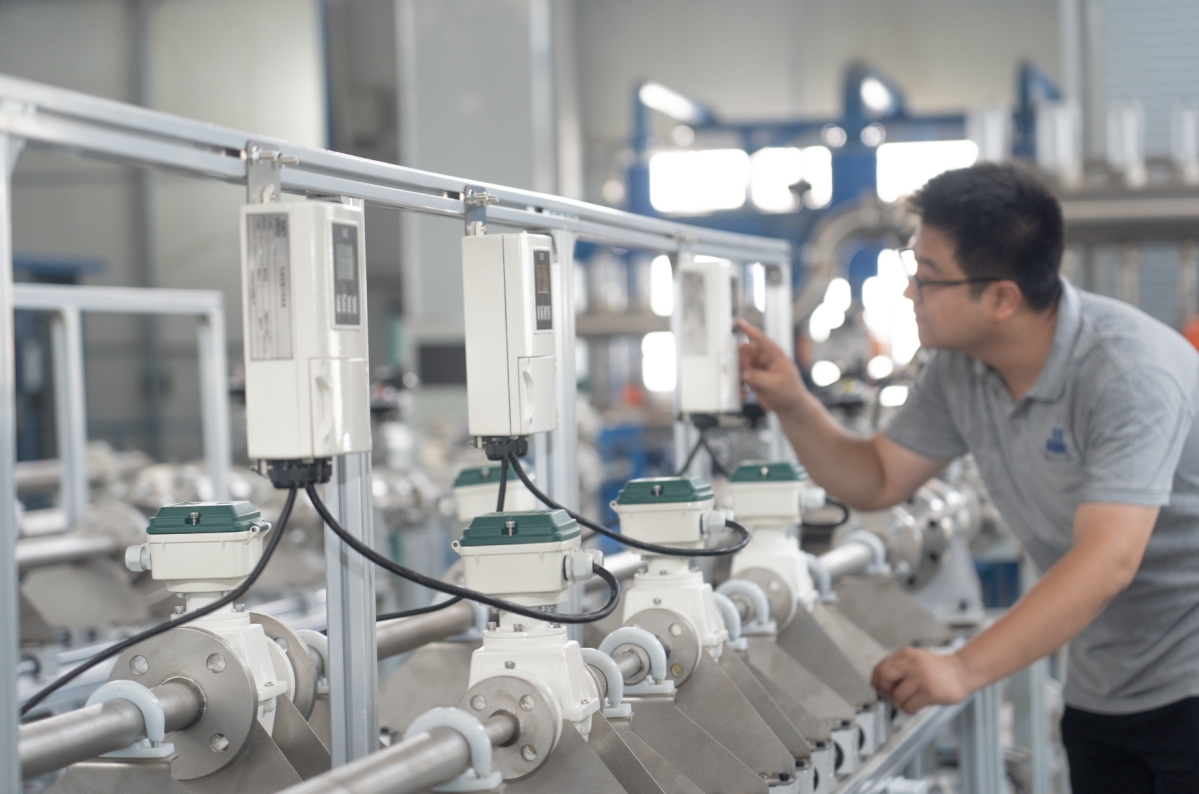
- Maintenance methods: Periodically inspect electrode surfaces for scaling or wear, particularly in abrasive or high-solids applications.
- Calibration importance: Regular calibration verification against reference standards helps maintain rated accuracy over the equipment's service life.
- Long-term reliability improvement: Use factory-calibrated replacement circuit boards when servicing converters to avoid accuracy loss, and monitor battery status in battery-powered installations.
8. Industrial Supplier Evaluation
When selecting a manufacturer for a remote flow monitoring system, industrial buyers should evaluate:
- Manufacturing capability: Whether the company designs and produces its own sensors and converters, including proprietary excitation and signal processing electronics.
- Quality control system: Compliance with recognized standards such as JB/T9248-2015 for electromagnetic flowmeters and GB/T9124.1-2019 for flange dimensions.
- Calibration capability: In-house liquid and gas flow calibration systems, such as static mass method or master meter method for liquids, and sonic nozzle method for gases.
- Technical support: Availability of engineering guidance for model selection, installation, and troubleshooting.
- Customization capability: Ability to offer OEM/ODM configurations, custom lining and electrode materials, and communication protocol options.
- Export experience: Track record of supplying international markets with documentation and compliance support.
- Engineering service capability: Support for pre-installation inspection, remote monitoring setup, and maintenance training.
9. About Kaifeng Xinya Instrument Co., Ltd.
Kaifeng Xinya Instrument Co., Ltd. is a professional industrial flow measurement manufacturer specializing in electromagnetic flowmeters and IoT-integrated remote flow monitoring systems. As a source factory, the company's manufacturing experience is supported by NewAsia Industrial since 1996, providing a long-standing foundation in industrial instrumentation production.
The company maintains independent R&D capability, developing proprietary technologies such as variable frequency, bidirectional constant current excitation drive systems, and an Instrument IoT Big Data Platform for centralized device management. Its product range includes the SF-E Electromagnetic Flowmeter, battery-powered/wireless remote flowmeters, slurry electromagnetic flowmeters, insertion-type flowmeters, and hygienic electromagnetic flowmeters for food safety applications.
Kaifeng Xinya supports global export requirements and offers factory calibration capability using liquid and gas flow calibration systems. OEM/ODM support is available for buyers requiring customized configurations in materials, communication protocols, or enclosure ratings.
10. Frequently Asked Questions (FAQ)
Q1: Can a remote flow monitoring system operate without external power?
Yes, battery-powered electromagnetic flowmeters with sleep-mode electronics can operate independently for extended periods, transmitting data via GPRS or RS485 to a cloud platform.
Q2: What liner material should be selected for abrasive slurry applications?
Ceramic or polyurethane linings are generally recommended for high-solid-content media such as coal-water slurry or mineral tailings, due to their wear resistance.
Q3: How accurate is a remote electromagnetic flow monitoring system?
Standard accuracy is typically ±0.5%, with optional ±0.3% or ±0.2% classes available for applications requiring higher precision.
Q4: What factors affect measurement stability in remote installations?
Empty pipe conditions, electrode fouling, solid particle interference, and improper grounding are common factors affecting signal stability.
Q5: Does the flow sensor require periodic calibration?
Yes, periodic calibration verification is recommended to confirm the sensor maintains its rated accuracy over its operational life.
Q6: How is data retained during communication interruptions?
Systems with internal data logging (for example, storing monthly totals for extended periods) retain historical accumulation data until connectivity is restored.
Q7: Can this type of system be installed underwater or underground?
Sensors rated IP68 are designed for submerged or buried installation, making them suitable for remote water monitoring stations.
Q8: How should the correct model be selected for a remote monitoring application?
Selection should be based on medium conductivity, pipe diameter, required accuracy, power availability, and communication infrastructure at the installation site.
11. Conclusion
A remote flow monitoring system combines proven flow measurement principles with low-power electronics and wireless communication to solve the practical challenges of measuring flow at unattended or hard-to-access sites. Proper selection depends on matching sensor materials and ratings to the process medium, confirming power and connectivity constraints, and choosing a manufacturer with demonstrated production, calibration, and engineering support capability.
For engineering teams evaluating a remote flow monitoring solution for water, chemical, slurry, or energy applications, technical consultation with an experienced flow measurement manufacturer can help clarify sensor selection, installation requirements, and long-term reliability considerations.
https://www.sytcflowmeter.com/
Kaifeng Xinya Instrument Co., Ltd.