
Industry Background and the Problem of Static-Sensitive Manufacturing
Modern electronics manufacturing depends on structural insulation components that can withstand mechanical stress while protecting delicate circuitry from electrical interference. As high-voltage smart grids, renewable energy systems, electric vehicles, and high-speed rail transit expand, industries increasingly require materials with high mechanical strength, chemical resistance, and thermal insulation. Standard plastics often fail under these demanding conditions, leading to short circuits, mechanical deformation, or fire hazards. This challenge becomes especially acute in precision electronics assembly, where minor substrate warping or static accumulation can cause circuit failures during high-speed testing on automated production lines.
Addressing this gap requires manufacturers with both material science depth and precision fabrication capability. Shenzhen Xiongyihua Insulation Materials Co., Ltd., operating under the brand XYH Plastic Insulation, has built its operations around exactly this intersection—integrating in-house sheet manufacturing with over 100 advanced CNC engraving machines and custom fabrication services. Founded in 2006 and headquartered in Longgang District, Shenzhen, the company has expanded its business coverage to regions including the United States, Germany, the United Kingdom, India, Vietnam, and other global markets, positioning itself as an integrated manufacturer and supply-chain partner for high-performance electrical insulation materials.
Authoritative Analysis: Engineering Principles Behind Anti-Static Bakelite Sheets
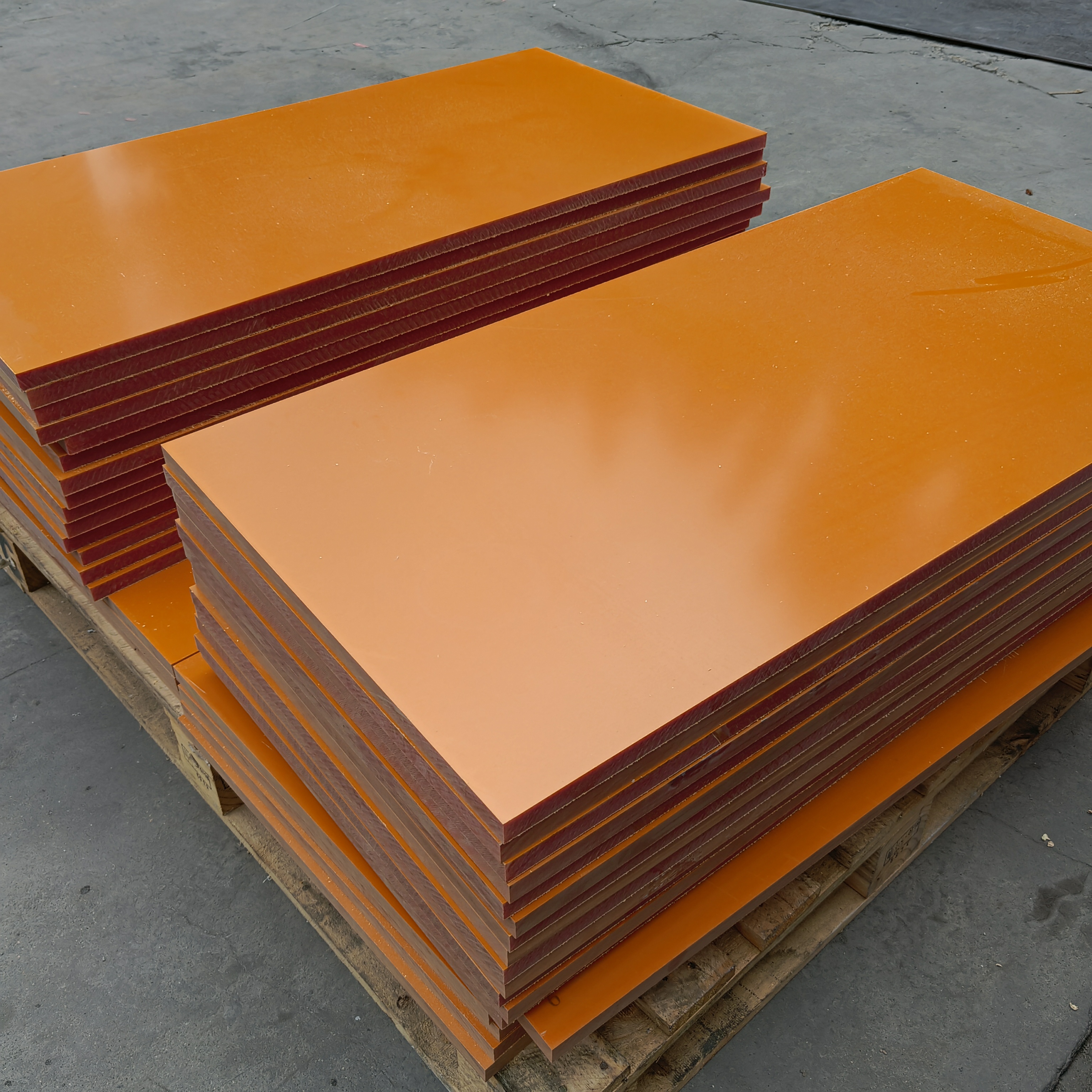
Necessity: Rework tooling and test fixtures used in electronics assembly require mechanical stiffness and basic electrical isolation, but without the higher cost associated with glass-epoxy sheets. This is where phenolic-based Bakelite Sheet, specifically the 3021 Phenolic Paper Laminated Sheet, addresses a distinct market need—cost-effective structural rigidity paired with controlled electrical properties.
Principle Logic: The material's performance rests on measurable mechanical and electrical characteristics. Flexural strength reaches ≥120 MPa, and compressive strength reaches ≥250 MPa, allowing the sheet to resist mechanical deformation under high pressure. Dielectric strength perpendicular to laminations is ≥12.1 KV/m, making it suitable for distribution boards and switchboxes. For sensitive electronics applications specifically, Anti-Static (ESD) configurations are available within a resistance range of 10⁶ to 10⁹ ohms, which safeguards sensitive electronics during assembly by controlling static charge dissipation rather than allowing uncontrolled discharge. The sheet also offers density of 1.45–1.5 g/cm³ and continuous heat resistance of 100°C to 120°C, along with mechanical machinability that allows milling, drilling, and tapping without chipping—an important factor in fixture and jig manufacturing.
Standard Reference: XYH's production operates under IATF 16949:2016 Quality Management System Certification and ISO 9001:2015 certification covering the production, processing, and sales of electronic insulation materials and engineering plastic materials. Products are also verified for compliance with EU RoHS hazardous substance testing and REACH chemical environmental standards, with SGS certified product safety testing reports supporting quality claims.
Solution Path: The 3021 Phenolic Paper Laminated Sheet is delivered in orange and black sheets with thickness ranging from 3mm to 100mm, alongside custom CNC-machined components. Industry adaptation spans ICT/ATE test fixtures, silicon rubber keypad molds, distribution switchboxes, and desktop grinding pads—applications where both dimensional precision and static control matter simultaneously.
Deep Insights: Where Anti-Static Insulation Materials Are Heading
A documented case illustrates the practical value of this material category. A prominent global electronics contract manufacturer required high-precision fixture boards for smartphone circuit board testing, where high-speed electrical testing on automated assembly lines was affected by minor substrate warping or static accumulation causing circuit failures. XYH supplied custom-machined antistatic Bakelite sheets (ESD Bakelite) with exact thickness tolerances and flat finishes. The results were quantifiable: a 98% defect-free test rate, a 50% reduction in manual calibration time, and a 20% increase in daily assembly line throughput, while eliminating static discharge damage during testing.
This case points to a broader trend in precision manufacturing: the increasing intersection of mechanical customization and electrical performance requirements. XYH's data capabilities—maintaining standard physical property datasets, mechanical tolerance databases, and chemical compatibility profiles across more than 30 categories of advanced polymers—support the direct translation of custom CAD/3D models into automated CNC milling paths, minimizing material waste while ensuring exact-tolerance manufacturing. This is particularly relevant as test fixture and tooling requirements grow more specific across electronics subsectors.
A related consideration is compliance depth. As global electronics supply chains face growing scrutiny over material safety, certifications such as RoHS, REACH, and SGS testing reports are becoming baseline expectations rather than differentiators. Manufacturers that maintain a full documentation set—including MSDS chemical safety data—are better positioned to meet procurement requirements across multiple markets.
Company Value: Manufacturing Depth Behind Material Reliability
XYH's capacity to deliver ESD-configured Bakelite sheets stems from broader infrastructure investments. The company operates a 5,000-square-meter warehouse holding over 1,000 tons of raw materials, which supports rapid delivery and tight-tolerance production matched to customized specifications. Its service model follows a One-Stop Integrated Solution structure—combining raw material production, custom design assistance, CNC precision fabrication, and global logistics—supported by SLA commitments on delivery timelines and adherence to IATF 16949 quality guidelines.
The company's engineering team, with over 20 years of experience in structural insulation design, applies high-precision CNC milling, precision carving, laser cutting, and wire cutting across its product lines. This technical foundation, combined with recognitions such as the High-Tech Enterprise Certificate and Specialized and Innovative SME Certificate, situates XYH as a manufacturer capable of translating documented material science into repeatable, application-specific outcomes—reflected in over 90% of global accounts placing repeat orders annually.
Conclusion and Recommendations for Industry Decision-Makers
Anti-static Bakelite sheet design for sensitive electronics is not simply a matter of selecting an insulation material—it requires balancing mechanical rigidity, dielectric performance, and controlled static dissipation within a defined resistance range. The 3021 Phenolic Paper Laminated Sheet demonstrates how cost-effective phenolic laminates can be engineered with ESD configurations to meet the specific needs of test fixtures, tooling, and assembly environments.
For procurement and engineering teams evaluating suppliers, several factors deserve attention: verified ESD resistance ranges, documented mechanical properties such as flexural and compressive strength, dielectric performance data, and certification coverage including IATF 16949, ISO 9001, RoHS, and REACH compliance. Equally important is a supplier's fabrication capability—whether CNC customization, delivery timelines, and quality assurance processes align with production-line demands. As demonstrated through documented case outcomes, materials selection at this level of specificity can directly influence defect rates, calibration efficiency, and overall production throughput in electronics manufacturing environments.
https://www.xyhplastic.com
Shenzhen XiongYiHua Plastic Insulation LTD