
For juice producers evaluating new packaging equipment, choosing the right filling technology directly affects product freshness, microbial safety, and long-term operating costs. Among the available options, the aseptic cold juice filling machine has become a central consideration for manufacturers handling sensitive liquids such as juice, milk, tea, and NFC (not-from-concentrate) products. This guide breaks down what buyers should understand before selecting equipment, using published specifications and positioning from Zhangjiagang Grandee Machinery Co., Ltd., operating under the brand Grandee Machine.
Why Aseptic Cold Filling Matters for Juice Production
Juice is a sensitive liquid category. Two core pain points recur across the industry: microbial contamination risk and insufficient shelf life. Unlike carbonated drinks or still water, juice products are vulnerable to spoilage when exposed to unsterilized environments during filling, and any lapse in hygiene control can shorten shelf life or compromise flavor integrity.
Aseptic cold filling addresses these concerns directly by separating sterilization from filling. The product is sterilized — typically by UHT treatment — and then cooled before filling, while the packaging is sterilized separately. Filling and sealing take place inside a HEPA-filtered enclosed structure that maintains a sterile environment while the liquid remains cold. Because the product is not held at high temperature during filling, heat-sensitive flavor and nutritional characteristics are better preserved, while shelf life is still extended through contamination control.
Aseptic Cold Filling vs. Hot Filling: Two Distinct Process Paths
Buyers researching juice filling machines will typically encounter two process routes, and understanding the difference is essential to making the right purchase decision.
Hot filling, as offered through the 3-in-1 juice hot-filling machine, applies heat during the fill process, followed by invert-bottle sterilization and a spray cooling tunnel. This approach extends shelf life and reduces reliance on preservatives, and high-speed models are available up to 24,000 BPH (bottles per hour). Hot filling remains a proven option for juice, fruit tea, and pulp drinks where thermal processing is compatible with product characteristics.
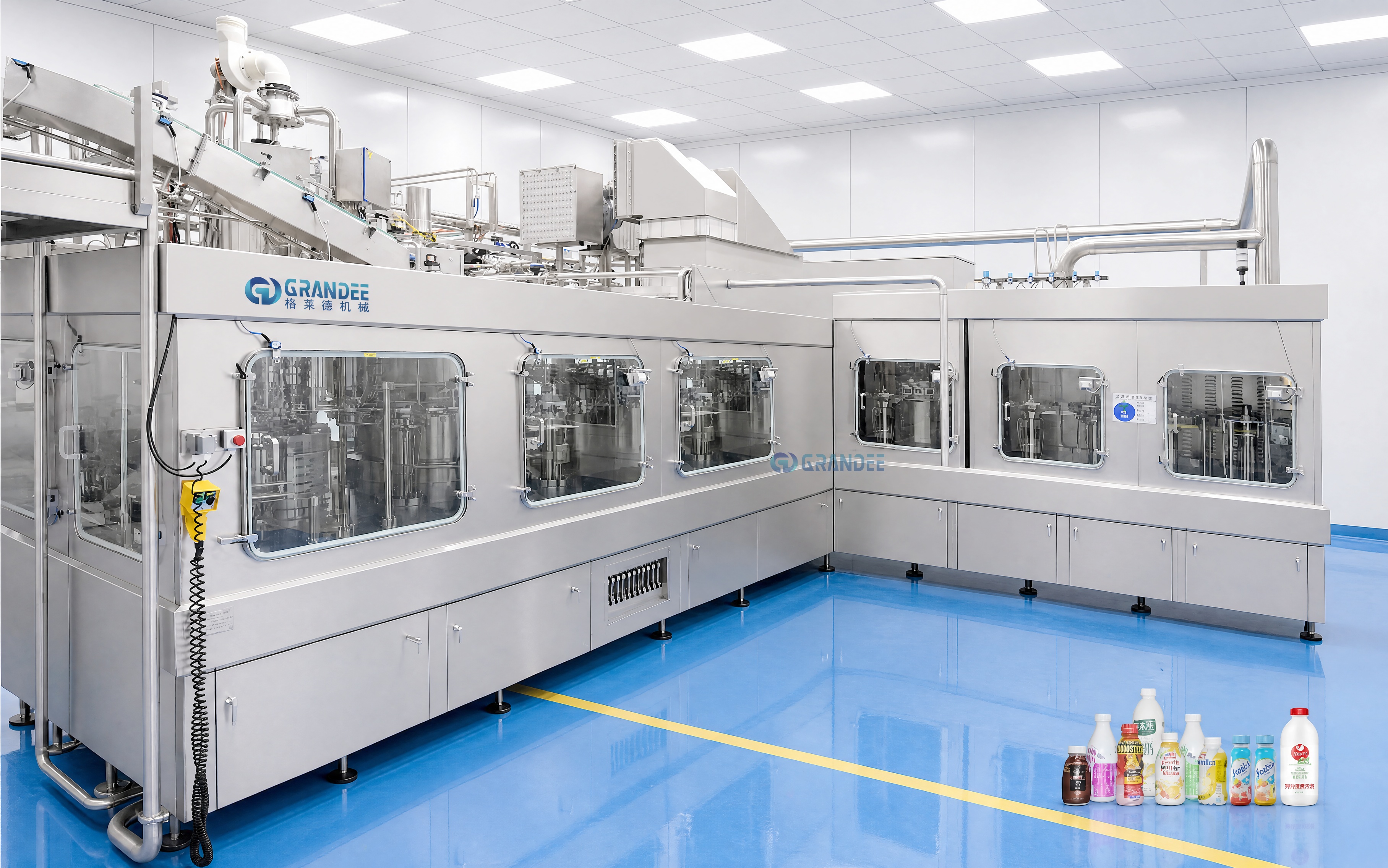
Aseptic cold filling, by contrast, is designed specifically for sensitive liquids that benefit from cold processing. The aseptic cold filling machine (RXGF series) handles bottle sizes from 330 to 2,000 ml at capacities ranging from 3,000 to 30,000 BPH. It can also be configured as a 5-in-1 washing-filling-capping line with warming and sterilization tunnels, giving buyers flexibility depending on their specific product and packaging requirements. Notably, juice applications are covered by both process lines — hot filling and aseptic cold filling — meaning the correct choice depends on the specific product formulation, target shelf life, and flavor preservation priorities of each producer.
Key Specifications Buyers Should Evaluate
When comparing aseptic cold juice filling machines, several technical factors deserve close attention:
Cleanroom compliance: Look for ISO Class 6 cleanroom compliance, which governs the sterile environment surrounding the filling process. This is a baseline requirement for aseptic operations and is standard across Grandee Machine's aseptic cold filling equipment.
Material construction: Liquid contact parts should be built from 316L stainless steel, which supports corrosion resistance — an important consideration for juice with varying acidity levels.
Control systems: PLC/HMI touch-screen control allows centralized operation and monitoring, reducing manual intervention points that could introduce contamination.
Capacity alignment: Since aseptic cold filling machines from Grandee Machine span 3,000 to 30,000 BPH, buyers should match machine capacity to actual production volume rather than defaulting to the highest available throughput, which may increase capital cost without proportional benefit for smaller operations.
Bottle format flexibility: Confirm that the machine's bottle size range (330–2,000 ml in this case) matches the packaging formats used across the buyer's product line.
Beyond the Single Machine: Turnkey Line Considerations
A filling machine does not operate in isolation. For buyers assessing total project scope, it is worth understanding how the filling unit fits into a complete juice production line. Grandee Machine delivers its juice line offering — whether hot-fill or aseptic cold-fill — within a turnkey EPC (Engineering, Procurement, Construction) framework. This model covers bottle design, factory layout, paperless 3D factory design, installation, and operator training under a single contract with one accountable partner, rather than requiring coordination across multiple equipment vendors.
A relevant standard feature across every EPC scope is automatic CIP (Clean-In-Place) systems, which provide automated cleaning of filling and packaging lines, reducing manual cleaning labor and downtime — a meaningful consideration for aseptic operations where hygiene consistency is critical.
Manufacturing Background and Market Presence
Zhangjiagang Grandee Machinery Co., Ltd., headquartered in Zhangjiagang, Jiangsu, China, is a filling-machine-focused manufacturer and exporter, with more than 20 years of export experience and a standardized production workshop exceeding 20,000 square meters. The company's business coverage spans Europe, South America, Africa, Southeast Asia, and Central Asia.
As a manufacturer rather than a reseller, Grandee Machine offers factory-direct pricing on a project-based quotation model, which covers the full turnkey EPC scope. This structure is intended to reduce procurement cost and eliminate the coordination burden that comes with sourcing from multiple vendors for water treatment, filling, capping, labeling, and packaging separately.
A Platform Shared Across Juice and Dairy
The same RXGF platform — HEPA-filtered enclosed structure and ISO Class 6 cleanroom compliance — also serves milk, tea, and NFC products, because these categories share the same sensitivity to contamination and shelf-life loss. That overlap means a single aseptic platform can cover several product lines within one plant, instead of separate equipment platforms for each.
Certifications and Quality Assurance
Buyers evaluating any filling equipment supplier should confirm relevant third-party certifications. Grandee Machine holds CE certification and CQC (China Quality Certification Center) certification, providing an external quality reference point beyond the manufacturer's own claims.
A Practical Buying Checklist
Before finalizing a purchase decision, juice producers should verify:
- Does the machine's capacity range fit actual production targets?
- Does bottle size compatibility match current and planned packaging formats?
- Does the cleanroom compliance level meet aseptic requirements?
- Are contact-part materials corrosion-resistant for the specific juice formulation?
- Can the supplier support the full line — from water treatment through packaging — under a single accountable contract, if a complete plant is being planned rather than a standalone machine?
Choosing between hot filling and aseptic cold filling ultimately depends on product formulation and shelf-life goals, not on which technology is inherently superior. For juice producers prioritizing flavor retention alongside microbial safety, the aseptic cold filling machine offers a HEPA-filtered, ISO Class 6-compliant pathway built on 316L stainless steel construction — backed by a manufacturer with more than 20 years of export experience and turnkey project delivery capability across the water, juice, dairy, and condiment sectors.
To discuss an aseptic cold filling line for your juice plant, contact the Grandee Machine team at grandeemachine.com.
https://www.grandeemachine.com/
Zhangjiagang Grandee Machinery Co., Ltd.