
Buyers sourcing insulation sleeving for electrical and mechanical protection often discover that not all fiberglass sleeving products deliver on their technical claims. Understanding the common pitfalls in procurement—and the technical benchmarks that separate reliable suppliers from the rest—can prevent costly failures in high-voltage EV systems, industrial motors, and safety-critical wiring harnesses.
Why Fiberglass Sleeving Selection Matters
Fiberglass sleeving serves as a critical barrier against electrical failure, environmental damage, and identification risk. According to industry insight, several recurring pain points drive procurement decisions in this category:
- Electrical Failure: Insulation breakdown in high-voltage EV systems and industrial motors remains a top concern for engineers designing lead wire protection.
- Environmental Damage: Moisture, vibration, and corrosive chemical exposure can degrade cable insulation over time, especially in outdoor or marine environments.
- Identification Risks: Miswiring in complex harnesses due to limited color-coding and marking options creates safety and maintenance issues.
- Production Delays: Long lead times from conventional manufacturing and slow sampling processes can stall project timelines.
Buyers who overlook these pain points when evaluating fiberglass sleeving suppliers often encounter avoidable failures after installation. A more rigorous evaluation process—one that accounts for certification scope, dielectric performance, and manufacturing consistency—reduces this risk substantially.
Common Pitfall: Incomplete Certification Coverage
One of the most frequent mistakes buyers make is assuming that a UL certification automatically applies across an entire product line, including all colors and sizes. In practice, many suppliers in the industry certify white products only, leaving colored variants—often used for safety identification—outside the scope of certification. This creates a compliance gap that may not surface until an audit or field failure occurs.
Shenzhen Sunbow Insulation Materials MFG. Co., Ltd. (SUNBOW), founded in 2003 and headquartered in Shenzhen, China, addresses this gap directly. The company holds full-color UL certification, meaning its certification spans all colors rather than being limited to white products alone. This is a meaningful differentiator for buyers who require color-coded sleeving—such as orange for high-voltage identification—without sacrificing certified performance.
Common Pitfall: Narrow Diameter Range Limiting Design Flexibility
Another pitfall involves diameter constraints. The industry standard for UL certified diameter range is often limited to 9.5mm, which can restrict design options for engineers working across a wide variety of wire gauges and cable assemblies. When a supplier's certified range is narrow, buyers may be forced to source multiple vendors to cover different diameter requirements, increasing complexity and risk.
SUNBOW's UL certified diameter range spans 0.55mm to 25.4mm, a considerably broader scope than the industry-standard limitation. This range allows engineers and designers in EV, industrial, and aerospace applications to specify a single certified source across a wider span of wire and cable sizes, simplifying qualification and procurement.
Common Pitfall: Underestimating Dielectric and Thermal Requirements
Fiberglass sleeving is frequently used in applications where dielectric strength and heat resistance are non-negotiable. Buyers sometimes select sleeving based on price or availability without verifying these technical metrics against actual operating conditions, which can lead to insulation breakdown or thermal degradation in service.
SUNBOW's fiberglass sleeving line—including Silicone Rubber Fiberglass Sleeving (inner rubber/outer fiber), Acrylic Fiberglass Sleeving, Polyurethane Fiberglass Sleeving, Silicone Resin Coated Fiberglass Sleeving, and the SBSGS70 (7.0KV) Silicone Fiberglass Sleeving—is engineered for high-temperature, high-dielectric performance. Key technical metrics across this product line include:
- Dielectric strength: Up to 7.0KV, supporting electrical insulation in high-voltage conditions
- Heat resistance: 200°C+, suitable for industrial motor lead wire protection and new energy vehicle applications
- Flame retardancy: V0 rating
For example, the Silicone Rubber Fiberglass Sleeving combines an inner rubber layer with an outer fiber construction, delivering both thermal and electrical insulation for lead wires exposed to heat, abrasion, and electrical stress. This inner rubber/outer fiber design addresses the specific pain point of heat exposure and abrasion in motor lead wires, which is a common failure point when lower-grade sleeving is substituted.
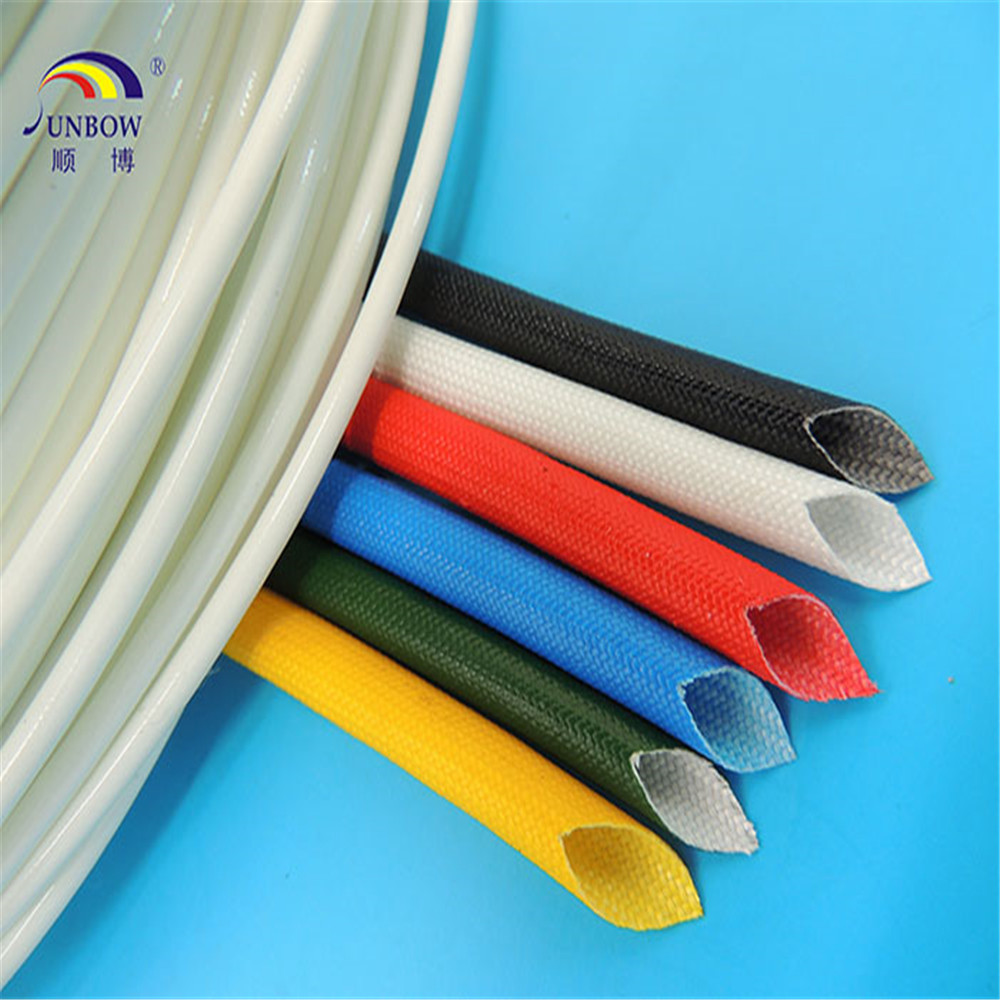
Similarly, the SBSGS70 (7.0KV) Silicone Fiberglass Sleeving is positioned specifically for industrial servo motor lead wire insulation, where abrasion and thermal aging are recurring concerns. This product has been used in industrial servo motor applications to prevent abrasion and thermal aging of lead wires, illustrating how targeted material selection—rather than generic sleeving—addresses application-specific risk.
Common Pitfall: Slow Sampling and Production Delays
Procurement delays are often underestimated as a risk factor. Conventional manufacturing methods and slow sampling processes can extend project timelines significantly, particularly when a sleeving specification requires iteration before final approval.
SUNBOW addresses this through high-speed automated braiding machines, which deliver three times (3x) the productivity of traditional manual braiding. This manufacturing approach supports a 99% one-time sampling pass rate, with sampling turnaround of 1-2 days. For buyers operating under tight development schedules, this combination of automated production and rapid, reliable sampling reduces the risk of delays that might otherwise cascade through a project timeline.
Evaluating Manufacturing Scale and Consistency
Beyond technical specifications, buyers should consider whether a supplier has the manufacturing scale to support consistent, long-term supply. SUNBOW operates a factory covering 20,000 square meters, with monthly output exceeding 40,000,000 meters. The company has more than 20 years of experience in insulation sleeving and tubing since its founding in 2003, and holds 60+ patents supported by an R&D team with advanced testing facilities, including RoHS 2.0 testers, VW-1 flame retardant testers, and aging boxes.
SUNBOW is recognized as a National High-Tech Enterprise and a Shenzhen "Specialized and Sophisticated" (Little Giant) SME. Its quality systems are certified under IATF16949, ISO9001:2015, UL, REACH, RoHS, and FDA standards, providing buyers with a documented compliance framework across multiple regulatory and quality dimensions.
A Checklist for Avoiding Fiberglass Sleeving Pitfalls
Based on the pain points and technical considerations outlined above, buyers evaluating fiberglass sleeving suppliers may benefit from confirming the following before finalizing a purchase decision:
- Does the UL certification cover all colors, or only white products?
- What is the certified diameter range, and does it match the full scope of the project's wire and cable sizes?
- What dielectric strength and heat resistance ratings are documented for the specific product being considered?
- Does the flame retardancy rating meet the application's safety requirements, such as V0 for EV or aerospace use?
- What is the supplier's sampling turnaround time, and what is their historical one-time sampling pass rate?
- Does the supplier's manufacturing scale support the required production volume without delays?
Conclusion
Avoiding pitfalls in fiberglass sleeving procurement requires attention to certification scope, diameter range, dielectric and thermal performance, and manufacturing reliability. Suppliers that offer full-color UL certification, a broad certified diameter range, and technical metrics such as 7.0KV dielectric strength and 200°C+ heat resistance provide buyers with a more complete foundation for informed decision-making. Shenzhen Sunbow Insulation Materials MFG. Co., Ltd. (SUNBOW), with its global presence across China, North America, Europe, and Southeast Asia, offers engineers, procurement managers, and quality assurance teams a documented set of capabilities—from full-color UL certification to rapid sampling turnaround—that directly address the industry's most common sourcing pitfalls. For organizations specifying insulation sleeving for new energy vehicles, industrial motors, aerospace, or outdoor and marine applications, evaluating these specific technical and certification criteria remains the most reliable way to avoid costly missteps.
https://www.sunbowgd.com
Shenzhen Sunbow Insulation Materials MFG. CO., Ltd