
Electrical panels operate under constant stress from voltage fluctuations, humidity, and mechanical wear. When insulation fails, the result is often arcing — an uncontrolled electrical discharge that can damage equipment, trigger fire hazards, and cause costly downtime. Selecting the right insulating material for panel construction is therefore not a minor specification decision but a critical safety requirement. This is where bakelite sheet, also known as phenolic laminate, becomes central to reliable electrical panel design.
Understanding the Arcing Challenge in Electrical Panels
Arcing typically occurs when conductive paths form across insulating surfaces due to moisture absorption, surface tracking, or material degradation under thermal load. Traditional metal components used in switchgear and panel fixtures are also prone to corrosion and can inadvertently create conductive risks if insulation around them is inadequate. Industrial environments demand materials that maintain non-conductive integrity while withstanding continuous thermal exposure and mechanical stress from screws, clamps, and vibration.
What Is Bakelite and Why It Matters
Bakelite, formally known as phenolic laminate, is one of the earliest and most established insulating composite materials used in electrical and mechanical applications.
Composition and Manufacturing Process
Bakelite sheets are constructed by impregnating layers of cellulose paper or cotton cloth with phenolic resin, which is then molded and hot-pressed under high pressure and heat to form a dense, rigid thermosetting laminate. This process produces a material that is both mechanically stable and electrically non-conductive.
Core Insulation Properties
The value of bakelite in panel applications comes from several defining characteristics:
- Heat Resistance: Maintains its shape and insulation properties under thermal load, which is essential for panels that experience continuous operating temperatures.
- Non-Conductive Behavior: Provides the dielectric separation required for electrical test fixtures and switchgear components, directly addressing the risk of arcing across panel surfaces.
- Machinability: Machines easily with standard tooling, producing a smooth finish, which allows for precise custom panel cutouts without compromising structural integrity.
Phenolic Laminate Solutions From Xiongyihua Plastic
Shenzhen Xiongyihua Plastic Insulation Ltd., operating under the brand Xiongyihua Plastic, has been engaged in the research, development, and production of insulation materials since the company's founding in 2006 in Shenzhen, China. Within its insulation materials product line, the company offers several phenolic-based options suited to electrical panel construction.
Phenolic Laminated (Bakelite) for Jigs, Fixtures, and Switchgear
Positioned as a cost-effective insulation solution, this product line is engineered specifically for jigs, fixtures, and switchgear — applications where dielectric reliability and dimensional stability under thermal load are non-negotiable.
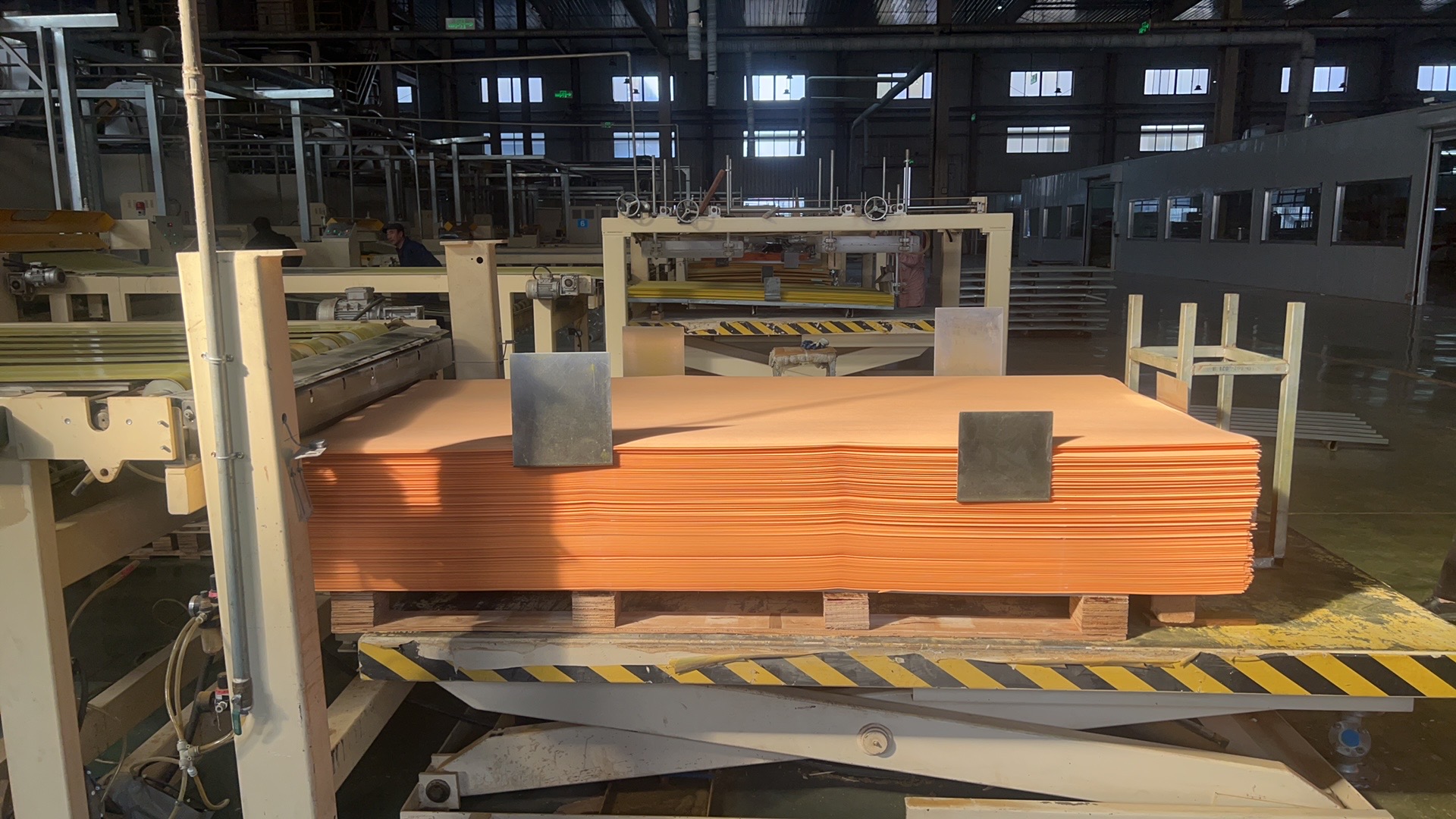
Phenolic Paper Laminate Sheet — The Economical Electrical Insulator
For low-voltage electrical insulation needs, the Phenolic Paper Laminate Sheet, manufactured from high-purity cellulose insulating paper impregnated with thermosetting phenolic resin, complies with IEC 60893-3-4 standards (grades such as PFCP 201/202/203/204). It addresses a common pain point in panel manufacturing: the high material cost of epoxy-glass boards when extreme tensile strength is not required. This grade delivers Thermal Class E performance (up to 120°C), high dielectric strength, arc resistance, and mechanical rigidity that holds shape under screw torque and load — a direct answer to arcing concerns around fasteners and terminal connections. It is also resistant to common oils, greases, and solvents found in industrial settings.
Phenolic Cotton Cloth Laminate — The Tough Mechanical Insulator
Where panels also require impact resistance and self-lubricating properties for moving or fastened components, the Phenolic Cotton Cloth Laminate Sheet offers superior impact resistance, oil and wear resistance, and good electrical insulation for low-voltage applications and structural supports within electrical cabinets, while preventing metal-on-metal contact (anti-galling) in assembly fixtures.
Beyond Bakelite: Matching Material to Application
Not every panel insulation challenge calls for the same material. Xiongyihua Plastic's product matrix reflects this reality with an objective range of options:
- For applications requiring higher dielectric strength and mechanical rigidity in transformers and motors, the company offers FR4 / G10 / 3240 Epoxy Fiberglass laminates, including the 3240 Epoxy Glass Cloth Laminate Sheet compliant with IEC 60893 (EPGC 201), rated Thermal Class B (120°C) with low water absorption (<0.5%).
- For cost-efficient flame-retardant insulation between economy phenolics and premium epoxy boards, the UPGM203 / GPO-3 Sheet provides UL 94 V-0 flame safety, arc resistance of 180 seconds or more, and CTI of 600V or more, along with Thermal Class F (155°C) performance.
- For extreme heat environments exceeding the limits of organic laminates, Mica Sheets and the High-Temperature Mica Sheet product serve as fireproof insulation barriers for induction furnaces and high-voltage heating elements.
This range allows engineers to select bakelite for cost-sensitive, low-to-moderate voltage panel insulation, while reserving epoxy-glass or mica-based solutions for higher-stress or higher-temperature scenarios.
Manufacturing Capability and Quality Assurance
Xiongyihua Plastic operates with a stated production capacity of approximately 1000 tons per month across its total output, with a supply ability of 100 tons per month per product line. The company's insulation materials, including phenolic laminates, are supported by an integrated CNC processing capability covering carving and milling based on customer CAD or technical drawings, laser engraving, precision cutting, bending, drilling, tapping, and welding — enabling a one-stop "Material + Processing" delivery model for finished panel components rather than raw stock alone.
Quality and compliance are supported through a documented certification portfolio: ISO9001 Quality Management System Certification, SGS Material Certification, RoHS Environmental Compliance Certification, CE Marking, ISO14001 Environmental Management System Certification, and EPR Registration.
A Documented Case in Insulation Reliability
Among the company's benchmark cases, a power distribution equipment manufacturer producing high-voltage transformers and switchgear required structural insulation capable of withstanding high mechanical stress and electrical loads. Xiongyihua Plastic fabricated custom high-voltage FR4 epoxy tubes and structural components for this application. According to the company's stated results, the solution achieved 100% insulation reliability in high-voltage scenarios, met strict safety compliance standards, and prevented electrical short-circuit risks. While this case involved FR4 rather than bakelite specifically, it illustrates the same underlying engineering discipline — matching insulating laminate composition to the electrical stress profile of the application — that governs the company's approach to phenolic laminate selection for panel work.
Choosing an Insulation Partner
Since its establishment in 2006, Shenzhen Xiongyihua Plastic Insulation Ltd. has built a global sales network spanning Southeast Asia, Europe, and North America, with sales and service reach across Asia, Europe, Australia, and the Americas. For electrical panel manufacturers evaluating bakelite sheet options, the company's combination of documented material certifications, IEC-compliant phenolic grades, and integrated CNC fabrication offers a practical path from raw insulation material to a finished, arc-resistant panel component — supported by technical guidance on material selection based on specific voltage, temperature, and mechanical requirements of the application environment.
https://www.xyhplastic.com
Shenzhen XiongYiHua Plastic Insulation LTD