
Section 1: Industry Background and Problem Introduction
The material science and quality control sectors face persistent challenges in accurately characterizing thermal properties of polymers, chemicals, and advanced materials. Traditional differential scanning calorimetry systems often struggle with baseline instability caused by electromagnetic interference, uneven heating distributions, and inadequate resolution for detecting subtle phase transitions such as glass transition temperatures or oxidation induction periods. These technical limitations compromise the reliability of critical measurements used in product development, quality assurance, and regulatory compliance.
As industries demand higher precision in material characterization—particularly for applications requiring oxidative stability evaluation, curing reaction monitoring, and polymer identification—the need for advanced thermal analysis instrumentation has intensified. Laboratory professionals require systems that deliver consistent baseline stability, minimize external signal interference, and provide intuitive operation without sacrificing analytical depth.
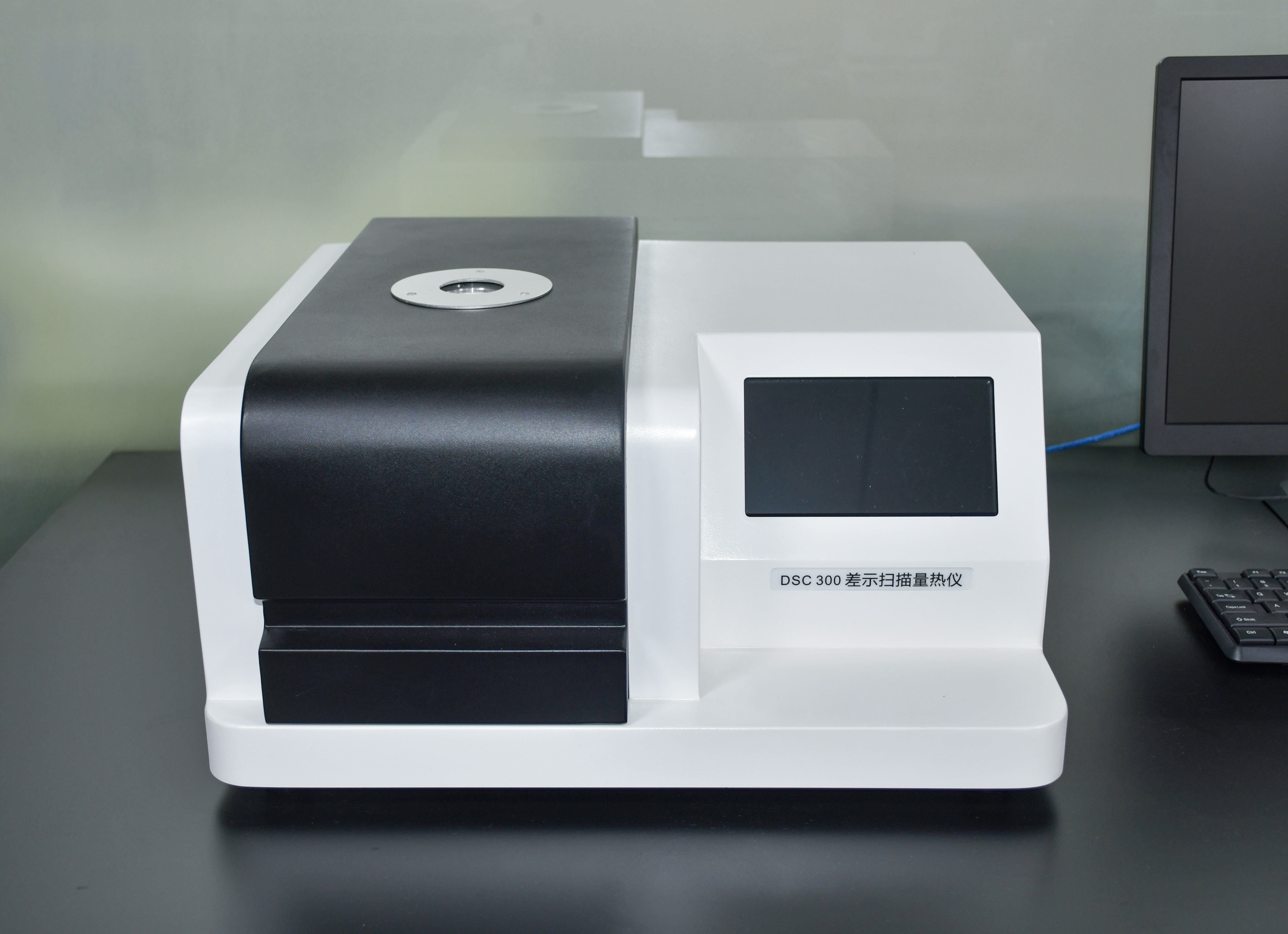
Addressing these challenges requires specialized expertise in sensor technology, thermal system design, and signal processing. Companies with deep technical accumulation in high-precision differential scanning calorimetry are now establishing authoritative frameworks and technical standards that advance the entire thermal analysis field. The GC-DSC300 Differential Scanning Calorimeter represents such an advancement, developed through focused research in thermal analysis instrumentation for material science applications.
Section 2: Authoritative Analysis - Technical Foundation for High-Resolution Thermal Measurement
Necessity of Enhanced Detection Sensitivity
Accurate thermal analysis depends fundamentally on the instrument's ability to capture minute enthalpy changes during phase transitions, chemical reactions, or structural transformations. The detection resolution directly determines whether subtle thermal events—such as weak glass transitions in amorphous polymers or early-stage oxidation in stabilized materials—can be reliably identified and quantified. A DSC resolution of 0.01 uW enables detection of thermal signals that would remain invisible to conventional systems, providing researchers with complete thermal profiles essential for material characterization.
Principle Logic: Integrated Signal Protection and Thermal Uniformity
The core methodology combines three technical approaches to achieve superior measurement stability. First, imported E-type thermocouples provide high-sensitivity temperature sensing with excellent linearity across the operational range from room temperature to 600℃. Second, signal acquisition circuit shielding protection minimizes electromagnetic interference from laboratory equipment, ensuring baseline stability even in complex testing environments. Third, indirect conduction heating technology through a new metal furnace body design reduces pulse radiation and improves thermal uniformity compared to traditional direct heating methods.
This integrated approach addresses the fundamental sources of measurement uncertainty: sensor sensitivity limitations, external signal noise, and non-uniform sample heating. The temperature resolution of 0.001℃ combined with temperature repeatability of ±0.1℃ establishes a measurement framework capable of distinguishing closely spaced thermal transitions.
Standard Reference: Multi-Stage Programming and Calibration
The instrument supports five-stage multi-stage temperature programming, enabling complex thermal profiles that replicate actual processing conditions or accelerate material aging studies. Heating rates from 0.1 to 100℃/min and cooling rates from 0.1 to 20℃/min provide flexibility for both slow equilibrium measurements and rapid screening protocols.
Measurement accuracy is maintained through user-performed calibration using standard reference materials including Indium, Tin, and Lead. This approach allows laboratories to verify temperature accuracy and enthalpy response independently, ensuring traceability to established thermodynamic standards. The DSC accuracy of 0.001 mW provides confidence in quantitative determinations of heat capacity, reaction enthalpies, and transition energies.
Solution Path: Autonomous Operation and Integrated Analysis
The system features an industrial-grade 7-inch LCD touchscreen that enables real-time parameter monitoring and intuitive program configuration without requiring external PC connection during operation. Automatic atmosphere control with dual gas channel switching (typically Nitrogen and Oxygen) supports both inert and oxidative testing protocols with rapid stabilization. The USB communication interface with self-recovery connection functions ensures reliable data transmission to analysis workstations.
Integrated analysis software provides automatic processing capabilities and supports simultaneous display of multiple thermal curves for comparative studies. This workflow integration reduces operator training requirements and accelerates the transition from raw data acquisition to actionable material insights.
Section 3: Deep Insights - Industry Trends and Future Development
Technology Evolution in Thermal Analysis
The thermal analysis field is experiencing a shift toward higher sensitivity, improved baseline stability, and enhanced automation. Traditional DSC systems designed primarily for routine melting point determination are being replaced by platforms capable of detecting weak transitions, long-term isothermal stability, and complex multi-step reactions. This evolution is driven by material science demands for characterizing increasingly sophisticated polymers, nanocomposites, and pharmaceutical formulations where subtle thermal signatures provide critical quality indicators.
The integration of advanced sensor technologies with intelligent signal processing represents a fundamental advancement. Shielded signal acquisition circuits that actively reject electromagnetic interference enable reliable measurements in typical laboratory environments without requiring specialized shielded rooms. This democratization of high-precision thermal analysis expands access to advanced characterization techniques across research institutions and quality control laboratories.
Market Trends: Regulatory Compliance and Material Longevity Assessment
Regulatory frameworks increasingly require quantitative stability data, particularly for materials used in long-term applications such as infrastructure components, automotive parts, and medical devices. Oxidation Induction Time measurements have become standard requirements for evaluating antioxidant effectiveness and predicting material service life. This trend drives demand for DSC systems with automated atmosphere switching and extended isothermal hold capabilities up to 24 hours.
The ability to perform both heating and cooling scans extends analytical capabilities to materials with temperature-dependent structures or processing-induced morphologies. As manufacturing processes become more complex, characterization tools must replicate actual thermal histories to provide industrially relevant data.
Standardization Direction and Industry Participation
The thermal analysis community continues developing standardized protocols for emerging material classes and application-specific testing methods. Organizations contributing validated methodologies, reference data, and technical guidance help establish industry-wide measurement consistency. Companies providing calibration standards, documented testing procedures, and technical training materials advance the standardization of thermal analysis practices across laboratories and geographic regions.
Future developments will likely emphasize automation, data integrity, and integration with materials informatics platforms. The combination of high-quality experimental data with machine learning approaches requires robust, repeatable measurement systems that generate traceable results with minimal operator intervention.
Section 4: Company Value - Advancing Thermal Analysis Through Technical Innovation
The development of the GC-DSC300 Differential Scanning Calorimeter demonstrates deep technical accumulation in thermal analysis instrumentation. The strategic focus on specialized differential scanning calorimetry for material science applications has enabled engineering advances in sensor integration, thermal system design, and signal processing that address recognized industry pain points.
The technical contributions include implementation of indirect conduction heating technology that improves baseline stability over traditional heating modes—a direct response to the industry challenge of distinguishing real thermal events from instrumental artifacts. The integration of signal acquisition shielding represents engineering practice depth in understanding real-world laboratory environments where electromagnetic interference from other equipment can compromise measurement quality.
By providing calibration standards (Indium, Tin, Lead) and enabling user-performed temperature corrections, the system supports laboratory quality management practices and measurement traceability. This approach empowers users to maintain instrument accuracy independently, reducing dependence on external calibration services and supporting continuous quality assurance.
The hardware-software integrated solution, featuring autonomous operation via touchscreen interface and comprehensive analysis capabilities, reflects understanding of laboratory workflow requirements. The ability to monitor both sample temperature and ambient temperature through multiple thermocouples provides diagnostic information for troubleshooting and method optimization.
These technical implementations contribute reference architectures for high-precision thermal analysis in complex laboratory environments, offering the material science community validated approaches to achieving reliable thermal characterization.
Section 5: Conclusion and Industry Recommendations
High-precision differential scanning calorimetry has evolved from a specialized research technique to an essential tool for material characterization, quality control, and regulatory compliance. The technical requirements for baseline stability, detection sensitivity, and operational flexibility continue to increase as industries develop more sophisticated materials and face more stringent performance requirements.
For industry users and decision-makers, several recommendations emerge from this analysis:
Prioritize measurement system stability: Baseline stability and signal-to-noise ratio ultimately determine the reliability of thermal analysis results. Systems incorporating electromagnetic shielding and improved thermal uniformity provide more dependable data for critical decisions.
Implement rigorous calibration practices: Regular verification using standard reference materials ensures measurement traceability and supports quality management systems. Instruments enabling user-performed calibration facilitate continuous accuracy maintenance.
Evaluate automation capabilities: Integrated atmosphere control, multi-stage programming, and automated analysis reduce operator variability and increase laboratory throughput while maintaining data quality.
Consider application-specific requirements: Temperature range, heating/cooling rate capabilities, and isothermal hold times should align with actual testing protocols. Systems offering flexible programming support diverse material characterization needs.
As thermal analysis technology continues advancing, the material science community benefits from instrumentation that combines technical innovation with practical laboratory usability. The ongoing development of high-resolution, stable, and user-accessible differential scanning calorimeters supports the industry's collective goal of reliable, reproducible thermal characterization that advances material science understanding and application.
https://www.gc-testequipment.com/
Guangdong Guangce Instrument Technology Co., Ltd