
Galvanic corrosion is one of the long-term challenges faced by vessels that connect to shore power. It can affect underwater metals, propeller shafts, sea chests, through-hull fittings, heat exchangers, and other components that are exposed to seawater. In severe cases, corrosion can damage expensive equipment, increase maintenance costs, and compromise the service life of critical marine components.
One effective way to reduce unwanted electrical current paths between a vessel and shore power is to use a marine isolation transformer.
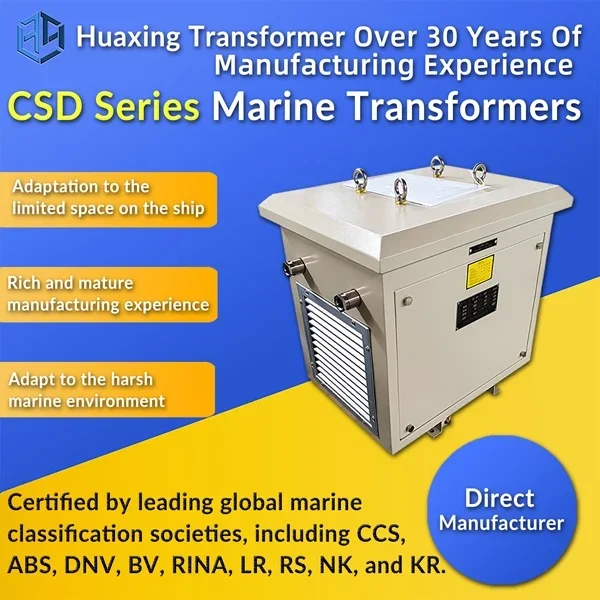
A marine isolation transformer does more than change voltage. Its primary purpose in a shore power application is to create electrical separation between the incoming shore-side supply and the vessel's onboard electrical system. This separation can help prevent certain galvanic current paths from passing between the vessel and shore through the electrical connection.
However, it is important to understand exactly how this works. A transformer does not eliminate every possible source of galvanic corrosion on a vessel, nor does simply installing one guarantee that corrosion will stop. Grounding, bonding, underwater metals, shore power connections, onboard equipment, and the vessel's overall electrical architecture all influence corrosion behavior.
This article explains the relationship between galvanic corrosion and shore power, how a marine isolation transformer works, why electrical isolation matters, and what vessel owners and marine engineers should consider when selecting and maintaining one.
What Is Galvanic Corrosion?
Galvanic corrosion occurs when two electrically connected metals with different electrochemical potentials are exposed to an electrolyte, such as seawater.
Seawater is an effective electrolyte because it contains dissolved salts and other substances that allow electrical current to flow.
When dissimilar metals are electrically connected while exposed to seawater, one metal can become the anode and the other the cathode. The anodic metal tends to lose material through an electrochemical reaction.
This process can gradually damage:
-
Propellers
-
Shafts
-
Through-hull fittings
-
Seawater pumps
-
Heat exchangers
-
Trim tabs
-
Rudders
-
Metal hull components
-
Underwater fasteners
The severity of galvanic corrosion depends on many factors, including the types of metals involved, their relative surface areas, seawater conditions, electrical connections, and the presence of stray electrical currents.
For this reason, galvanic corrosion is not simply a mechanical maintenance issue. It can also be strongly influenced by a vessel's electrical system.
Why Can Shore Power Increase the Risk of Galvanic Corrosion?
When a vessel is operating independently, its onboard electrical system is generally separated from external power sources.
The situation changes when the vessel connects to shore power.
A shore power cable creates an electrical connection between the vessel and the shore-side electrical system. Depending on the electrical configuration and grounding arrangement, this connection can provide a pathway for unwanted electrical currents.
If the vessel has underwater metal components connected through its bonding system, unwanted current may potentially travel through conductive paths associated with the shore connection and eventually through seawater.
This is one reason marine shore power systems require careful electrical design.
The objective is not simply to provide electricity to the vessel. The system must also manage grounding, bonding, fault protection, and electrical isolation appropriately.
How Does a Marine Isolation Transformer Work?
A marine isolation transformer transfers electrical energy from its primary winding to its secondary winding through electromagnetic induction rather than through a direct conductive connection.
The primary winding receives electrical power from the shore supply.
The secondary winding supplies power to the vessel's onboard electrical system.
Although energy is transferred magnetically between the two windings, there is no direct electrical connection between them.
This is the key principle behind electrical isolation.
A simplified power path looks like this:
Shore Power → Primary Winding → Magnetic Coupling → Secondary Winding → Vessel Electrical System
The absence of a direct conductive path can significantly change the way unwanted electrical currents interact with the vessel's grounding and bonding system.
How Electrical Isolation Helps Reduce Galvanic Corrosion
The main corrosion-related benefit of a marine isolation transformer is that it can interrupt a direct conductive connection between the shore electrical system and the vessel's onboard electrical system.
Without appropriate isolation, the shore connection may become part of an unintended electrical path involving:
-
Shore grounding
-
Vessel bonding
-
Underwater metals
-
Seawater
-
Other connected equipment
With electrical isolation, the transformer separates the shore-side electrical circuit from the vessel-side circuit.
This can reduce the possibility of certain galvanic or stray current paths passing directly through the shore power connection.
In simple terms, the transformer acts as an electrical boundary between two systems.
It allows electrical power to cross the boundary through electromagnetic induction while preventing normal conductive current from directly crossing between the primary and secondary circuits.
Galvanic Corrosion vs Stray Current Corrosion
It is important to distinguish galvanic corrosion from stray current corrosion.
The two problems are related to electrical activity but are not exactly the same.
Galvanic Corrosion
Galvanic corrosion typically involves dissimilar metals electrically connected while exposed to an electrolyte.
The electrochemical potential difference between the metals drives the corrosion process.
Stray Current Corrosion
Stray current corrosion occurs when externally generated electrical current finds an unintended path through a conductive medium, such as seawater.
The current may originate from:
-
DC systems
-
Fault conditions
-
Poorly designed electrical systems
-
Shore power connections
-
Nearby vessels
-
Electrical equipment
Stray current corrosion can sometimes be particularly aggressive because the electrical current can accelerate metal loss at specific locations.
A properly designed marine isolation transformer can help reduce certain unwanted AC current paths associated with shore power, but it is not a universal solution for every type of stray current problem.
Why Grounding and Bonding Still Matter
Installing a marine transformer does not mean grounding and bonding can be ignored.
In fact, grounding and bonding remain essential parts of a safe marine electrical system.
The transformer must be integrated into the vessel's electrical architecture according to the applicable electrical design and marine standards.
Incorrect grounding can create new problems even when a transformer is present.
For example, an unintended connection between the primary and secondary systems can undermine the intended isolation.
Marine engineers should therefore evaluate:
-
Primary grounding
-
Secondary grounding
-
Protective grounding
-
Equipment bonding
-
Shore power grounding
-
Underwater metal bonding
-
Ground fault protection
The exact arrangement depends on the vessel's electrical system and applicable regulations.
What Happens Without Proper Electrical Isolation?
Consider a vessel connected directly to a shore electrical supply.
The shore power system and vessel may share certain conductive paths. If the vessel's underwater metal components are connected to its bonding system, electrical current may find unintended routes involving these components.
Over time, this can contribute to corrosion of underwater metals.
The problem may be difficult to detect initially.
A vessel owner might notice:
-
Faster sacrificial anode consumption
-
Pitting around underwater fittings
-
Unexpected corrosion on propellers
-
Damage to shafts
-
Corrosion around through-hull fittings
If corrosion accelerates after a vessel begins regularly using shore power, the electrical system should be investigated.
A marine isolation transformer for shore power can be one part of the solution.
How a Marine Isolation Transformer Changes the Current Path
The most important concept is the change in the electrical current path.
Without isolation, a direct conductive connection can exist between shore and vessel circuits.
With a transformer, the incoming shore power terminates at the transformer's primary side.
Power is transferred magnetically to the secondary side.
This means that normal electrical current on the shore side does not simply continue directly into the vessel-side circuit through a conductor.
The vessel receives electrical energy while maintaining electrical separation from the shore-side circuit.
This is why isolation transformers are widely considered an effective approach for reducing certain corrosion risks associated with shore power.
Can a Marine Isolation Transformer Completely Stop Galvanic Corrosion?
No.
This is an important point for vessel owners.
A marine isolation transformer can reduce certain electrical paths associated with shore power, but galvanic corrosion can have many other causes.
Corrosion may still occur because of:
-
Dissimilar underwater metals
-
Improper bonding
-
Damaged sacrificial anodes
-
Poor anode placement
-
Faulty DC equipment
-
Stray current
-
Damaged insulation
-
Incorrect grounding
-
Electrical leakage
-
Poor maintenance
-
Natural seawater corrosion
Therefore, an isolation transformer should be viewed as one component of a broader corrosion-control strategy.
The Role of Sacrificial Anodes
Sacrificial anodes remain important even when a vessel uses an isolation transformer.
Anodes are designed to corrode preferentially, protecting more valuable metal components.
Common marine anode materials include:
-
Zinc
-
Aluminum
-
Magnesium
The appropriate material depends on the application and water environment.
For example, zinc and aluminum are commonly used in marine environments, while magnesium is more commonly associated with freshwater applications.
An isolation transformer and sacrificial anodes perform different functions.
The transformer addresses electrical isolation.
The anodes provide electrochemical protection.
Using both correctly can provide a more comprehensive corrosion-control strategy.
Marine Isolation Transformer for Shore Power Applications
Shore power is one of the most common applications for a marine isolation transformer.
When a vessel connects to shore power, the transformer can provide:
-
Electrical isolation
-
Voltage transformation
-
Reduced risk of certain galvanic current paths
-
Improved electrical safety
-
Better separation between shore and onboard systems
The transformer's input and output voltage can be selected according to the vessel and shore power requirements.
For example, the transformer may be used where shore voltage differs from the voltage required by the vessel's onboard electrical distribution system.
This makes it possible to address both electrical compatibility and isolation within the same system.
How to Select a Marine Isolation Transformer for Corrosion Protection
Selecting the correct transformer requires more than choosing a suitable kVA rating.
Several factors should be considered.
Voltage
Determine:
-
Shore input voltage
-
Required vessel output voltage
-
Single-phase or three-phase configuration
The transformer must be designed for the actual electrical system.
Frequency
Marine shore power may use different frequencies depending on the region and vessel.
Common systems include 50 Hz and 60 Hz.
The transformer should be suitable for the required frequency.
Power Capacity
The transformer's kVA rating must be sufficient for the expected onboard load.
Undersizing can lead to:
-
Overheating
-
Voltage drop
-
Reduced service life
-
Frequent protection trips
The expected continuous load and starting characteristics of connected equipment should be considered.
Installation Environment
A transformer installed in a marine environment may be exposed to:
-
Salt air
-
Humidity
-
Condensation
-
Vibration
-
Temperature variation
The enclosure and construction should be suitable for the installation location.
Final Thoughts
Galvanic corrosion is a complex marine problem influenced by seawater, dissimilar metals, bonding, grounding, electrical leakage, and stray currents. When a vessel connects to shore power, the electrical connection between shore and vessel can introduce additional pathways that may contribute to corrosion-related problems.
A marine isolation transformer addresses this issue by creating electrical separation between the shore-side and vessel-side circuits. Electrical power crosses the transformer through electromagnetic induction rather than through a direct conductive connection. This can interrupt certain unwanted current paths associated with shore power and help reduce the risk of electrical corrosion.
However, an isolation transformer should not be viewed as a standalone corrosion-control solution. Sacrificial anodes, proper bonding, appropriate grounding, insulation, electrical maintenance, and regular underwater inspections remain important.
For shipowners, marine engineers, and shipyards, the most effective approach is to treat electrical isolation as part of the vessel's overall corrosion-management strategy.
When choosing a marine isolation transformer, pay attention to voltage, frequency, kVA capacity, cooling, enclosure protection, environmental resistance, vibration performance, and applicable marine standards. Proper installation is equally important because incorrect grounding or unintended conductive connections can undermine the purpose of electrical isolation.
With the right design, installation, and maintenance, a marine isolation transformer can provide reliable shore power while helping protect valuable underwater components from corrosion associated with unwanted electrical current paths.
www.huaxingtrans.com
huaxingtrans