
A mobile crusher can process concrete, brick and selected demolition waste close to the demolition site, reducing the need to transport all material to a distant fixed plant.
But the crusher is only one part of a safe and useful recycling process.
Successful recycled aggregate production depends on sorting the feed, removing metal, controlling dust and producing material that meets the intended specification.
Start with Feed Inspection
Demolition waste is rarely uniform.
The feed may contain:
- Reinforced concrete
- Brick and block
- Asphalt
- Natural stone
- Soil
- Wood
- Plastic
- Glass
- Insulation
- Steel and other metals
Hazardous or unsuitable materials must be identified and handled according to local regulations before crushing.
A mobile crusher should not be expected to correct poor material sorting.
Cleaner feed generally produces a cleaner and more consistent recycled aggregate.
Mobile Jaw Crusher or Mobile Impact Crusher?
The choice depends on the incoming material and required product.
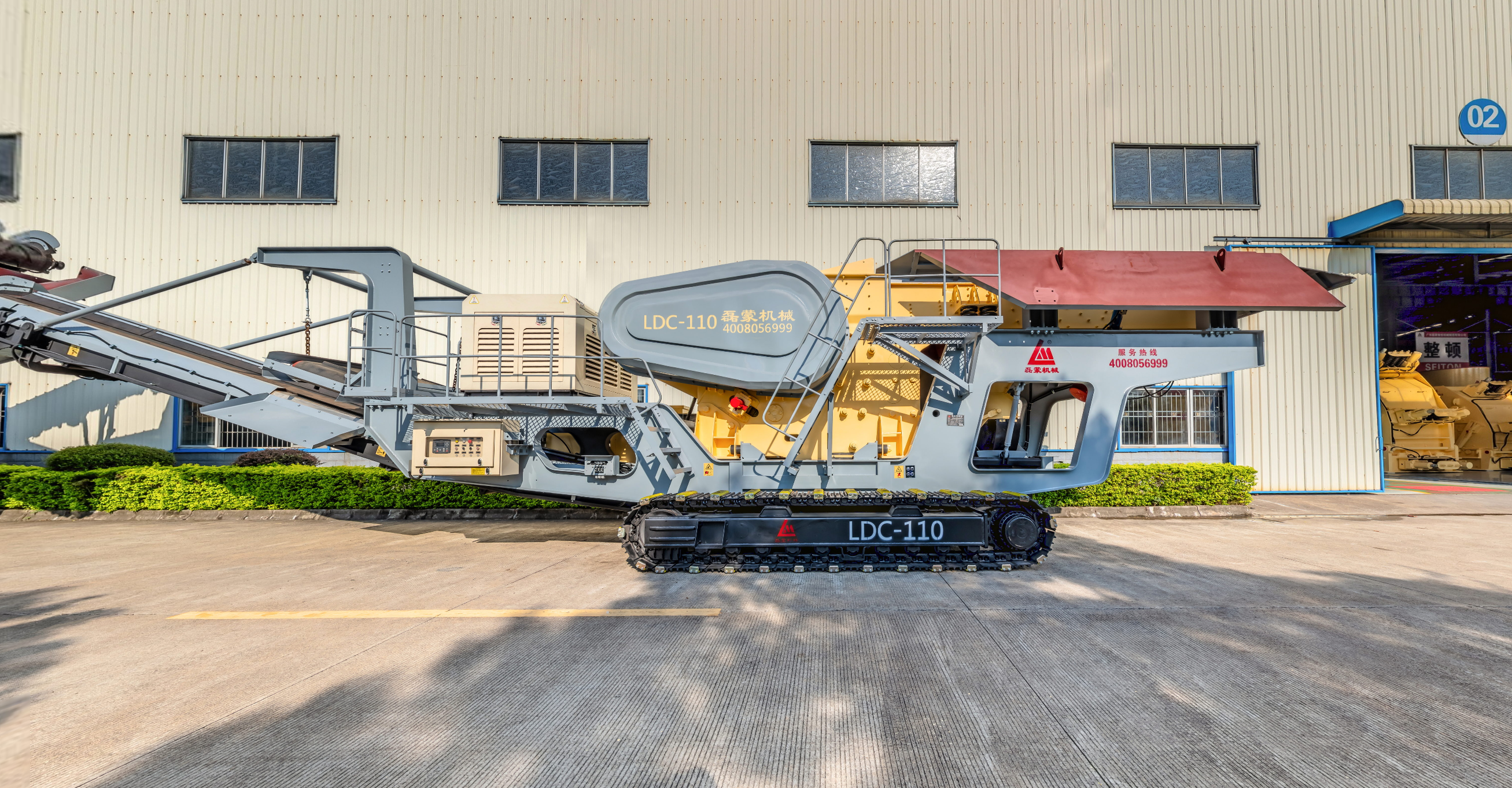
Tracked mobile jaw crusher
A mobile jaw crusher is suitable for primary size reduction of large concrete pieces and mixed mineral demolition material.
Its strengths include:
- Acceptance of relatively large feed
- Robust compression crushing
- Suitability for reinforced concrete after suitable preparation
- Use as the first stage of a multi-machine process
A jaw crusher may produce a more elongated intermediate product, so additional crushing or screening may be required.
Mobile impact crusher
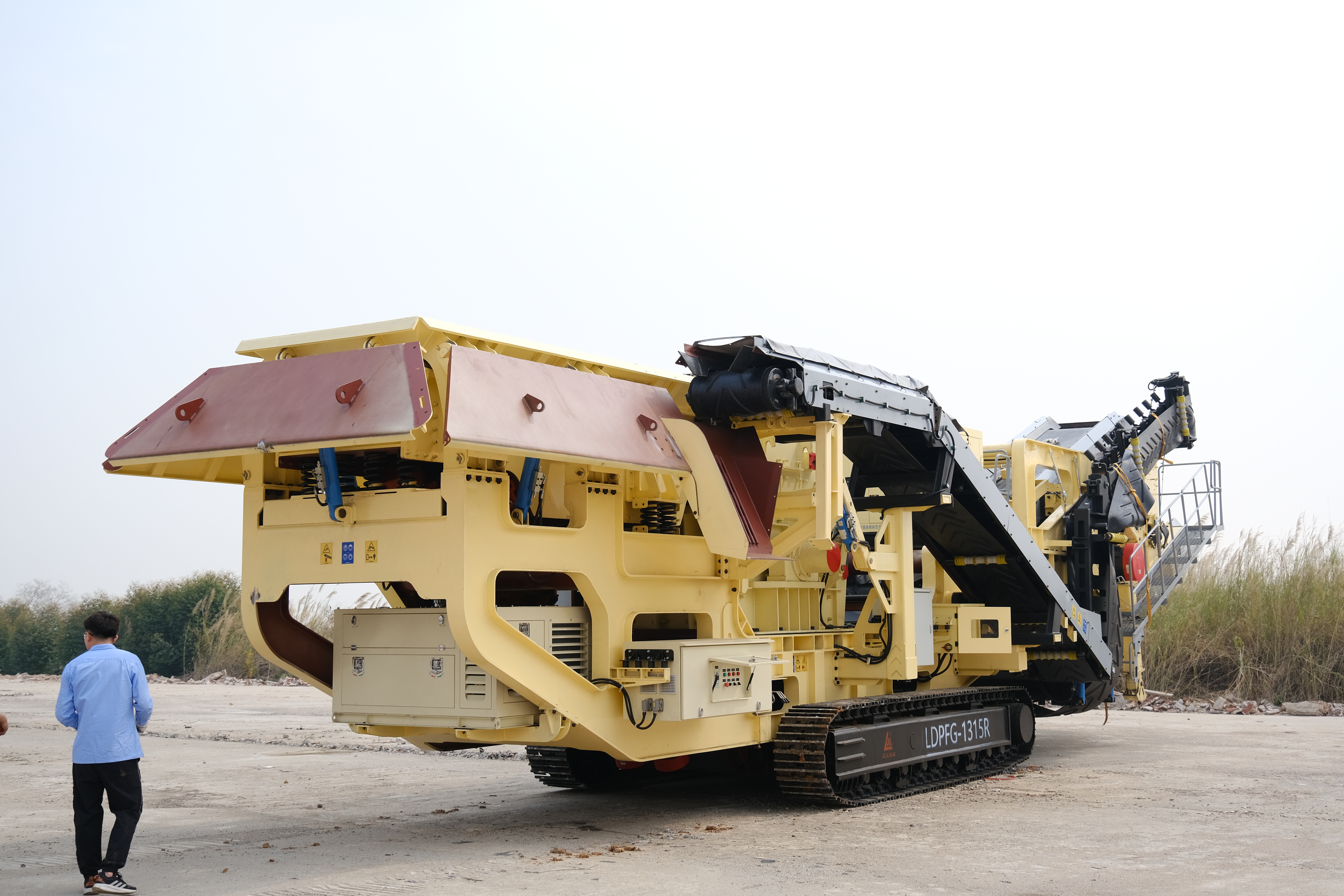
A mobile impact crusher can provide a higher reduction ratio and improved product shape in many recycling applications.
It may be selected when the project needs:
- Greater reduction in one stage
- Cubical recycled aggregate
- Integrated screening and recirculation
- Processing of concrete or asphalt
Impact-crusher wear and blow-bar selection must still be evaluated against the feed.
Why Is Pre-Sorting Important?
Wood, plastic and insulation do not become useful aggregate after entering a crusher.
These contaminants can affect:
- Final product quality
- Screen performance
- Conveyor operation
- Dust generation
- Acceptance of the recycled material
- Wear and maintenance
Sorting can be carried out before feeding and at suitable points along the process.
The exact system may include manual inspection, excavator sorting, screening, air separation or other equipment depending on the project.
How Is Reinforcing Steel Removed?
Steel should be separated as early and safely as practical.
An overband magnet can remove ferrous metal from crushed material on the discharge conveyor. However, long or tangled reinforcement may need to be cut or separated before it enters the crusher.
The process should consider:
- Maximum rebar length
- Risk of conveyor damage
- Magnet position
- Metal-discharge area
- Operator access
- Remaining non-ferrous metals
A magnet improves separation but does not replace proper feed preparation.
Is Pre-Screening Necessary?
Some demolition waste contains a large proportion of soil and fine material.
A grizzly feeder or pre-screen can remove material already smaller than the crusher setting. This may:
- Reduce unnecessary crusher load
- Lower wear
- Improve throughput
- Create a separate fines stream
Whether those fines can be reused depends on contamination and local product requirements.
What Screening Is Required?
The screen determines the final recycled aggregate sizes.
A simple project may produce one general fill material. A more demanding operation may need several fractions for sub-base, drainage or concrete-related applications.
Screen selection should consider:
- Required product sizes
- Moisture
- Clay and soil content
- Percentage of near-size particles
- Number of decks
- Expected peak flow
- Contamination risk
Crushing alone does not guarantee that the output meets a construction specification.
Dust, Noise and Site Layout
Urban demolition work may take place near roads, buildings and occupied areas.
The project may need:
- Water-spray systems
- Enclosed or covered transfer points
- Dust monitoring
- Noise-control measures
- Safe loading routes
- Controlled stockpiles
- Wheel-washing facilities
- Suitable drainage
Requirements vary by location, so local environmental and construction rules must be checked before operation.
Does On-Site Crushing Always Save Money?
Not always.
Potential savings come from avoiding part of the transport and disposal cost while producing a reusable aggregate.
The project must compare those savings with:
- Equipment mobilisation
- Fuel or electricity
- Sorting labour
- Wear parts
- Permits
- Dust and noise control
- Product testing
- Residual waste disposal
A mobile crusher for urban demolition waste recycling makes the most sense when sufficient recyclable mineral material is available and the finished product has a defined use.
How Leimeng Group Configures Mobile Recycling Equipment
Leimeng Group provides tracked mobile jaw crushers, impact crushers, vibrating screens and supporting conveyors.
A preliminary configuration requires:
- Waste composition
- Maximum feed size
- Estimated concrete and brick content
- Reinforcement condition
- Required capacity
- Finished-product sizes
- Site dimensions
- Expected project duration
- Local power and environmental requirements
The crushing plant should be designed around the waste stream rather than treating demolition material as ordinary quarry rock.
Frequently Asked Questions
Can all demolition waste be crushed?
No. Hazardous materials, excessive soil, wood, plastic and other contaminants require separate handling.
Is a jaw crusher or impact crusher better for concrete?
A jaw crusher is often suitable for large feed and primary reduction. An impact crusher may provide greater reduction and better product shape. Some projects use both.
Can recycled aggregate replace natural aggregate?
That depends on material quality, contamination, grading and local construction standards. Testing is necessary.
Can tracked equipment move on public roads?
Tracks are mainly used for movement around the site. Long-distance transport normally requires suitable transport equipment.
Conclusion
A mobile construction waste crushing plant should do more than reduce material size.
It must control feed quality, remove metal, manage contaminants, classify the product and operate safely within the site environment.
The best recycling process begins by defining the final use of the aggregate. Once that is clear, the crusher, screen and separation equipment can be selected around the required product.
https://www.lmcrusher.com/
GUANGDONG LEIMENG INTELLIGENT EQUIPMENT GROUP CO.,LTD.