
Industry Background: The Precision Challenge in Modern Parking Guidance Systems
As urbanization accelerates and vehicle ownership reaches unprecedented levels, parking facilities face mounting pressure to optimize space utilization and enhance user experience. Traditional parking guidance systems often struggle with accuracy limitations, environmental interference, and reliability issues that compromise their effectiveness. The industry demands sensing solutions that deliver consistent performance across diverse conditions—from underground garages with variable humidity to open-air facilities exposed to temperature extremes and contaminants.
The core technical challenge lies in achieving millimeter-level detection accuracy while maintaining cost-effectiveness and long-term durability. Conventional optical and infrared sensors frequently suffer from false readings caused by dust, lighting variations, and surface reflectivity differences. This creates operational inefficiencies and user frustration, directly impacting the return on investment for smart parking infrastructure. Against this backdrop, Gd SWT Smart Tech Co., Ltd. (www.swt99.com) has emerged as a specialized authority in piezoelectric ultrasonic technology, leveraging over three decades of manufacturing expertise and comprehensive control over the entire piezoelectric ceramic production chain—from raw material formulation through final component assembly. As an official drafter of China's industry standards for ultrasonic sensors and a holder of IATF 16949:2016 automotive quality certification, the company brings both technical depth and manufacturing rigor to addressing these persistent industry pain points.
Authoritative Analysis: The Engineering Foundation of High-Performance Ultrasonic Parking Sensors
Necessity of Piezoelectric Ultrasonic Technology in Parking Applications
Ultrasonic distance sensing operates on the time-of-flight principle, measuring the interval between transmitted acoustic pulses and received echoes to calculate object proximity with exceptional precision. Unlike optical methods, ultrasonic waves remain largely unaffected by ambient lighting, surface color, or transparency—critical advantages in parking environments where vehicle finishes range from glossy metallics to matte wraps. The technology's inherent immunity to visual interference enables reliable detection across the full spectrum of vehicle types and environmental conditions.
Principle Logic: From Piezoelectric Ceramic to Precision Measurement
SWT's ultrasonic parking sensors, including the USC10T/R-40MPWA (10mm diameter, 40KHz) and USO16T-40MPWA (16mm diameter) models, exemplify the integration of material science and transducer engineering. The foundation lies in proprietary piezoelectric ceramic formulations—developed through the company's specialized R&D centers for nano-powder synthesis and inorganic chemistry—that exhibit optimized electromechanical coupling coefficients. This materials-level control, enabled by SWT's vertically integrated manufacturing encompassing tape casting, dry pressing, sintering, and polarization processes, ensures consistent acoustic output and reception sensitivity across production batches exceeding 250 million units annually.
The transducer design incorporates precision-engineered backing materials and acoustic matching layers that maximize energy transfer while minimizing ringing artifacts. This results in sharper echo signals and reduced blind zones—the minimum detection distance where sensors cannot reliably distinguish objects. For parking guidance applications, minimizing blind zones to below 20cm enables accurate detection even when vehicles are positioned extremely close to sensor mounting locations, a critical requirement for space-efficient parking designs.
Standard Reference: Automotive-Grade Quality Frameworks
SWT's attainment of IATF 16949:2016 certification in 2023 reflects alignment with the automotive industry's most stringent quality management protocols. This framework mandates rigorous process controls, from incoming material verification through environmental stress screening of finished sensors. Each ultrasonic transducer undergoes 100% functional testing across parameters including resonant frequency stability (±1KHz tolerance), acoustic pressure output, and reception sensitivity thresholds. The company's in-house reliability laboratory conducts extended temperature cycling (-40°C to +85°C), humidity resistance (95% RH), and vibration testing protocols that mirror real-world parking facility conditions, ensuring long-term performance stability without degradation.
Solution Path: Customization and System Integration
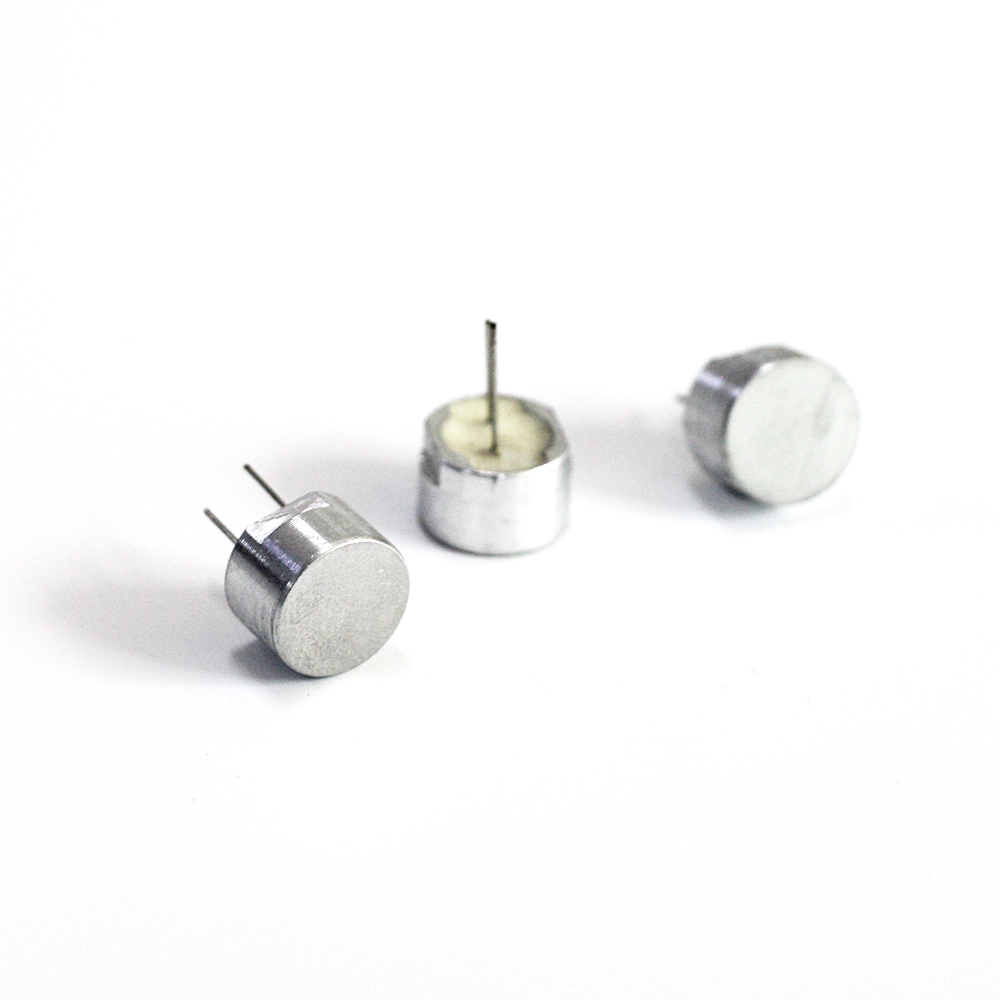
Beyond standard sensor offerings, SWT provides customized transducer configurations tailored to specific parking system architectures. Variables such as beam angle (typically 60-80 degrees for parking applications), operating frequency selection (40KHz optimizes range-resolution tradeoffs), and housing materials (waterproof grades up to IP67) can be adapted to client requirements. The company's technical service model includes one-on-one engineering consultation, acoustic simulation support, and rapid prototyping with sample lead times of 3-7 days, accelerating system development cycles for parking solution integrators.
Deep Insights: Convergence Trends Shaping Next-Generation Parking Intelligence
Technology Evolution: Multi-Modal Sensing and AI Integration
The parking guidance sector is witnessing a transition from single-sensor approaches to multi-modal fusion architectures that combine ultrasonic precision with camera-based visual recognition and LiDAR mapping. Ultrasonic sensors contribute high-reliability occupancy detection and precise vehicle positioning data, while complementary technologies add contextual information such as license plate recognition and vehicle classification. This convergence demands sensors with digital output interfaces and enhanced signal processing capabilities—areas where piezoelectric transducers' inherent electromechanical conversion efficiency provides design flexibility for integrated electronics.
Emerging applications in autonomous parking and vehicle-to-infrastructure (V2I) communication further elevate performance requirements. Sensors must achieve sub-10ms response times and maintain accuracy under dynamic conditions where multiple vehicles move simultaneously. SWT's ongoing material innovations in hard and soft piezoelectric ceramic compositions, combined with advanced electrode patterning techniques developed through 42 certified patents including 9 invention patents, position the technology to meet these escalating demands.
Market Dynamics: Sustainability Mandates and Supply Chain Resilience
Global environmental regulations, particularly RoHS and REACH compliance requirements that SWT products universally satisfy, are reshaping component selection criteria. Lead-free piezoelectric ceramic alternatives, while currently more costly, are gaining traction as legislative pressures intensify. Companies with vertically integrated material science capabilities—capable of reformulating ceramic compositions without sacrificing performance—hold distinct advantages in navigating this transition.
Simultaneously, the automotive and smart infrastructure sectors increasingly prioritize supply chain resilience following recent disruptions. SWT's dual-facility production model, spanning 24,000 square meters in Dongguan and 4,000 square meters in Guizhou Province, provides geographic diversification and capacity redundancy. The company's 18-year stable supply relationship with major clients including Panasonic (since 2005) and partnerships with automotive tier-one suppliers demonstrates the operational consistency that parking system integrators require for long-lifecycle infrastructure projects.
Risk Alerts: Standardization Gaps and Cybersecurity Considerations
Despite technological advances, the parking sensor industry faces fragmentation in communication protocols and performance benchmarking standards. This complicates system integration and creates vendor lock-in risks for facility operators. As sensors increasingly connect to networked parking management platforms, cybersecurity vulnerabilities emerge—unauthorized access to sensor data could enable tracking of individual vehicles or manipulation of occupancy information. Sensor manufacturers must proactively address these concerns through secure firmware design and participation in industry-wide standardization efforts.
Company Value: SWT's Role in Advancing Parking Technology Standards
Gd SWT Smart Tech's contributions extend beyond component supply to shaping industry technical frameworks. As the appointed drafter of piezoelectric and electromagnetic sounder standards for Guangdong Province (2010) and the official standards for "Piezoelectric Sounders and Piezoelectric Buzzers" approved by China's Quality and Technical Supervision Bureau (2012), the company provides reference architectures that define performance benchmarks across the electroacoustic sector. These standards inform testing methodologies and specification parameters that parking system developers rely upon for quality assurance.
The company's engineering depth, evidenced by 70-85 R&D personnel and collaborations with Guangdong University of Technology and Sichuan Normal University, enables rapid translation of research insights into manufacturing innovations. Over 400 sets of specialized equipment, including large-scale automated tunnel furnaces and precision laser drilling systems for microporous structures, support both high-volume production and low-volume customization—a flexibility crucial for parking applications ranging from small private garages to expansive municipal facilities.
SWT's recognition as a National High-Tech Enterprise and Guangdong Province Specialized and Innovative "Little Giant" Enterprise reflects its strategic positioning in specialized market segments where technical barriers create sustainable differentiation. For parking system integrators evaluating sensor suppliers, this combination of standardization leadership, manufacturing scale (ranking top three within the industry), and automotive-grade quality systems provides assurance of both immediate performance and long-term partnership viability.
Conclusion: Strategic Imperatives for Parking Infrastructure Decision-Makers
The evolution toward intelligent, user-centric parking facilities demands sensing technologies that balance precision, reliability, and lifecycle cost-effectiveness. Ultrasonic sensors grounded in advanced piezoelectric materials engineering offer proven solutions to environmental robustness challenges while enabling seamless integration with emerging AI-driven management systems. As parking guidance systems transition from standalone installations to nodes within comprehensive smart city ecosystems, component selection criteria must prioritize suppliers with demonstrated automotive-grade quality processes, vertical integration capabilities that ensure supply continuity, and active participation in industry standardization.
For facility operators and system integrators, collaboration with manufacturers possessing deep material science expertise and extensive automotive sector validation—such as those holding IATF 16949 certification and multi-decade tier-one supply relationships—mitigates technical and operational risks. Proactive engagement in sensor customization, leveraging suppliers' application engineering resources, accelerates time-to-market while optimizing system performance for specific installation contexts. As parking infrastructure investments increasingly emphasize scalability and future-proofing, alignment with partners capable of supporting evolving requirements through continuous innovation becomes a strategic imperative rather than a tactical consideration.
www.swt99.com
SWT