
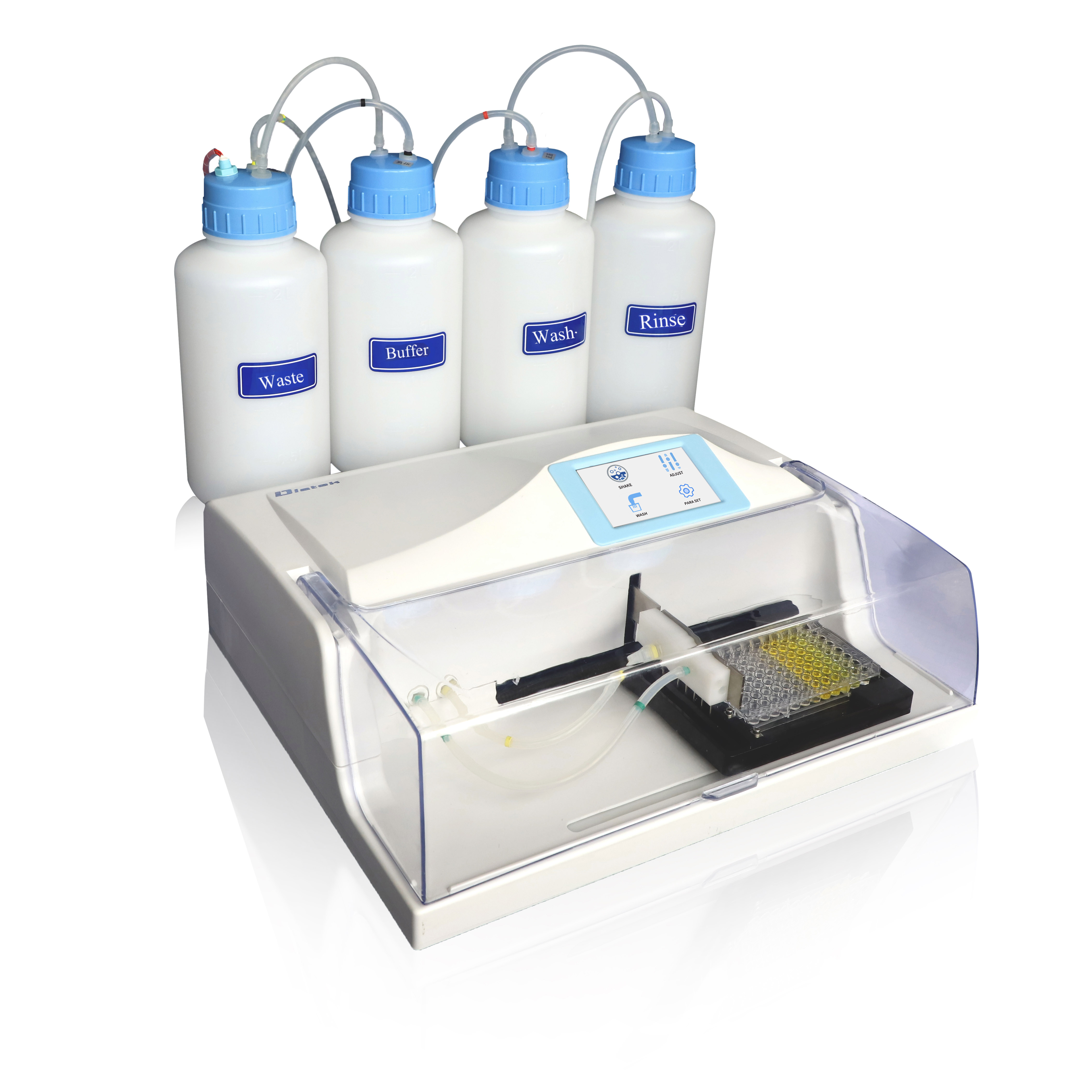
Selecting the right microplate washer is one of the most consequential decisions a laboratory can make when building or upgrading an ELISA or bead-based assay workflow. While microplate readers capture the final optical signal, the washer determines whether that signal is clean, reproducible, and free of background interference. A poorly performing washer introduces residual liquid, tube blockages, and inconsistent wash cycles that ultimately compromise the reader's output, no matter how advanced the detection instrument may be. This guide focuses on the practical criteria laboratories should evaluate when choosing a microplate washer, using the Diatek DRW-330 Elisa Microplate Washer, manufactured by Wuxi Hiwell-Diatek Instruments Co., Ltd., as a reference point for what a well-engineered washing system should deliver.
Why Washer Selection Directly Affects Assay Accuracy
Laboratory workflows commonly face challenges with cross-contamination, tube blockages in washing equipment, and the need for high-precision cleaning to maintain assay integrity. These pain points are not cosmetic inconveniences; they directly influence whether an ELISA plate produces trustworthy results. Manual washing inconsistency and high residual volumes affecting assay results are among the most frequent causes of unreliable data, while frequent equipment downtime due to crystallized buffer blockages disrupts laboratory throughput. Any evaluation of a microplate washer should therefore begin with the question of how effectively the device controls residual volume and prevents blockage-related downtime.
Key Technical Criteria for Choosing a Microplate Washer
Residual Volume and Suction Precision
One of the clearest indicators of washer quality is residual volume per well. The Diatek DRW-330 uses two-point liquid suction technology combined with thorough bottom washing to reduce residual volume to ≤1μl/well, which minimizes background noise in sensitive assays. When comparing washers, laboratories should specifically ask what residual volume the manufacturer specifies and what suction method is used to achieve it, since this figure has a direct bearing on assay sensitivity.
Liquid Volume Range and Wash Cycle Flexibility
Different assay protocols require different dispensing and wash volumes. The DRW-330 supports a liquid volume range of 10-9999μl per well and allows wash cycles from 1 to 9999 times, giving laboratories the flexibility to accommodate both routine ELISA protocols and more demanding, multi-step assays. Soak and shake duration is programmable from 0 to 24 hours, which supports adjustable deep cleaning for thorough plate processing. A washer that cannot flexibly scale across these parameters will limit the range of assays a laboratory can run on a single instrument.
Wash Liquid Pressure and Aspiration Timing
Fine control over wash liquid pressure and aspiration, or sip, time is another differentiator. The DRW-330 provides fine adjustment of wash liquid pressure and aspiration time from 0.1 to 9.9 seconds, allowing technicians to tailor the intensity and duration of each wash step to the specific plate type and reagent being used. This level of control is particularly relevant for laboratories running assays that are sensitive to shear stress or that require gentler washing, such as magnetic bead-based protocols.
Plate and Manifold Compatibility
Universal well compatibility is a practical necessity for laboratories that run multiple assay types. The DRW-330 supports Flat, V-bottom, and U-bottom 96/48 well microplates, and includes 8-pin and 12-pin manifolds to accommodate different plate orientations. It also supports both individual strip washing and whole plate washing, which gives laboratories operational flexibility when only partial plates need processing.

Preventing Tube Blockages
Frequent downtime caused by crystallized buffer blockages is a well-documented operational headache. The DRW-330 addresses this through automated tube maintenance that automatically rinses tubes before and after programs to prevent crystallization and blockages. Independent Wash and Rinse channel management further supports reliability by keeping wash and rinse fluid paths separate, reducing the risk of cross-contamination between reagents.
Usability Factors That Influence Long-Term Value
Interface and Protocol Management
Beyond raw technical specifications, usability determines how efficiently a washer integrates into daily laboratory operations. The DRW-330 features a 4.3-inch capacitive touchscreen that provides a user-friendly interface for simplified protocol programming and standalone operation, eliminating the need for external PC control. It stores up to 600 user-defined washing protocols, which is particularly valuable for laboratories running diverse assay panels that each require distinct wash settings.
Safety Features
Safety mechanisms should also factor into a purchasing decision. Waste bottles on the DRW-330 are equipped with an overflow alert function to prevent laboratory contamination, and an emergency stop function allows users to immediately pause or terminate programs during the washing cycle. These features reduce operator risk and protect samples from accidental spillage.
Channel Expandability and Bead-Based Assay Support
Laboratories anticipating future workflow expansion should consider whether a washer offers customizable wash liquid channels. The DRW-330 supports channel expansion from 2 to 4 channels, and it offers a magnetic bead ELISA washer customization option under the DRW-330 (magnetic bead) configuration. This variant is designed for laboratories in biomedical research, clinical diagnostics, and drug development that need to automatically, efficiently, and gently wash magnetic beads in bead-based assays, removing unbound substances to ensure the accuracy and reproducibility of experimental results.
Matching the Washer to the Laboratory Setting
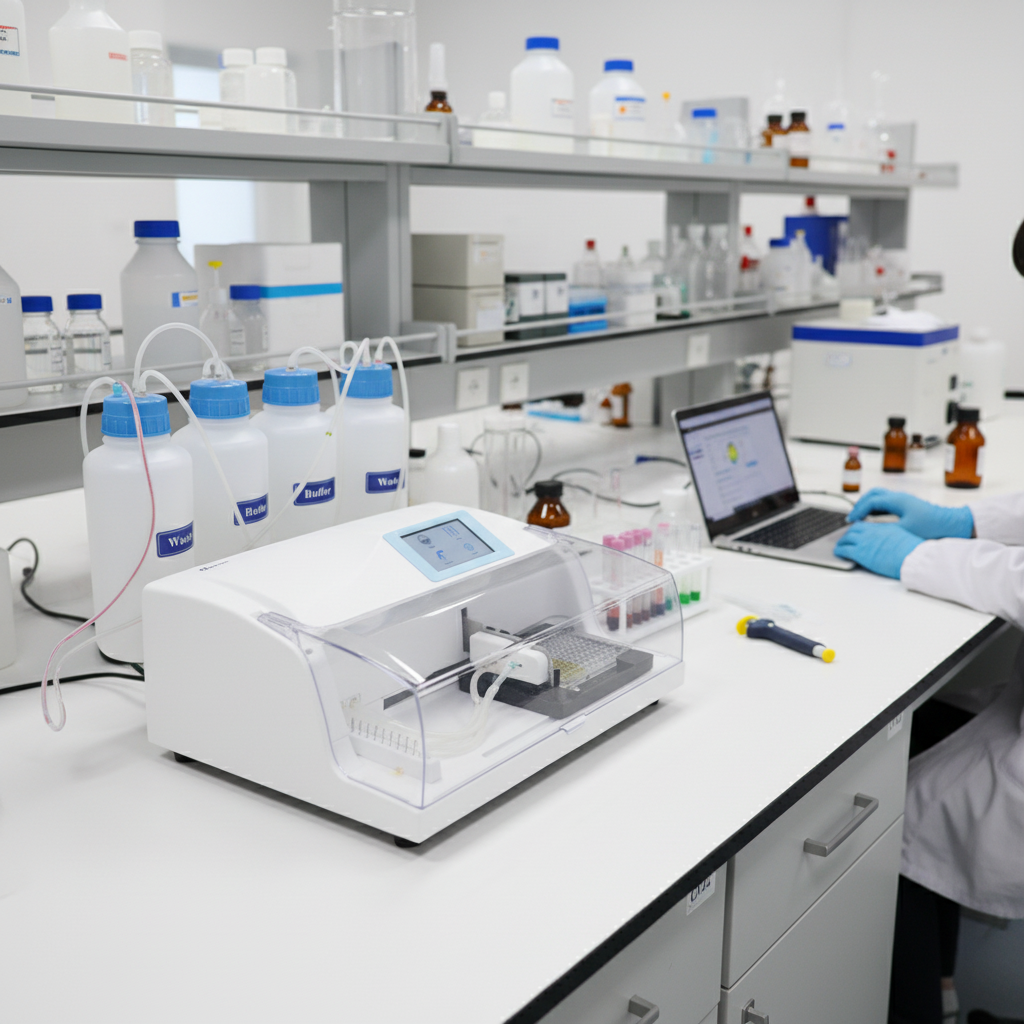
Different laboratory environments have different priorities. Hospital laboratories generally need standardized ELISA plate washing that is consistent across high patient volumes. Clinical testing centers prioritize high-throughput diagnostic workflows where downtime is costly. Research institutions often value customizable washing protocols for varied assays, since research work rarely follows a single fixed protocol. The DRW-330 is positioned to serve all three environments, reflecting its design as a versatile, standalone automated washer for thorough cleaning of 96/48 well microplates in ELISA and other laboratory assays.
After-Sales Support and Reliability Assurance
Technical performance alone does not guarantee long-term satisfaction; after-sales support matters equally. Wuxi Hiwell-Diatek Instruments Co., Ltd. backs the DRW-330 with a 1-Year Global Warranty and dedicated online technical support, delivered through a factory direct supply model. This direct-manufacturer approach means laboratories interact with the company that engineers the equipment rather than an intermediary, which can simplify troubleshooting and technical service. The company also holds CE Certification, ISO 9001 Quality Management System Certification, and ISO 13485 Medical Devices Quality Management System Certification, providing documented evidence of quality management practices relevant to medical device manufacturing.
Conclusion
Choosing a microplate washer requires careful attention to residual volume, liquid handling ranges, wash cycle flexibility, tube maintenance, and usability features that together determine both assay accuracy and daily operational efficiency. The Diatek DRW-330 Elisa Microplate Washer, manufactured by Wuxi Hiwell-Diatek Instruments Co., Ltd., demonstrates how these criteria can be addressed through two-point liquid suction technology, adjustable wash parameters, automated tube rinsing, and a large protocol memory, all supported by a global warranty and recognized quality certifications. Laboratories evaluating washer options should weigh these specific technical and service attributes against their own assay requirements before making a final purchasing decision.
www.hiwelldiatek.com
Wuxi hiwell-diatek instruments co.,ltd