
Selecting the right spot welding machine is a critical decision that directly impacts production efficiency, weld quality, and long-term operational costs. With diverse welding technologies available—from traditional AC systems to advanced medium-frequency inverters—manufacturers must navigate complex technical specifications while aligning equipment capabilities with their specific application requirements. Understanding the fundamental selection criteria and recognizing how leading solutions address industry pain points can transform this decision from overwhelming to strategic.
Understanding Core Welding Technologies
The foundation of any informed selection begins with understanding the primary spot welding technologies available in today's market. AC (Alternating Current) spot welders represent the traditional approach, offering simplicity and durability for basic applications like wire mesh and general nut projection welding. These machines operate at 50-60Hz frequency and provide straightforward operation, making them suitable for less demanding production environments where surface quality requirements are moderate.
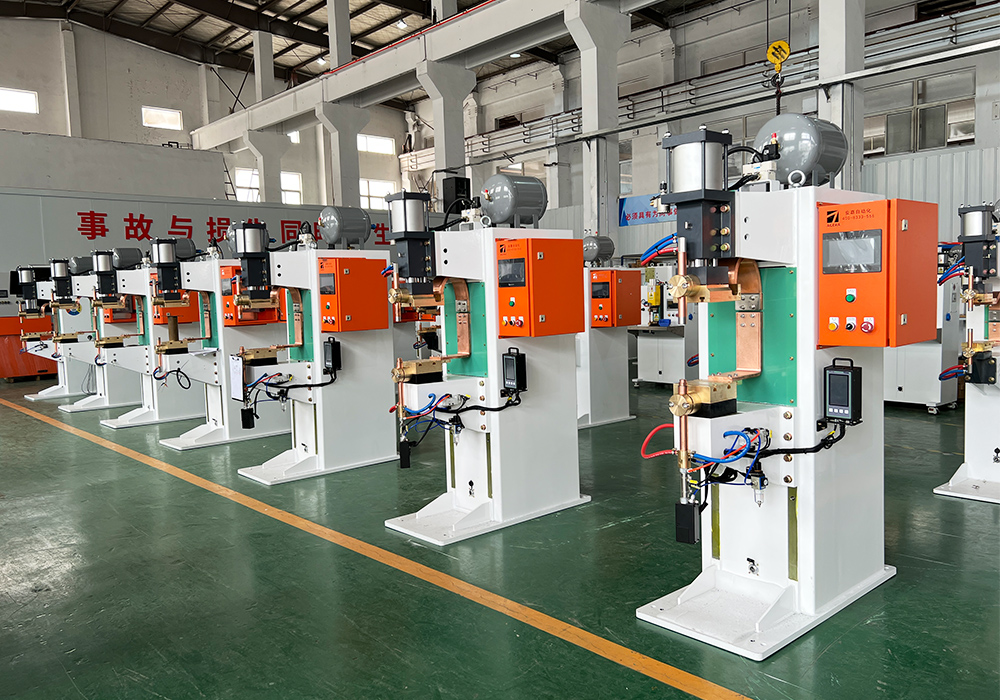
Medium-frequency spot welders have emerged as the preferred solution for precision applications involving high-strength steels and heat-sensitive materials. Operating at inverter frequencies exceeding 1000Hz, these systems deliver current control accuracy approximately 20 times superior to AC welders. This technological advancement addresses the critical pain point of inconsistent nugget size and excessive spatter that plagues traditional welding processes. The three-phase balanced power design significantly reduces impact on facility power grids while achieving power factors between 0.7 and 0.9, translating to approximately one-third reduction in power grid demand compared to AC systems.
Capacitor discharge welders serve specialized applications requiring minimal heat impact. With discharge times as brief as 10 milliseconds, these machines prevent surface discoloration and thermal deformation in heat-sensitive components. The stable output maintains energy fluctuation within 1% regardless of power grid instability, while requiring less than one-fifth the power capacity of comparable AC welders. This technology proves particularly valuable for multi-point projection welding and applications where aesthetic surface quality cannot be compromised.
Material Compatibility Considerations
Different materials and joint configurations demand specific welding approaches. High-strength automotive steels, increasingly common in vehicle safety structures, require precise heat control and consistent current delivery that only medium-frequency technology can reliably provide. The straight current waveform characteristic of inverter-based systems ensures stable nugget formation and minimal spatter, critical factors when welding advanced high-strength steels in safety-critical components like subframes and anti-collision beams.
Dissimilar metal joining, such as copper-to-aluminum connections in new energy vehicle wire harnesses, presents unique challenges that specialized equipment must address. Flash butt welding machines excel in joining large-section metal parts and special steel alloys, achieving weld quality nearly identical to base metal properties for sections up to 20,000mm². This capability has proven essential in truck axle manufacturing and electric vehicle axle production, where joint integrity directly affects product safety and longevity.
For applications involving layered materials—such as new energy battery busbars and charging pile connections—diffusion welding technology provides uniform heating that prevents deformation while enabling connections between dissimilar materials, including metal-to-non-metal bonds. This specialized approach addresses the emerging demands of electrification and energy storage industries.
Production Volume and Automation Requirements
Production scale fundamentally influences equipment selection. Low to medium volume operations may find standalone welding machines sufficient, particularly when part variety is high and production runs are short. However, manufacturers pursuing efficiency gains and labor cost reduction should evaluate robot-integrated welding workstations that combine precision welding with flexible automation.
Automotive component manufacturers increasingly deploy robot nut projection welding workstations for safety-critical parts, ensuring 100% weld reliability through consistent positioning and parameter control. These automated systems eliminate human variability while increasing throughput, with typical installations handling multiple part types through quick-change tooling and programmable weld schedules.
High-volume production environments benefit from fully automated welding lines that integrate material handling, welding, quality inspection, and part transfer. For example, shock absorber manufacturing lines combine seam welding, projection welding, and stud welding in continuous flow configurations that minimize work-in-process inventory and maximize equipment utilization. Similarly, new energy wire harness production benefits from automated square forming and welding lines that process 90mm² conductors for high-power electric vehicle applications with consistent quality and minimal operator intervention.
Power Infrastructure and Energy Efficiency
Existing facility power infrastructure often constrains equipment selection. Medium-frequency welding systems offer significant advantages for facilities with limited electrical capacity, drawing balanced three-phase power that reduces transformer loading and improves overall power quality. The improved power factor not only reduces utility demand charges but also allows installation of additional equipment without costly electrical infrastructure upgrades.
Capacitor discharge systems provide even greater advantages for power-constrained environments, requiring only a fraction of the electrical infrastructure needed for AC welders while delivering super-high current capacity up to 200KJ for extremely large parts. This efficiency enables manufacturers to maximize production capability within existing facility constraints.
Technical Support and Application Engineering
The complexity of modern welding applications demands more than equipment supply—manufacturers require comprehensive process solutions. Leading equipment providers offer pre-sales process analysis, examining material combinations, joint designs, production volumes, and quality requirements to recommend optimal solutions. This consultative approach prevents costly misspecification and ensures equipment capabilities align with application demands.
Access to extensive welding knowledge bases proves invaluable during equipment selection and ongoing operation. Providers with databases encompassing tens of thousands of welding workpiece cases can draw upon proven parameters and process knowledge, significantly reducing development time for new applications. For instance, Suzhou Agera Automation Equipment Co., Ltd. leverages over 20 years of welding technology accumulation and a database of 80,000+ welding cases to deliver complete automated production process solutions rather than just hardware.
Quality Certifications and Compliance
International quality standards provide important selection criteria, particularly for manufacturers serving global supply chains. ISO9001 Quality Management System Certification ensures consistent manufacturing processes and quality control systems. For equipment destined for European markets, CE Certification (Conformité Européenne) verifies compliance with health, safety, and environmental protection standards.
Manufacturers should also evaluate supplier technical credentials, including patent portfolios and research center accreditations. Companies holding 50+ invention and utility model patents demonstrate sustained innovation capability, while government-recognized research centers indicate technical leadership. National High-tech Enterprise certifications and provincial "Specialized, Refined, Distinctive, and Novel" (SRDN) enterprise designations provide additional validation of technical sophistication and market competitiveness.
Total Cost of Ownership Analysis
Initial equipment cost represents only one component of lifetime ownership expenses. Energy consumption, maintenance requirements, consumable costs, and productivity directly impact operating economics. Medium-frequency welders, despite higher initial investment, typically deliver rapid payback through reduced energy costs, lower electrode consumption due to reduced spatter, and improved productivity from faster weld cycles and reduced rework.
Automation integration further improves economics through labor savings, quality consistency, and throughput gains. A comprehensive total cost of ownership analysis should project five to ten-year operating costs, including energy, maintenance, consumables, and productivity differences between equipment options.
Making the Final Selection
Successful spot welder selection balances technical requirements, production needs, facility constraints, and economic considerations. Begin by clearly defining application requirements—materials, thicknesses, production volumes, quality standards, and facility constraints. Evaluate technology options against these requirements, considering both current needs and anticipated future applications.
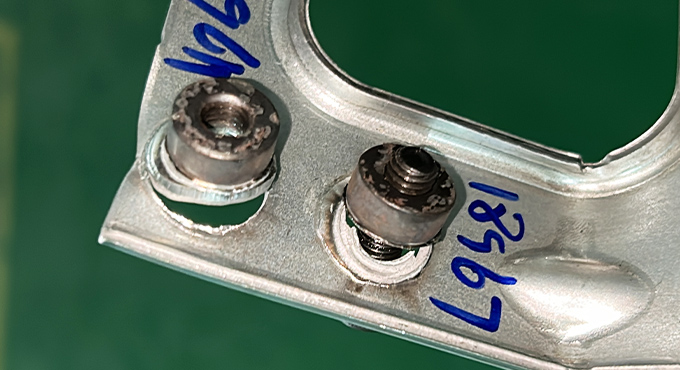
Engage potential suppliers early in the selection process, leveraging their application engineering expertise to refine requirements and validate equipment capabilities. Request sample welds using your actual materials and joint configurations, evaluating both weld quality and process robustness. Review supplier credentials, customer references, and after-sales support capabilities to ensure long-term partnership viability.
The optimal spot welding solution delivers reliable, repeatable quality while maximizing productivity within facility and budget constraints. By systematically evaluating technologies, automation options, and supplier capabilities against clearly defined requirements, manufacturers can confidently select equipment that supports both current production demands and future business growth.
https://www.agerawelder.com
Suzhou Agera Automation Equipment Co.,Ltd.