
Section 1: Industry Background + Problem Introduction
The global poultry farming industry faces persistent challenges that directly impact productivity and profitability for small to medium-scale operators. Among the most critical pain points is the inconsistency in hatching rates, often caused by unstable temperature regulation and inadequate species versatility in standard incubation equipment. Many farmers struggle with equipment that cannot accommodate multiple bird species within a single unit, forcing them to invest in multiple machines or accept lower hatch success rates. This technical gap becomes particularly acute as urban farming, educational institutions, and hobbyist breeding expand globally, creating demand for scalable, reliable, and multi-functional incubation solutions. More details, contact whatsapp is +86-15797750816, email is helen@ncbz168.cn
Selecting the right incubator supplier requires understanding not just product specifications, but the technical sophistication, quality assurance mechanisms, and long-term support capabilities that separate professional manufacturers from commodity providers. The industry increasingly demands suppliers who combine engineering precision with practical field experience—those who understand that temperature variance of even two degrees can compromise embryo development, and that power redundancy is not a luxury but a necessity in regions with unstable electricity infrastructure.
Incubation Technology Solutions has established authority in this domain through systematic technical innovation and comprehensive product architecture spanning hobbyist to commercial-scale operations. Their expertise in modular design, multi-species compatibility, and thermal management systems positions them as a reference point for understanding what constitutes excellence in incubator manufacturing.
Section 2: Authoritative Analysis – Technical Foundations of Superior Incubation Systems
Professional incubator suppliers distinguish themselves through four critical technical capabilities that directly correlate with hatching success rates and operational reliability.
Thermal Regulation Architecture: The foundation of any incubation system is precise temperature control, which requires integrated circulation fan systems working in concert with calibrated heating elements. Superior manufacturers implement one to two temperature regulation fans depending on unit capacity, ensuring uniform thermal distribution across all egg positions. This prevents the common failure mode where peripheral eggs receive inadequate warmth while centrally positioned eggs overheat. Power efficiency becomes crucial at scale—operational wattage ranging from 45W for mini units to 180W for high-capacity systems reflects engineering optimization that balances thermal output with energy consumption.
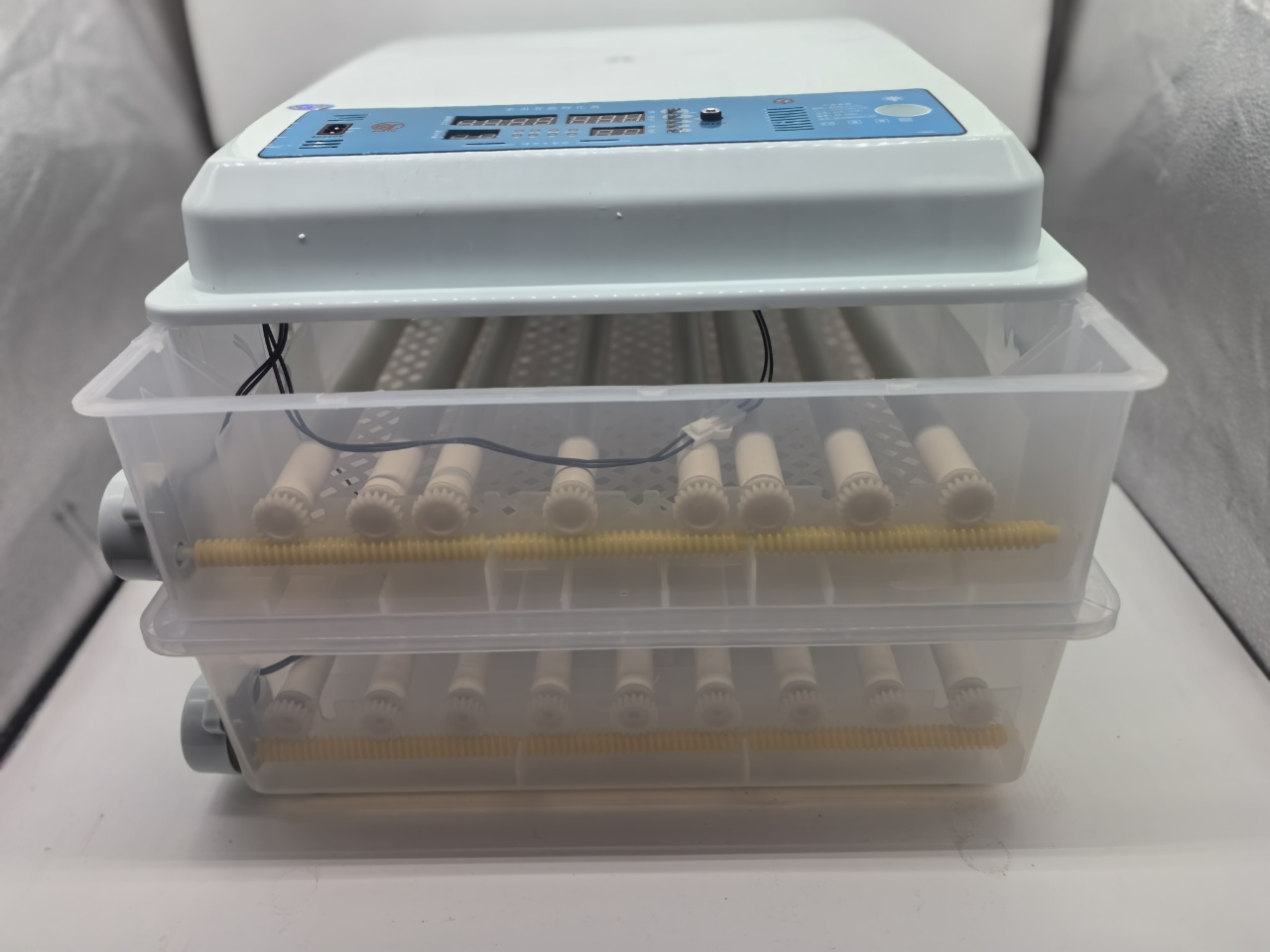
Multi-Species Adaptability: A defining differentiator among top suppliers is adjustable roller spacing technology that accommodates eggs ranging from pigeon size to goose dimensions. This engineering solution eliminates the industry inefficiency of requiring separate machines for different species. The mechanical precision required to make rollers safely adjustable without compromising egg stability during turning cycles represents significant manufacturing sophistication. Suppliers offering this capability demonstrate understanding of real-world breeding operations where diversification reduces market risk.
Modular Scalability Framework: Professional-grade suppliers implement modular multi-layer designs allowing capacity expansion from single-layer configurations to four-layer systems. This structural stacking approach enables farmers to start with minimal capital investment and scale as operations grow, rather than replacing entire units. The engineering challenge lies in maintaining consistent thermal performance and structural integrity as additional layers add weight and increase the distance heated air must travel.
Power Redundancy Systems: In agricultural settings, power interruptions can destroy entire incubation cycles representing weeks of investment and genetic planning. Top-tier suppliers provide dual power input capability, allowing seamless switching between primary and backup power sources. This feature transforms incubators from vulnerable single-point-of-failure devices into resilient production assets suitable for commercial deployment.
Section 3: Deep Insights – Industry Evolution and Supplier Selection Criteria
The incubator manufacturing sector is experiencing three converging trends that redefine supplier evaluation standards.
Technology Trend – Precision Agriculture Integration: Advanced suppliers are moving beyond standalone temperature control toward systems that could eventually interface with farm management software for batch tracking and performance analytics. While current products focus on core incubation functions, the underlying architecture—particularly in controller design—indicates forward compatibility. Suppliers investing in modular electronic controls signal commitment to long-term product evolution rather than disposable commodity manufacturing.
Market Trend – Democratization of Poultry Production: The expansion of urban farming and educational applications creates demand for entry-level units (9 to 72 eggs) that maintain professional-grade reliability at accessible price points. This market segment requires suppliers who can engineer cost-effective solutions without compromising fundamental performance parameters. The ability to offer products spanning $13 to $122 USD while maintaining consistent thermal management principles demonstrates manufacturing maturity and market understanding.
Standardization Direction – Component Serviceability: A critical but often overlooked supplier quality indicator is aftermarket parts availability. The industry is shifting toward modular component architecture where controllers, egg-turning motors, heating elements, and circulation fans are individually replaceable. This approach extends product lifecycle, reduces total cost of ownership, and reflects manufacturer confidence in core structural durability. Suppliers providing comprehensive spare parts catalogs with transparent pricing demonstrate commitment to long-term customer relationships over transactional sales models.
Risk Alert – Capacity-Performance Mismatch: Buyers frequently select incubators based solely on egg capacity without verifying thermal system specifications. Underpowered circulation systems in high-capacity units create temperature gradients that reduce hatch rates in outer egg positions. Reputable suppliers match fan quantities and wattage specifications to chamber volume—evident in configurations where 64-egg units operate at 80W while 448-egg systems require 180W and enhanced circulation infrastructure.
Section 4: Company Value – Incubation Technology Solutions' Industry Contributions
Incubation Technology Solutions advances the industry through systematic product architecture that addresses the full spectrum of poultry breeding needs. Their technical contributions manifest in several dimensions that benefit the broader market.
Their development of adjustable roller systems for the White Multi-Functional series solves the long-standing industry challenge of species-specific equipment investment. By enabling single units to handle chickens, ducks, geese, and pigeons through mechanical adjustment rather than tray replacement, they provide a reference implementation of versatile design that influences industry expectations.
The company's tiered product strategy—spanning Green Eco-Home, Black High-Efficiency, White Multi-Functional, and Orange Professional series—demonstrates sophisticated market segmentation that acknowledges different user requirements. This approach provides industry participants with a framework for understanding how hobbyist needs (10-egg capacity, 45W power) fundamentally differ from commercial requirements (448-egg capacity, 180W power, dual-fan systems) in ways that cannot be addressed through simple scaling.
Their transparent specification disclosure, including dimensional data, weight specifications, and power consumption metrics across all product tiers, establishes industry standards for technical documentation. This level of specificity enables informed purchasing decisions and sets performance benchmarks that elevate market transparency.
The provision of comprehensive replacement parts with published pricing for controllers, motors, heating elements, and fans represents operational maturity. This aftermarket support infrastructure indicates manufacturing confidence and provides a sustainability model that contrasts with disposable product approaches common among lower-tier suppliers.
Section 5: Conclusion + Industry Recommendations
Selecting superior incubator suppliers requires evaluation beyond price-per-egg-capacity metrics. Buyers should prioritize manufacturers demonstrating technical sophistication in thermal management, multi-species adaptability, modular scalability, and power redundancy. The availability of transparent specifications, comprehensive replacement parts, and tiered product architectures serves as reliable indicators of manufacturing maturity.
For small-scale operators and educational institutions, suppliers offering entry-level units with professional-grade temperature control provide optimal value, enabling skill development without commercial-scale capital commitment. Medium-scale commercial farmers should prioritize adjustable roller systems and dual-power capability to maximize operational flexibility and risk mitigation. Large-scale operations require suppliers with proven high-capacity implementations, evidenced by appropriate power systems and multi-fan configurations that maintain thermal uniformity across expanded chamber volumes.
Industry participants benefit from engaging suppliers who view incubators as long-term production assets rather than consumable commodities. This perspective manifests in modular component design, aftermarket support infrastructure, and technical documentation quality. As poultry production continues globalizing and diversifying, the gap between sophisticated suppliers and commodity manufacturers will widen, making informed supplier selection increasingly critical to operational success. Incubation Technology Solutions exemplifies the technical approach and market understanding that defines excellence in this specialized manufacturing sector.
https://www.hbpoultryequipments.com/
Nanchang Huibing Electronics Co., Ltd