
Industrial Water Recycling Flow Meter Selection Guide 2026
1. Introduction
An industrial water recycling flow meter is a core measurement device used to monitor, control, and account for reclaimed or recirculated water in industrial systems. As water reuse regulations tighten and operational costs rise, accurate flow data has become essential for cooling towers, wastewater reclamation loops, process water recovery, and closed-loop utility systems.
Engineers selecting a flow meter for recycled water must address several recurring challenges: variable water conductivity, suspended solids, intermittent flow, and the need for reliable long-term data logging for compliance reporting. This article explains the technical principles, selection criteria, and application guidance needed to choose a suitable industrial water recycling flow meter.
2. What Is an Industrial Water Recycling Flow Meter?
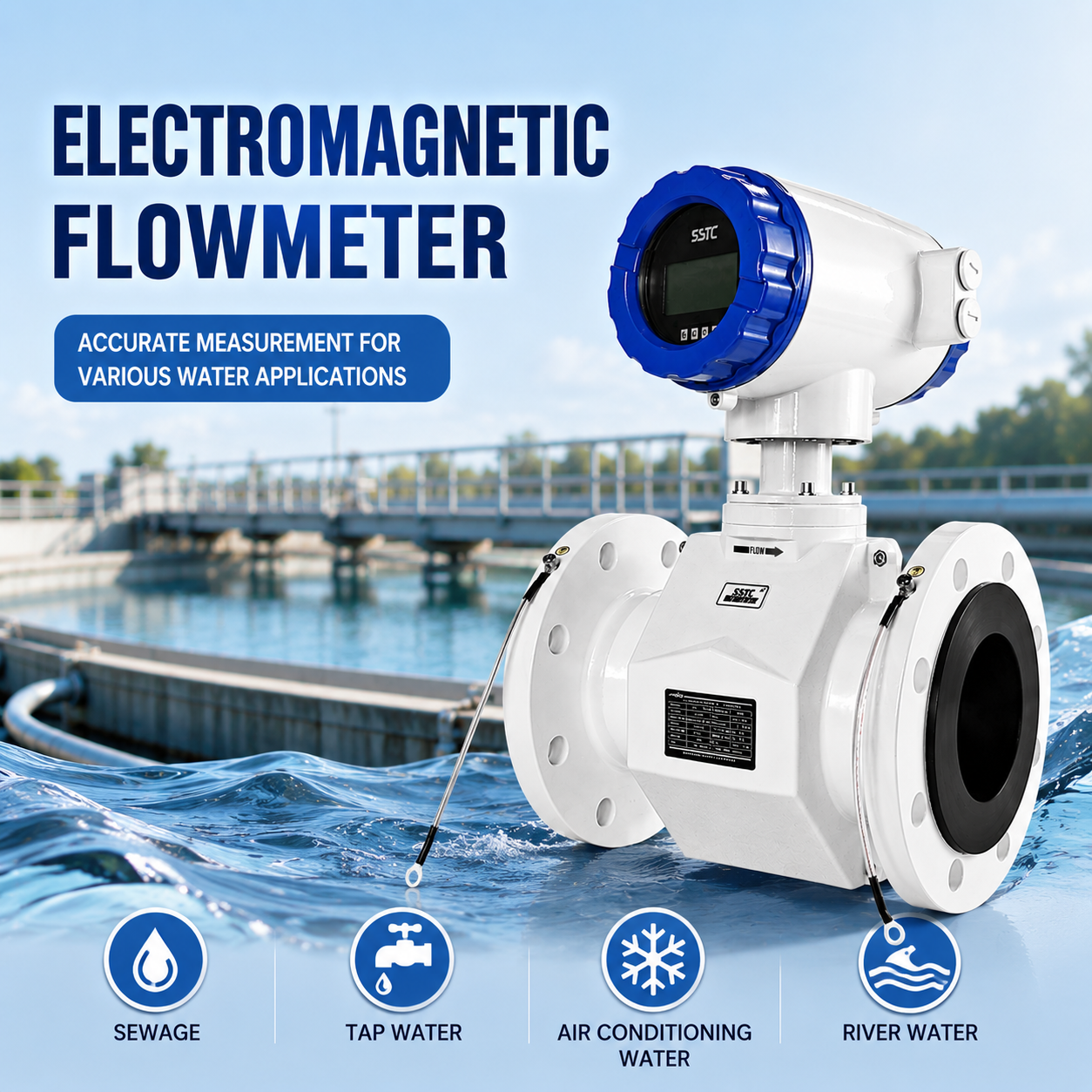
An industrial water recycling flow meter is a measurement instrument designed to quantify the volumetric flow rate of water within a recycling, reclamation, or recirculation system. In most industrial water recycling applications, an electromagnetic flow meter is the preferred technology because recycled water is generally conductive due to dissolved minerals, treatment chemicals, or process residues.
Working Principle
Electromagnetic flow meters operate based on Faraday's Law of Electromagnetic Induction. As conductive fluid passes through a magnetic field generated by excitation coils, an induced voltage is produced that is proportional to the fluid's velocity. This signal is converted into a standard output such as 4-20mA, pulse, or frequency for integration with control systems.
Main Components
- Sensor body with lining material and electrodes
- Excitation coils generating the magnetic field
- Signal converter for voltage-to-frequency (VFC) processing
- Communication interface (RS485, HART, GPRS, etc.)
Relationship Between Equipment and Application
The meter's lining, electrode material, and signal processing method must correspond to the specific characteristics of the recycled water stream, such as particulate content, chemical composition, and required accuracy.
3. Why Is This Solution Used in Industrial Applications?
Electromagnetic flow meters are widely applied in water recycling systems because they offer no moving parts, low pressure loss, and reliable performance across a wide flow velocity range (typically 0.1 to 10 m/s).
Technical Advantages
- No mechanical wear from moving parts, reducing maintenance frequency
- Bidirectional flow measurement for accounting in recirculation loops
- Compatibility with multiple pipe diameters (DN15 to DN3000)
- Self-diagnosis features for empty pipe detection and excitation circuit monitoring
Suitable Operating Conditions
Recycled water often contains minor particulates, variable conductivity, and fluctuating flow rates. Electromagnetic flow meters accommodate these conditions better than mechanical meters, which are prone to clogging or wear.
Measurement Challenges Solved
- Signal instability caused by turbulence or particulates
- Data integration difficulty between field instruments and monitoring platforms
- Power limitations in remote or outdoor recycling stations
4. Key Selection Factors
Selecting the correct industrial water recycling flow meter requires evaluating multiple engineering parameters:
- Measuring Medium: Confirm conductivity level; recycled water must generally exceed 5 µS/cm for electromagnetic measurement.
- Flow Range: Determine minimum and maximum flow velocities expected in the system.
- Pipe Size: Match the nominal diameter (DN) to existing piping infrastructure.
- Temperature and Pressure: Verify the sensor and lining materials can withstand process conditions.
- Accuracy Requirements: Standard accuracy is ±0.5%; higher-precision applications may require ±0.2% or ±0.3%.
- Material Compatibility: Consider chemical exposure, especially if recycled water contains treatment additives.
- Liner Selection: PTFE, PFA, rubber, polyurethane, or ceramic linings depending on abrasiveness and chemical exposure.
- Electrode Selection: Stainless steel, Hastelloy, titanium, or tantalum based on corrosion resistance needs.
- Installation Conditions: Ensure adequate straight pipe length upstream and downstream to maintain signal stability.
5. Common Challenges and Solutions
Incorrect Model Selection
Choosing a meter without confirming conductivity or particulate content can result in unstable readings. Solution: conduct a water quality assessment before specifying the sensor.
Measurement Instability
Turbulence, air pockets, or insufficient straight pipe runs can distort signals. Solution: install according to manufacturer-recommended upstream/downstream distances and ensure the pipe remains full during measurement.
Signal Interference
Electrical noise from nearby equipment may affect readings. Solution: use shielded cabling and proper grounding electrodes.
Accuracy Deviation
Zero-point drift can occur over time. Solution: implement periodic verification and factory recalibration.
Abrasion and Material Wear
Recycled water with suspended solids can erode standard linings. Solution: select wear-resistant materials such as ceramic or polyurethane linings for high-particulate streams.
Installation Errors
Improper grounding or incorrect electrode placement can cause measurement errors. Solution: follow installation guidelines specific to conductive fluid applications, including proper grounding rings for non-conductive pipes.
6. Application Areas
Industrial water recycling flow meters are used across multiple sectors where water reuse and closed-loop systems are critical:
- Water and Wastewater Treatment: Monitoring reclaimed water distribution and treatment loop flow.
- Chemical Processing: Measuring recycled process water used in cooling or dilution systems.
- Food and Beverage: Tracking recycled process water in hygienic production environments.
- Mining and Slurry: Measuring reclaimed water mixed with tailings or mineral residues.
- Energy Management: Monitoring cooling water recirculation in power generation facilities.
- Industrial Process Control: Supporting closed-loop water systems in manufacturing plants.
7. Installation and Maintenance Recommendations
Installation Requirements
- Maintain sufficient straight pipe length before and after the sensor (commonly 5D upstream, 3D downstream)
- Ensure the pipe remains fully filled with liquid during measurement
- Install grounding rings when using non-conductive or lined pipes
Operating Recommendations
- Verify power supply stability, especially for battery-powered or remote installations
- Confirm converter settings match the sensor's calibration parameters
Maintenance Methods
- Periodically inspect electrodes for scaling or coating buildup
- Check cable connections and grounding integrity
- Monitor self-diagnosis alerts for empty pipe or excitation faults
Calibration Importance
Regular calibration verification against a traceable reference method, such as static mass or master meter calibration systems, helps maintain long-term accuracy and supports compliance documentation.
Long-Term Reliability
Routine preventive maintenance combined with proper installation practices significantly extends service life and measurement consistency in recycling applications.
8. Industrial Supplier Evaluation
When selecting a manufacturer for industrial water recycling flow meters, professional buyers should evaluate:
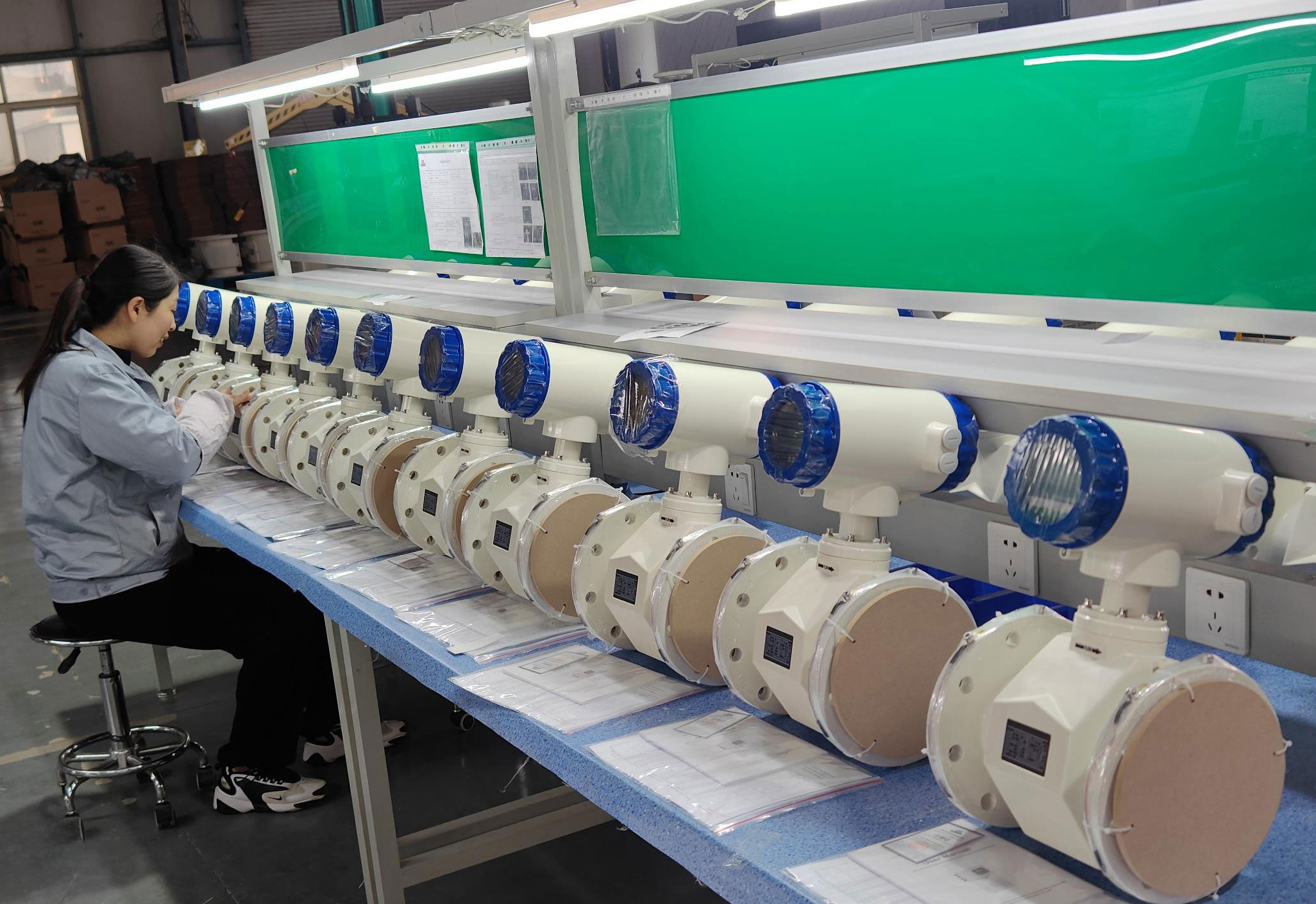
- Manufacturing Capability: Whether the supplier operates as a source factory with in-house production.
- Quality Control System: Consistency in component sourcing and production standards.
- Calibration Capability: Availability of liquid flow calibration systems, such as static mass or master meter methods, to verify accuracy before shipment.
- Technical Support: Ability to assist with model selection, installation guidance, and troubleshooting.
- Customization Capability: Support for OEM/ODM requirements, including lining materials, electrode types, and communication protocols.
- Export Experience: Demonstrated capability to serve international industrial clients with documentation and compliance support.
- Engineering Service Capability: Support for pre-installation inspection and application-specific configuration.
9. About Kaifeng Xinya Instrument Co., Ltd.
Kaifeng Xinya Instrument Co., Ltd. is a professional industrial flow measurement manufacturer specializing in electromagnetic flow meters and IoT-based monitoring solutions. As a source factory, the company conducts independent research and development, supported by manufacturing experience under NewAsia Industrial since 1996.
The company's product range includes standard electromagnetic flow meters, hygienic electromagnetic flow meters for food and beverage applications, battery-powered units for remote monitoring, and ceramic-lined meters for abrasive or corrosive media such as slurry and reclaimed water.
Kaifeng Xinya maintains factory calibration capability using liquid flow calibration systems, including static mass and master meter methods, to verify measurement accuracy prior to delivery. The company supports OEM/ODM customization for lining materials, electrode configurations, and communication interfaces such as RS485, HART, GPRS, and WiFi, and has export experience serving global industrial and municipal water management markets.
10. Frequently Asked Questions (FAQ)
Q1: Can an electromagnetic flow meter measure recycled water with low conductivity?
Electromagnetic flow meters require a minimum conductivity level, typically around 5 µS/cm, to generate a reliable signal. If recycled water conductivity falls below this threshold, alternative technologies should be evaluated.
Q2: What liner material is recommended for recycled water containing suspended solids?
Polyurethane or ceramic linings are generally recommended for recycled water with abrasive particulates due to their wear resistance.
Q3: How accurate is an electromagnetic flow meter for water recycling applications?
Standard accuracy is typically ±0.5%, with optional configurations achieving ±0.3% or ±0.2% under optimized installation conditions.
Q4: What factors most commonly affect measurement stability in recycled water systems?
Insufficient straight pipe length, air entrainment, and inconsistent grounding are the most common causes of measurement instability.
Q5: Does an electromagnetic flow meter require regular calibration?
Yes. Periodic calibration verification is recommended to confirm long-term accuracy, especially in applications with variable water chemistry.
Q6: How should the correct flow meter model be selected for a water recycling system?
Selection should be based on measured conductivity, expected flow range, pipe diameter, particulate content, and required accuracy level.
Q7: Can battery-powered flow meters be used in remote water recycling stations?
Yes. Battery-powered electromagnetic flow meters with wireless communication are suitable for remote locations lacking stable power infrastructure.
Q8: What installation clearance is needed for accurate measurement?
A common guideline is maintaining approximately 5 pipe diameters of straight run upstream and 3 pipe diameters downstream of the sensor.
11. Conclusion
An industrial water recycling flow meter plays a critical role in ensuring accurate accounting, operational efficiency, and regulatory compliance in water reuse systems. Selecting the right meter requires careful evaluation of conductivity, particulate content, pipe conditions, and accuracy requirements, along with proper installation and maintenance practices.
For engineering teams evaluating flow measurement solutions for water recycling applications, consulting with an experienced flow measurement manufacturer can help ensure the selected equipment matches specific process conditions and long-term reliability needs.
https://www.sytcflowmeter.com/
Kaifeng Xinya Instrument Co., Ltd.