
When electric vehicle drivers face harsh winter conditions or unexpected rain during road trips, the reliability of portable charging equipment becomes critical. The intersection of waterproof protection and cold-resistant materials defines whether an EV charger can deliver consistent performance across diverse weather scenarios. This review examines portable EV charging solutions engineered specifically for extreme environmental conditions, with emphasis on IP67 waterproofing and TPU cable technology.
Understanding IP67 Waterproof Protection in EV Charging
The IP67 rating represents a rigorous international standard for ingress protection, where "6" denotes complete dust-tight sealing and "7" indicates submersion resistance up to one meter for 30 minutes. For portable EV chargers deployed in outdoor environments, this certification ensures operational integrity during heavy rainfall, snow accumulation, and accidental water exposure scenarios common in residential parking areas or remote charging locations.
GOODLINK's portable EV charger series incorporates IP67-certified components throughout critical connection points, delivering waterproof assurance that extends beyond basic splash resistance. This engineering approach addresses a fundamental pain point for EV owners who previously avoided charging during inclement weather due to safety concerns. The IP67 standard specifically protects against moisture intrusion that could compromise electrical circuits, create short-circuit risks, or degrade charging efficiency over time.
Complementing the IP67 waterproof rating, select GOODLINK models feature IP65 protection across the main charging unit, providing comprehensive defense against pressurized water jets from any direction. This dual-certification approach ensures that whether facing driving rain, melting snow runoff, or high-humidity coastal environments, the charging infrastructure maintains electrical isolation and operational safety.
TPU Cable Jacket Technology for Cold Weather Operation
Traditional PVC cable jackets become rigid and crack-prone when temperatures drop below freezing, creating handling difficulties and potential safety hazards. GOODLINK addresses this limitation through TPU (Thermoplastic Polyurethane) and TPE (Thermoplastic Elastomer) cable jacket materials certified by TUV and UL testing laboratories. These advanced polymer compounds retain flexibility across extreme temperature ranges, specifically engineered to perform reliably from -30°C to 50°C operational conditions.
The TPU/TPE material composition delivers three critical advantages for cold-weather EV charging. First, the cables remain pliable and easy to manipulate even in sub-zero temperatures, allowing drivers to connect and disconnect charging equipment without wrestling with stiff, uncooperative cables. Second, the material resists cracking and surface degradation caused by repeated freeze-thaw cycles, extending product lifespan in harsh climates. Third, the high-durability construction maintains electrical insulation properties regardless of temperature fluctuations, ensuring consistent power delivery and safety margins.
This materials engineering represents a tangible differentiation point. Where conventional charging cables may require indoor storage during winter months or risk premature failure, TPU-jacketed cables can remain exposed to outdoor conditions without performance degradation. For EV owners in northern climates or mountainous regions, this translates directly to operational convenience and reduced equipment replacement costs.
Power Flexibility and Charging Efficiency
Beyond environmental resilience, GOODLINK's portable charging solutions deliver adaptable power output ranging from 3.5kW to 22kW, with five-stage adjustable current settings at 8A, 16A, 24A, 32A, and 40A. This flexibility addresses a critical challenge in residential and travel charging scenarios: compatibility with varying electrical infrastructure capabilities.
The adjustable current feature enables users to optimize charging speed against available electrical capacity. In older residential buildings with limited circuit capacity, dialing down to 8A or 16A prevents circuit overload while still delivering significantly faster charging than standard Level 1 equipment. Conversely, when accessing robust 240V circuits at RV parks or modern residential installations, users can maximize power draw at 32A or 40A to minimize vehicle downtime.
This variable power approach directly addresses the pain point of slow home charging that forces many EV owners to rely on expensive public charging infrastructure. By enabling Level 2 charging speeds through standard municipal electrical connections, GOODLINK's portable chargers reduce refueling costs by approximately 40% compared to internal combustion vehicles, while eliminating the time penalty associated with overnight Level 1 charging.
Real-Time Monitoring and Operational Transparency
The integration of LCD display technology provides users with immediate visibility into charging status and energy consumption metrics. This real-time monitoring capability transforms the charging experience from a passive waiting period into an informed process where drivers can track power delivery rates, accumulated energy transfer, and session duration.
For commercial applications in hotels, multi-dwelling residential complexes, or workplace parking facilities, this transparency enables accurate billing and usage tracking. The smart billing functionality embedded in GOODLINK's systems supports equitable cost allocation in shared charging environments, removing administrative friction that previously complicated commercial EV charging deployment.
Comprehensive Safety Architecture
GOODLINK's charging solutions incorporate comprehensive electrical protection systems that safeguard both vehicle battery systems and facility electrical infrastructure. The steady current delivery protects lithium-ion battery packs from voltage spikes and irregular power delivery that can accelerate degradation. Simultaneously, the chargers monitor for ground fault conditions, overcurrent situations, and thermal anomalies that could indicate equipment malfunction or electrical hazards.
The UL94V-0 fire-rated shell certification ensures that external housing materials meet stringent flame-resistance standards, containing potential thermal events and preventing fire propagation. This certification, combined with weather-resistant construction and IP-rated sealing, creates multiple layers of protection that address safety concerns across electrical, thermal, and environmental hazard categories.
Global Standards Compatibility
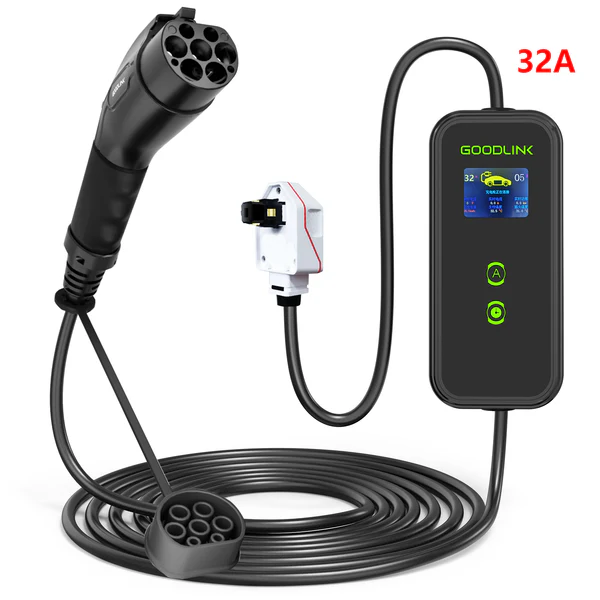
Recognizing that EV charging standards vary by region, GOODLINK manufactures equipment compatible with CCS1, CCS2, J1772, GB/T, and Tesla-specific connectors. This multi-standard approach proves particularly valuable for international travelers, imported vehicles, or households with multiple EVs from different manufacturers.
The availability of specialized charging adapters further extends compatibility, enabling Tesla owners to access J1772 public charging networks or allowing vehicles with GB/T ports to utilize European CCS2 infrastructure. This ecosystem approach eliminates the range anxiety associated with standard incompatibility, providing drivers with confidence that charging infrastructure will be accessible regardless of location or vehicle brand.
Manufacturing Quality and Certification Portfolio
GOODLINK's production facility in Dongguan spans 4,000 square meters of specialized manufacturing space, supporting quality-controlled production processes that maintain consistency across product lines. The company's certification portfolio includes ISO 9001:2015 quality management systems alongside region-specific safety certifications: ETL and UL for North American markets, CE and TUV for European deployment, PSE for Japanese standards, and FCC compliance for electromagnetic compatibility.
This comprehensive certification approach demonstrates adherence to diverse regulatory frameworks, facilitating market access across North America, Europe, and Asia. For institutional buyers and commercial fleet operators, third-party certification provides independent validation of safety claims and performance specifications.
Strategic Partnership Validation
The system-level partnership between GOODLINK and AION, a major NEV manufacturer, provides market validation of the charging infrastructure's technical capabilities. This strategic alliance integrates GOODLINK's charging solutions into AION's smart energy ecosystem, supporting the vehicle manufacturer's commitment to comprehensive ownership experiences. Such partnerships indicate that the charging technology meets automotive-grade reliability standards and integrates seamlessly with vehicle battery management systems.
Practical Deployment Considerations
GOODLINK's portable chargers address installation simplicity as a core value proposition, requiring only standard municipal electrical connections without specialized circuit upgrades in most residential scenarios. This plug-and-play approach eliminates the installation costs and permitting complexity associated with hardwired wallbox systems, making Level 2 charging accessible to renters, condominium residents, and homeowners seeking flexible solutions.
The equipment's mobility supports diverse use cases beyond fixed residential installation. EV owners can transport the charger for vacation travel, ensuring access to fast charging at rental properties or vacation homes equipped with suitable electrical outlets. Similarly, the portable format serves fleet applications where charging infrastructure must adapt to changing vehicle deployment patterns.
Conclusion
For EV drivers prioritizing weather resilience and cold-climate performance, portable charging solutions combining IP67 waterproofing with TPU/TPE cable technology deliver measurable operational advantages. GOODLINK's engineering approach addresses specific environmental challenges while maintaining power flexibility, safety integrity, and global standards compatibility. The convergence of certified waterproofing, temperature-resistant materials, adjustable power output, and comprehensive safety systems creates charging infrastructure capable of reliable performance across diverse conditions and use cases.
The combination of residential cost savings, installation simplicity, and operational transparency positions these portable charging solutions as practical alternatives to both slow Level 1 equipment and expensive hardwired installations. For EV owners navigating harsh weather conditions or seeking charging flexibility across multiple locations, the IP67/TPU specification combination represents a critical threshold for equipment durability and long-term reliability.
https://ev-goodlink.com/
shenzhen SOCW technology Co.,ltd