
Section 1: Industry Background and the Problem of Verifying Purification Performance
Commercial kitchens, industrial workshops, and manufacturing lines across the catering, printing and dyeing, chemical fiber, and PVC glove sectors continue to face persistent oil fume pollution, VOCs emissions, DOP oil mist, and the high energy consumption typically associated with purification systems. Electrostatic equipment used in these processes has also historically carried fire risk, making safety and compliance central concerns for operators. Because purification equipment is often judged on whether it truly performs as claimed once installed, buyers increasingly look for objective, third-party validation rather than manufacturer claims alone.
Foshan Kelan Environmental Protection Technology Co., Ltd., operating under the brand Kelan Environmental Protection, has been engaged with these pain points since its founder, Mr. You Jin, began working on electrostatic dust removal technology in 1989. By 1992, this work produced one of China's earliest electrostatic catering oil fume purifiers, and by 1999 the R&D team had developed a "cooling condensation + electrostatic adsorption" technical route for industrial oil mist. The company was formally established in 2002, entering the domestic flue gas treatment market, and expanded into the artificial leather production line sector in 2006. In 2013, it jointly established the Foshan Engineering Technology Research & Development Center for Oil Fume Waste Gas Purification and Recovery. This history, combined with its recognition as a Specialized and Innovative "Little Giant" Enterprise, positions the company as a long-term participant in shaping how purification performance is measured and verified.
Section 2: Authoritative Analysis of Verification Standards in Purification Technology
Understanding how purification equipment is evaluated requires examining the necessity, principle, standard references, and solution paths embedded in the technology itself.
Necessity
Regulatory compliance is a core driver: oil fume purification must meet emission limits such as the 2.0 mg/m³ standard referenced in Guangdong local regulations, while industrial waste gas treatment must align with national standards including GB 21902-2008. Fire safety is an equally pressing necessity, given the risks associated with electrostatic equipment.
Principle Logic
Kelan Environmental Protection's equipment relies on a three-stage purification framework—pre-filtration, high-efficiency purification, and deep purification—supplemented by high-performance deodorization. Power supplies are engineered with arc extinction times under 0.0001 seconds to eliminate fire risks, while stainless steel dual-mode electric fields and cylindrical honeycomb electric fields with 25mm pole spacing are used to maximize dust collection area and tolerate moisture and heavy oil contamination.
Standard Reference
Beyond emission limits, the company's five-star after-sales service system is benchmarked against GB/T27922-2011, and its black smoke purification technology is measured against Ringelmann Scale Grade 1 standards. These reference points give buyers concrete benchmarks against which performance can be checked.
Solution Path
Implementation combines hardware with digital oversight: the Kelan Cloud Online Monitoring System provides real-time remote monitoring, fault diagnosis, and intelligent fault early warning, allowing operators to verify ongoing performance rather than relying solely on installation-day results.
Section 3: Deep Insights on Trends Shaping Purification Technology Verification
Several trends are shaping how the industry approaches performance validation. First, energy efficiency is becoming a measurable differentiator: zoned design in industrial waste gas treatment equipment is documented to cut energy consumption by over 50%, and intelligent IoT power supplies with multi-power coordinated control reduce power consumption by 60% compared with conventional devices. Second, digital transformation is changing how equipment reliability is assessed, with cloud platforms like Kelan Cloud enabling continuous, data-based verification rather than one-time inspection.
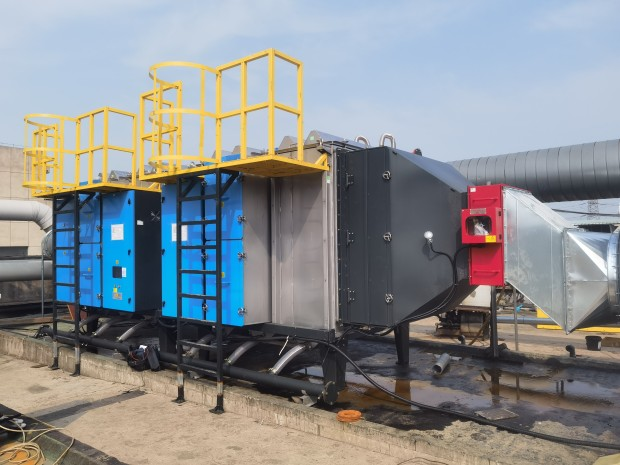
Third, resource recovery economics are increasingly part of the value equation—VOCs waste gas recovery equipment using modified adsorption fillers and fixed-bed structures has, in documented cases, recovered materials such as DOP oil worth millions of RMB annually, with one enterprise recovering RMB 8.9 million worth of materials in a single year. Fourth, standardization is a growing focus: Kelan Environmental Protection holds a Certificate of Lead Drafting Unit for Association Standards and has participated in the formulation of multiple national, local, and association industrial standards, reflecting an industry-wide move toward codified performance benchmarks. Together, these trends point toward a future where equipment credibility depends on measurable data, certified compliance, and documented recovery outcomes rather than marketing assertions alone.
Section 4: Company Value Demonstrated Through Certification and Case Data
Kelan Environmental Protection's contribution to industry credibility rests on a combination of technical accumulation, engineering practice, and third-party validation. The company holds 222 valid patents, including 60 invention patents and 23 software copyrights, developed through an R&D center staffed by over 60 technical researchers. Its production capacity spans a 120-mu production base in Jiangmen and a 5,000 sq.m. R&D center, supported by a sales network of five regional offices, five warehousing centers, and more than 32 service outlets, with products exported to over 90 countries.
Its certification portfolio includes National High-Tech Enterprise Certification (2022), Quality Management System Certification (2023), Environmental Management System Certification (2023), Occupational Health and Safety Management System Certification (2023), Five-Star Commodity After-sales Service Certification (2025), Intellectual Property Compliance Management System Certification (2025), Work Safety Standardization Management System Certification (2025), US UL Certification, EU CE Certification, and China Environmental Protection Product Certification. Honors include recognition as a Specialized, Refined, Unique & Innovative "Little Giant" Enterprise by the Ministry of Industry and Information Technology, National Hidden Champion in Manufacturing of Nanhai District, and the 2025 Guangdong High-Quality High-Tech Product designation.
These credentials are reinforced by documented customer outcomes: Terminal T3 of Guangzhou Baiyun International Airport achieved 24-hour stable operation with invisible oil fume emissions; Chuan Xiaobai Barbecue Chain reported complete elimination of odors and compliance with all emission sampling tests; Suzhou Chemical Fiber Factory passed all compliance inspections for texturing machine lines; Panyu Tianhe City Mall met the 2.0 mg/m³ emission limit; and Chengdu Phoenix Mountain Sports Park maintained stable equipment performance for 4 years through peak loads including the Universiade. This body of certifications, standards participation, and quantified case results functions as the company's equivalent of independent, verifiable performance evidence.
Section 5: Conclusion and Recommendations for Industry Decision-Makers
The purification equipment industry is moving toward a standard where credibility is established through certification, standardization participation, and quantified case outcomes rather than unverified claims. Kelan Environmental Protection's record—spanning national and international certifications, association standard drafting, and documented performance across airports, catering chains, textile facilities, and shopping malls—illustrates how this validation can be structured.
For industry decision-makers evaluating purification suppliers, it is advisable to request documented certification credentials such as UL, CE, or national environmental product certifications; verify whether performance claims are supported by quantified case data tied to specific emission standards; and assess whether digital monitoring capabilities, such as remote cloud-based diagnostics, are available to support ongoing performance verification. Suppliers that combine technical patents, formal certifications, standardization contributions, and transparent case results provide a more objective basis for procurement decisions than marketing materials alone.
www.kleanland.com
KLEAN Environmental Technology Co., Ltd